
OFFICIAL STORE IN THE UNITED KINGDOM


Keto Jams
A keto jam is a fruit spread that replaces sugar with sweeteners, so the sugars line on the label stays low. Every jam on this shelf is 60% fruit, sweetened with erythritol, xylitol and steviol glycosides, and set with pectin. Sugars run from 3.2 g to 4.6 g per 100 g, which is 0.8 g to 1.15 g in a 25 g serving. Each 200 g jar is £4.29.
-

 Vegan And Gluten Free
Keto Jam – Mango & Passion Fruit 200g
£ 4.29 GBP✔ Completely free from added sugar
✔ Vegan and gluten-free
✔ Only 87 kcal per 100 g
✔ The perfect alternative to traditional jam
-
 Vegan And Gluten Free
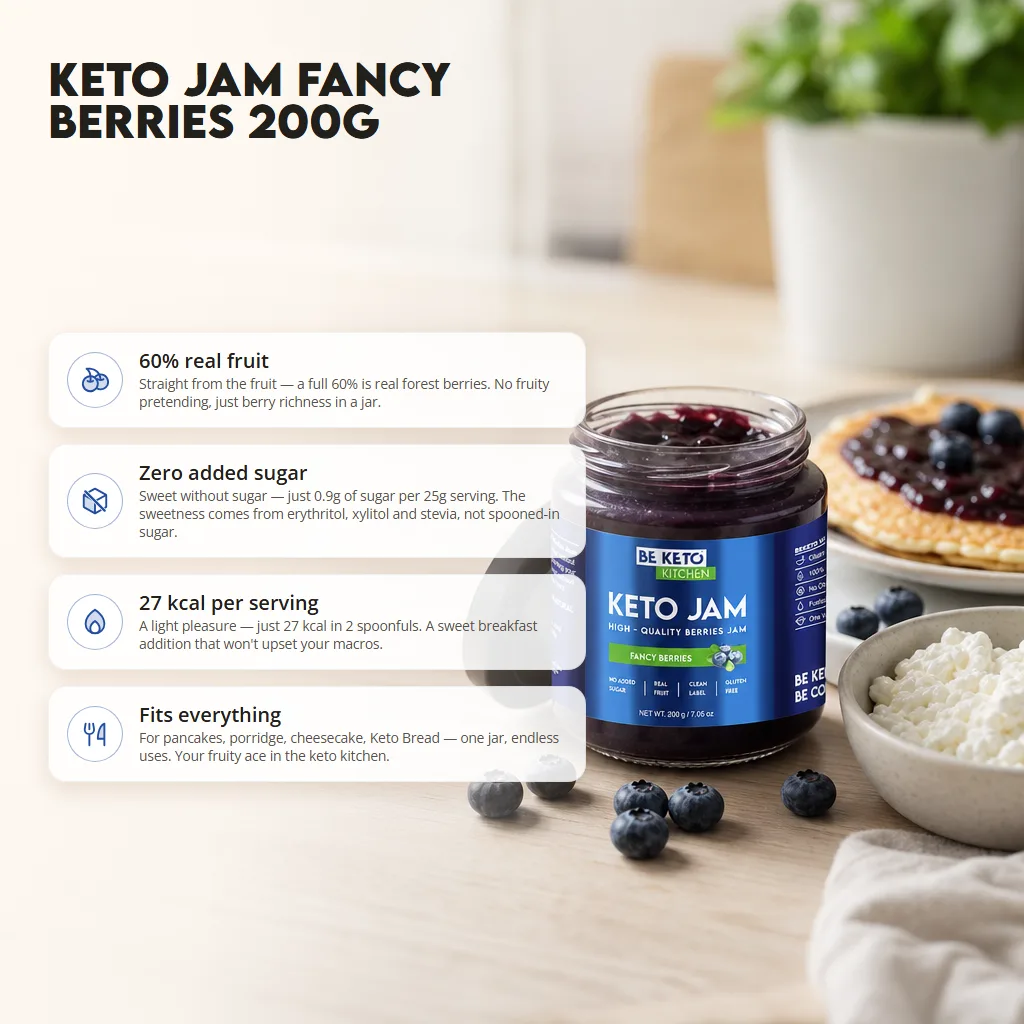
Keto Jam – Fancy Berries 200g
£ 4.29 GBP✔ No added sugar
✔ Vegan and gluten-free
✔ Only 108 kcal per 100 g
✔ The perfect alternative to classic jam
-

 Vegan And Gluten FreeBESTSELLER
Keto Jam – Very Strawberry 200g
£ 4.29 GBP✔ Completely without added sugar
✔ Vegan and gluten-free
✔ Only 42 kcal per 100 g
✔ Excellent substitute for classic jam
-
 Vegan And Gluten Free
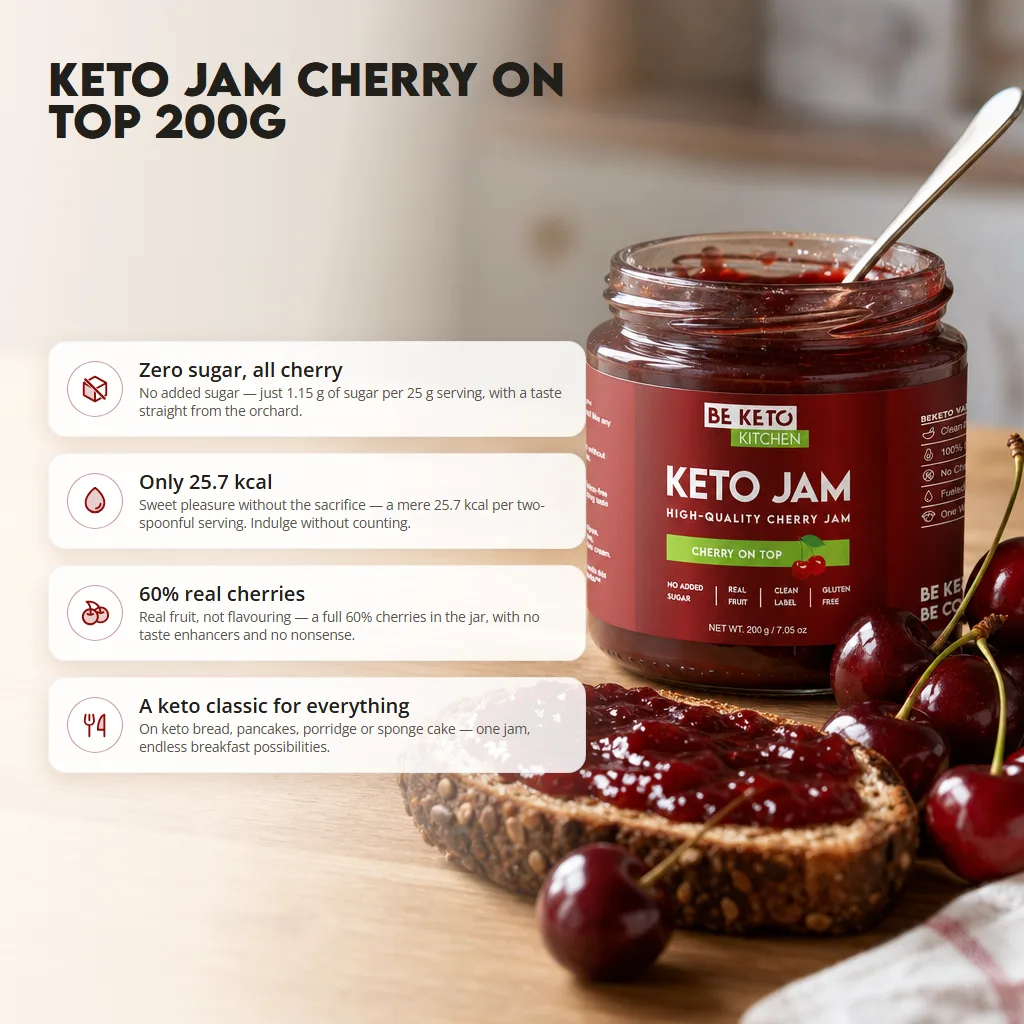
Keto Jam – Cherry on Top 200g
£ 4.29 GBP✔ Completely without added sugar
✔ Vegan and gluten-free
✔ Only 47 kcal per 100 g
✔ Excellent substitute for classic jam
-
 Vegan And Gluten Free
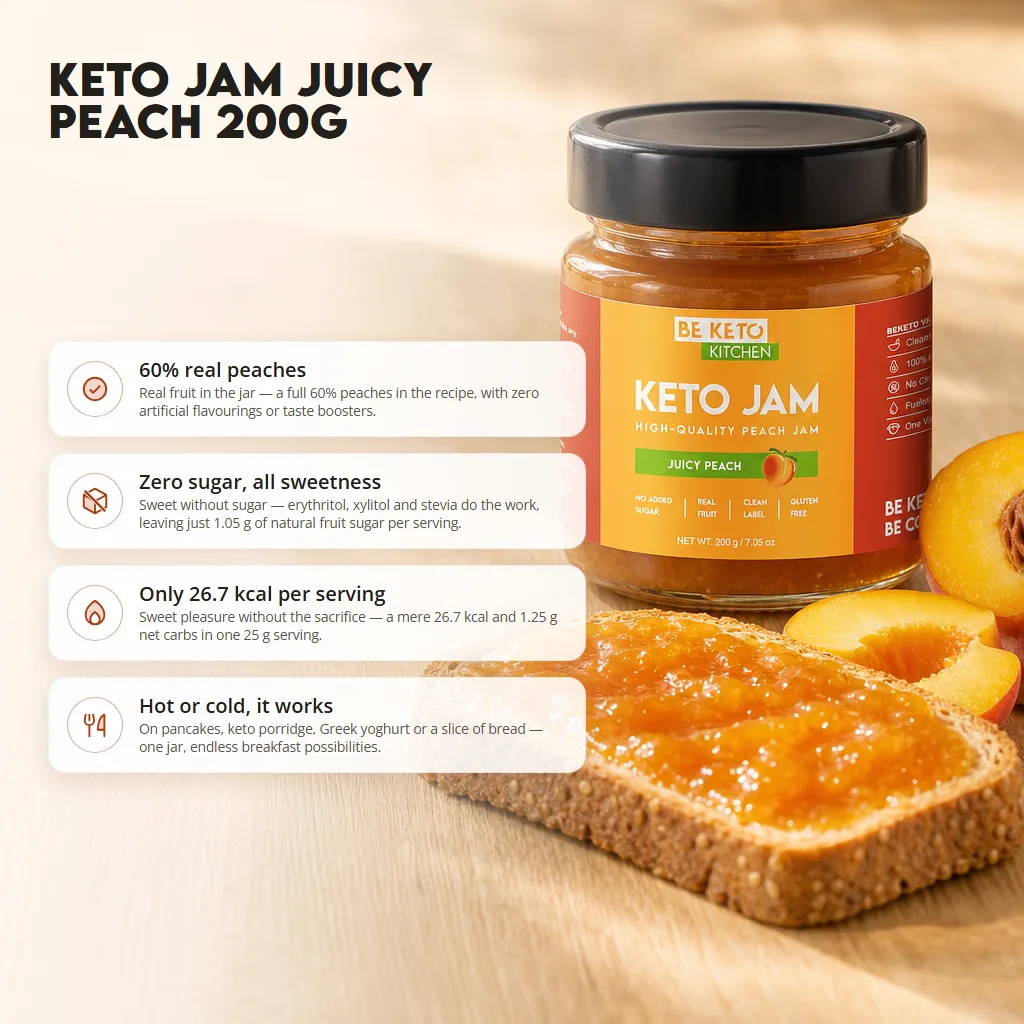
Keto Jam – Juicy Peach 200g
£ 4.29 GBP✔ Completely without added sugar
✔ Vegan and gluten-free
✔ Only 50 kcal per 100 g
✔ Excellent substitute for classic jam
-
 Vegan And Gluten Free
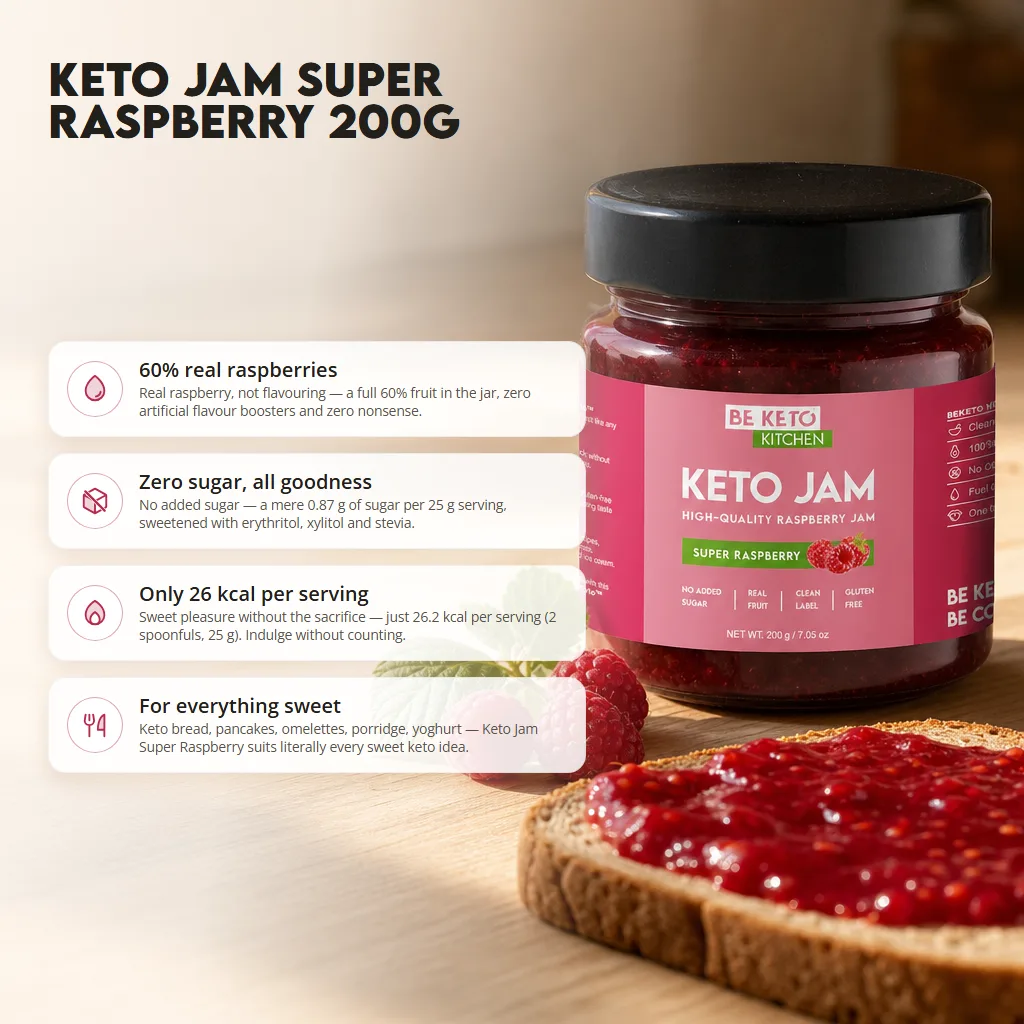
Keto Jam – Super Raspberry 200g
£ 4.29 GBP✔ Completely without added sugar
✔ Vegan and gluten-free
✔ Only 58 kcal per 100 g
✔ Excellent substitute for classic jam
What jam is keto friendly?
A jam is keto friendly when its sugars line is low, not when its name says keto. Every jam here is low in sugars, the Great Britain claim that allows no more than 5 g per 100 g.
Sugars run from 3.2 g per 100 g in Very Strawberry to 4.6 g in Cherry on Top, which is 0.8 g to 1.15 g a serving.
None of it is added: each label carries no added sugars, and the sugars it declares are naturally present in the fruit.
How many carbohydrates are in a keto jam?
These labels declare 16 g to 25 g of carbohydrate per 100 g. Almost all of that figure is polyol rather than sugar, and the sugars line on the same label reads 3.2 g to 4.6 g.
The two numbers sit together because of how a British label is built. Erythritol and xylitol are polyols, and polyols count inside the carbohydrate line, so they land in the same total as the fruit sugars. That gap is 12.4 g to 20.8 g per 100 g.
Per 100 g is not what anyone eats. The label serving is 25 g: 4 g to 6.25 g of carbohydrate, with 0.8 g to 1.15 g as sugars. That is the figure that matters to anyone reading this jam as a low carb spread or eating it on a ketogenic diet.
Which sweeteners are in these keto jams?
Erythritol, xylitol and steviol glycosides do the sweetening in every jar here. Erythritol and xylitol are polyols, steviol glycosides come from the stevia leaf, and none is a sugar.
Consumption of foods containing erythritol and xylitol instead of sugar induces a lower blood glucose rise after their consumption compared to sugar containing foods.
The effect comes from the swap itself: a 25 g serving here instead of a sugar sweetened jam, as part of a varied and balanced diet and a healthy lifestyle.
Polyols carry a second property. Excessive consumption may produce laxative effects, which is why the label prints a 25 g serving.
Which sweetener suits a keto diet is a separate question. Our guide to the best sweeteners for keto compares erythritol, xylitol and stevia.
Which keto jam should you choose?
Very Strawberry carries the least sugars at 3.2 g per 100 g. Mango and Passion Fruit the most fibre at 3.5 g, and every jar costs the same £4.29.
Per 100 g, flavour by flavour:
- Fancy Berries: sugars 3.6 g, fibre 2.4 g, carbohydrate 16 g
- Mango and Passion Fruit: sugars 4.6 g, fibre 3.5 g, carbohydrate 18 g
- Very Strawberry: sugars 3.2 g, fibre 2.1 g, carbohydrate 24 g
- Cherry on Top: sugars 4.6 g, fibre 1.8 g, carbohydrate 24 g
- Juicy Peach: sugars 4.2 g, fibre 1.8 g, carbohydrate 25 g
- Super Raspberry: sugars 3.5 g, fibre 3.1 g, carbohydrate 23 g
Mango and Passion Fruit and Super Raspberry are each a source of fibre, the claim that needs at least 3 g per 100 g.
Pick the flavour, then order the jar: 200 g at £4.29 is eight servings at £0.54 a serving.
Are these keto jams gluten free and vegan?
Every jam here is labelled gluten free and vegan. The setting agent is pectin, which comes from fruit, so no jar contains gelatine or a cereal.
The ingredient list repeats across the shelf: fruit at 60%, sweeteners (erythritol, xylitol, steviol glycosides), water, pectin and citric acid. Very Strawberry and Juicy Peach also list ascorbic acid.
Two lines stay flat across the shelf: fat at 0.0 g per 100 g and salt at 0.02 g to 0.03 g. Protein runs from 0.3 g in Fancy Berries to 1.3 g in Super Raspberry.
Frequently asked questions
How do you make keto jam?
At home you set fruit with chia seeds. You cook berries down, stir in chia and a granulated sweetener. These are set with pectin instead, on 60% fruit, £4.29 a jar.
What is the lowest calorie jam?
Read the sugars line, not the calories. On a polyol sweetened jam that figure separates the jars: 3.2 g per 100 g in Very Strawberry, 4.6 g in Cherry on Top.
What jelly can you eat on keto?
That depends which jelly you mean. A British jelly is a set dessert, and that shelf here is the konjac jelly pouches. Jelly in the American sense, a fruit spread, is what this page sells.
Are these keto jams sugar free?
No, they carry no added sugars. Sugars free is a different claim and needs no more than 0.5 g per 100 g. These hold 3.2 g to 4.6 g, all of it from the fruit.
What is the difference between a keto jam and a regular jam?
The sugars line, and little else. A regular jam is built on added sugar, these on 60% fruit with erythritol, xylitol and steviol glycosides.
What do you spread keto jam on?
Bread, pancakes, yoghurt and cheesecake. A 25 g serving carries 15 g of fruit and behaves on a slice like a regular jam. Our keto breads are the usual partner.
How much keto jam can you eat in a day?
The serving on the label is 25 g. That is eight servings to a 200 g jar. Polyols eaten in quantity can have a laxative effect, so work from the serving, not the jar.
Can you buy keto jam in Tesco or Holland and Barrett?
BeKeto jams are sold direct from this shop. A 200 g jar is £4.29 here. Supermarket and health shop ranges change month to month, so check the sugars per 100 g on any jar you find.
Over 26500+ excellent reviews
BeKeto is known for outstanding service and the highest product quality. This can be experienced by #BeKetonians in 29 countries!
Every day, we send out hundreds of parcels and receive fantastic reviews from you. Thank you!
Every day, we send out hundreds of parcels and receive fantastic reviews from you. Thank you!