What pasta can I eat on keto?
Pasta is keto friendly when its own label keeps carbohydrate in single figures per 100 g. Wheat semolina is ruled out at roughly 70 g per 100 g, and that is the figure every keto friendly pasta is measured against.
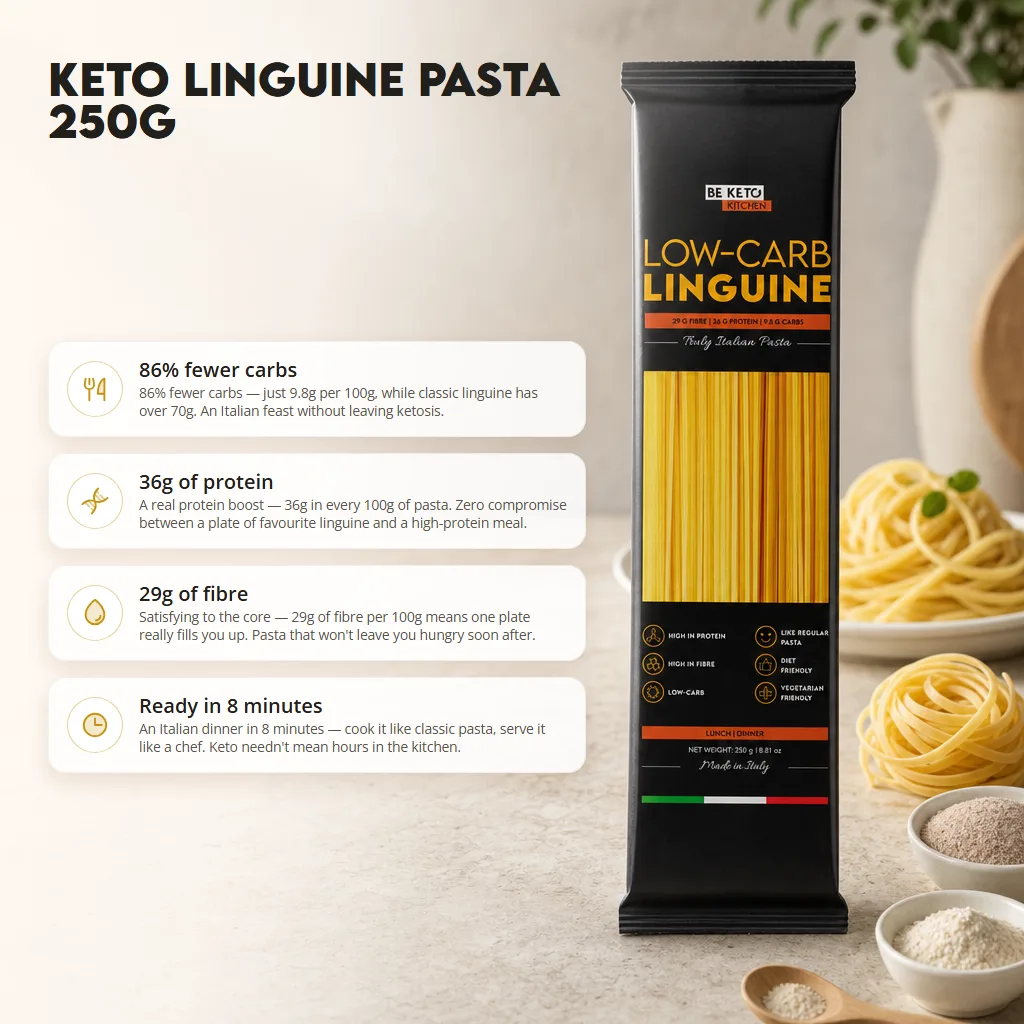
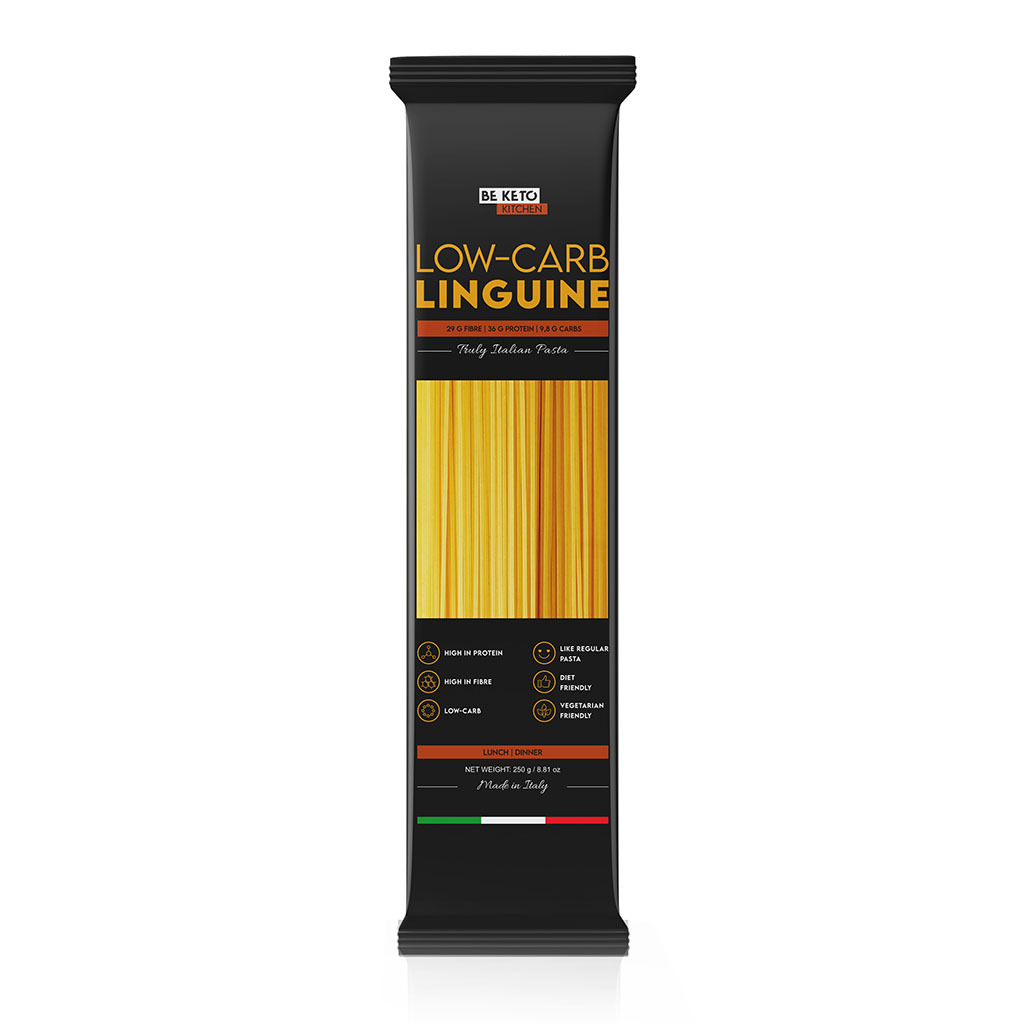
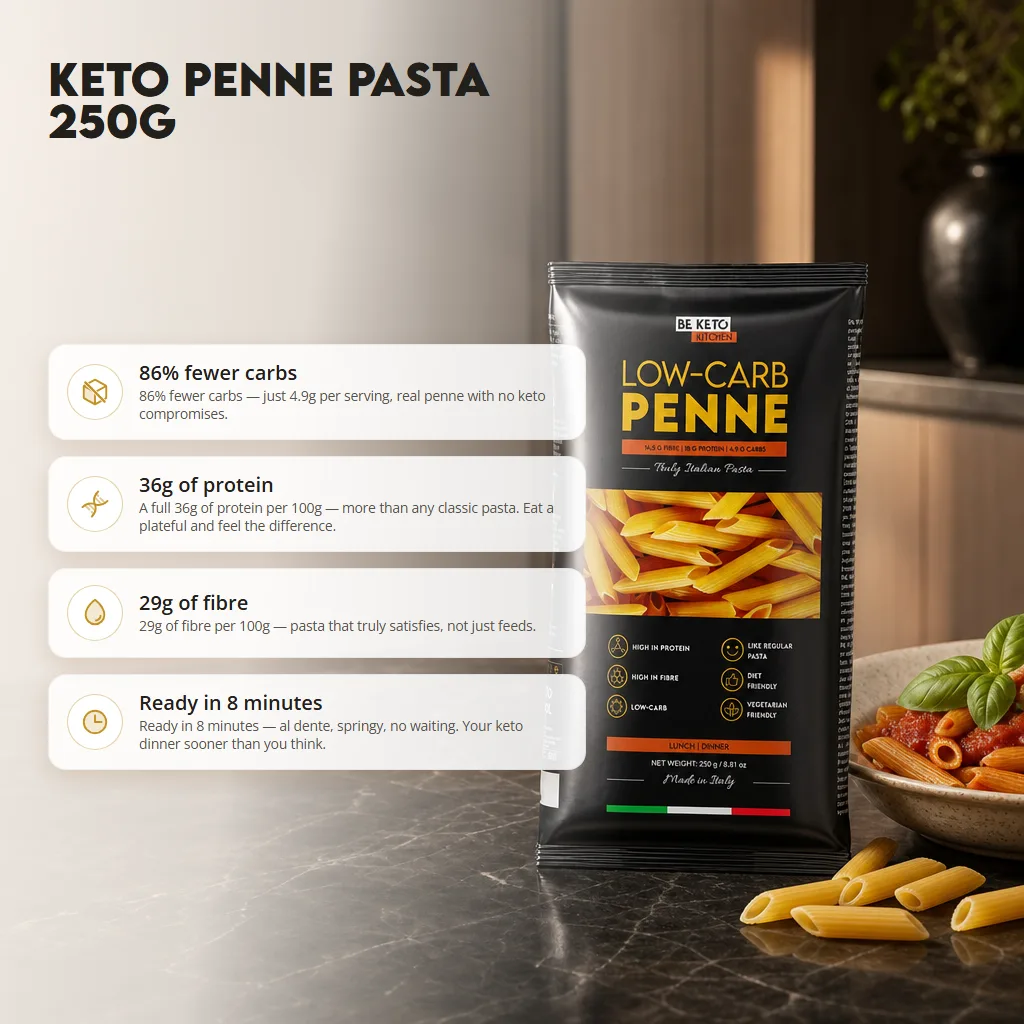
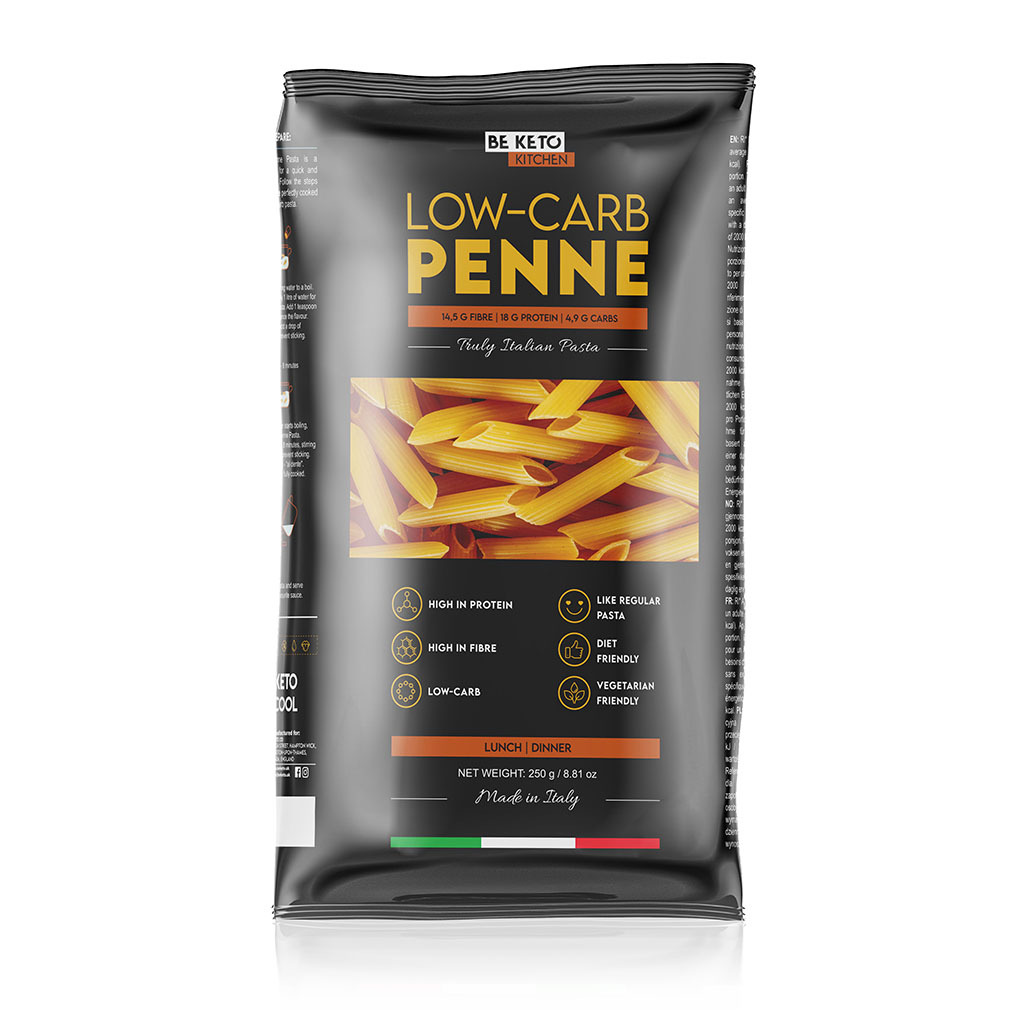
Two recipes clear the bar on this page. Organic Konjac Spaghetti and Organic Konjac Fettuccine declare 1.3 g of carbohydrate per 100 g. Keto Linguine and Keto Penne declare 9.8 g per 100 g, with 29 g of fibre and 36 g of protein alongside it.
A 100 g plate of konjac pasta therefore costs 1.3 g of your daily carbohydrate, and a 50 g portion of Keto Penne costs 4.9 g. Whether that fits depends on how many carbs you can eat on keto, which most people set between 20 g and 50 g a day.
Is low carb pasta ever truly zero carb?
No low carb pasta sold in the UK is zero carb. The lowest figure on this page is 1.3 g of carbohydrate per 100 g, printed on the Organic Konjac Spaghetti and Fettuccine label.
British labels leave fibre out of the carbohydrate line, so 1.3 g is already the net figure rather than a gross one. The same rule puts Keto Linguine and Keto Penne at 9.8 g instead of the 38.8 g you would reach by counting their 29 g of fibre in.
That distinction decides whether a plate fits your day, and our guide to what net carbohydrates are works through it with the same numbers.
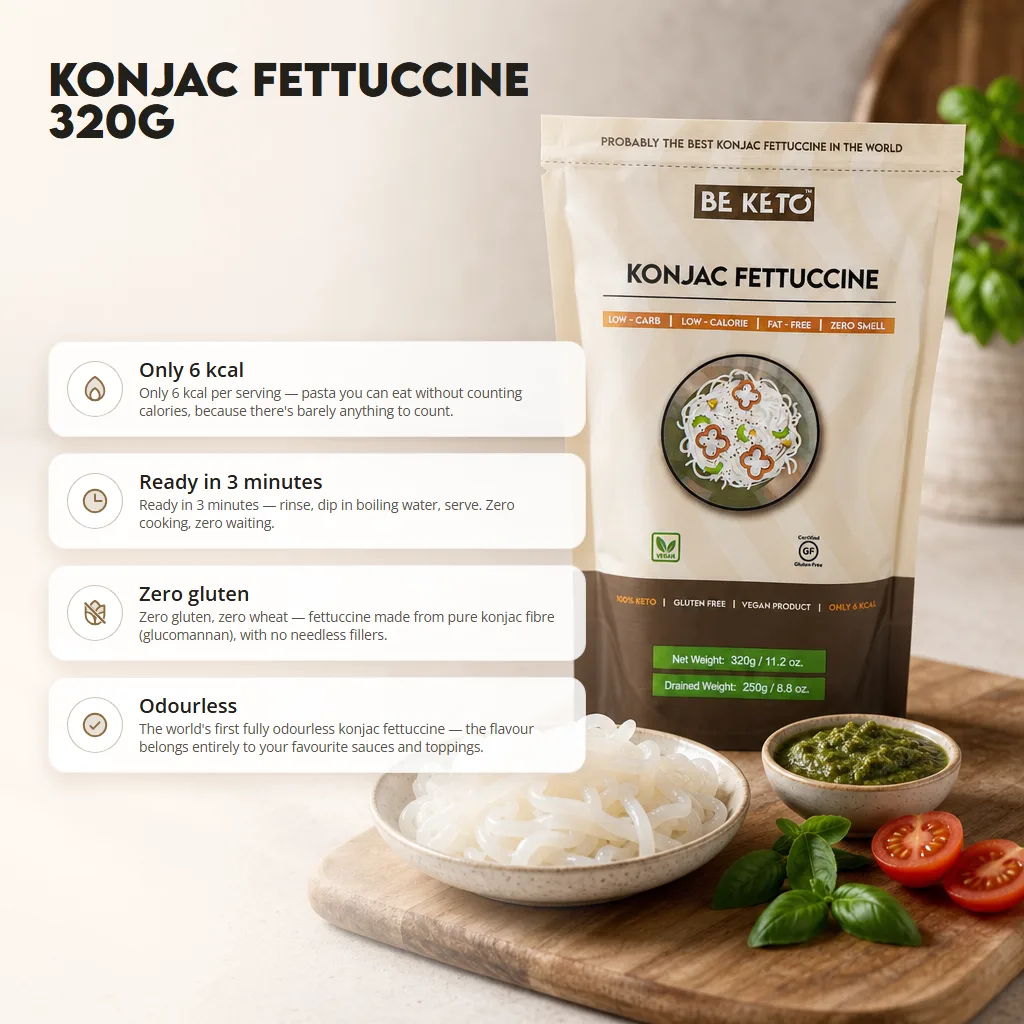
Scale it to a real plate rather than to 100 g. A drained 320 g pack leaves 250 g of konjac noodles, which comes to 15 kcal and 3.3 g of carbohydrate.
Which keto pasta is best for you: konjac or protein?
The best keto pasta is konjac when calories decide and protein pasta when texture decides. Both are on this page, and the two labels make the trade plain.
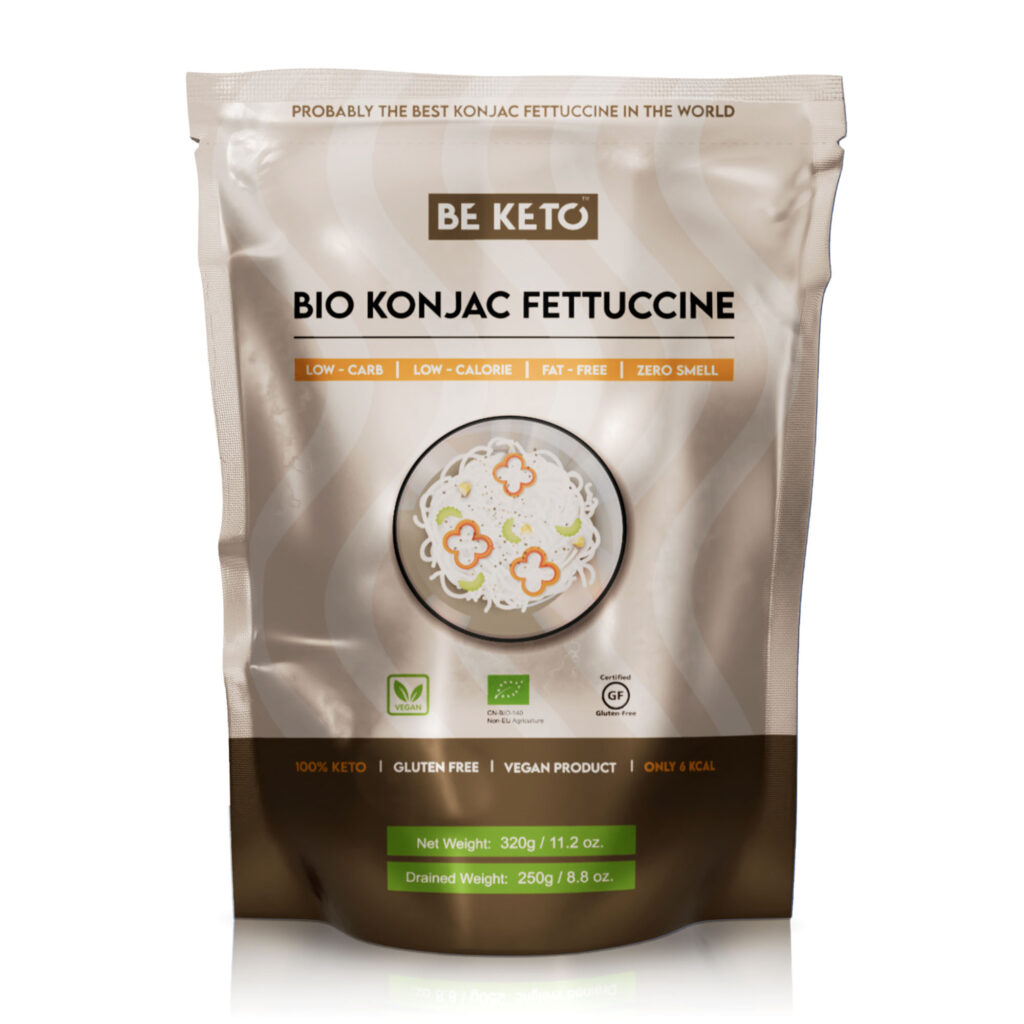
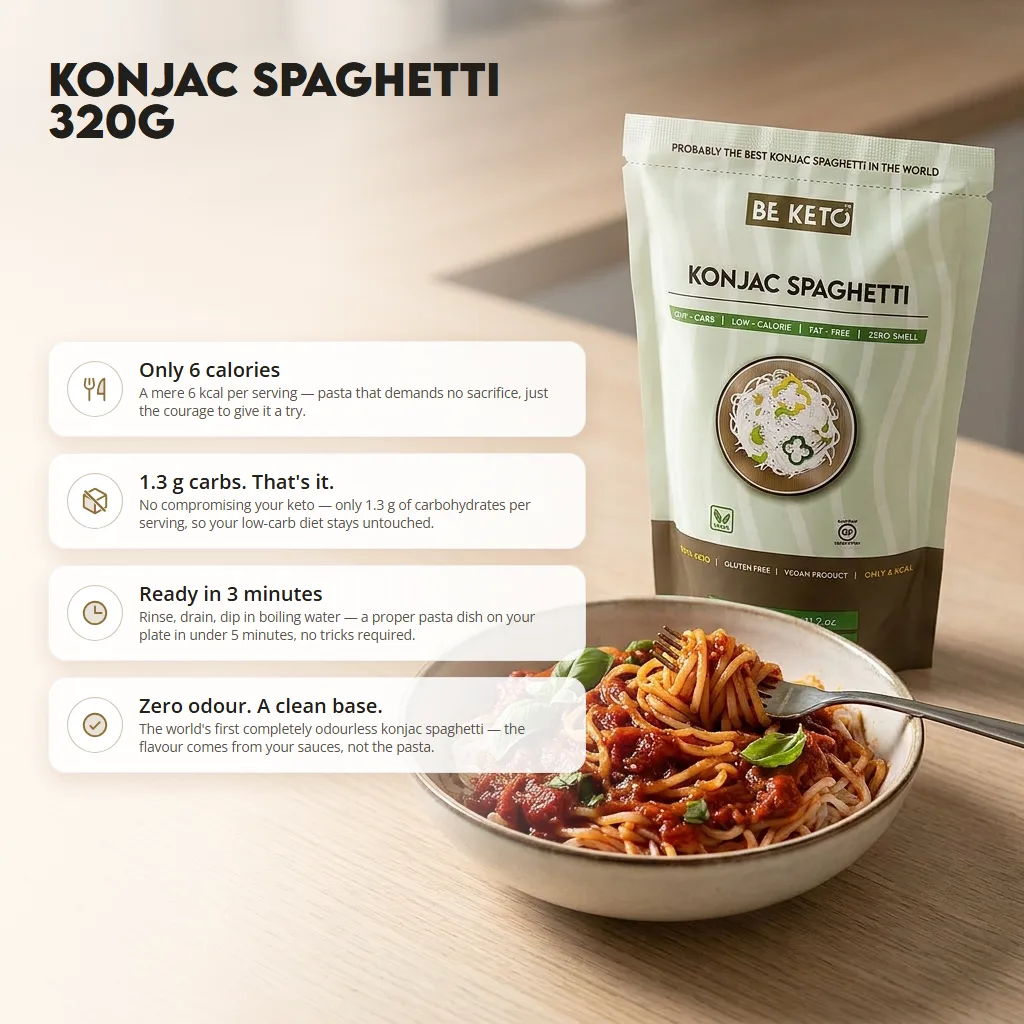
Organic Konjac Spaghetti and Organic Konjac Fettuccine declare 6 kcal and 1.3 g of carbohydrate per 100 g, with under 0.1 g of protein. Both carry organic certification, and the same root sets the gel in our konjac jelly pouches.
Keto Linguine and Keto Penne declare 284 kcal, 36 g of protein, 29 g of fibre and 9.8 g of carbohydrate per 100 g. That is 47 times the energy of konjac pasta, and it buys a firm al dente bite.
Price runs the same way. A 320 g pack of konjac pasta costs £3.99, which works out at £1.60 per 100 g drained. A 250 g pack of Keto Linguine or Keto Penne costs £6.99, or £2.80 per 100 g.
Shape is the last choice: spaghetti and fettuccine in konjac, linguine and penne in the protein and fibre recipe.
Is keto pasta gluten free?
Only the konjac pasta is free from gluten ingredients: water, organic konjac powder and citric acid. Keto Linguine and Keto Penne are not.
Both wheat pastas list wheat protein, wheat flour and oat protein, so gluten is in the recipe rather than a trace. They also list egg white, which makes them suitable for vegetarians but not for vegans.
The Keto Penne label reads pea protein, oat protein, wheat protein, egg white, psyllium husk, rice protein and wheat flour. The Keto Linguine label adds curcuma fibre and rice flour to that list.
The factory declaration goes wider. Both labels say the pasta is produced in a facility that also processes nuts, sesame, eggs, milk, gluten, oats and soya, with lupins named on Keto Linguine and legumes on Keto Penne.
If you avoid gluten or eggs, the konjac pasta is the one to read. Three ingredients, none of them a cereal and none of them from an animal.
How much fibre does a portion of keto pasta carry?
A 100 g portion of Keto Linguine or Keto Penne carries 29 g of fibre. That is close to the 30 g a day the NHS suggests for adults.
The Keto Penne label prints a second column for a 50 g portion: 14.5 g of fibre, 18 g of protein, 4.9 g of carbohydrate and 142 kcal. The Keto Linguine label quantifies 100 g instead, which is why the two packs look different.
If your usual diet is light on fibre, start at the 50 g portion rather than the 100 g one. Twenty nine grams in a single sitting is a long step up from a plate of ordinary pasta.
Konjac pasta sits at the other end of the shelf, at 0.5 g of fibre per 100 g and 1.25 g in a whole drained pack. It is there for the calorie count, not for the fibre.
How do you cook keto pasta?
Keto Linguine and Keto Penne take 8 minutes in boiling salted water, konjac pasta 3 minutes. The two recipes are handled differently, and the konjac one is where people go wrong.
For Keto Linguine and Keto Penne, use one litre of salted water per 100 g of pasta. Boil for 7 to 8 minutes for al dente, or 9 to 10 minutes if you prefer it softer, then drain and add the sauce.
Konjac pasta arrives packed in liquid. Drain it and rinse the strands, then hold them in boiling water for 2 to 3 minutes, drain again and dress them straight away.
Konjac carries no flavour of its own, so the sauce does all the work. Both recipes take the same sauces, and our keto carbonara recipe works with either.
Where can I find keto pasta in the UK?
BeKeto sells its keto pasta direct from beketo.uk and ships across the United Kingdom. It is not stocked in Tesco, Asda or on Amazon.
Supermarket keto ranges in the UK usually stop at konjac noodles, and the Amazon listings that come up on this search belong to other brands. We sell ours ourselves, from this shop.
Buying here means the label travels with the product. Every figure quoted on this page, from 1.3 g of carbohydrate to 36 g of protein, is printed on the pack that reaches you.
Order Organic Konjac Spaghetti or Fettuccine at £3.99 for a 320 g pack, or Keto Linguine and Keto Penne at £6.99 for 250 g, with delivery across the United Kingdom.
Frequently asked questions
What is a keto substitute for pasta?
Konjac spaghetti and fettuccine. Both declare 1.3 g of carbohydrate per 100 g and go from pack to plate in 3 minutes. Courgette ribbons and egg and cheese doughs work too, but those are dishes you make rather than pasta you boil.
Are keto noodles the same as shirataki?
Keto noodles and shirataki both mean konjac. Low carb noodles is the third name for the same thing. The strands are made from the glucomannan fibre in konjac root mixed with water, which is why Organic Konjac Spaghetti lists water, organic konjac powder and citric acid.
What is keto pasta made of?
Keto Penne and Keto Linguine are protein pasta. Their labels list pea protein, oat protein, wheat protein, egg white, psyllium husk, rice protein and wheat flour, with curcuma fibre and rice flour added on Keto Linguine. The konjac pasta has three ingredients: water, organic konjac powder and citric acid.
Is keto pasta vegan?
Only the konjac pasta is vegan. Keto Linguine and Keto Penne list egg white, so they are suitable for vegetarians instead. Organic Konjac Spaghetti and Fettuccine contain water, organic konjac powder and citric acid, and nothing from an animal.
How many carbohydrates are in a portion of keto pasta?
4.9 g in a 50 g portion. That is the second column on the Keto Penne label, next to 9.8 g per 100 g. Keto Linguine quantifies a 100 g serving, so its portion figure is 9.8 g. Konjac pasta gives 1.3 g per 100 g.
Does konjac pasta smell?
Organic Konjac Spaghetti and Fettuccine are odourless. Rinsing the strands after draining clears the packing liquid, and 2 to 3 minutes in boiling water finishes the job before the sauce goes on.
Is keto pasta high in protein?
Yes, 36 g of protein per 100 g. That is 144 of the 284 kcal in Keto Linguine and Keto Penne, so just over half the energy comes from protein. Protein contributes to the maintenance of muscle mass. Konjac pasta has under 0.1 g of protein per 100 g.
Can you buy BeKeto keto pasta in Tesco, Asda or on Amazon?
No, only at beketo.uk. We sell it direct and deliver across the United Kingdom. Supermarket keto ranges usually stop at konjac noodles, and the Amazon listings on this search belong to other brands.
 United KingdomCurrent regionDelivery within the United KingdomCurrency: Pound Sterling (£)
 GermanyDelivery within Germany and AustriaCurrency: Euro (€)
 FranceDelivery within France and BelgiumCurrency: Euro (€)
 ItalyDelivery within ItalyCurrency: Euro (€)
 PolandDelivery within Poland and EuropeCurrency: Zloty (PLN)
 Czech RepublicDelivery within the Czech Republic and SlovakiaCurrency: Czech Koruna (Kč)
 SpainDelivery within SpainCurrency: Euro (€)