Why and when is the measurement of ketones performed?
Measuring ketone bodies allows you to be sure whether your body has already gone through the adaptation process and is in a state of ketosis. Regular measurement of ketones also allows you to determine the depth of ketosis, which is important for monitoring your progress and adjusting your diet. Ketones, also known as ketone bodies, are organic chemical compounds formed by the breakdown of fatty acids in the liver. They are an alternative source of energy for the body in the event of glucose deprivation, among other things. During a ketogenic diet or in situations where the body does not have enough glucose, the liver starts to intensively convert fats into ketones. Ketone bodies are transported through the blood and provide alternative fuel for the brain and other organs[1]
What are the methods for measuring ketone bodies?
Measuring ketones from the blood
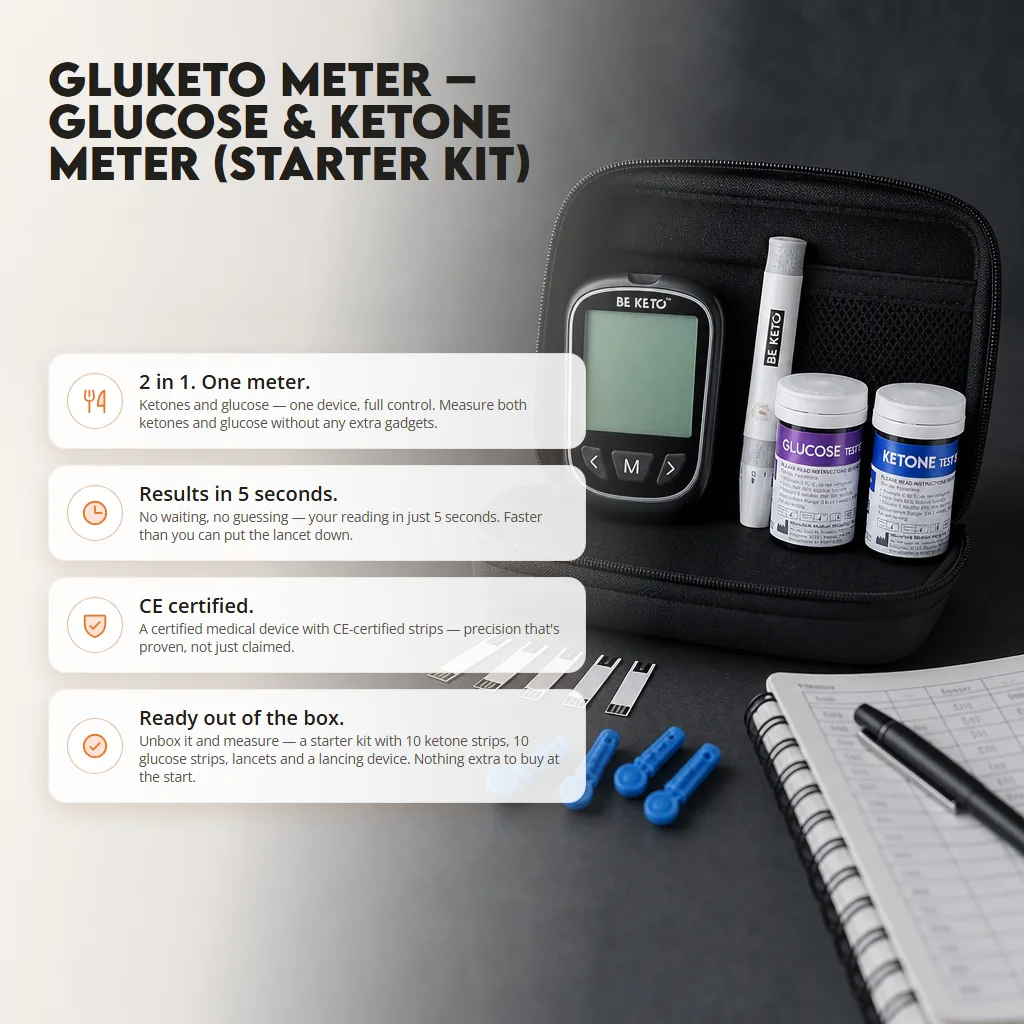
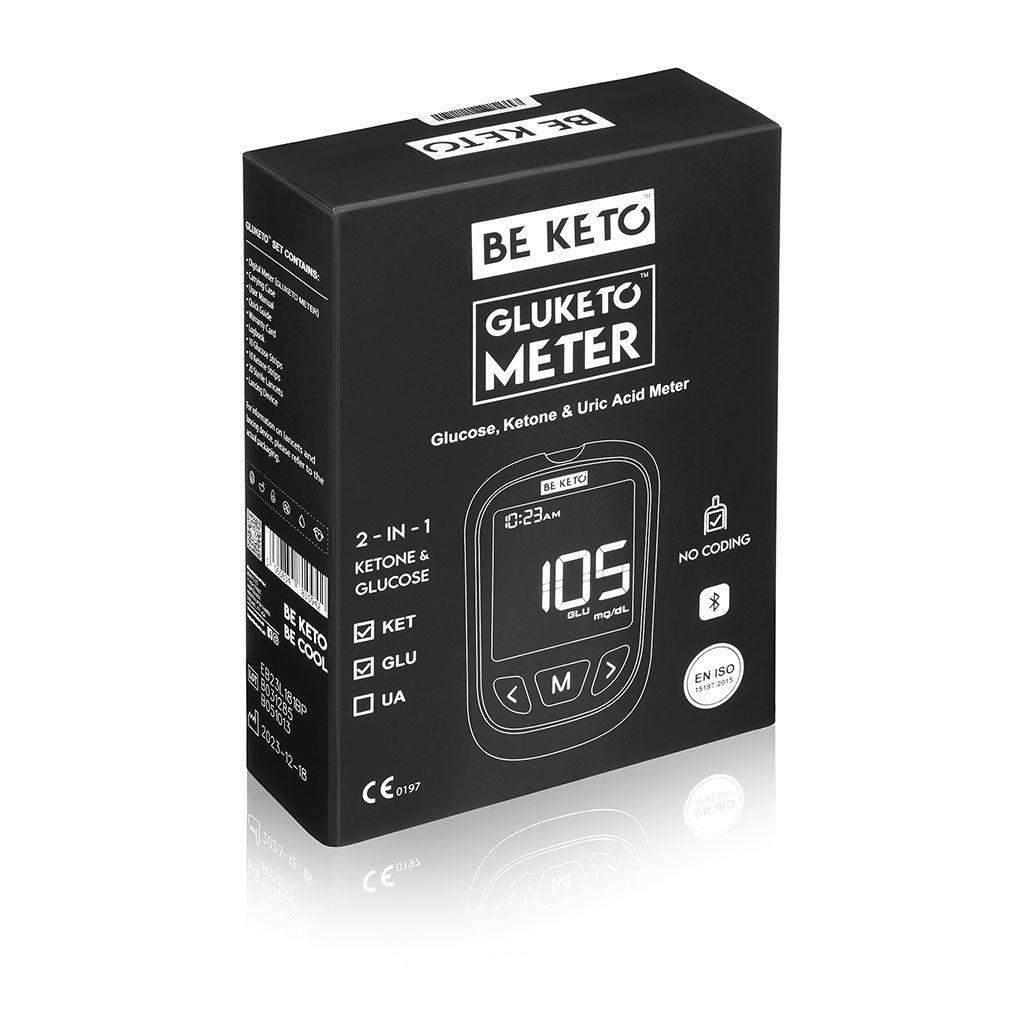
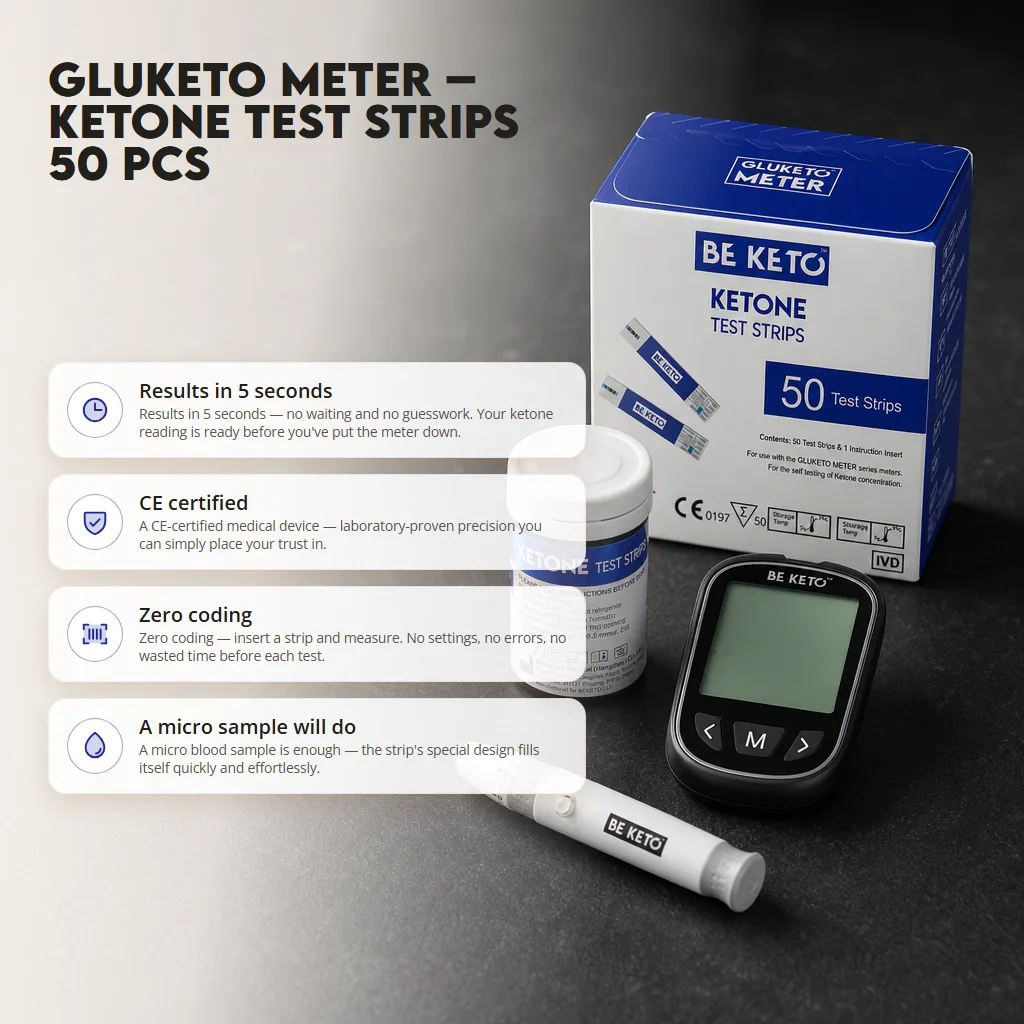
Measuring the level of ketone bodies using the blood method is considered the most reliable and accurate way to assess the body's ketosis. It can be performed on your own, under home conditions. The necessary tools are a ketone meter, which is a starter device to measure ketones and glucose, and a set of ketone measurement strips.
The procedure is similar to measuring blood sugar levels and requires the following steps:
- Insert the appropriate test strip into the device.
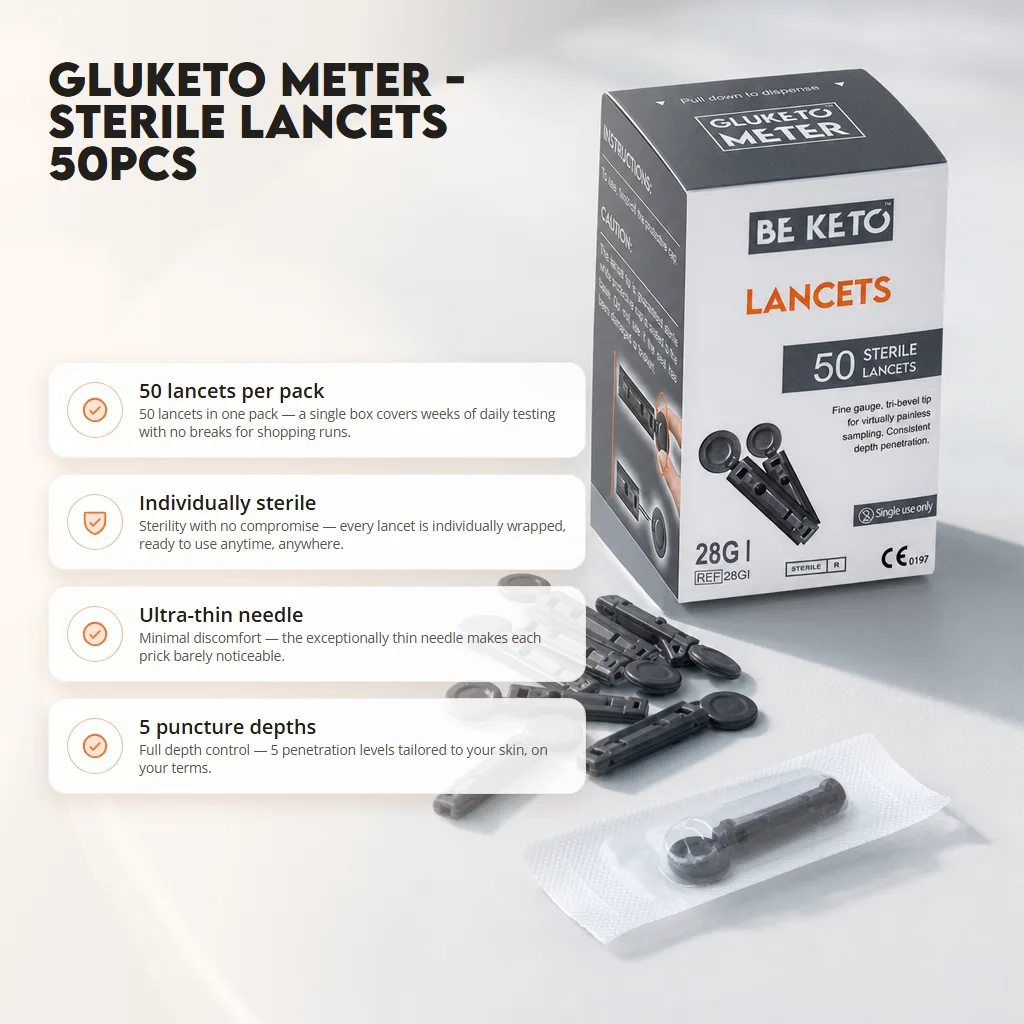
- Use the puncture device to take a blood sample for measurement.
- Place the blood sample inside the prepared test strip in the device and wait for the result.
- Read the result, which will appear on the display of the device.
Measurement of ketones from urine
The testing of ketone bodies by means of measurement from urine is an alternative to measurement from blood, offering an equally rapid way of monitoring the body's ketosis status. Strips for measuring ketones from urine are readily available and relatively less expensive.
The procedure for measuring ketone bodies from urine is as follows:
- Take a urine sample into a special cup, preferably in the morning after waking up, as the highest amounts of ketones are secreted during this period.
- Dip the end of the ketone strip into the urine, according to the manufacturer's instructions. Make sure the strip is well soaked.
- Wait for the result
- Compare the colour on the strip with the referring colours on the strip pack. The colour of the strip corresponds to the level of ketones in the urine.
Measuring ketones from breath
The method of measuring ketone bodies by breath is based on the analysis of acetone levels in exhaled air. It is an alternative way of monitoring the body's ketosis status that does not require puncture or blood sampling.
The procedure for measuring ketones by breath is as follows:
- According to the manufacturer's instructions, prepare the device for measurement.
- Breathe in and out into the device as instructed. The device analyses the chemical composition of the exhaled air, including the level of acetone.
- Wait for the result to be read on the device display. The result is usually expressed in units that reflect the level of acetone in the body.
- The measurement result indicates the level of acetone in the body, which can be an indicator of a state of ketosis. The higher the acetone level, the more likely the body is in a fat-burning state.
What is the normal level of ketones in the body in a state of ketosis?
The normal level of ketones in the blood is an important indicator for those following a ketogenic diet. The range to aim for is between 0.5 and 3.0 mmol/L blood, with the optimum value being around 1.5 mmol/L blood and 3.0 mmol/L blood being too high and not recommended, representing a risk of ketoacidosis. During the adaptation process, ketone levels may be higher for some time. However, it is important to adjust the standard individually, as every body reacts slightly differently. In order for ketosis to be measured correctly regularity of measurement is key , so it is advisable to measure ketone levels under the same conditions every day. The measurement is expressed in millimoles per litre (mmol/L)
The following levels of ketone bodies are assumed:
- Negative: less than 0.5 mmol/L.
- Low to moderate: 0.6 to 1.5 mmol/L
- High: 1.6 to 3.0 mmol/L
- Very high: More than 3.0 mmol/L


 United KingdomCurrent regionDelivery within the United KingdomCurrency: Pound Sterling (£)
 GermanyDelivery within Germany and AustriaCurrency: Euro (€)
 FranceDelivery within France and BelgiumCurrency: Euro (€)
 ItalyDelivery within ItalyCurrency: Euro (€)
 PolandDelivery within Poland and EuropeCurrency: Zloty (PLN)
 Czech RepublicDelivery within the Czech Republic and SlovakiaCurrency: Czech Koruna (Kč)
 SpainDelivery within SpainCurrency: Euro (€)