How is organic coffee certified in the UK?
Organic coffee sold in the UK is certified twice, at the farm and again at the roastery. An approved control body inspects each site once a year and issues the code that appears on the pack.
Certification is a rule about method rather than about taste. It bans synthetic pesticides and synthetic fertilisers on the land, restricts what may be used in processing, and sets a conversion period before a farm may sell its crop as organic at all.
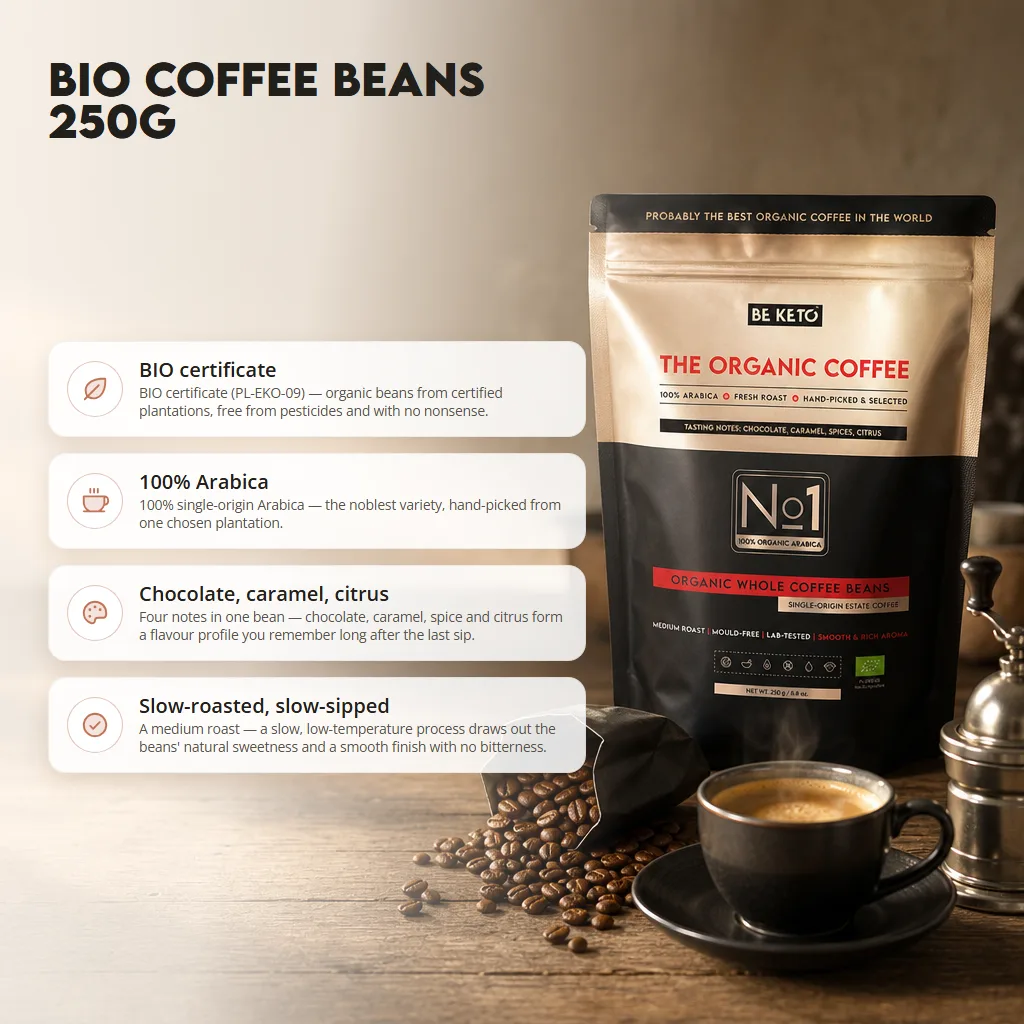
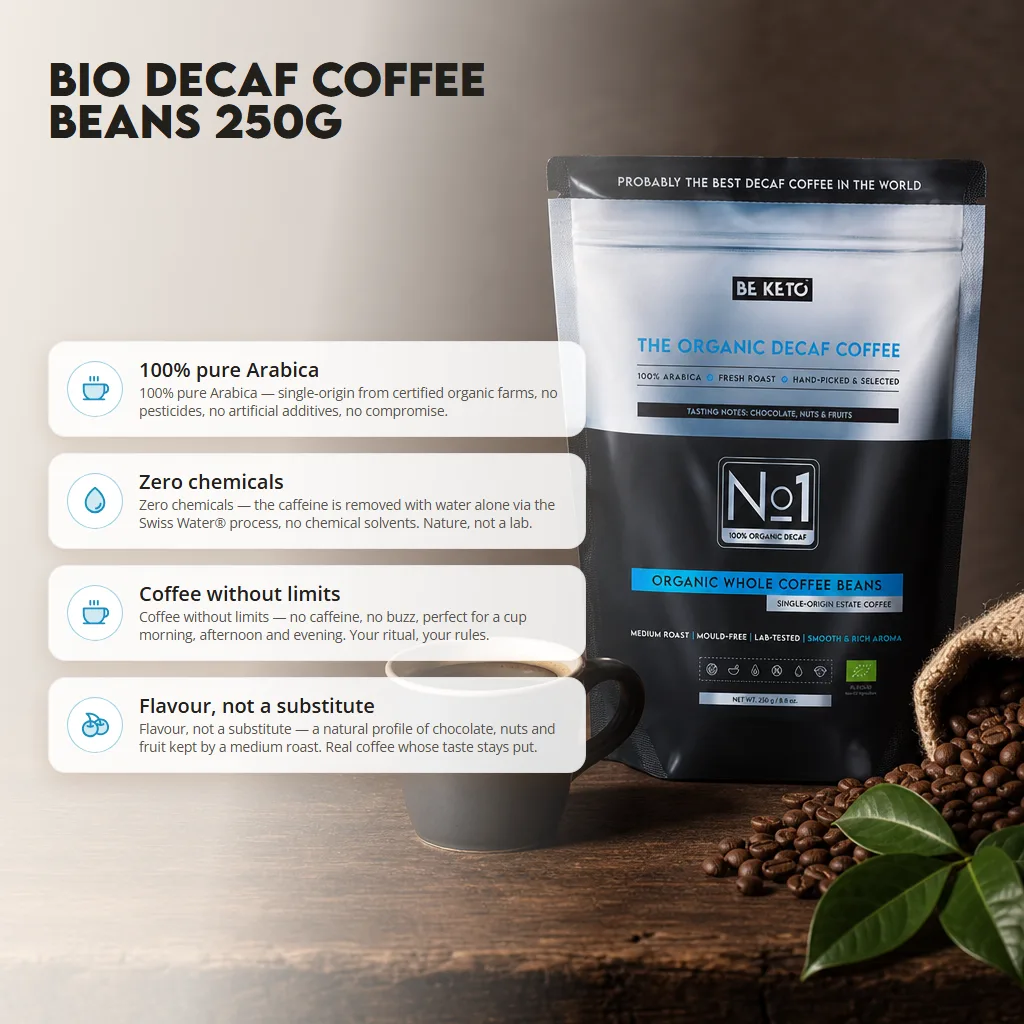
Both coffees on this shelf are sold as organic and BIO certified. The code of the control body belongs on the packaging itself, so read it from the bag you receive rather than from a category page.
Organic certification covers the crop, not the cup. It tells you how the coffee was grown and handled, and says nothing about roast level, grind size or flavour, which are decisions the roaster makes afterwards.
Which organic coffee beans should you choose?
There is no single best organic coffee bean: you choose by caffeine, by roast level and by flavour notes. Those three questions settle the choice faster than any ranking does.
Roast level is the fork most people skip. Both coffees here are medium roast, which keeps some of the acidity of a light roast and some of the body of a dark one, and that middle position is what makes one bag work across espresso, filter and cafetiere.
Flavour notes are declared by the roaster, not added to the bag. They describe what the beans already taste of once roasted, so read them as a description of the cup rather than as an ingredient list.
Caffeinated or decaf?
The caffeinated pack carries notes of chocolate, caramel, spices and citrus at £12.90. The decaf, decaffeinated without chemical solvents, runs to chocolate, nuts and fruit at £13.90, and its beans come from a single farm.
Everything else on the two labels matches. Both are 250 g, both are whole bean, both are 100% Arabica and both are medium roast, so the decision is caffeine first and flavour notes second.
What does 100% Arabica mean in the cup?
100% Arabica means there is no Robusta in the bag, and Arabica is the milder of the two species. Both packs here are organic Arabica coffee, with no second species blended in.
Arabica carries less caffeine than Robusta and tastes rounder and less bitter, which is why speciality roasters work with it. Robusta grows faster and cheaper at lower altitudes, and it is commonly used to bulk out a blend.
Species and certification answer different questions. A coffee can be 100% Arabica and not organic, or certified organic and cut with Robusta, so a bag that is both has to say so twice on the label.
Why choose organic whole bean coffee over ground?
Organic whole bean coffee keeps its aromatic oils sealed inside the bean until you grind it. Ground coffee has already lost part of them before the bag is opened.
Grinding multiplies the surface in contact with air. A bean broken into grounds exposes many times more surface, so the aroma begins to fade from the minute the grinder stops, which is the argument for keeping the mill next to the kettle.
Whole beans also let one pack serve several brewing methods. Grind fine for espresso, medium for a filter and coarse for a cafetiere, and the same 250 g covers all three without a second purchase.
The trade off is kit. Whole beans need a grinder, and a burr grinder gives the even particle size that a blade one cannot, which matters most for espresso and least for a cafetiere.
How much does a cup of organic coffee cost?
A 250 g pack at 7 g a cup gives about 35 cups. That puts the caffeinated beans at roughly 36p a cup and the decaf at 39p.
Both figures come from the pack price divided by the cups a pack gives. £12.90 over 35 cups is 36p and £13.90 over 35 cups is 39p, so choosing decaf costs 3p a cup more.
A 7 g dose is the usual filter measure and it is the one used here. Pull a heavier 10 g scoop for espresso and the same pack gives 25 cups instead, which lifts the price per cup accordingly.
At a cup a day a 250 g pack lasts about five weeks. That is the useful way to read the shelf price, rather than as a single spend on a bag of beans.
Plain beans are not the only coffee in this shop. If you want coffee blended with mushrooms or adaptogens, our mushroom and adaptogenic coffee sits on a separate shelf, in instant and ground form.
Pick the caffeinated pack for chocolate, caramel, spice and citrus, or the decaf for chocolate, nuts and fruit, and order the 250 g pack with delivery across the UK.
Frequently asked questions
Are organic coffee beans better for you?
No health claim for coffee is authorised. The Great Britain register of authorised claims lists nothing for coffee or for caffeine, so nobody selling coffee here may tell you that organic beans are better for you. What certification changes is how the crop was farmed, not what the cup gives you.
Which coffees are pesticide free?
Certified organic coffee is grown without synthetic pesticides. That is a rule about the farming and about the yearly inspection behind it, not a residue test on the finished bag. If you want the bag itself tested, ask the seller for a laboratory report rather than reading the organic logo as one.
What is the difference between organic and Fairtrade coffee?
Organic certifies farming, Fairtrade certifies the price. Organic covers the growing method and the inspection behind it. Fairtrade covers what the grower is paid for the crop. Different bodies run the two schemes, so a bag of beans can carry one label, both or neither.
Where can you buy organic coffee beans in the UK?
From supermarkets, roasters and online shops. You can buy organic coffee from a supermarket, which stocks a few organic lines beside the rest of the coffee, from a specialist roaster, which carries most of the choice, or online from this shelf, where both 250 g packs ship across the UK.
Do these beans work in an espresso machine?
Yes, and in a cafetiere or filter too. Medium roast whole beans suit all three. Grind finer for espresso, medium for a filter and coarser for a cafetiere, and start from about 7 g a cup before adjusting to taste.
Do you sell 1 kg bags of organic coffee beans?
No, both coffees come in 250 g packs. A kilo of organic coffee beans therefore means four packs, which you can mix between the caffeinated and the decaf. Each pack gives about 35 cups at 7 g, so four of them come to roughly 140.
How should you store whole coffee beans?
Airtight, cool and out of daylight. Keep the bag sealed and grind only what you are about to brew. The fridge adds moisture rather than freshness, so a closed cupboard away from the hob keeps whole beans in better shape than the door shelf does.


 United KingdomCurrent regionDelivery within the United KingdomCurrency: Pound Sterling (£)
 GermanyDelivery within Germany and AustriaCurrency: Euro (€)
 FranceDelivery within France and BelgiumCurrency: Euro (€)
 ItalyDelivery within ItalyCurrency: Euro (€)
 PolandDelivery within Poland and EuropeCurrency: Zloty (PLN)
 Czech RepublicDelivery within the Czech Republic and SlovakiaCurrency: Czech Koruna (Kč)
 SpainDelivery within SpainCurrency: Euro (€)