OFFICIAL STORE IN THE UNITED KINGDOM


MCT Oils Powder
MCT powder, or MCT oil powder, is MCT oil carried on acacia fibre, a soluble fibre that turns liquid fat into a powder that mixes into cold drinks. BeKeto sells it in 300 g and 800 g tubs, unflavoured or flavoured, with a 10 g scoop. That scoop holds 7.1 g of fat in the organic unflavoured tub and 5.0 g to 5.6 g in the flavoured ones, 49 kcal to 69 kcal. Tubs from £27.90, scoops from 85p.
-
 Perfectly Digestible And Easily DigestedBESTSELLER
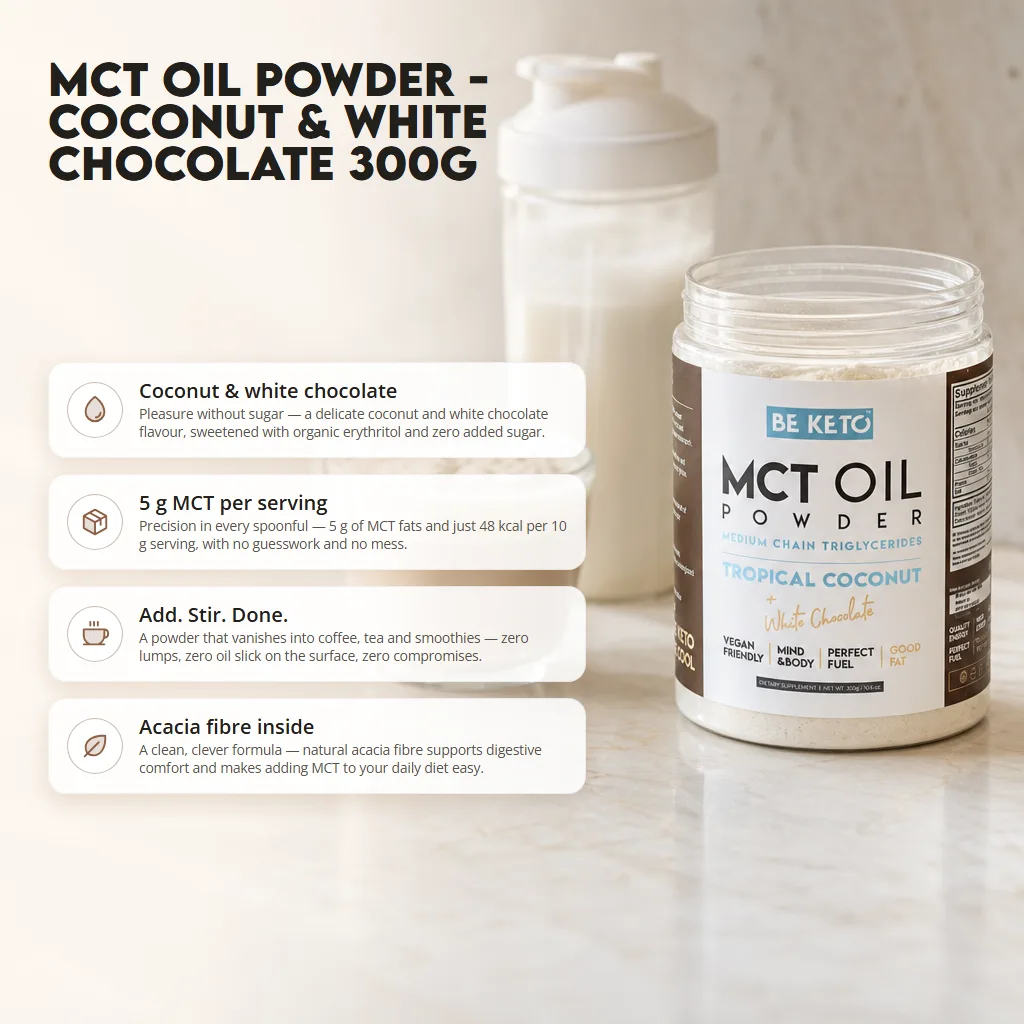
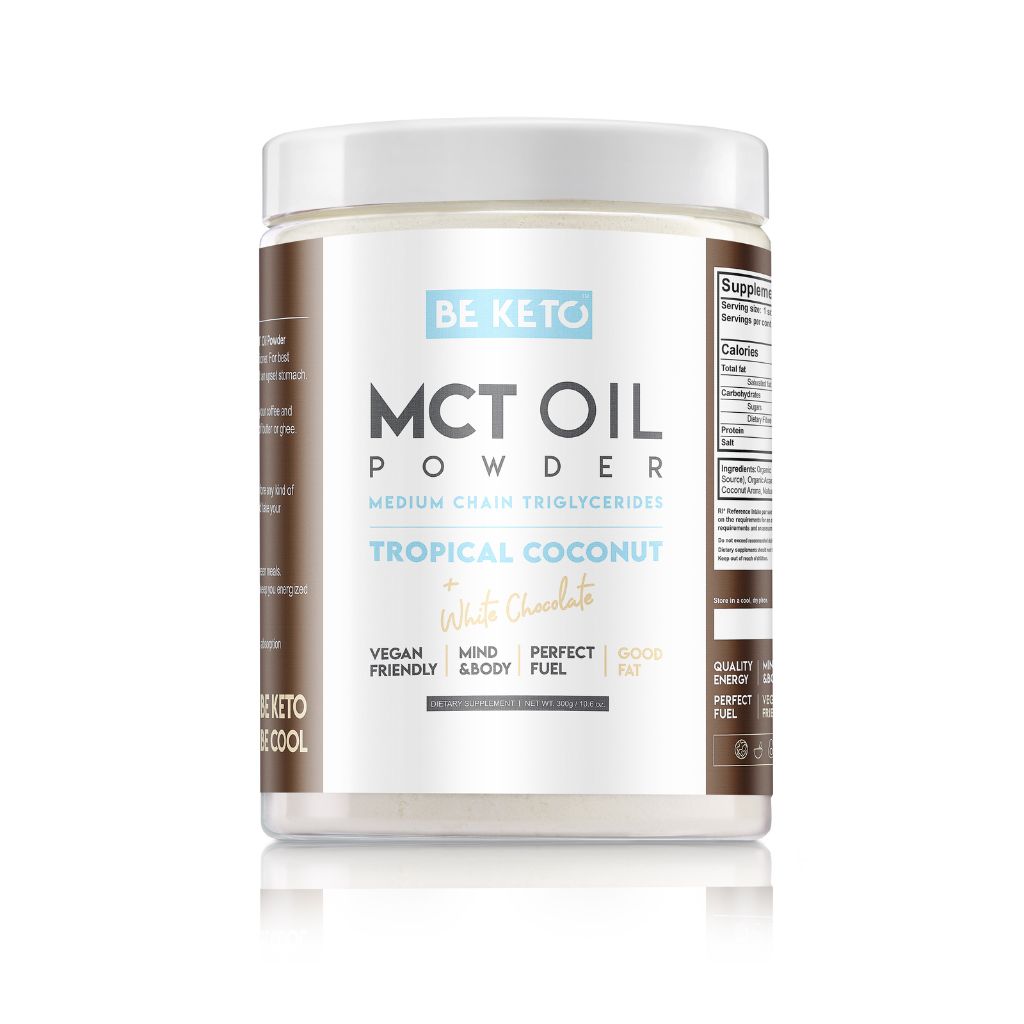
MCT Oil Powder – Coconut & White Chocolate 300g
£ 28.90 GBP✔ Supports the body in the production of ketones
✔ Provides a stable energy boost
✔ Ideal for beginners
✔ Reduces overall fatigue
-
 Perfectly Digestible And Easy To Digest
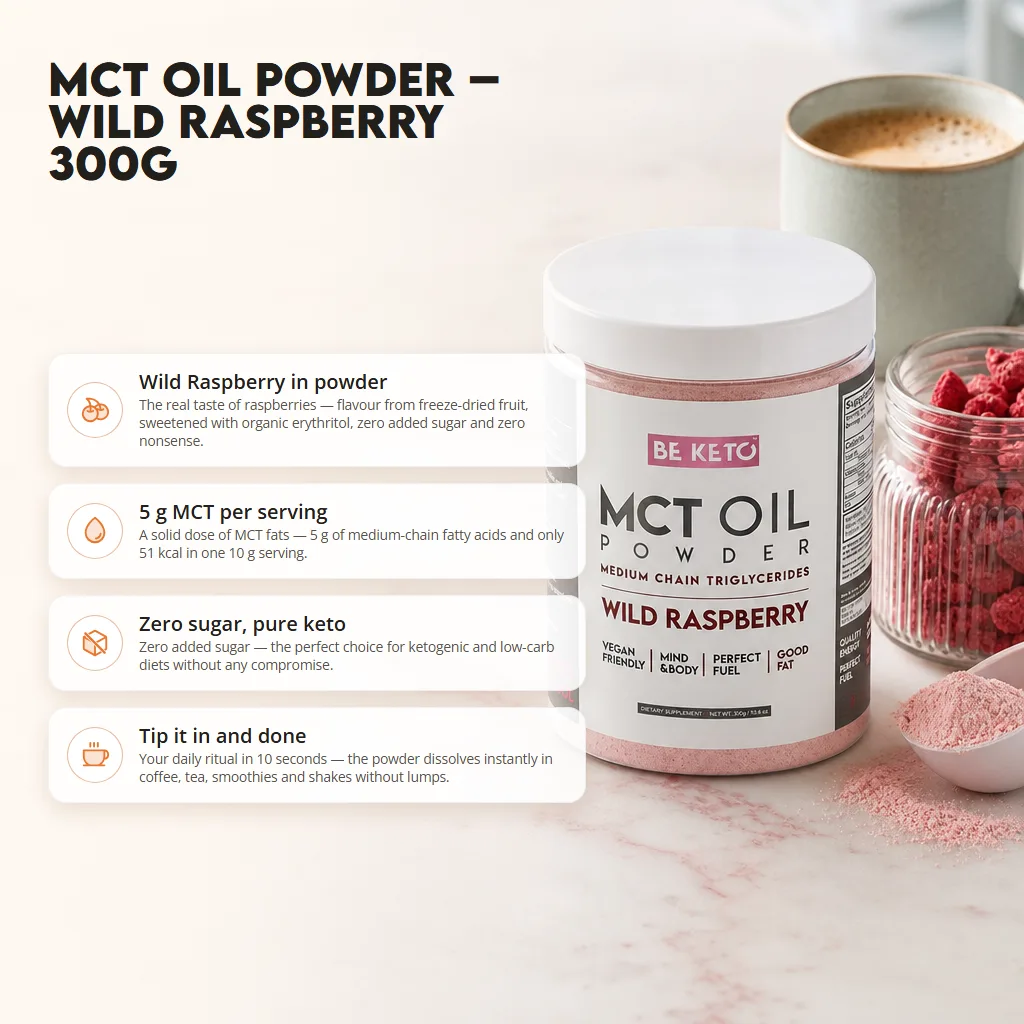
MCT Oil Powder – Wild Raspberry 300g
£ 28.90 GBP✔ Supports the body in the production of ketones
✔ As much as 5g of healthy fat per serving
✔ Ideal for beginners
✔ Reduces overall fatigue
-
 Perfectly Absorbable & Easily Digestible
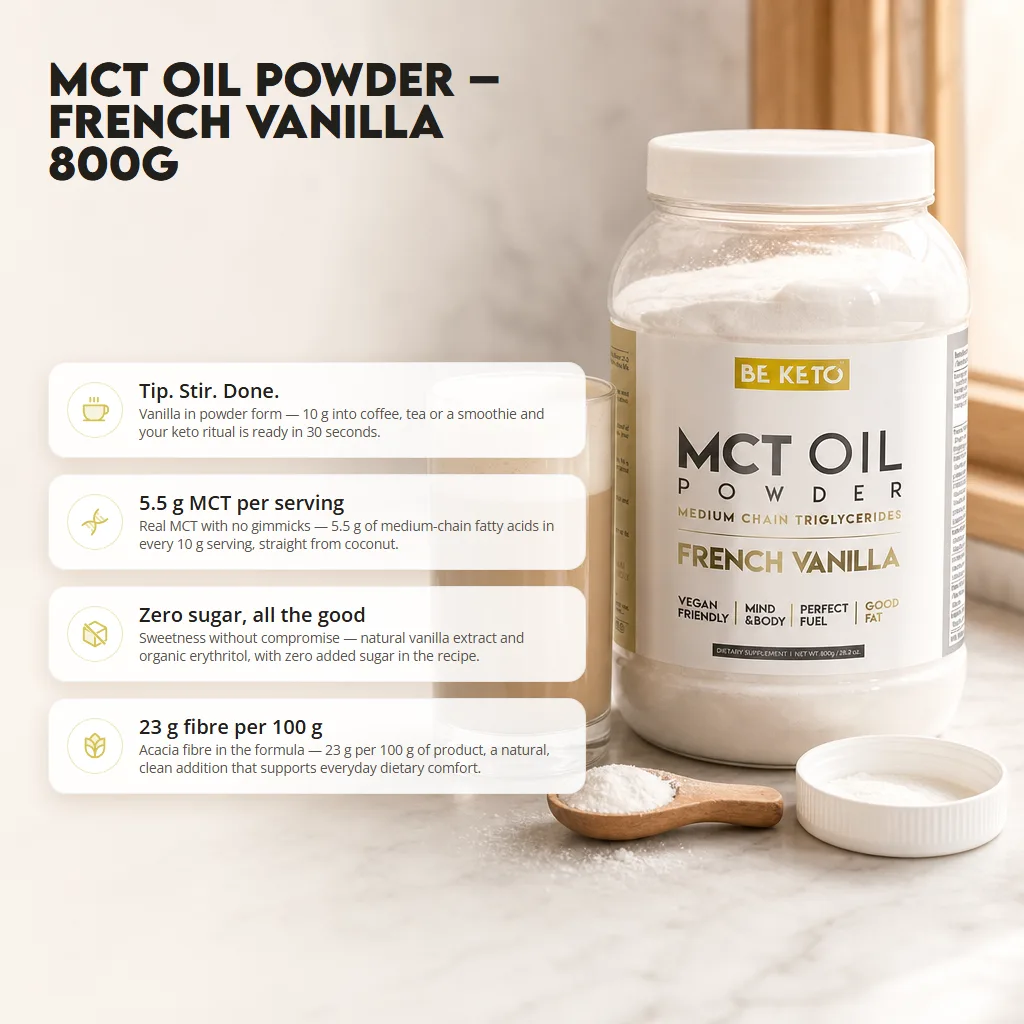
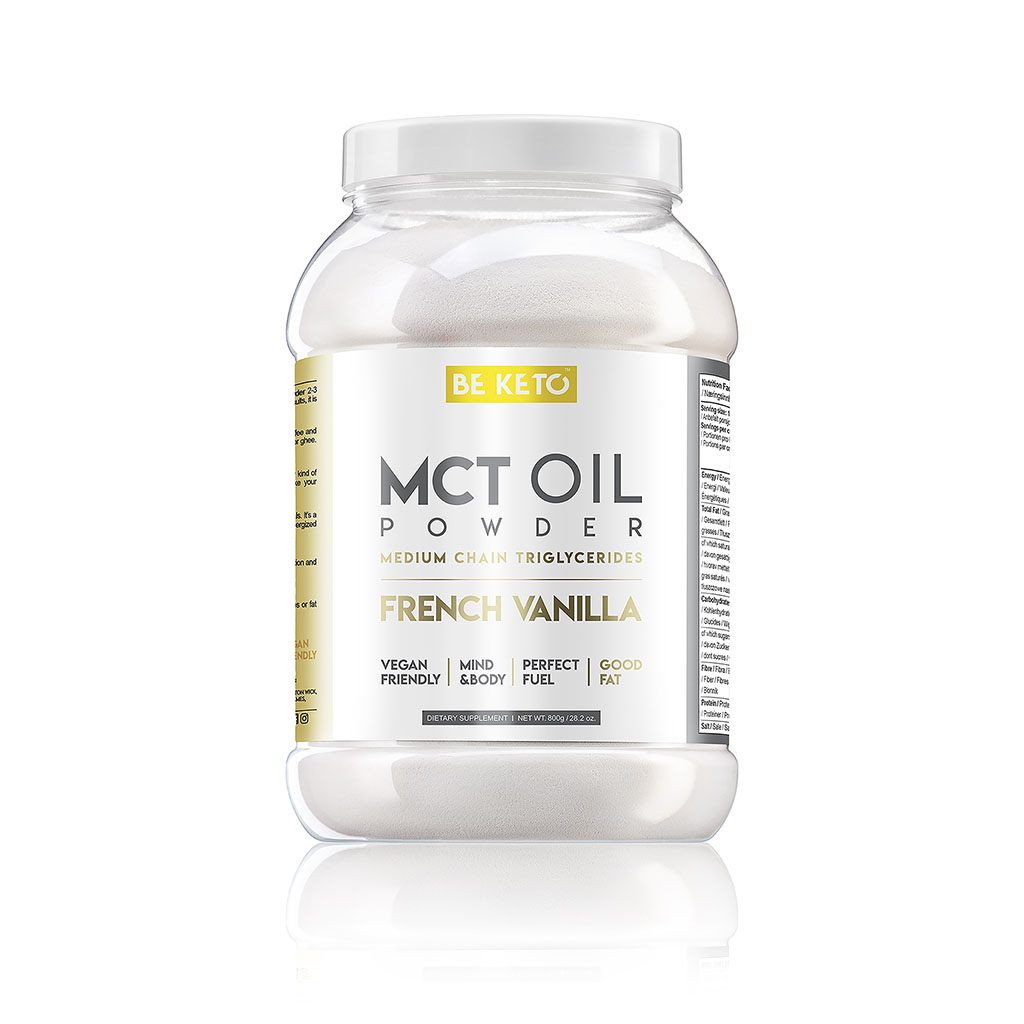
MCT Oil Powder – French Vanilla 800g
£ 67.90 GBP✔ Supports the body's production of ketones
✔ Provides a stable energy boost
✔ Improves concentration and memory
✔ Accelerates fat burning
✔ Reduces overall fatigue
-
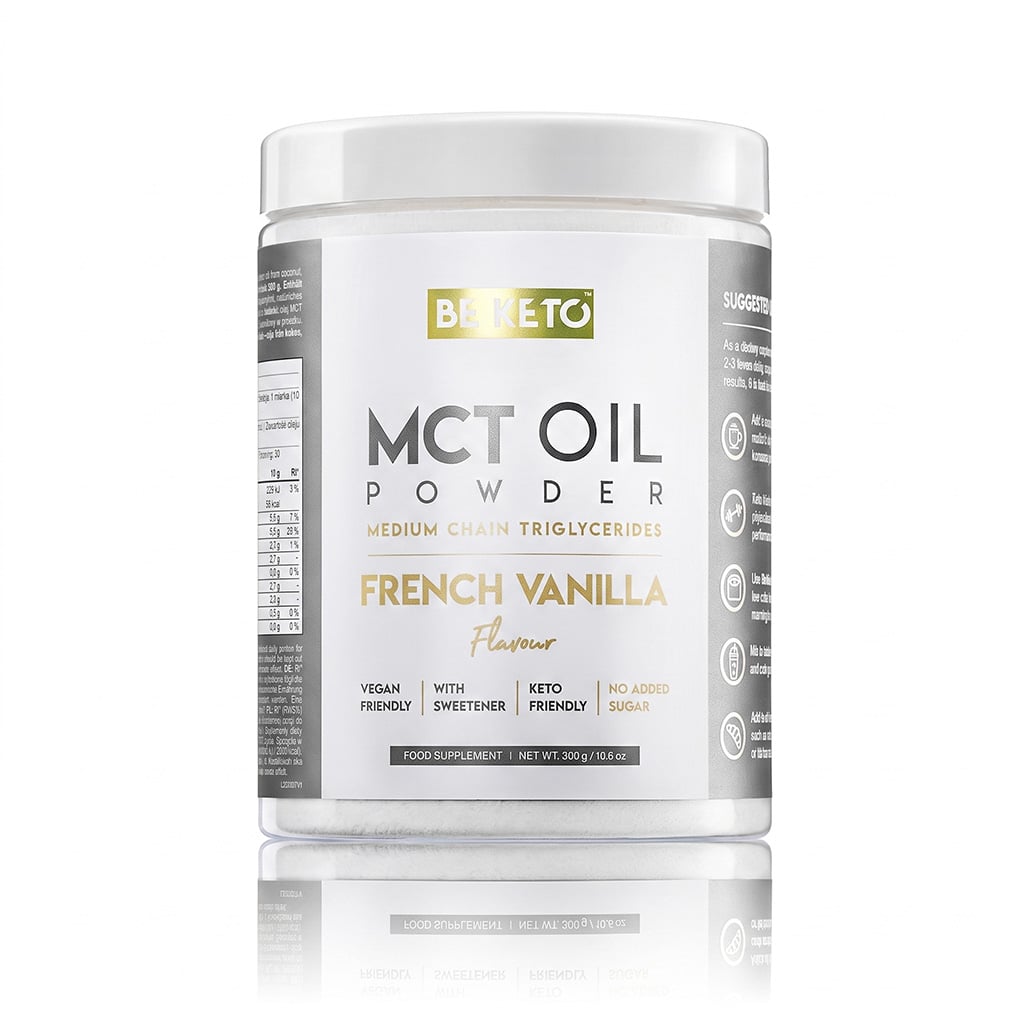 Perfectly Digestible And Easily DigestedBESTSELLER
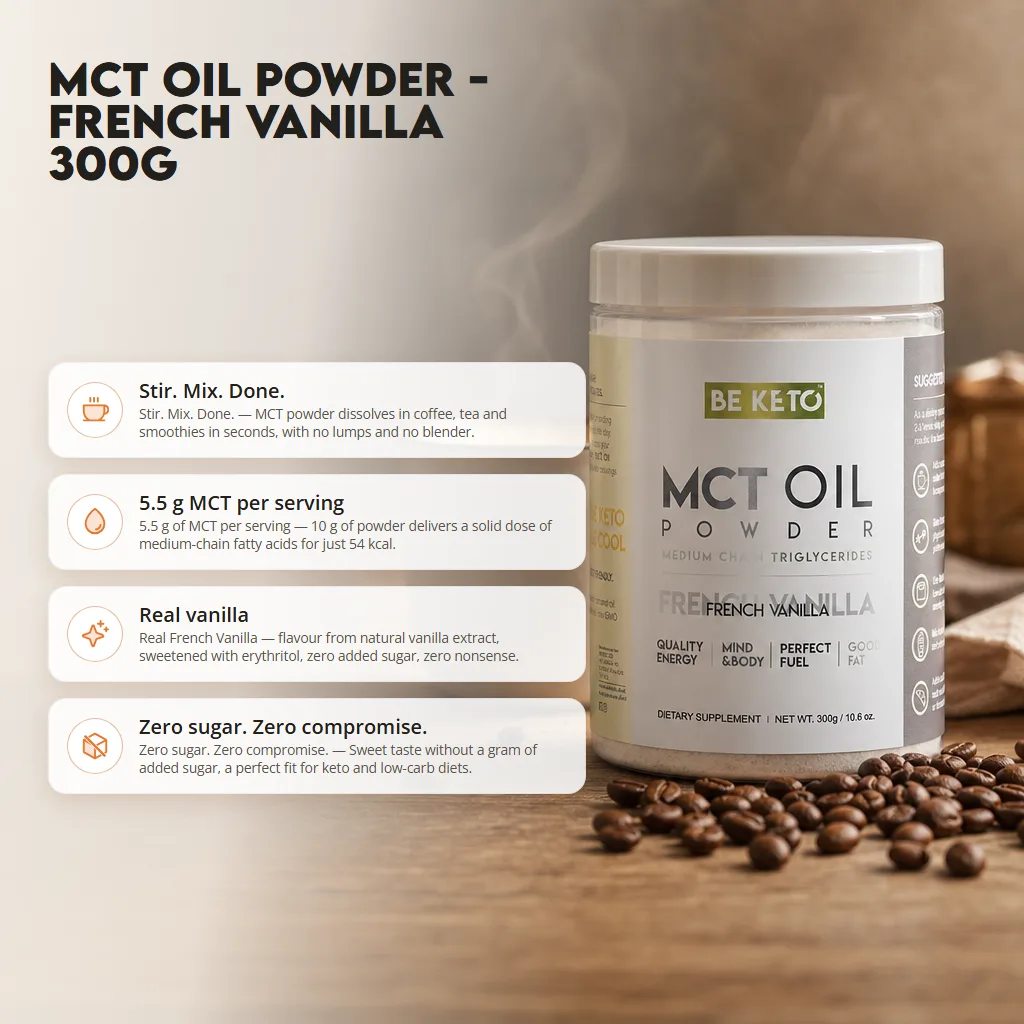
MCT Oil Powder – French Vanilla 300g
£ 28.90 GBP✔ Supports the body in the production of ketones
✔ Contains 7.5 g of healthy fats per serving
✔ Ideal for beginners
✔ Reduces general tiredness
-
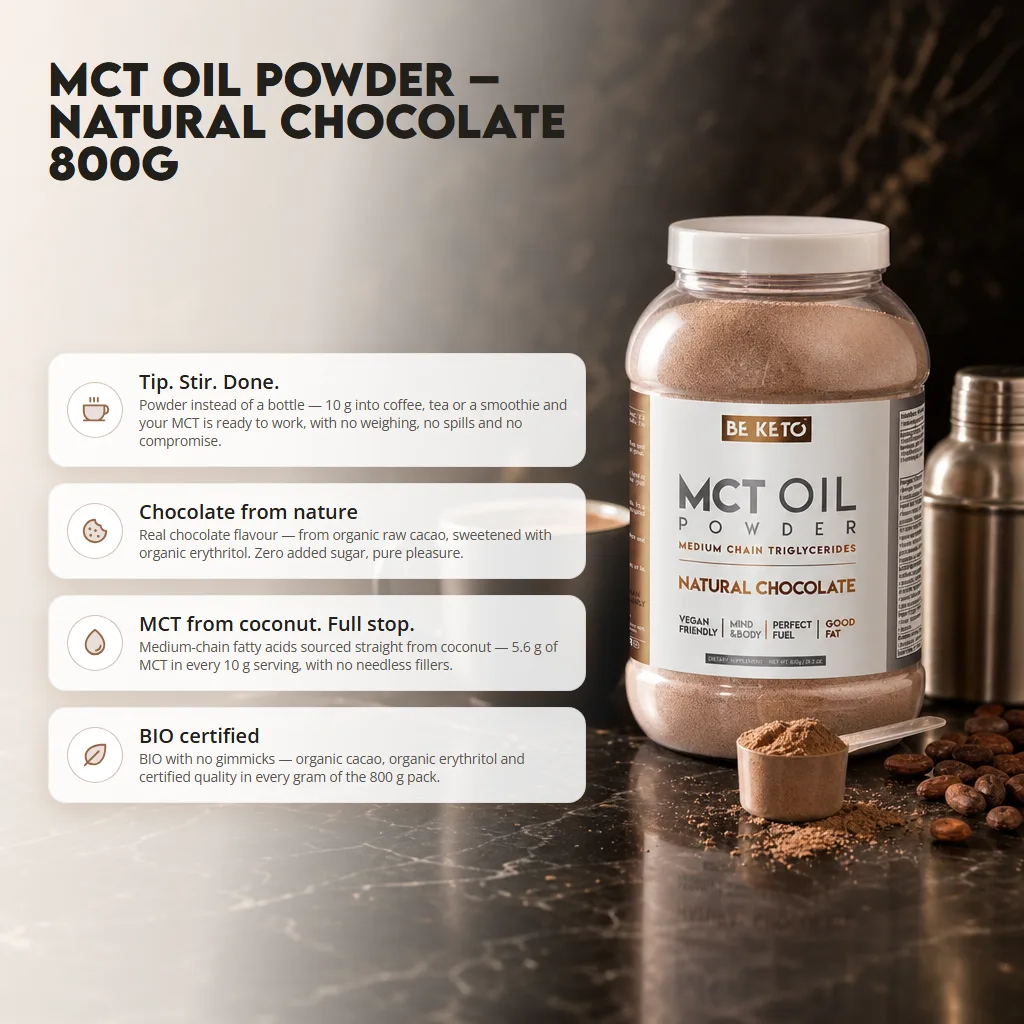
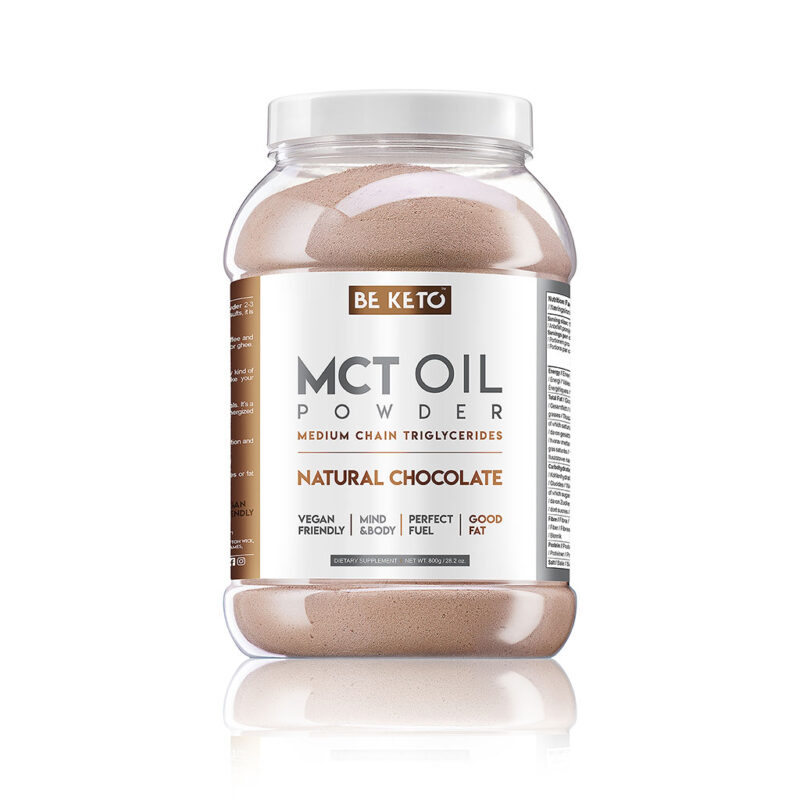 Perfectly Absorbable & Easily Digestible
MCT Oil Powder – Natural Chocolate 800g
£ 67.90 GBP✔ Supports the body in ketone production
✔ Provides a stable energy boost
✔ Improves concentration and memory
✔ Accelerates fat burning
✔ Reduces overall fatigue
-
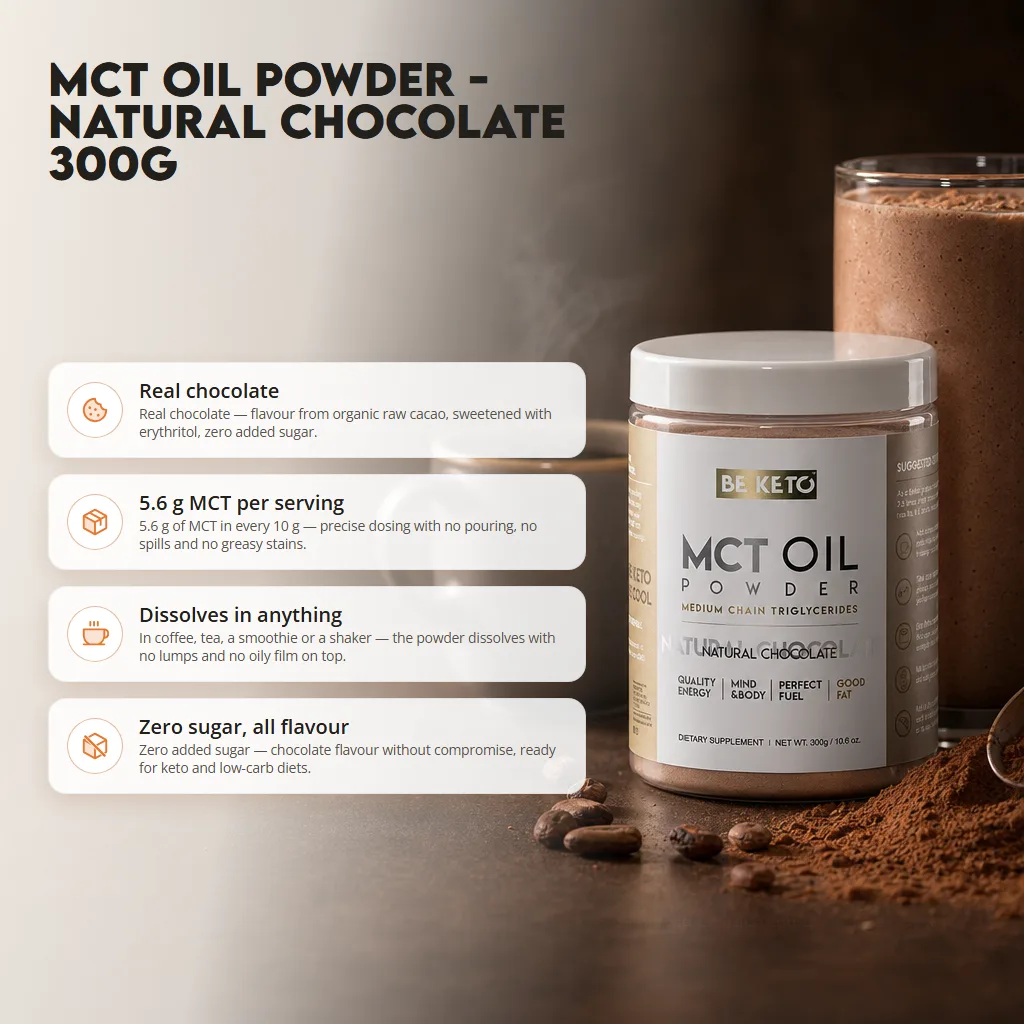
 Perfectly Digestible And Easily Digested
MCT Oil Powder – Natural Chocolate 300g
£ 27.90 GBP✔ Supports the body in the production of ketones
✔ Contains 7.5 g of healthy fat per serving
✔ Ideal for beginners
✔ Reduces general tiredness
-
 Perfectly Digestible And Easily Digested
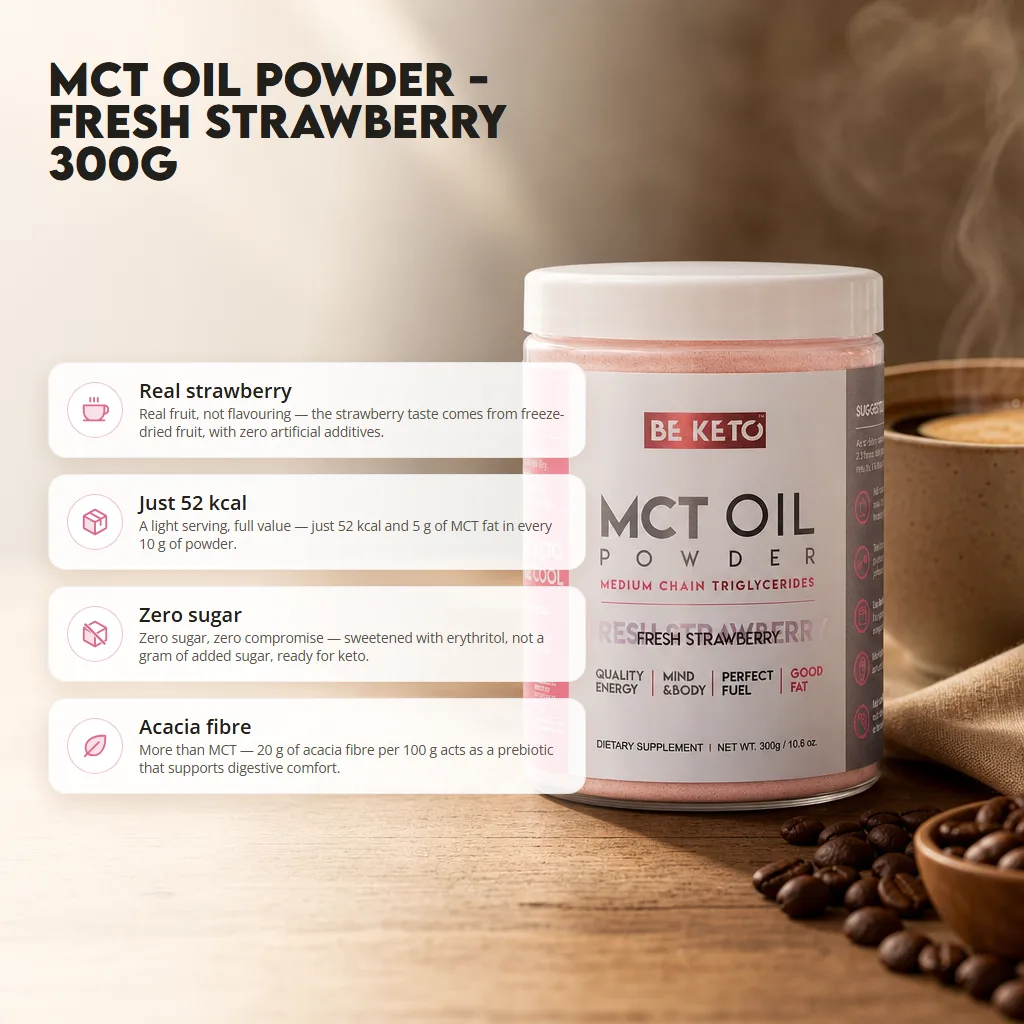
MCT Oil Powder – Fresh Strawberry 300g
£ 28.90 GBP✔ Supports the body in the production of ketones
✔ 7.5 g of healthy fat per serving
✔ Ideal for beginners
✔ Reduces general tiredness
-
 Perfectly Digestible And Easily Digested
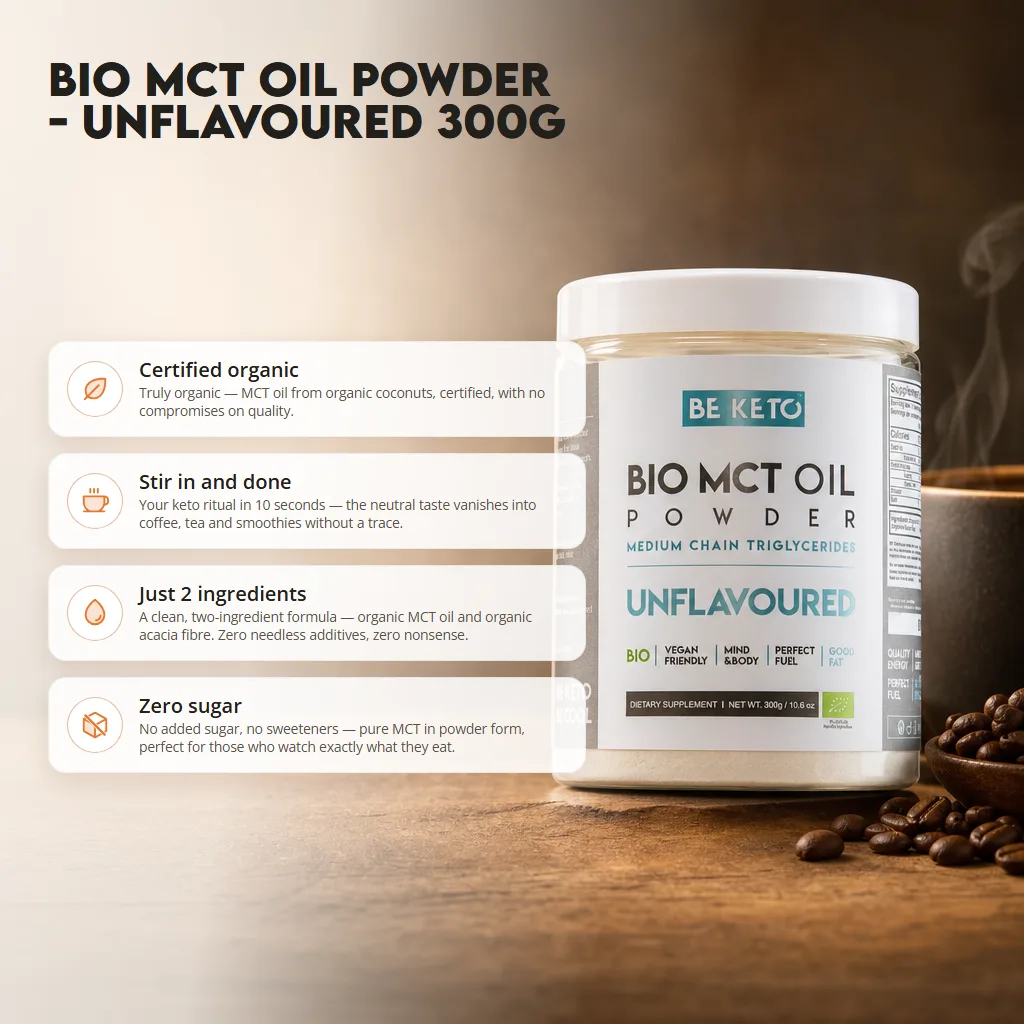
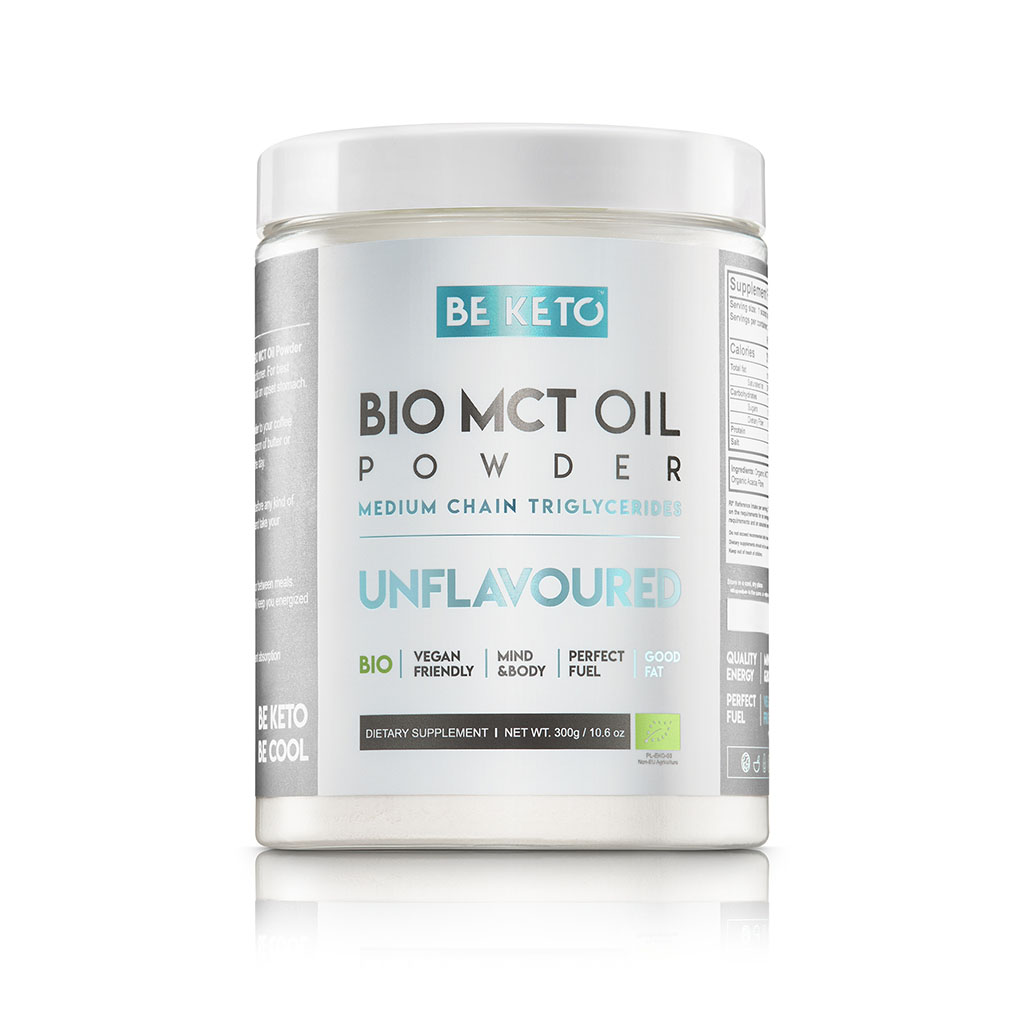
Organic MCT Oil Powder – Unflavoured 300g
£ 28.90 GBP✔ Supports the body in the production of ketones
✔ Contains 7.1 g of healthy fat per serving
✔ Ideal for beginners
✔ Reduces general tiredness
-
Out of stock
 Unique Fat MixtureBESTSELLER
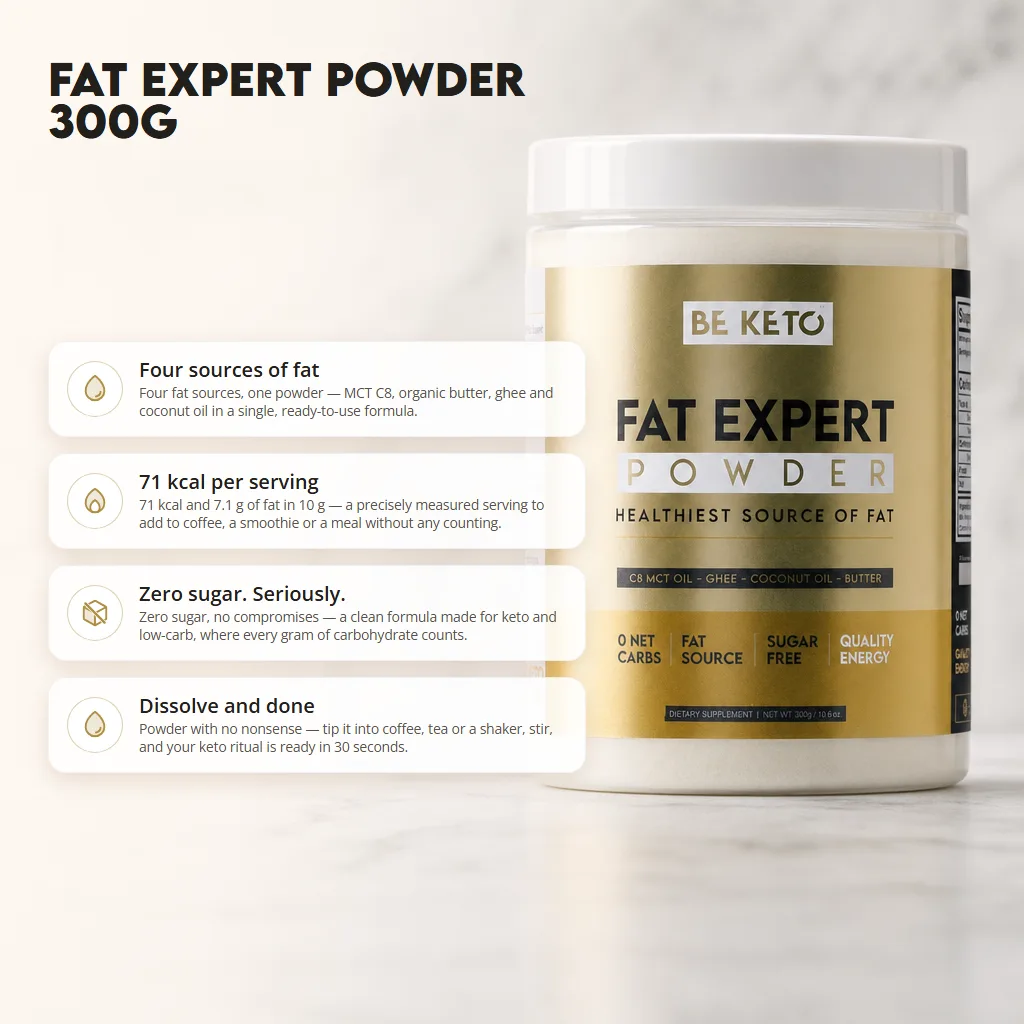
Fat Expert Powder 300g
£ 29.90 GBP✔ Acts as an anti-inflammatory for the digestive system
✔ Improves nutrient absorption
✔ Combination of the healthiest fats
✔ Supports concentration
What is MCT oil powder made of?
The unflavoured tub lists two ingredients: organic MCT oil from coconut and acacia fibre. That is the whole recipe.
Older descriptions of this shelf named starch or whey protein as the carrier, but neither is on our labels. What holds the oil here is acacia fibre, a soluble fibre from the sap of the acacia tree, and every tub on this page names it.
The flavoured tubs add two things on top of that pair: erythritol for sweetness and the flavour itself. Natural Chocolate takes organic raw cocoa, French Vanilla takes natural vanilla extract, Wild Raspberry takes freeze dried raspberry, and Coconut and White Chocolate takes natural flavourings.
The carrier is also why a pure fat product shows carbohydrate on its label. In the unflavoured tub the table reads 2.4 g of carbohydrate and 2.4 g of fibre per 10 g scoop, with sugars at 0 g, so the carbohydrate figure is the fibre.
How much fat does a 10 g scoop really hold?
A 10 g scoop holds 7.1 g of fat in the unflavoured tub, and 5.0 g to 5.6 g in the flavoured tubs. Those figures come from the nutrition table printed on each tub.
Fat and energy per 10 g scoop, tub by tub:
- Organic MCT Oil Powder Unflavoured 300g: 7.1 g fat, 69 kcal
- Natural Chocolate 300g and 800g: 5.6 g fat, 54 kcal
- French Vanilla 300g and 800g: 5.5 g fat, 54 kcal
- Fresh Strawberry 300g: 5.0 g fat, 52 kcal
- Wild Raspberry 300g: 5.0 g fat, 51 kcal
- Coconut and White Chocolate 300g: 5.0 g fat, 49 kcal
The spread has a plain cause: erythritol and flavouring take up room that oil would otherwise occupy. Per 100 g the unflavoured powder is 71 g fat, while the flavoured ones run from 50 g to 56 g.
In practice that is 1.5 g to 2.1 g more fat from the same 10 g scoop. If fat per scoop is what you are buying, the unflavoured tub is the one to pick.
Why pick MCT powder instead of liquid MCT oil?
MCT powder stirs into a cold drink without separating and travels without a bottle, while the liquid oil gives far more fat for the money.
The price side is not close. A 10 g scoop of unflavoured powder gives 69 kcal for 96p, while 15 ml of liquid oil gives 135 kcal for 42p from a litre bottle of C8 + C10. You pay for the form, not for more fat.
What the form buys is behaviour. Oil floats on a cold drink and needs a blender; powder disperses with a spoon or a shaker. Oil needs a bottle and a cap; powder sits in a tub and does not leak into a bag.
The trade is straightforward. If price per gram of fat matters more than format, the liquid C8 + C10 MCT oil is the same fat in cheaper packaging. The powder earns its place when the drink is cold, or when a bottle in a rucksack is not an option.
How does MCT powder dissolve in coffee and cold drinks?
Acacia fibre is water soluble, so the powder disperses through hot coffee or cold water instead of floating on top. In a hot cup a spoon is enough.
In a hot drink it clouds the cup the way a creamer does, and the fibre holds the fat in suspension, so no oily film forms on top.
Cold liquid asks for a little more work. In iced coffee or plain water a spoon leaves lumps, so use a shaker or a milk frother for about ten seconds and the powder goes in cleanly.
Heat does not harm the powder, so a scoop can go into porridge, a hot chocolate or a soup at the end of cooking. It will not thicken what you put it in the way a starch would, because there is no starch in it.
Flavoured or unflavoured MCT powder: which tub suits you?
The unflavoured tub is the organic one, with two ingredients and no sweetener at all. The flavoured tubs are sweetened with erythritol rather than sugar.
French Vanilla, Natural Chocolate, Coconut and White Chocolate, Wild Raspberry and Fresh Strawberry each carry their own flavour, and all five read between 0 g and 0.7 g of sugars per 10 g scoop. The sweetness is erythritol, a sugar alcohol, not sugar.
Choose by what the powder goes into. Unflavoured disappears into coffee, soup or a shake that already tastes of something, and it is the only tub named Organic here. The flavoured tubs turn plain hot water or milk into a drink on their own.
What does MCT oil powder cost per scoop?
A 10 g scoop costs 85p from an 800 g tub and 93p to 96p from the 300 g tubs. Both 800 g tubs, French Vanilla and Natural Chocolate, are £67.90 for 80 scoops.
Among the 300 g tubs, Natural Chocolate is £27.90, which works out at 93p a scoop. French Vanilla, Coconut and White Chocolate, Wild Raspberry, Fresh Strawberry and the Organic Unflavoured tub are £28.90, or 96p a scoop over 30 scoops.
Per 100 g the same prices read £8.49 for the 800 g tubs against £9.30 and £9.63 for the 300 g ones. Moving up a size saves 11p on every scoop, about 12 per cent, and that is the whole reason the larger tub exists.
Try a flavour in 300 g first, then order the 800 g tub of whichever one you keep reaching for, at 85p a scoop. Keto Collagen with MCT comes in the same 300 g and 800 g tubs if you want protein in the same scoop.
Frequently asked questions
What is MCT powder used for?
Stir a 10 g scoop into coffee, a shake, yoghurt or porridge: that is what the powder is for, a way to add fat to a drink or a bowl without pouring oil, which is why it turns up in keto and low carbohydrate cooking.
What is the downside of MCT?
Taken in large amounts at once, MCT can cause stomach cramps, loose stools or nausea, which is why half a scoop is a sensible first serving and why MCT sits better with food than on an empty stomach.
Does MCT powder really work for weight loss?
No health claim for MCT is authorised in Great Britain, so we make none: a 10 g scoop carries 49 kcal to 69 kcal and counts towards the day's energy like any other fat.
Who should not use MCT powder?
Anyone allergic to milk or peanuts should avoid Fat Expert Powder, which is made with milk protein and peanut butter, and anyone who reacts badly to erythritol should take the unflavoured tub instead of the flavoured ones.
What are the benefits of MCT powder?
We list no benefits, because no health claim for MCT is authorised in Great Britain: what the label gives you is 5.0 g to 7.1 g of fat per 10 g scoop, 1.7 g to 2.8 g of carbohydrate and a powder that mixes into cold liquid.
What are the side effects of MCT powder?
The reported effects are digestive: cramping, loose stools and nausea after a large serving, and the erythritol in the flavoured tubs can add to that in people who tolerate polyols poorly. Our article on MCT oil side effects goes through it in detail.
Is MCT powder suitable for vegans?
Fat Expert Powder is the one exception on this page, because it is made with milk protein and peanut butter; the other tubs list plant ingredients only, with no dairy and no egg.
Is your MCT oil powder organic?
Organic sits in the name of one tub here, Organic MCT Oil Powder Unflavoured 300g, which is also the shortest ingredient list on the page at two items.
How many calories are in MCT powder?
A 10 g scoop gives 49 kcal to 69 kcal depending on the tub, which works out at 489 kcal to 689 kcal per 100 g, with the unflavoured powder at the top of that range.
Do you sell MCT powder wholesale?
BeKeto supplies MCT oil powder to trade customers in the United Kingdom through its distribution page, in the same 300 g and 800 g tubs sold here.
Over 26500+ excellent reviews
BeKeto is known for outstanding service and the highest product quality. This can be experienced by #BeKetonians in 29 countries!
Every day, we send out hundreds of parcels and receive fantastic reviews from you. Thank you!
Every day, we send out hundreds of parcels and receive fantastic reviews from you. Thank you!