OFFICIAL STORE IN THE UNITED KINGDOM


Exogenous Ketones
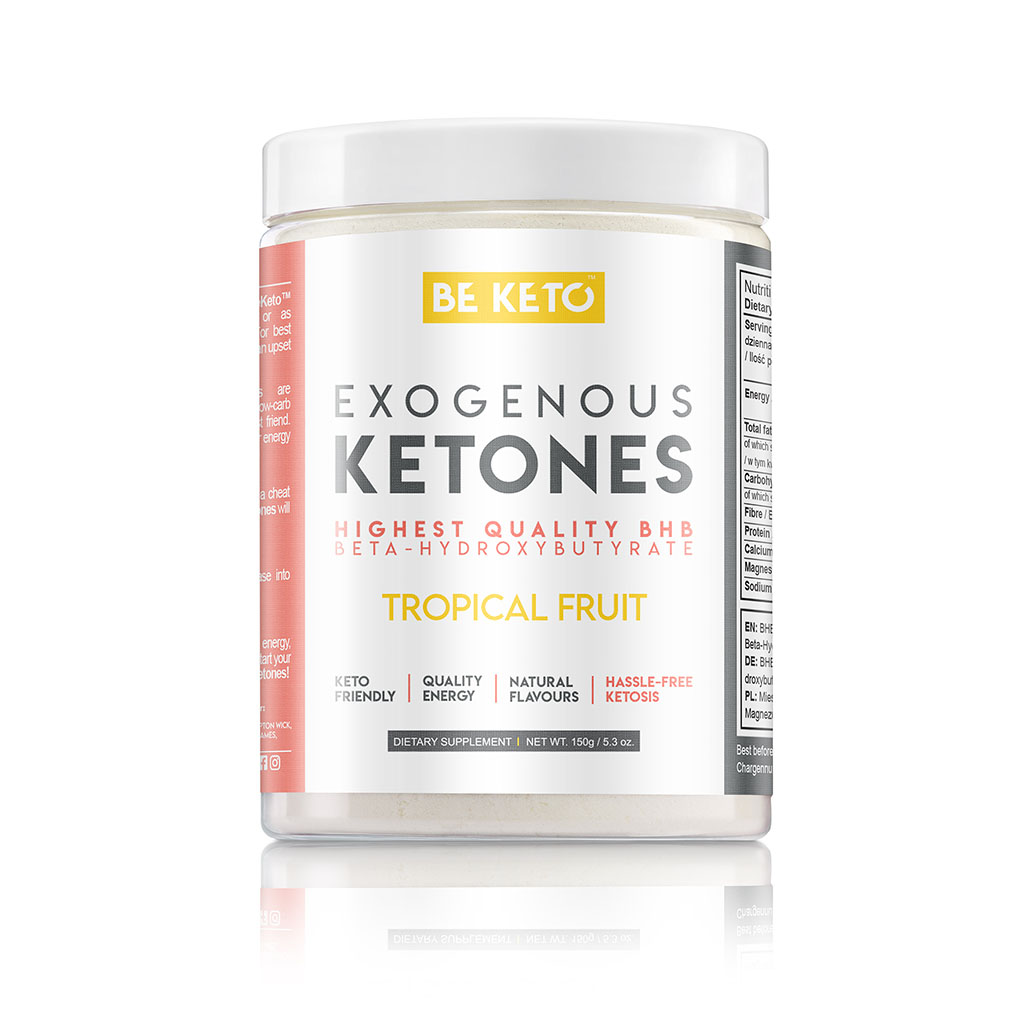
Exogenous ketones are beta-hydroxybutyrate (BHB) supplied as a supplement rather than made in the body, sold here as a powder of calcium, magnesium and sodium BHB salts. One 11.5 g scoop holds about 8.7 g of those salts, 6.8 kcal and 2.7 g of carbohydrate. The Tropical Fruit label gives 470 mg calcium, 300 mg magnesium and 530 mg sodium per serving. A 150 g tub is £26.90 and holds 13 servings, in Wild Raspberry, Tropical Mango and Tropical Fruit.
-
Out of stock
 Super Boost With Ketones
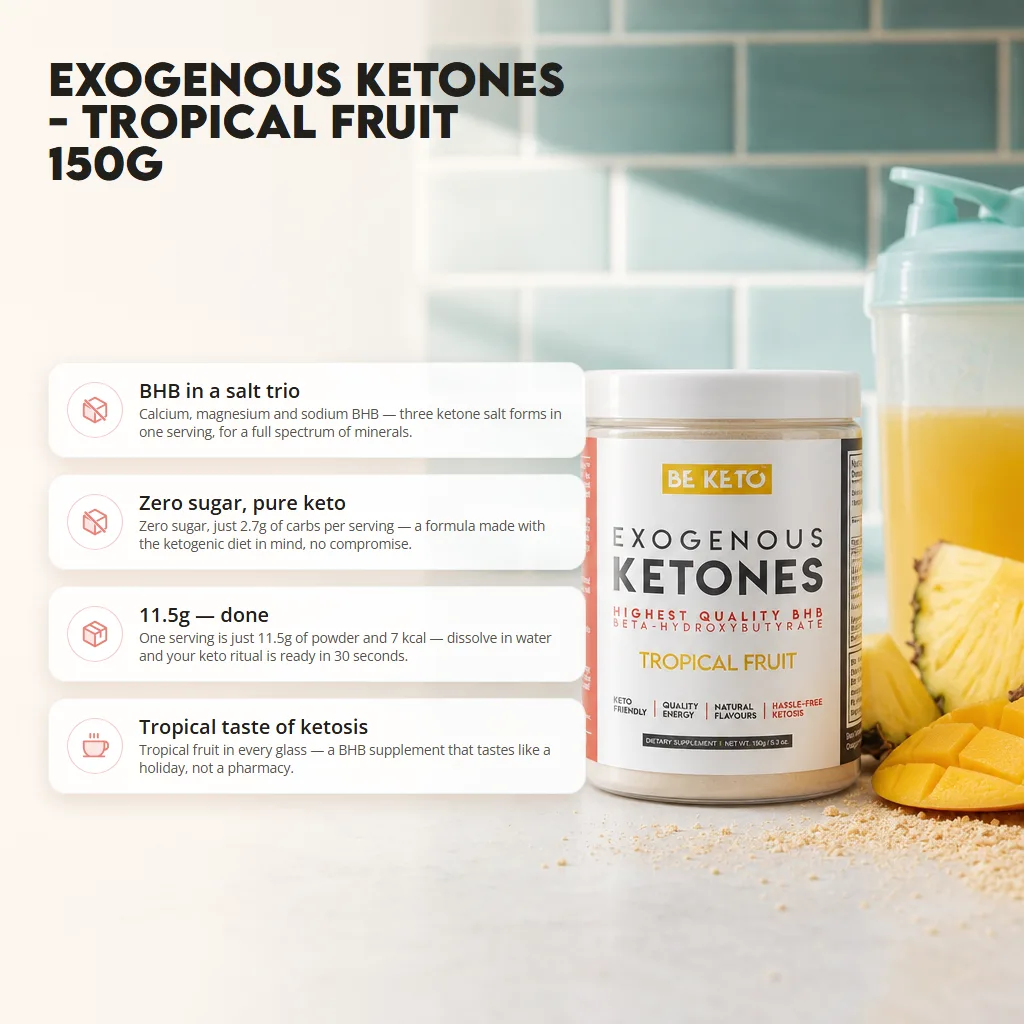
Exogenous Ketones – Tropical Fruit 150g
£ 26.90 GBP✔ Accelerate the state of ketosis
✔ Support the production of ketone bodies
✔ Provide a fast and stable source of energy
✔ Reduce the symptoms of ketoadaptation
-
Out of stock
 Super Boost With Ketones
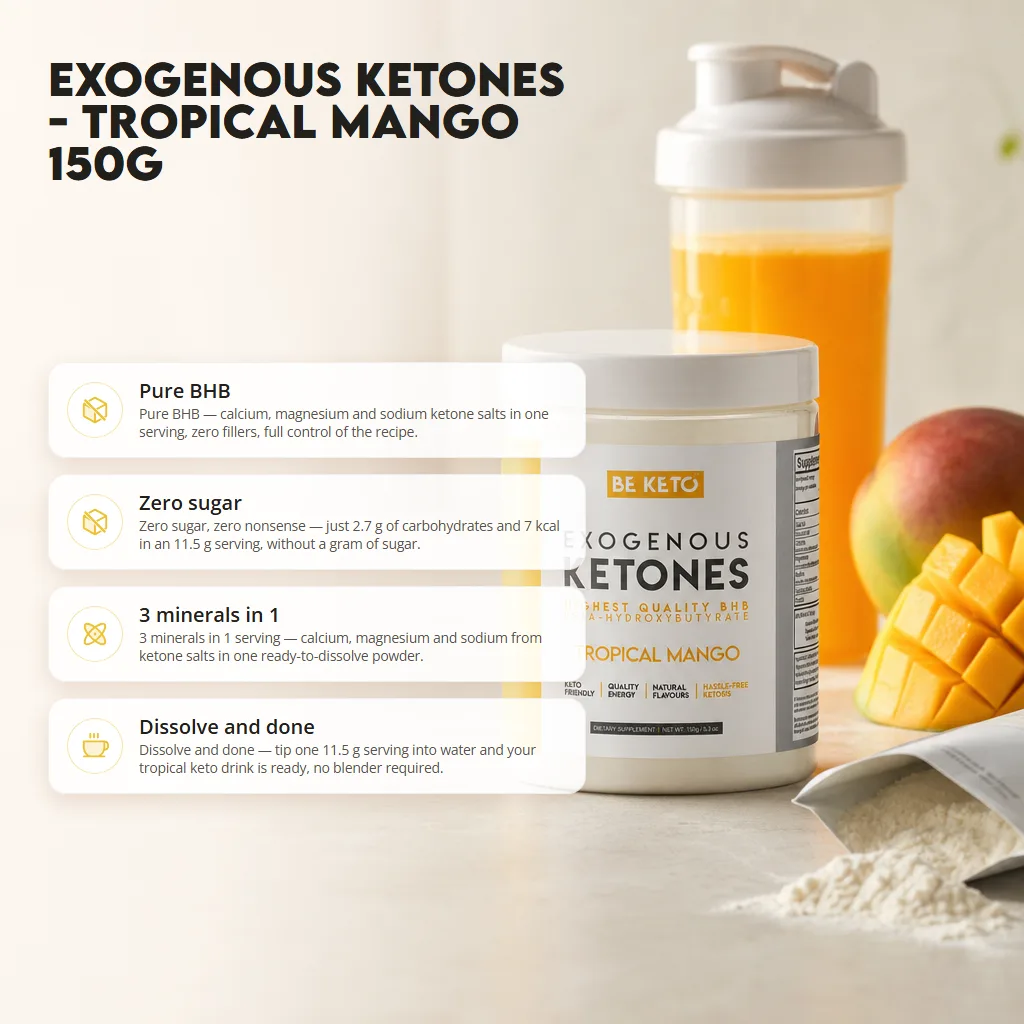
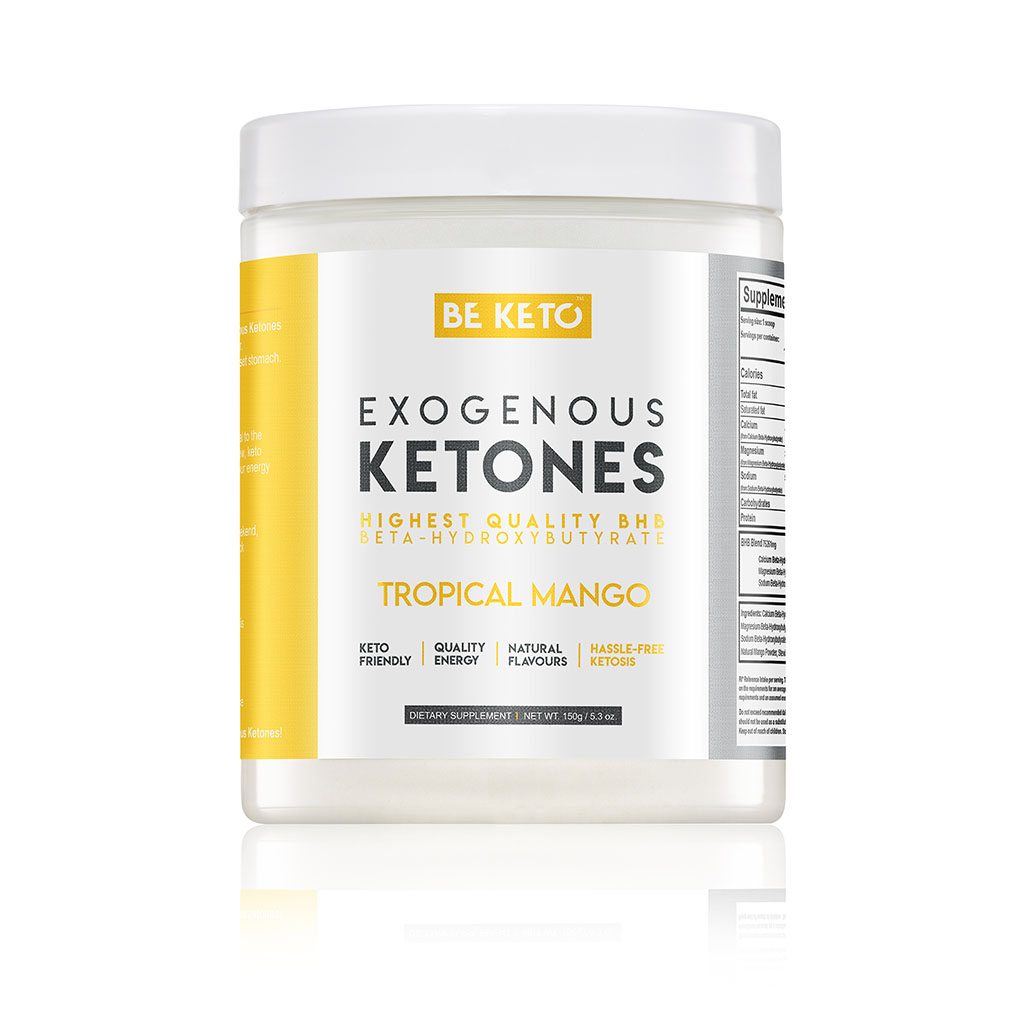
Exogenous Ketones – Tropical Mango 150g
£ 26.90 GBP✔ Accelerate the state of ketosis
✔ Support the production of ketone bodies
✔ Provide a fast and stable source of energy
✔ Reduce the symptoms of ketoadaptation
-
Out of stock
 Super Boost with KetonesBESTSELLER
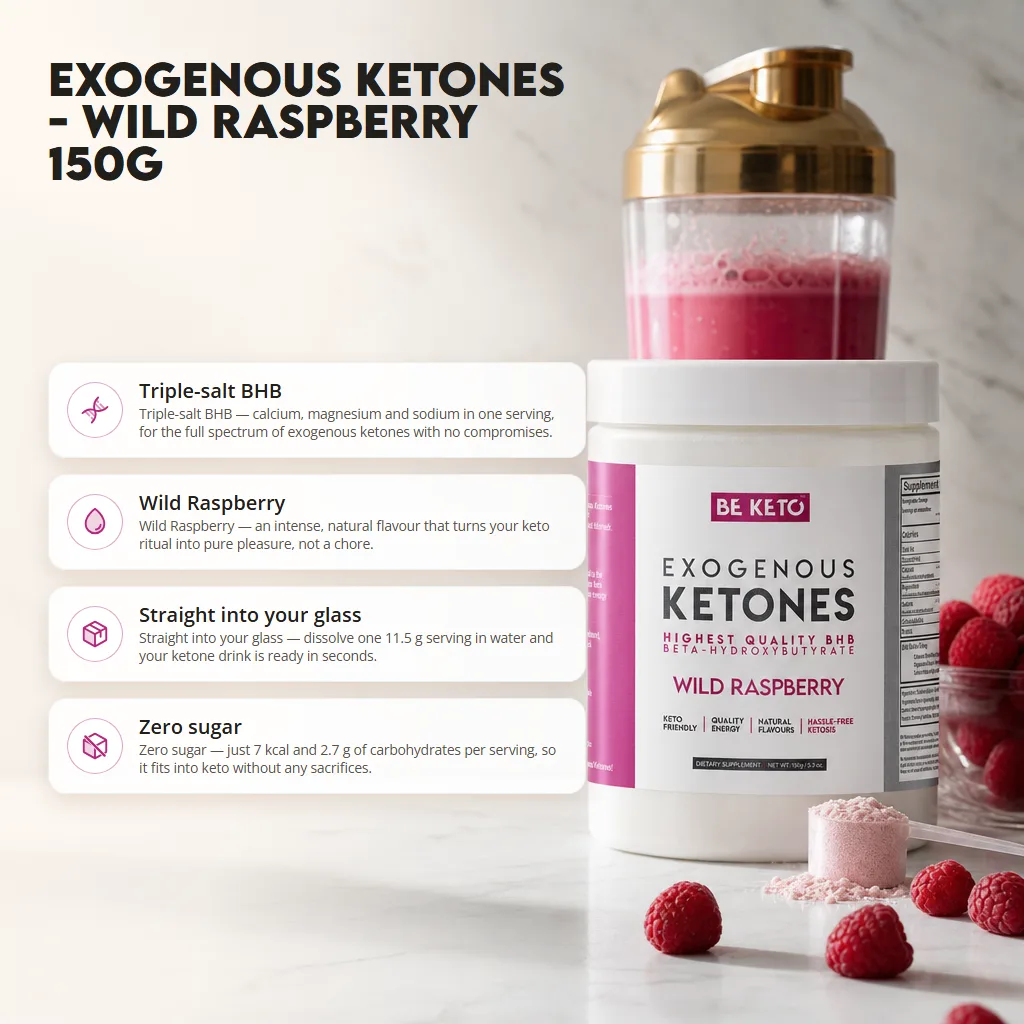
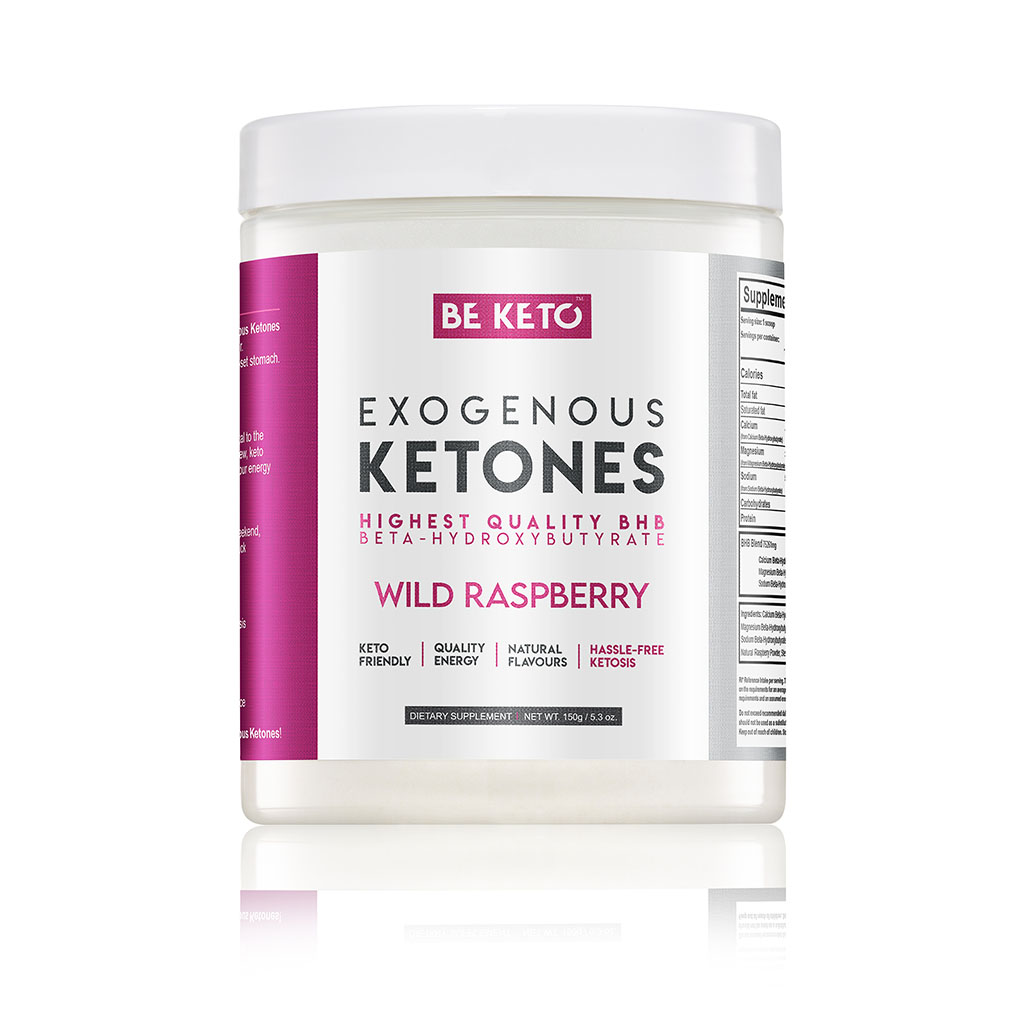
Exogenous Ketones – Wild Raspberry 150g
£ 26.90 GBP✔ Accelerate the state of ketosis
✔ Support the formation of ketone bodies
✔ Provide a fast and stable energy supply
✔ Reduce the symptoms of ketoadaptation
What goes into a serving of exogenous ketone powder?
One 11.5 g scoop holds about 8.7 g of BHB salts, roughly three quarters of the powder by weight. The remaining quarter is where the three tubs differ from one another, and it carries the 2.7 g of carbohydrate in a serving.
The label prints the blend as 75,261 mg per 100 g, split equally in three: 25,087 mg of calcium beta-hydroxybutyrate, 25,087 mg of magnesium beta-hydroxybutyrate and 25,087 mg of sodium beta-hydroxybutyrate.
At 11.5 g a scoop that comes to about 8.7 g of salts, near 2.9 g from each of the three forms. Read the blend figure with the weight it belongs to, because a milligram number on a tub can refer to 100 g of powder rather than to one serving.
Fat, saturates, sugars and protein all read 0 g on the nutrition table. What a serving carries is the salts, the carbohydrate and the minerals bound into those salts.
Ketone salts or ketone esters: which form of BHB is this powder?
BHB here is bound to calcium, magnesium and sodium, which makes these ketone salts rather than ketone esters. A ketone ester binds beta-hydroxybutyrate to an alcohol, usually 1,3-butanediol, and is sold as a liquid.
The difference shows up on the label rather than in the name. A salt brings its mineral along, so every gram of BHB arrives with calcium, magnesium or sodium attached, and the mineral lines on the nutrition table follow from that. An ester brings no mineral and is measured in millilitres.
Neither form appears here as a capsule or as a ready mixed drink. This shelf is powder in a 150 g tub, stirred into water at home.
How much sodium, calcium and magnesium does one serving carry?
Tropical Fruit states 530 mg of sodium, 470 mg of calcium and 300 mg of magnesium a serving. All of it arrives as part of the three BHB salts, not as minerals added on top.
Magnesium and calcium are the two that label can say anything further about. At 300 mg magnesium reaches 80% of the daily reference intake and at 470 mg calcium reaches 59%, against the 15% a serving must reach before a mineral may be named at all. Magnesium contributes to electrolyte balance, and calcium contributes to normal muscle function.
Sodium carries no such wording here and needs none. 530 mg a serving is a number to set against the salt in the rest of your day, and it is the number most write ups about ketone salts raise as a caution without ever printing it.
Wild Raspberry and Tropical Mango are built on the same BHB blend, but their product data do not give milligrams of each mineral per serving. The three figures above therefore stand for Tropical Fruit, and we do not stretch them across the shelf.
Minerals on their own are a different purchase. A tub of keto electrolytes carries 376 mg of magnesium and 200 mg of potassium in a 10 g serving, with no beta-hydroxybutyrate in it.
How much carbohydrate and energy does a serving add?
A serving adds 2.7 g of carbohydrate and 6.8 kcal, which is 1% of the reference intake. Per 100 g the same table reads 23.48 g of carbohydrate and 59.1 kcal.
Sugars read 0 g, so none of that carbohydrate is added sugar. The Tropical Fruit tub rounds its own lines to 7 kcal a serving and 59 kcal per 100 g.
If you count carbohydrate to a daily figure, a scoop is 2.7 g against that total. That is the whole of what the powder contributes, and it is one of the few numbers you can compare directly between two ketone products.
What does a serving of exogenous ketones cost?
A 150 g tub costs £26.90 and holds 13 servings, so one serving comes to £2.07. That is the figure worth comparing, rather than the price on the front of the tub.
Divide pack weight by serving size before you set two ketone products side by side. 150 g at 11.5 g a scoop gives 13 servings; a tub of the same weight with a smaller scoop shows more servings and less BHB in each of them.
Per gram of BHB salts the same sum comes to about £0.24, from the 8.7 g in a serving. Wild Raspberry, Tropical Mango and Tropical Fruit are all 150 g and all £26.90, so flavour does not change the arithmetic.
How do you mix the powder, and what does it taste like?
One scoop is stirred thoroughly into plenty of water, and that is the whole instruction on the pack. The daily serving given on the label is one scoop of about 11.5 g.
Wild Raspberry and Tropical Mango list natural fruit powder with stevia and erythritol, so those two taste of fruit. Tropical Fruit lists the BHB blend alone, with no fruit powder and no sweetener named beside it.
Mineral salts bring a taste of their own, so BHB powder in a small glass has a salty edge to it. More water is the usual answer, and it is the reason the instruction says plenty of it rather than a measured amount.
Choose the flavour first, then check the four numbers that decide everything else: 8.7 g of BHB salts, 2.7 g of carbohydrate, £2.07 a serving and 13 servings from a 150 g tub at £26.90. Compare those against any other tub, then order the one you will actually drink.
Frequently asked questions
Do exogenous ketones really work?
No health claim for ketone bodies or BHB is authorised in Great Britain, so we make none. What we describe instead is what is in the tub: grams of BHB salts, minerals, carbohydrate and price per serving.
What is the best exogenous ketone?
There is no single best exogenous ketone, so compare four numbers on the label: grams of BHB salts per serving, sodium per serving, carbohydrate per serving and price per serving. This powder gives 8.7 g of BHB salts, 2.7 g of carbohydrate and £2.07 a serving, with 530 mg of sodium on the Tropical Fruit label.
Who should not take ketones?
Food supplements are not for children and do not replace a varied diet. The Tropical Fruit label gives 530 mg of sodium a serving, which is worth counting if you are watching salt, and our note on the dangers of exogenous ketones sets out what else is worth reading first.
How much BHB is in one serving?
About 8.7 g of BHB salts, from a blend of 75,261 mg per 100 g split equally between the calcium, magnesium and sodium forms. At 11.5 g a scoop that is near 2.9 g of each.
Do exogenous ketones contain carbohydrate?
Yes, 2.7 g per 11.5 g serving and 23.48 g per 100 g, with 0 g of sugars. On the reference intake for an average adult that serving works out at 1%.
Is BHB the same as beta-hydroxybutyrate?
Yes, BHB is short for beta-hydroxybutyrate, the ketone body named on this label in its calcium, magnesium and sodium salt forms. BHB ketones, BHB salts and exogenous ketone powder all describe the same thing.
Are exogenous ketones the same as raspberry ketones?
No, raspberry ketone is a different compound and is not beta-hydroxybutyrate. It is an aroma compound from fruit, while beta-hydroxybutyrate is the ketone body this powder supplies as three mineral salts.
What is the difference between exogenous ketones and MCT oil?
MCT oil is a fat and exogenous ketone powder is a salt, so the two carry entirely different labels: caprylic and capric acid on one side, calcium, magnesium and sodium beta-hydroxybutyrate on the other. Our MCT oils are measured by the millilitre and by fatty acid share, this powder by grams of salts per scoop.
What do exogenous ketones taste like?
Wild Raspberry and Tropical Mango taste of fruit, sweetened with stevia and erythritol and flavoured with natural fruit powder. Tropical Fruit names neither sweetener on its ingredient list, and mineral salts give any of them a salty edge in a small glass of water.
Where can you buy exogenous ketones in the UK?
BeKeto ships exogenous ketone powder across the United Kingdom, with free delivery on orders from £59. A 150 g tub is £26.90 and holds 13 servings of 11.5 g.
Over 26500+ excellent reviews
BeKeto is known for outstanding service and the highest product quality. This can be experienced by #BeKetonians in 29 countries!
Every day, we send out hundreds of parcels and receive fantastic reviews from you. Thank you!
Every day, we send out hundreds of parcels and receive fantastic reviews from you. Thank you!