Which fatty acids does MCT oil contain?
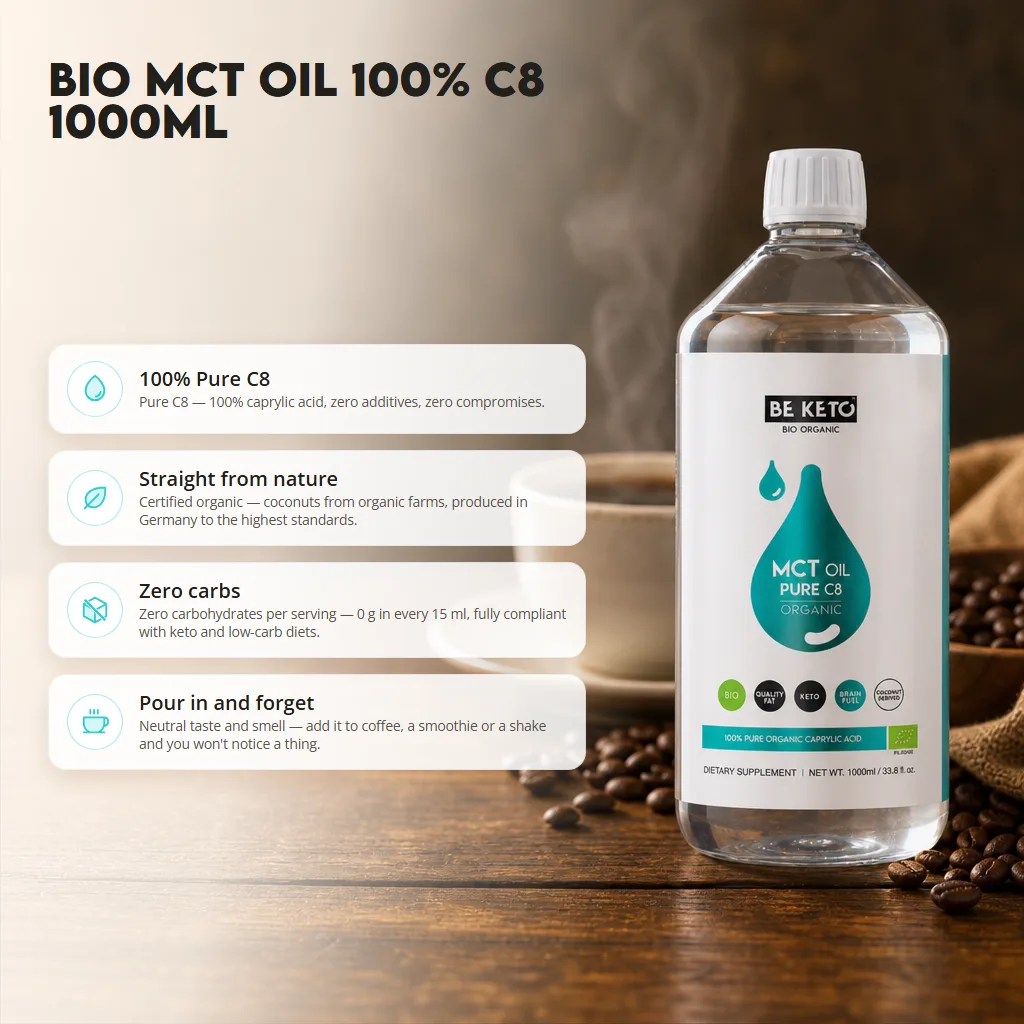
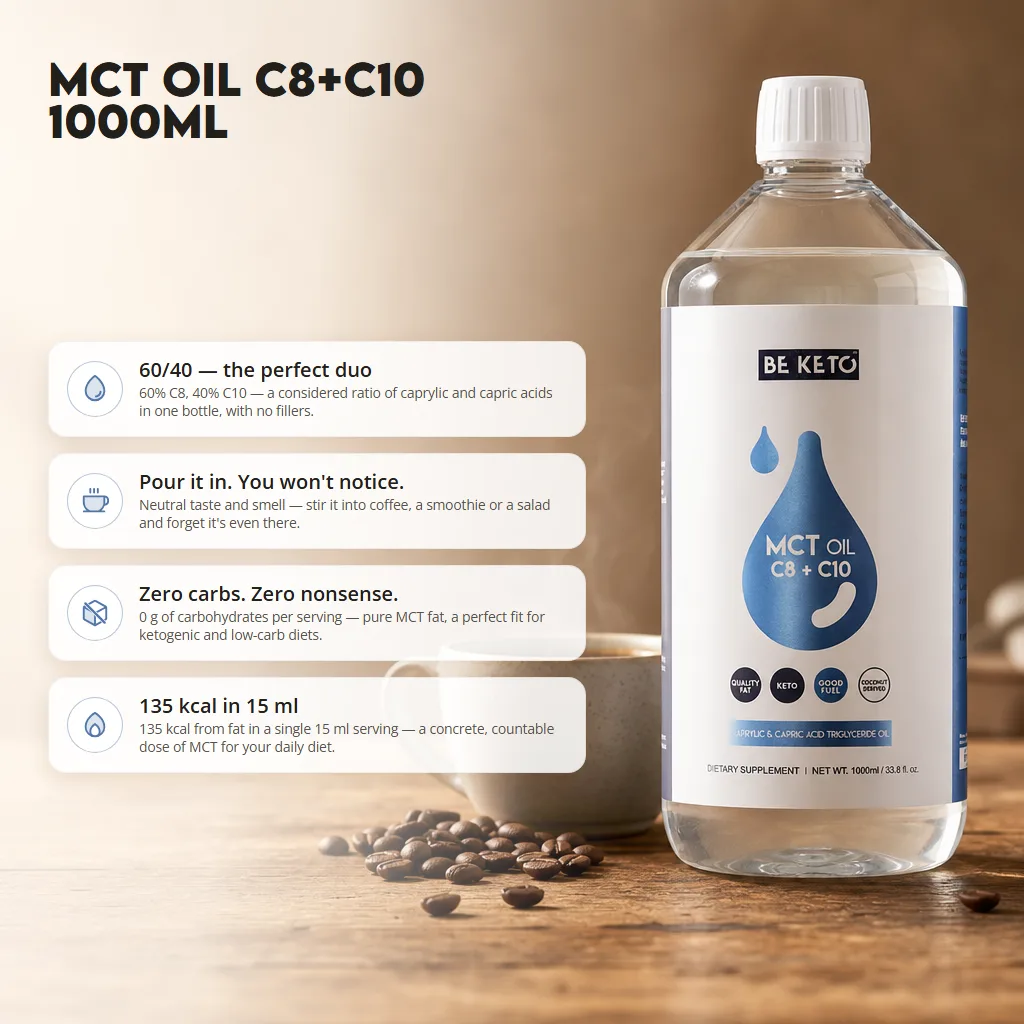
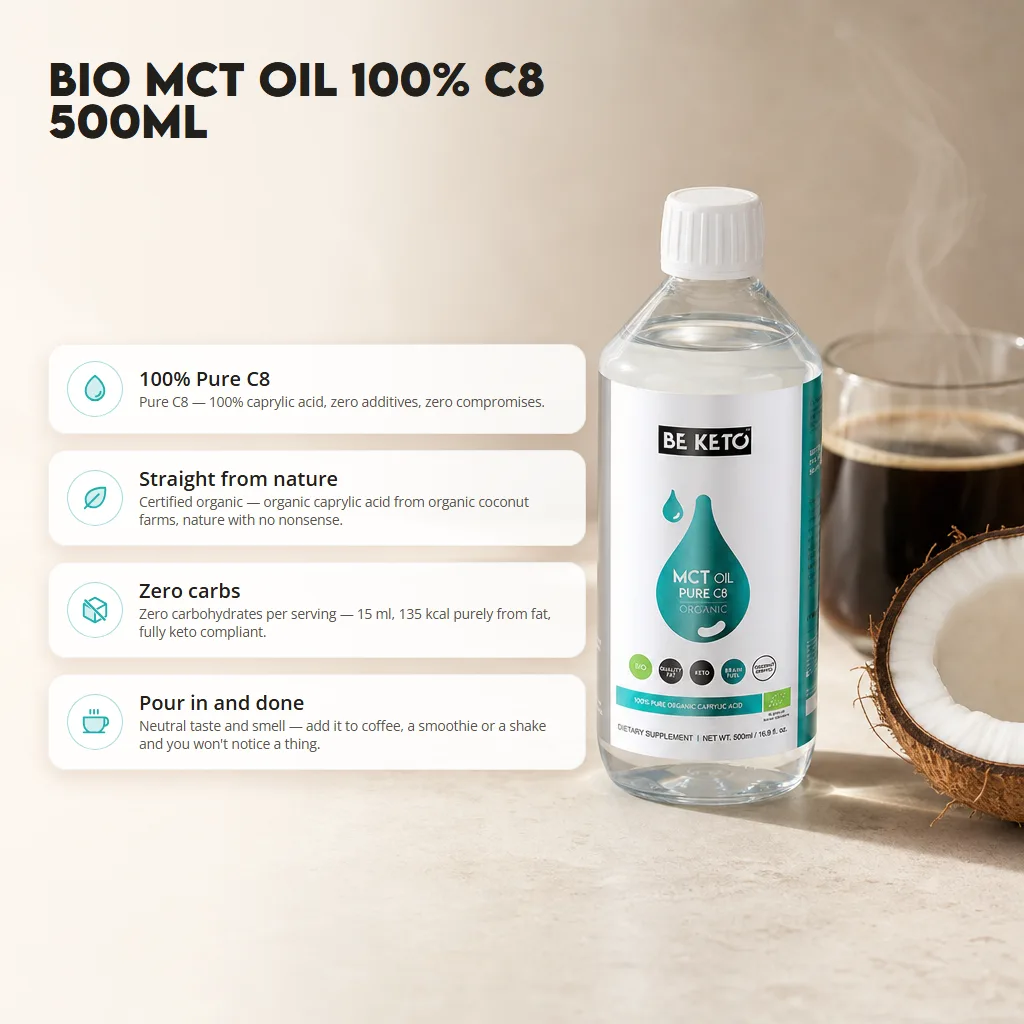
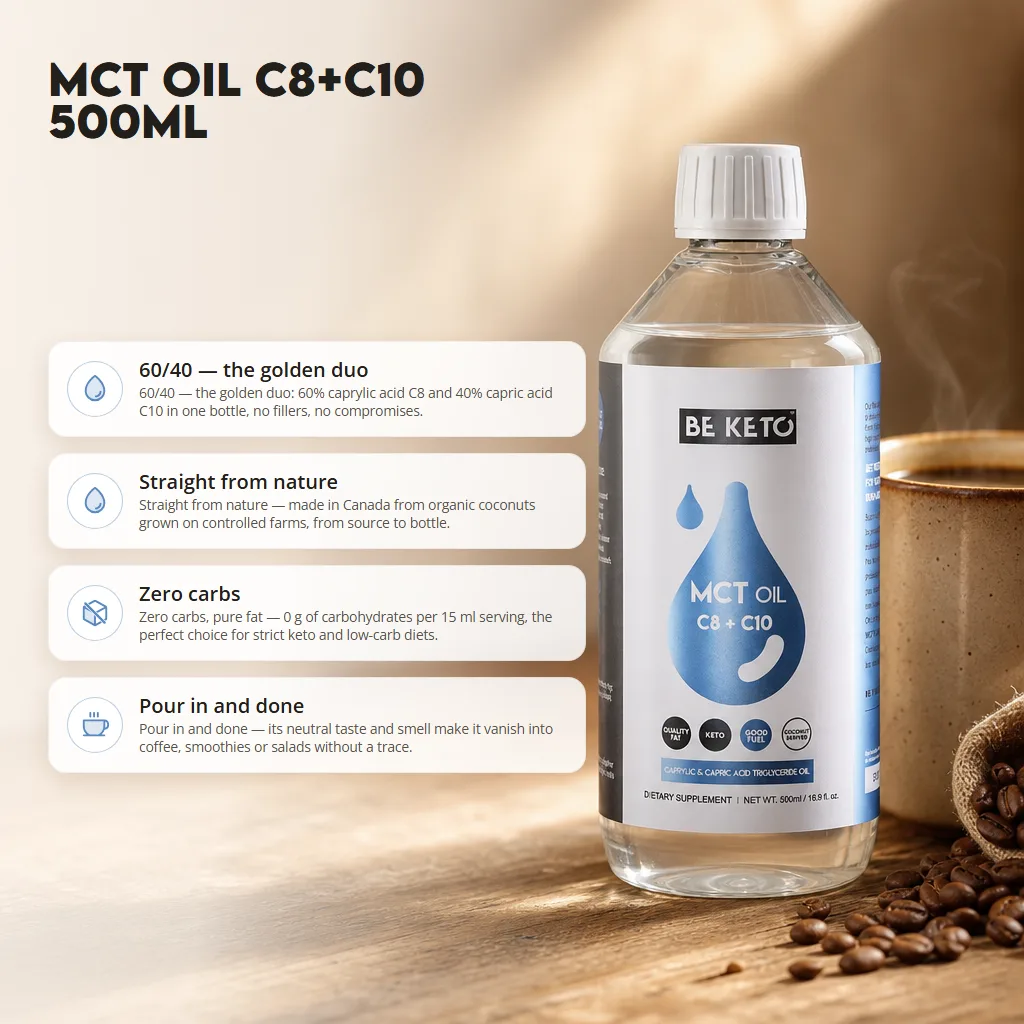
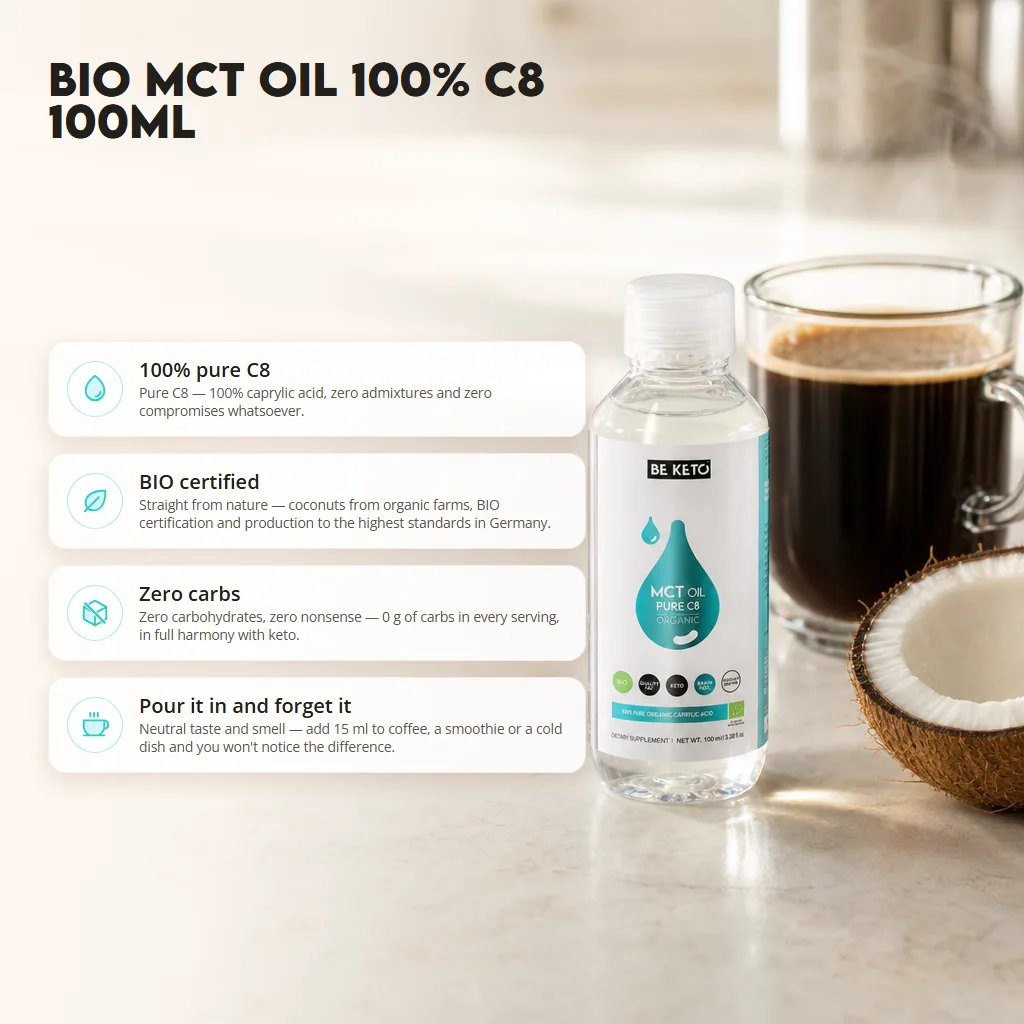
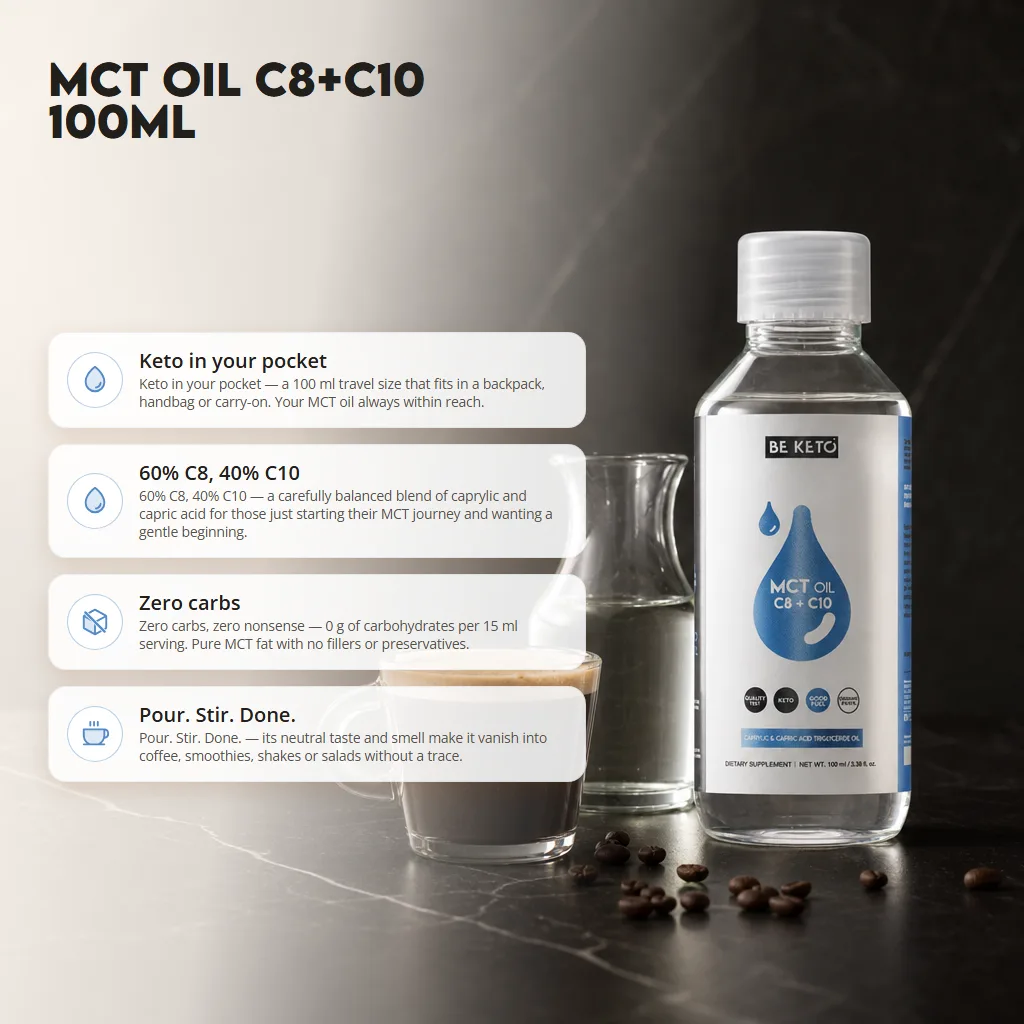
BeKeto MCT oils carry either caprylic acid (C8) on its own or a blend of 60% C8 and 40% C10. The names describe chain length: caprylic acid has eight carbon atoms in the chain, capric acid has ten.
Beyond those two acids the ingredient lists stay short. The 100% C8 bottles name one ingredient, caprylic acid from coconut oil, and the blend names two, so there is no lauric acid (C12), no flavouring and no carrier oil in the bottle.
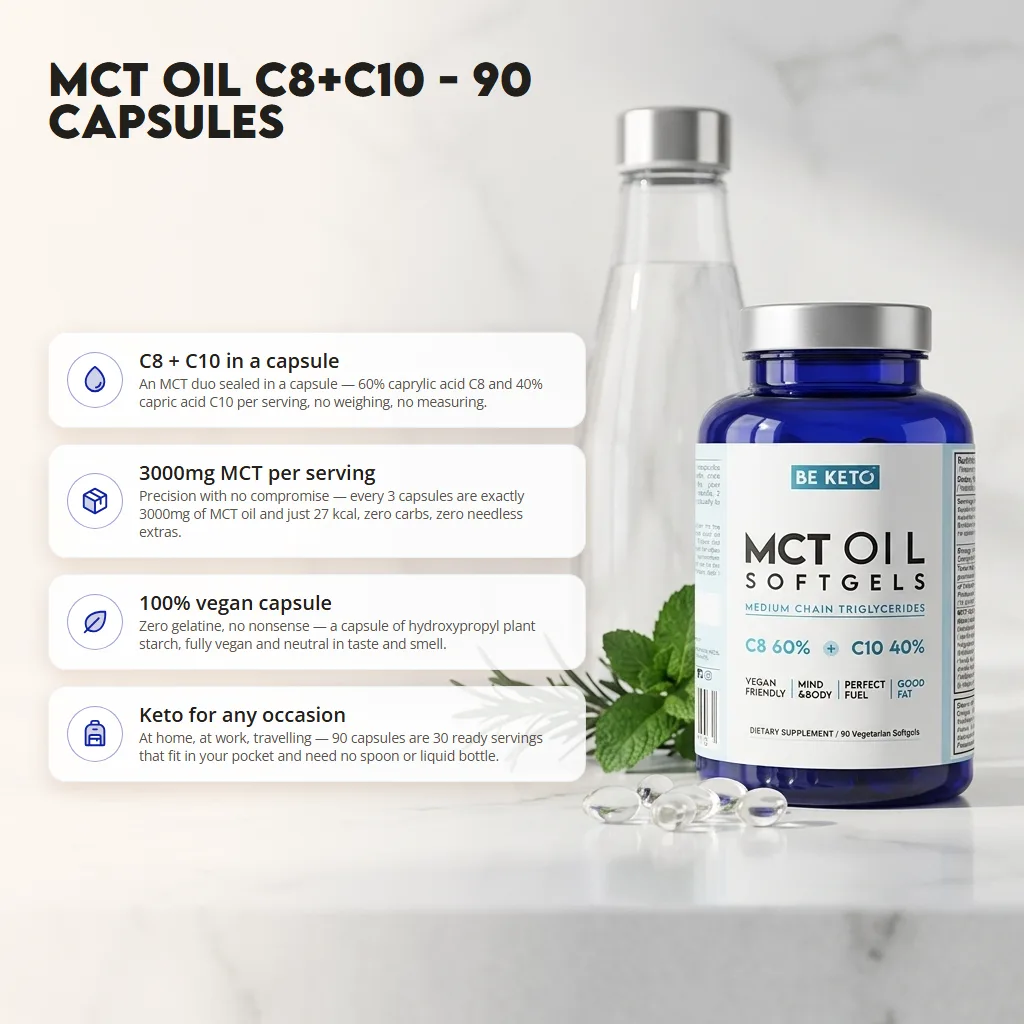
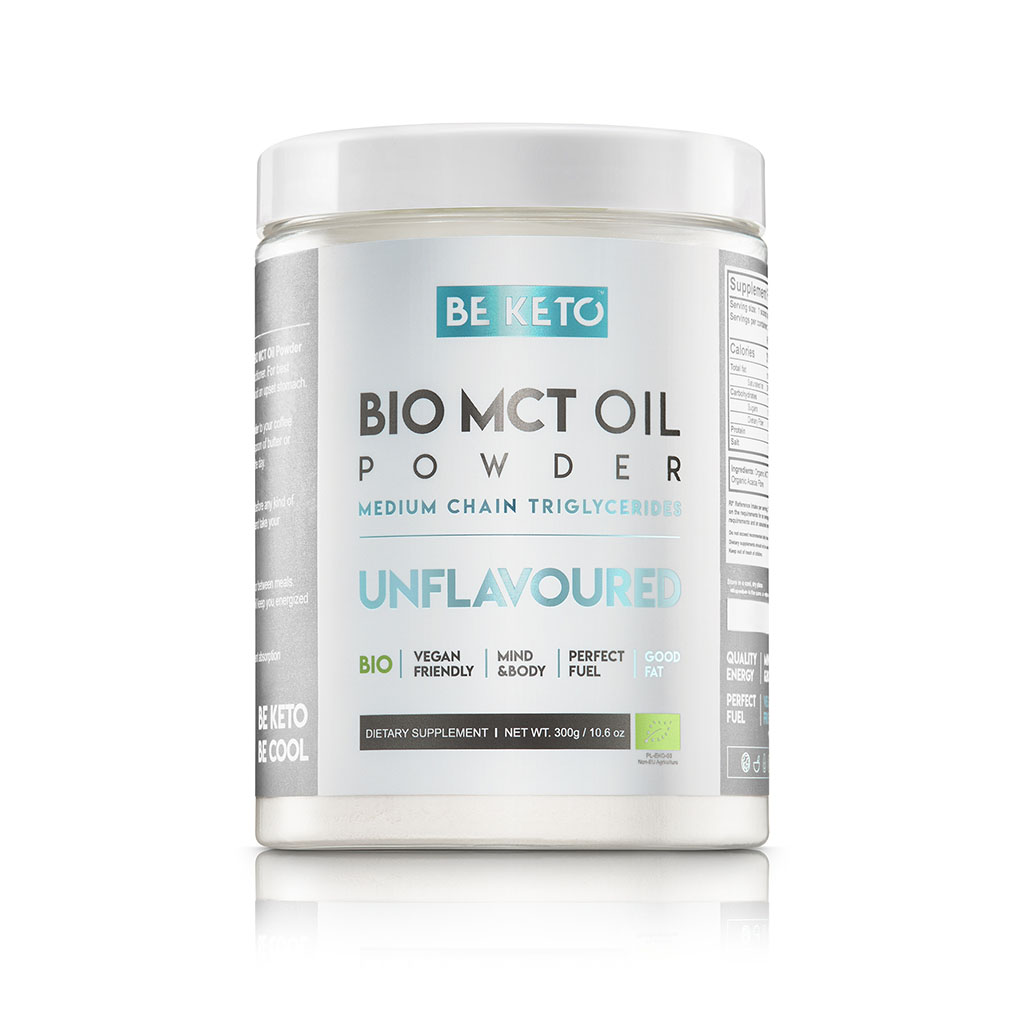
The capsules hold the same 60/40 blend, with the MCT oil sourced from coconut oil or palm kernel oil. The powders start from MCT oil of coconut origin and add acacia fibre, which is what turns a liquid fat into a powder.
C8 or C8 + C10: which MCT oil should you choose?
The 100% C8 line is the organic, single-acid option and the C8 + C10 blend is the cheaper one. In 500 ml the C8 bottle costs £24.90 and the blend £16.90; in 1000 ml it is £33.90 against £27.90.
Per serving that gap comes to £0.75 against £0.51 for the 500 ml bottles, and £0.51 against £0.42 for the litres. In 100 ml both bottles cost £4.90, so the small format is the way to try either one.
Both taste neutral and both give 135 kcal and 0 g carbohydrate per 15 ml, so choose by ingredient list and by price. Organic certification sits with the 100% C8 bottles, which carry Organic in the product name.
Oil, capsules or powder: which form fits your routine?
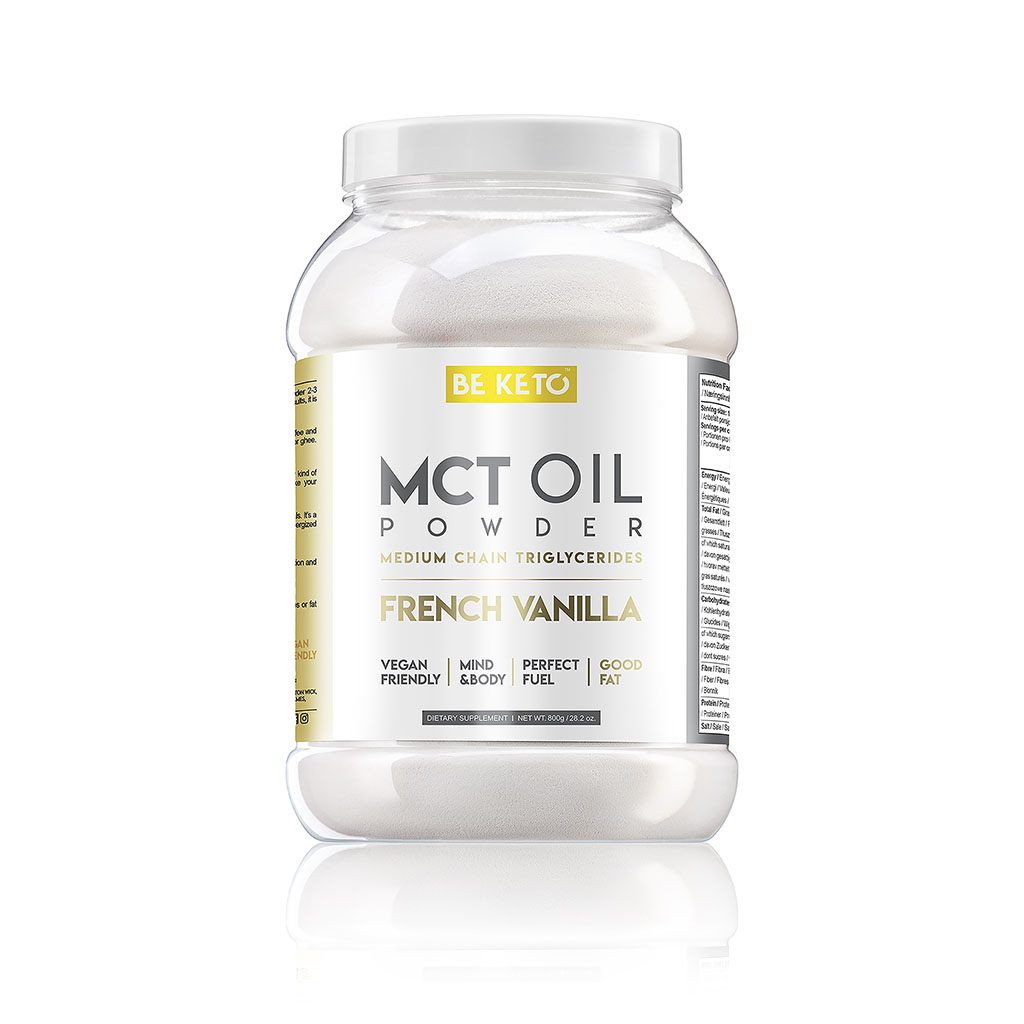
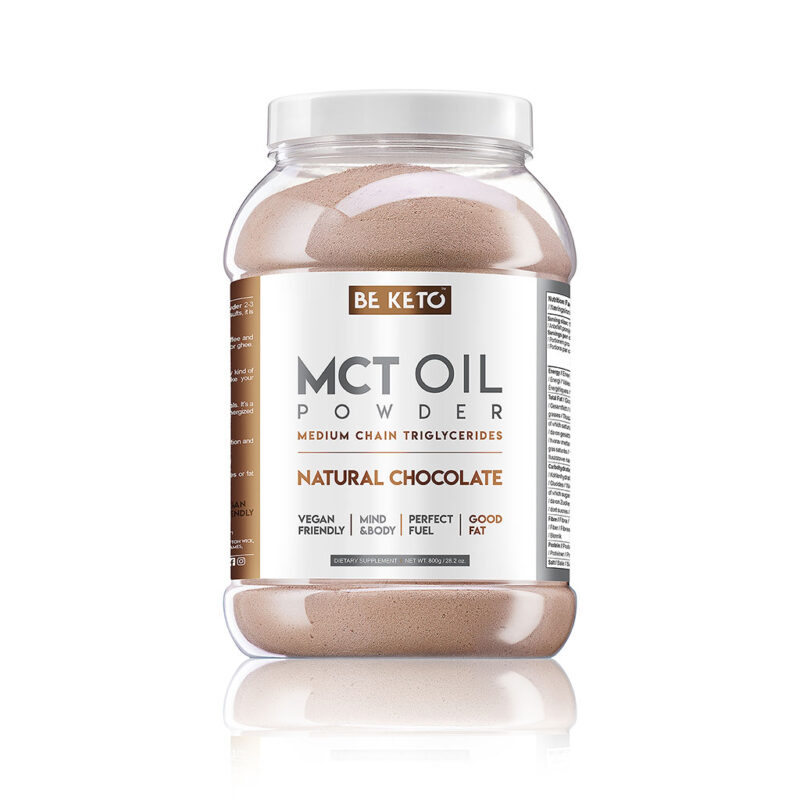
The same fat comes as liquid oil, as MCT oil capsules and as MCT oil powder. Bottles hold 100 ml, 500 ml or 1000 ml, capsules come 90 to a pack, and MCT oil powder comes in 300 g and 800 g tubs.
MCT oil capsules travel well, because there is no bottle to open or spill. One pack holds 90 capsules for £18.90, which works out at £0.21 per capsule, and the shell is made of hydroxypropyl starch, glycerine and water, with no gelatine.
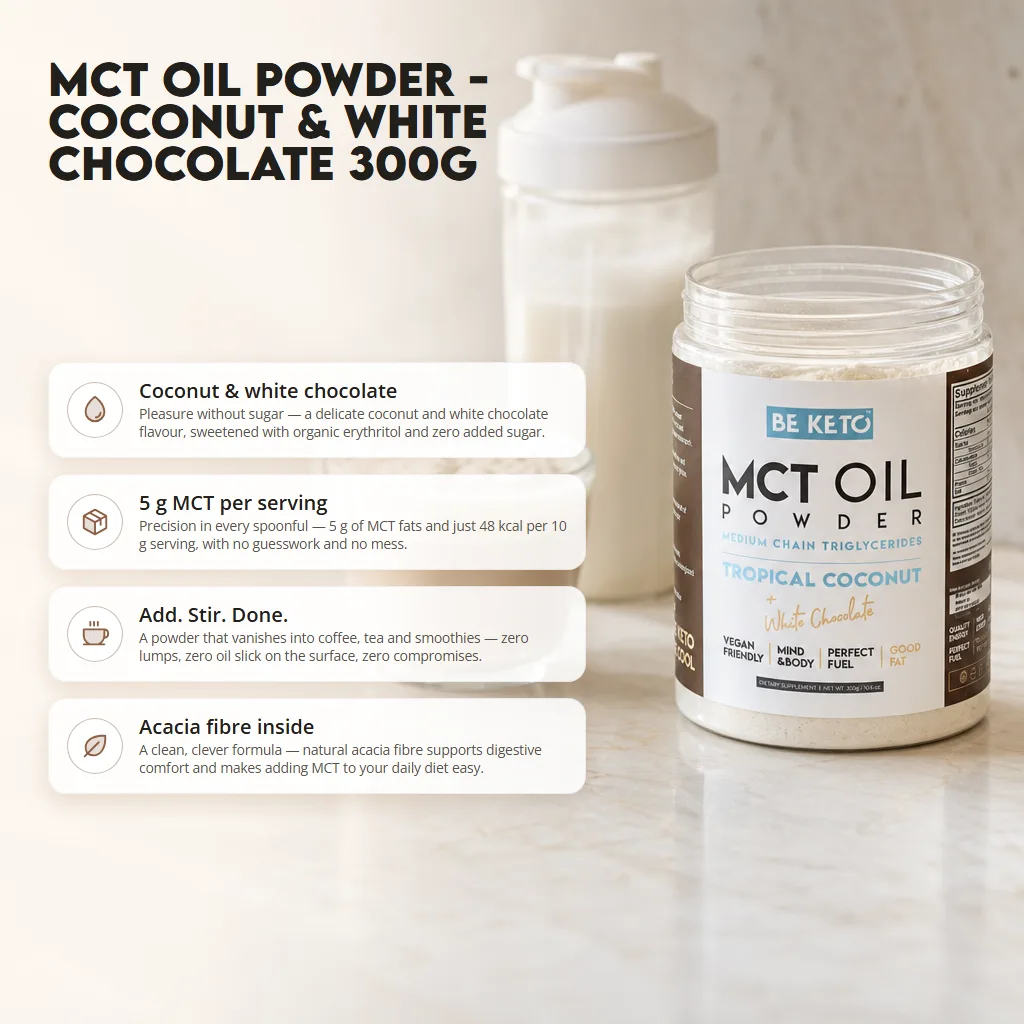
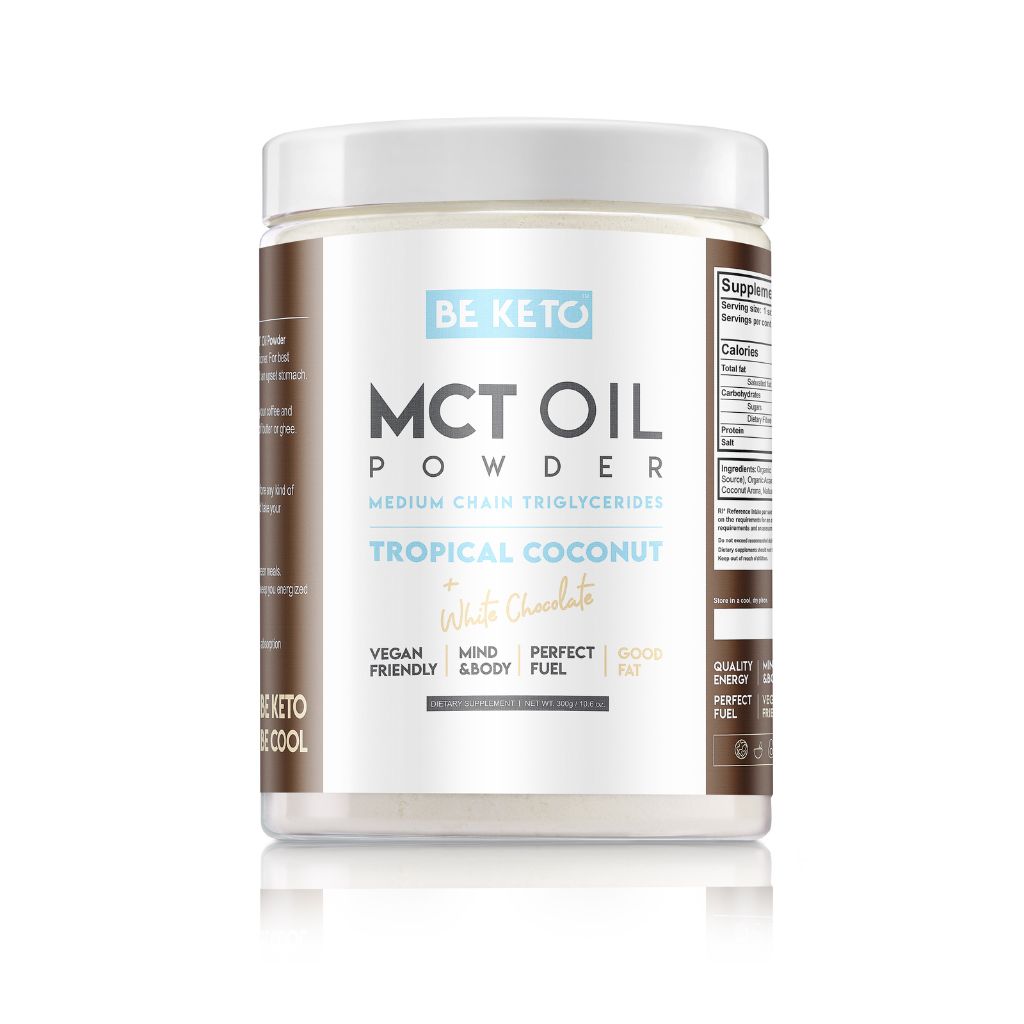
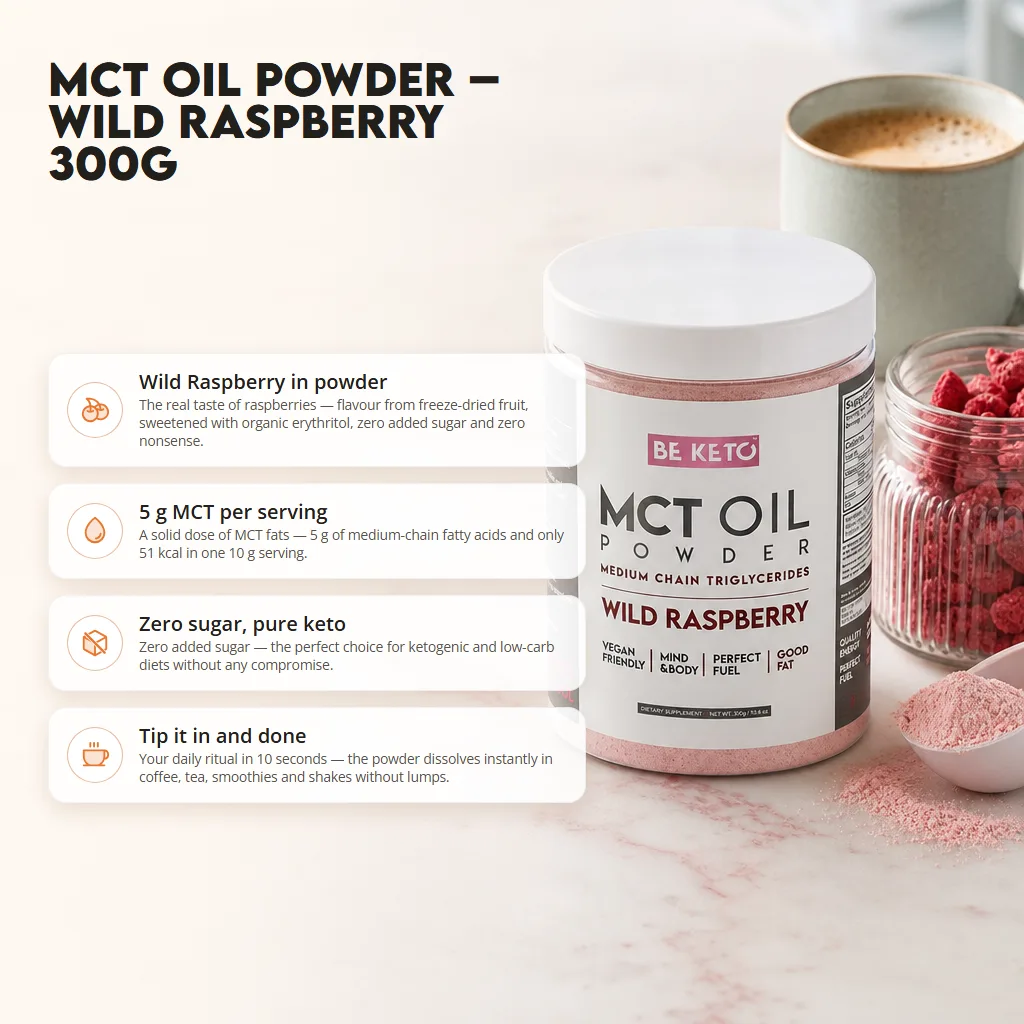
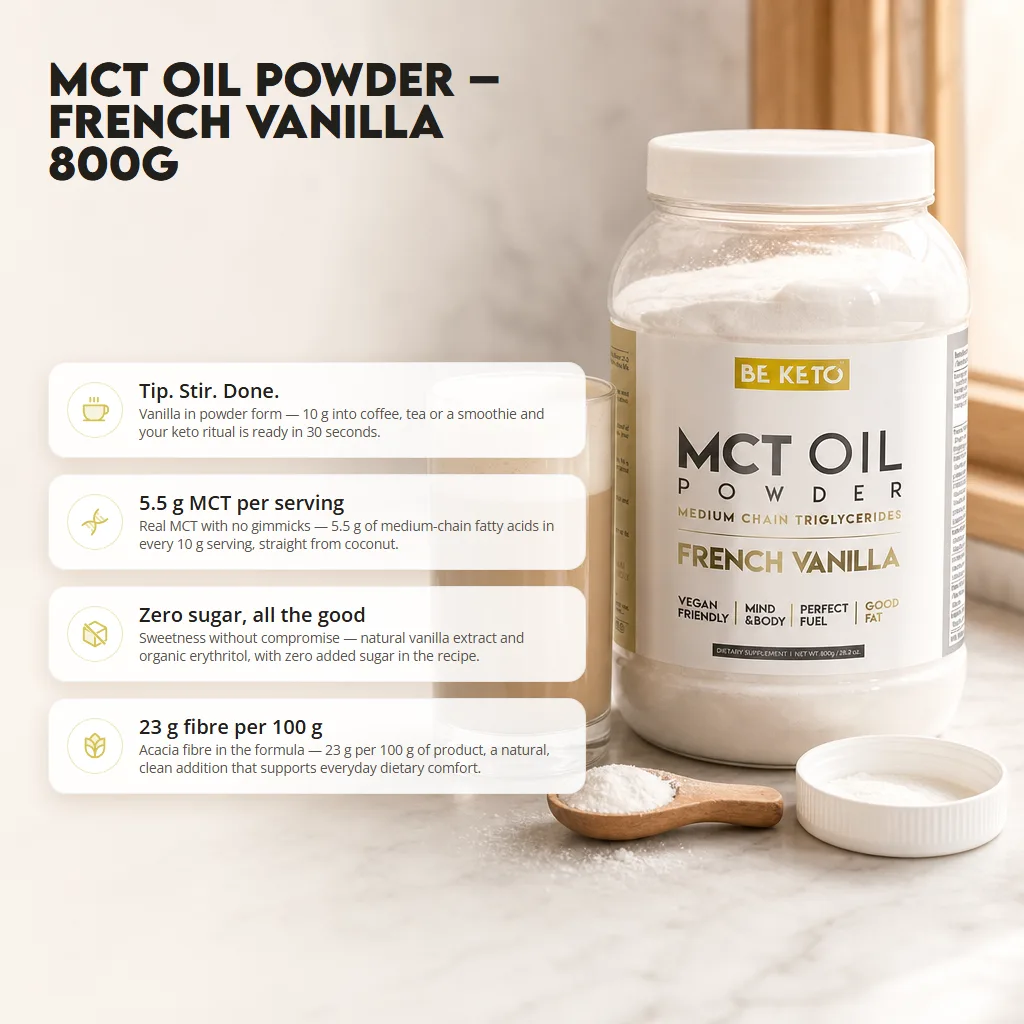
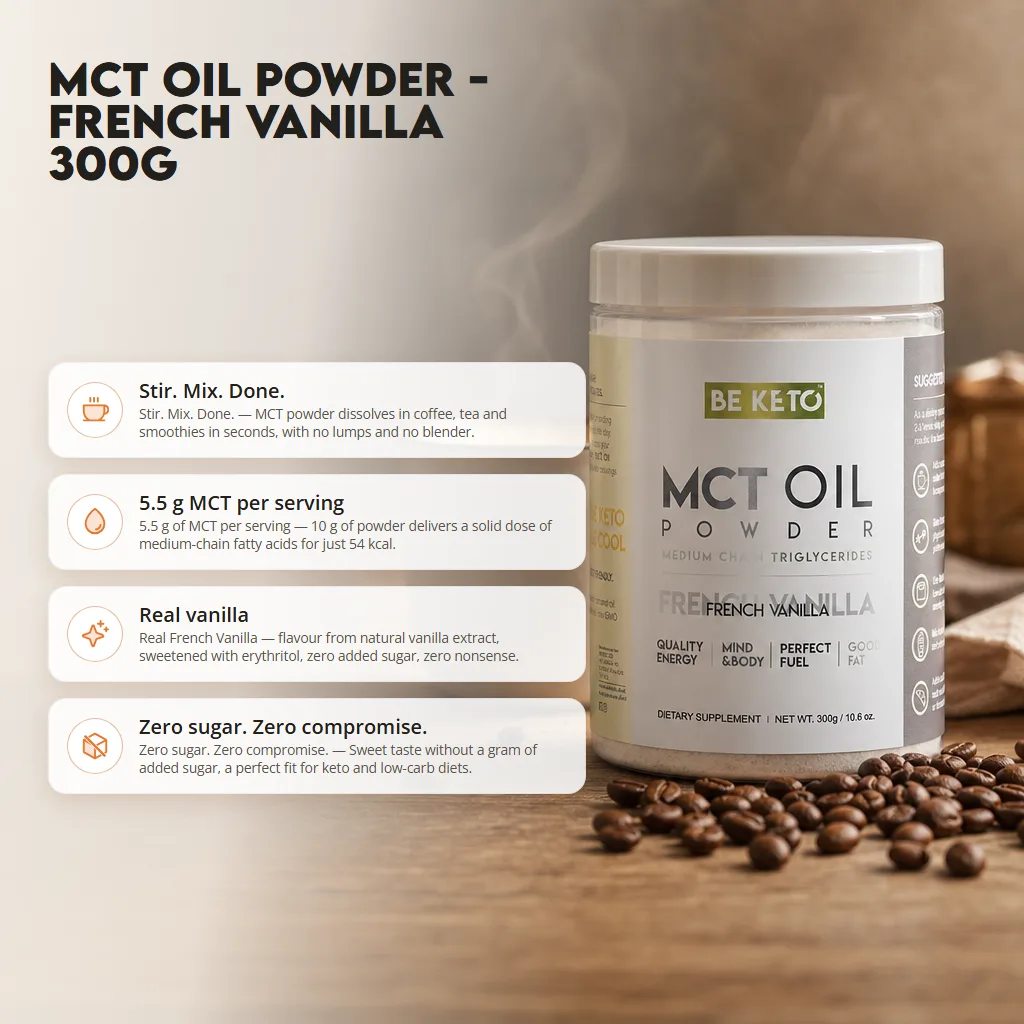
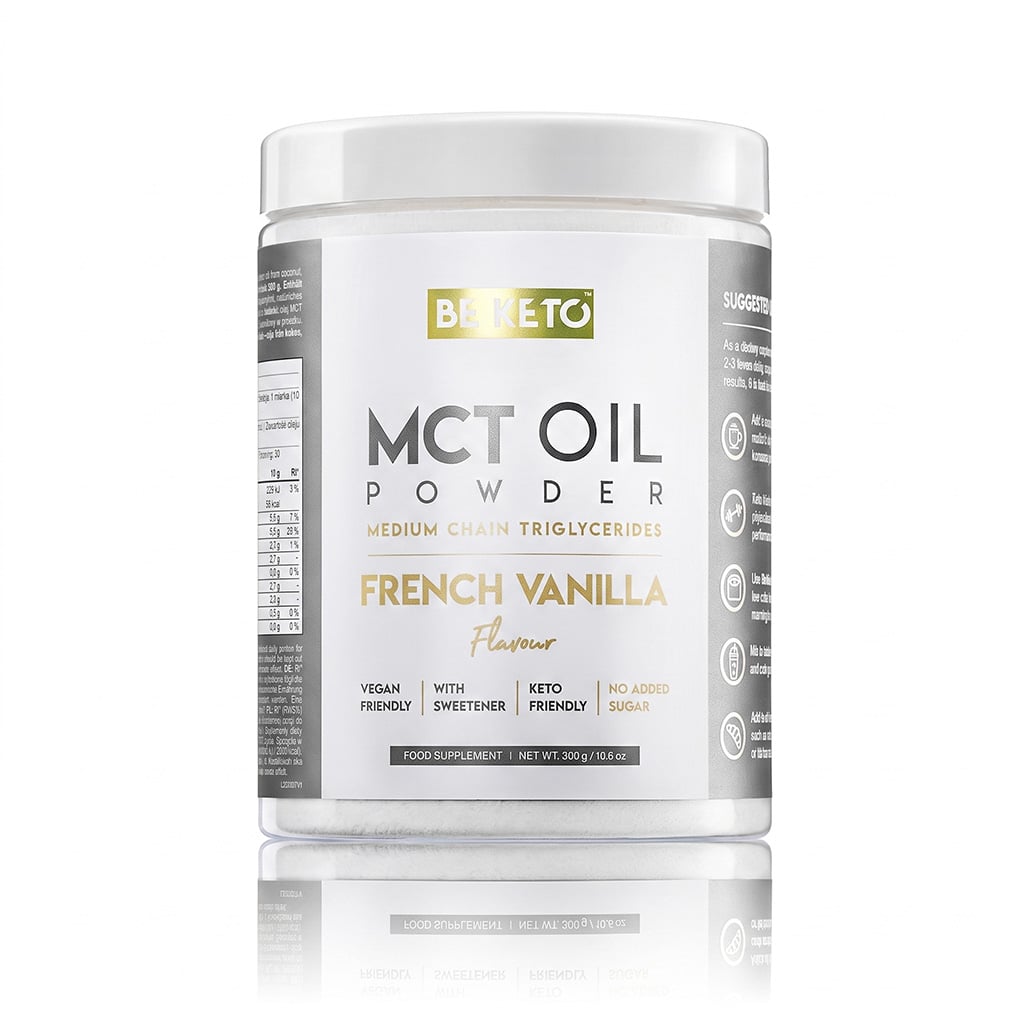
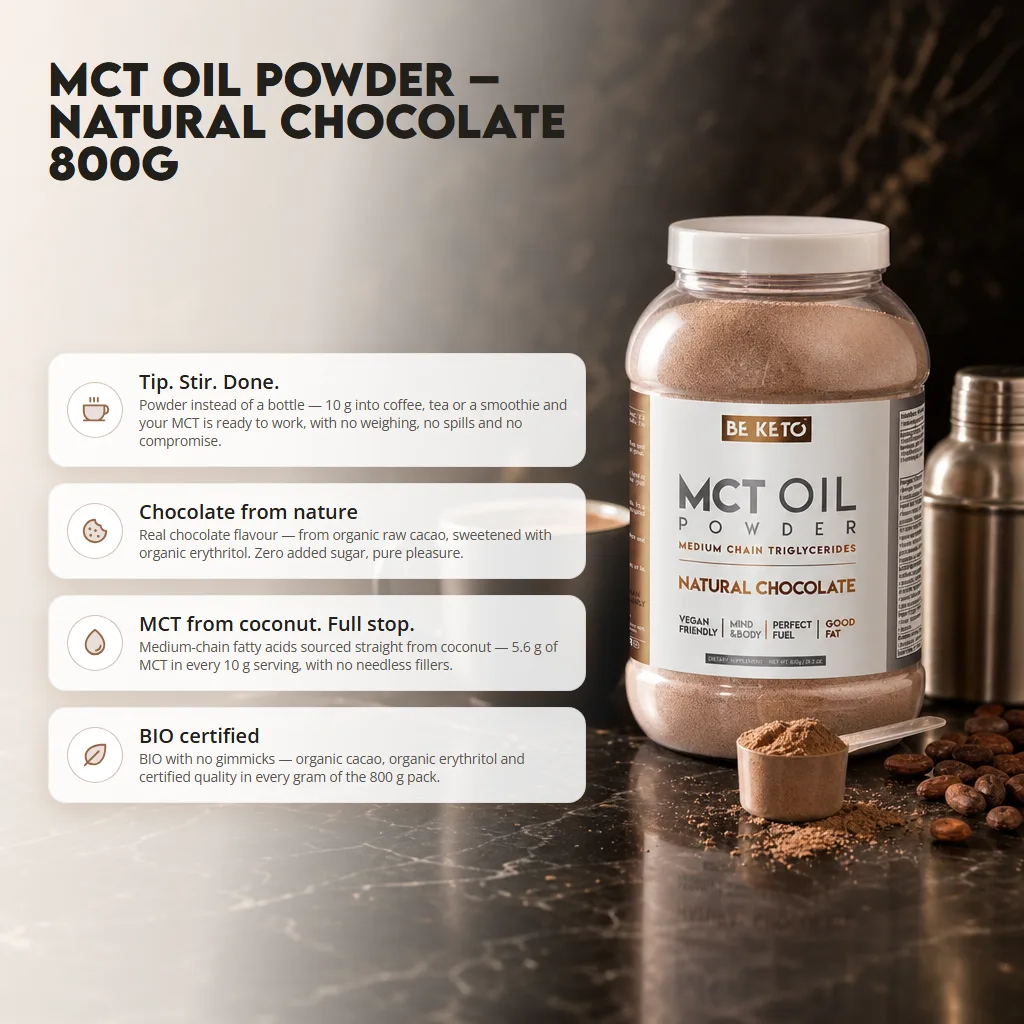
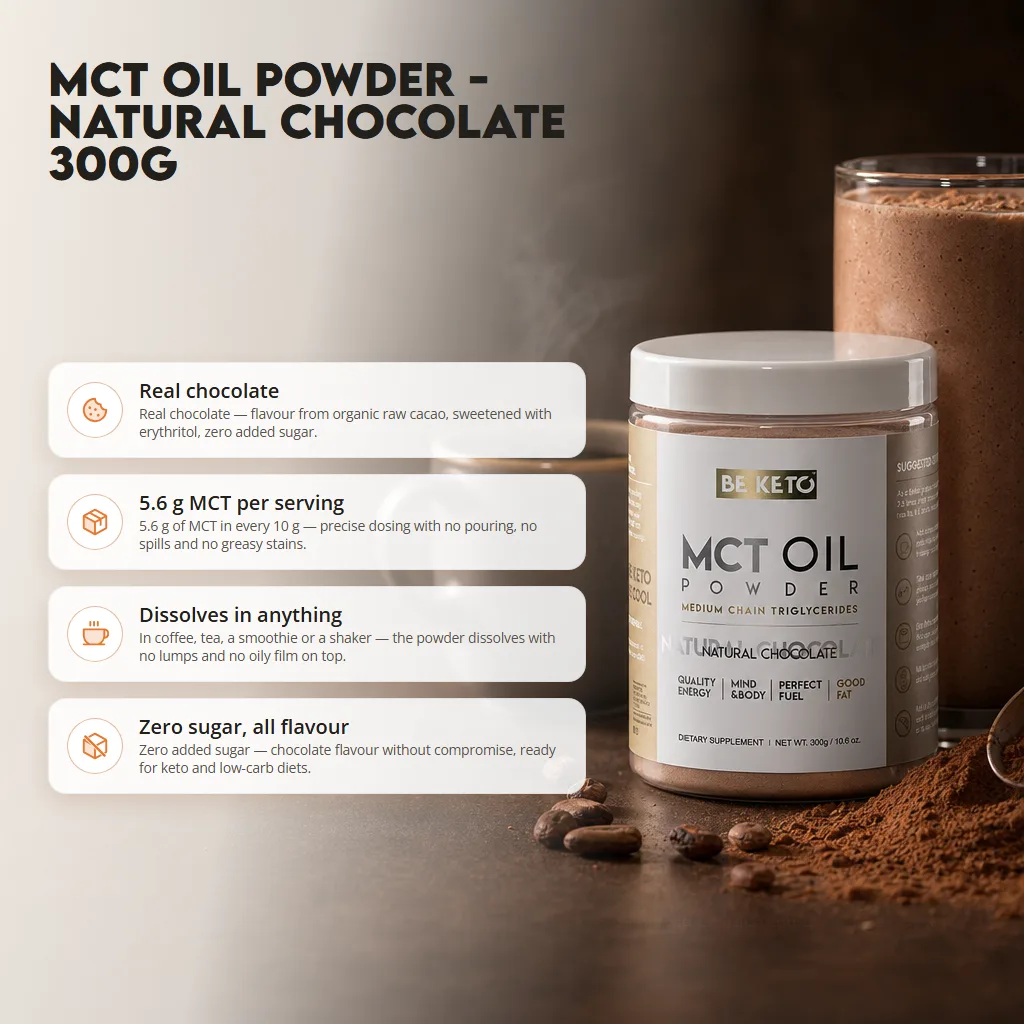
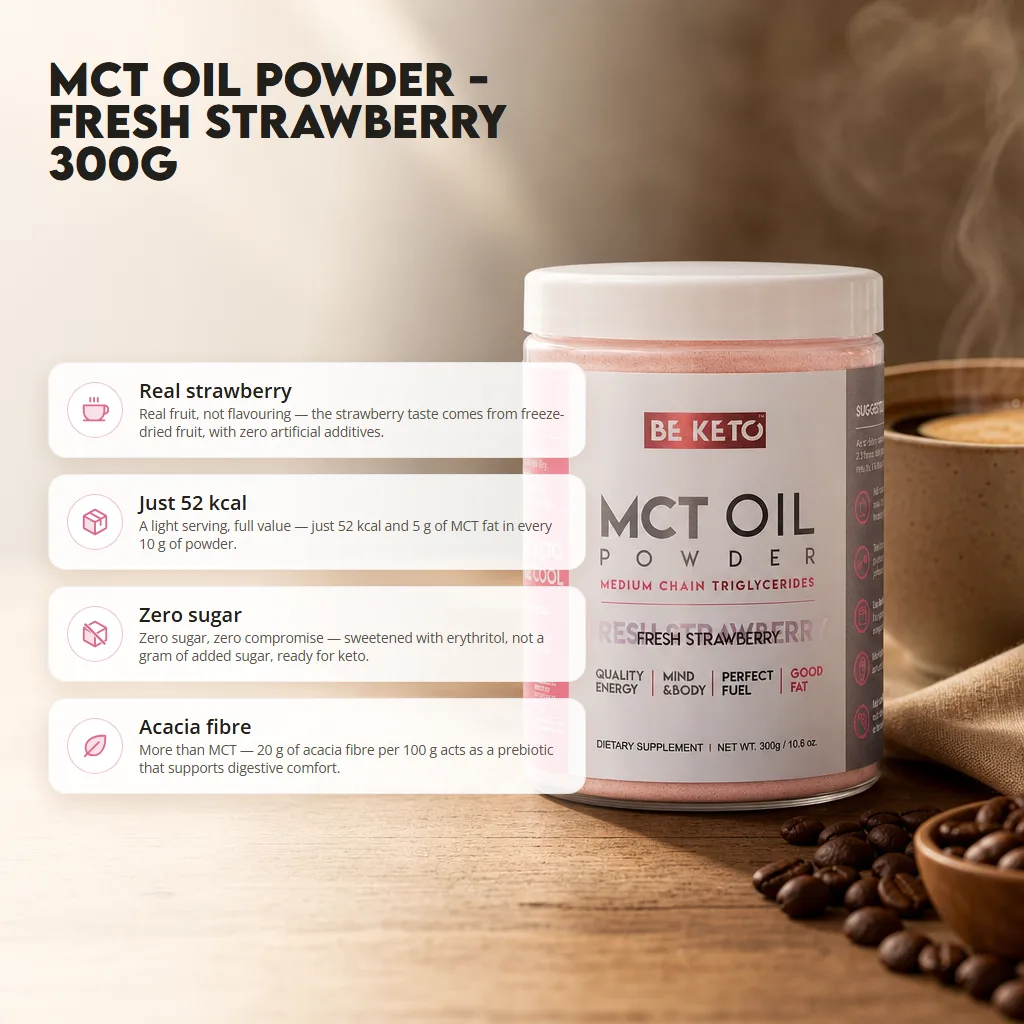
MCT oil powder stirs into cold drinks without separating, because the fat sits on acacia fibre. A 10 g scoop gives 48 kcal to 69 kcal depending on the tub, and the flavoured powders are sweetened with erythritol.
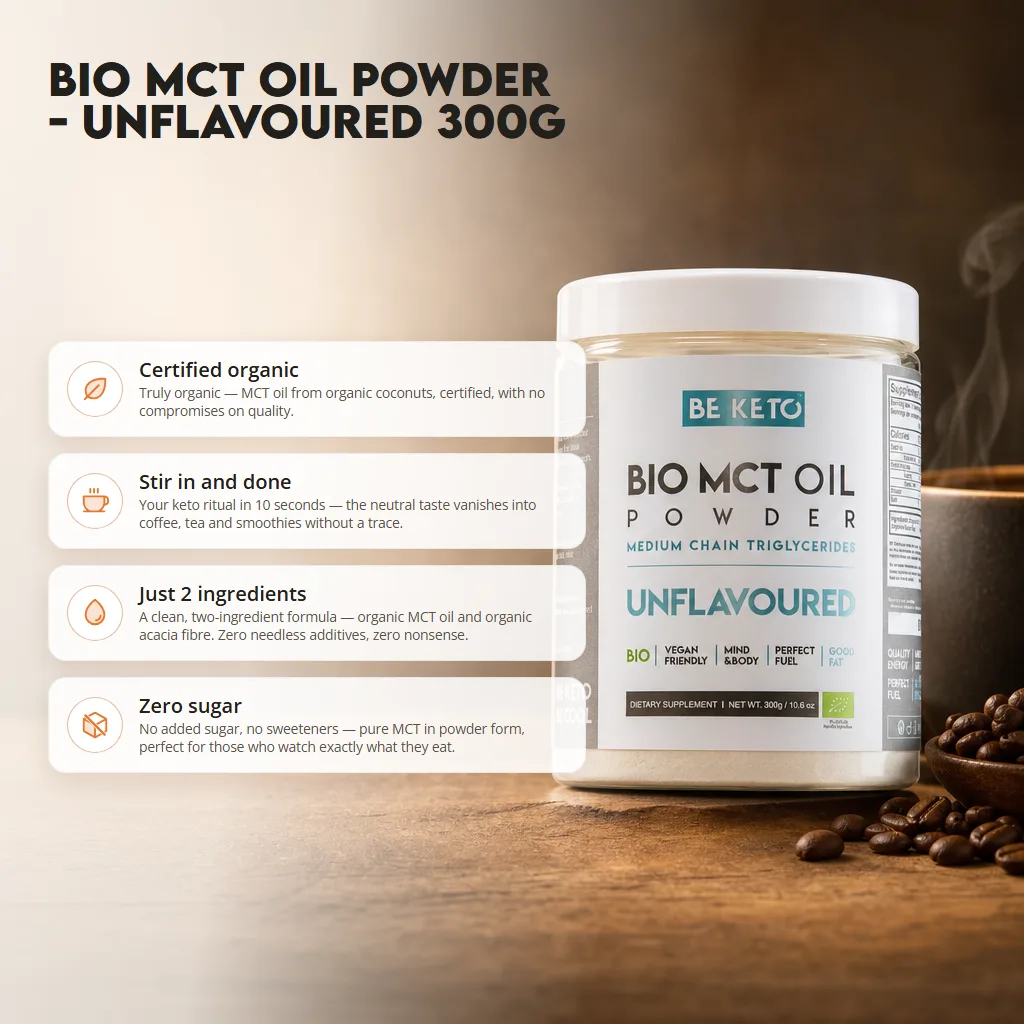
The unflavoured powder leaves out both the flavouring and the erythritol, which is why it carries 7.1 g of fat per 10 g scoop against 5.0 g to 5.6 g in the flavoured tubs.
Is MCT oil just coconut oil?
No, MCT oil is a fraction of coconut oil rather than the whole oil. Coconut oil also carries lauric acid (C12) and longer chains, while our MCT oils name only C8, or C8 with C10.
The two acids are separated from the rest of the coconut fat, which is why the bottle stays liquid at room temperature while a jar of coconut oil sets solid in a cool kitchen.
On the label the difference shows up in one line. Coconut oil lists coconut oil; these bottles list caprylic acid, or caprylic and capric acid, and nothing else.
How do you use MCT oil day to day?
A serving is 15 ml of liquid oil or a 10 g scoop of powder. Both go into coffee, shakes, yoghurt, soups and salad dressings, and both count towards the day's fat rather than replacing a meal.
The powder dissolves in cold liquid, while the oil needs something warm or a quick blend to mix in evenly. When coffee is the usual route, our functional coffees are the instant blends we sell for the same cup.
The oils taste neutral and disappear into whatever they go into. The powders bring their own flavour: French Vanilla, Natural Chocolate, Coconut and White Chocolate, Wild Raspberry, Fresh Strawberry, plus an unflavoured tub for savoury dishes.
What does MCT oil cost per serving?
A 15 ml serving of C8 + C10 oil costs £0.42 from the 1000 ml bottle. The same serving costs £0.51 from the 500 ml bottle and £0.82 from the 100 ml bottle, which is the trial size.
The organic 100% C8 line runs higher per serving, and MCT oil powder is priced per 10 g scoop:
- Organic 100% C8, 1000 ml: £33.90, 66 servings, £0.51 per serving
- Organic 100% C8, 500 ml: £24.90, 33 servings, £0.75 per serving
- C8 + C10, 1000 ml: £27.90, 66 servings, £0.42 per serving
- MCT oil powder, 300 g: from £27.90, 30 scoops, from £0.93 per scoop
- MCT oil powder, 800 g: £67.90, 80 scoops, £0.85 per scoop
- MCT oil capsules: £18.90 for 90 capsules, £0.21 per capsule
Buy MCT oil in the size that matches how often you use it: the litre is the cheapest per serving, the 100 ml bottle costs £4.90 to try, and we deliver across the UK, free from £59.
Frequently asked questions
What is MCT oil and what is it good for?
MCT oil in the UK is coconut fat made of caprylic acid (C8) and capric acid (C10), used in the kitchen: stirred into coffee, shakes and dressings, with 135 kcal and no carbohydrate per 15 ml serving. It comes as oil, capsules and powder.
What is the downside of taking MCT oil?
Taken in large amounts at once, MCT oil can cause stomach upset, loose stools or nausea, which is why a first serving of 5 ml is the sensible start. Splitting servings across the day, and taking them with food, makes the first week easier.
Can MCT oil reduce belly fat?
No health claim for MCT is authorised in Great Britain, so we make none: MCT oil is a pure fat with 900 kcal per 100 ml and it counts towards the day's energy. We describe what is in the bottle, not what it will do for you.
How much MCT oil should you take a day?
Start at 5 ml and build up to the 15 ml serving printed on the label, spread across the day rather than taken at once. The powder is measured with a 10 g scoop. Our guide to MCT oil dosage walks through the steps.
Does MCT oil contain carbohydrate?
Liquid MCT oil has 0 g of carbohydrate per 15 ml, which is why it fits a keto diet without any counting, while a 10 g scoop of MCT powder has 1.7 g to 2.8 g from acacia fibre and erythritol.
Is BeKeto MCT oil organic?
Organic certification covers the 100% C8 liquids in 100 ml, 500 ml and 1000 ml and the unflavoured powder: these are the organic MCT oils we ship in the UK, and they carry Organic in the product name.
Is MCT oil suitable for vegans?
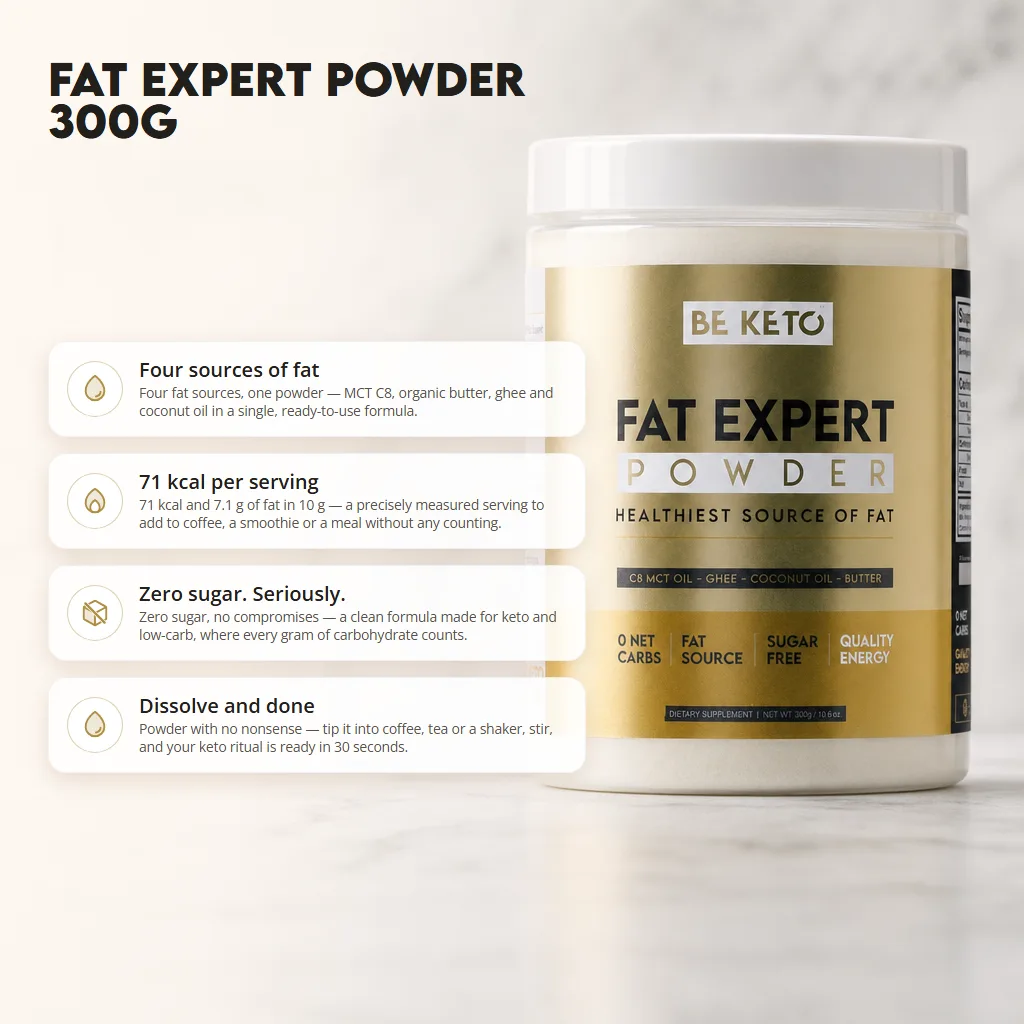
The oils and capsules list no animal ingredients: the bottles hold coconut MCT oil alone, and the capsule shell is starch, glycerine and water. The powders each have their own list, and one is the exception: Fat Expert Powder is made with milk protein and peanut butter.
Can you cook with MCT oil?
MCT oil goes into cold and warm dishes: coffee, shakes, yoghurt, soups and dressings, stirred in at the table or into a finished pan. Its neutral taste leaves the flavour of the dish alone. Our article on cooking with MCT oil covers the practical side.
Where can you buy MCT oil in the UK?
BeKeto ships MCT oil across the United Kingdom with free delivery on orders from £59, so you do not need a shop near you; health food shops and pharmacies also stock MCT oil on the high street.

 United KingdomCurrent regionDelivery within the United KingdomCurrency: Pound Sterling (£)
 GermanyDelivery within Germany and AustriaCurrency: Euro (€)
 FranceDelivery within France and BelgiumCurrency: Euro (€)
 ItalyDelivery within ItalyCurrency: Euro (€)
 PolandDelivery within Poland and EuropeCurrency: Zloty (PLN)
 Czech RepublicDelivery within the Czech Republic and SlovakiaCurrency: Czech Koruna (Kč)
 SpainDelivery within SpainCurrency: Euro (€)