How do you take a reading?
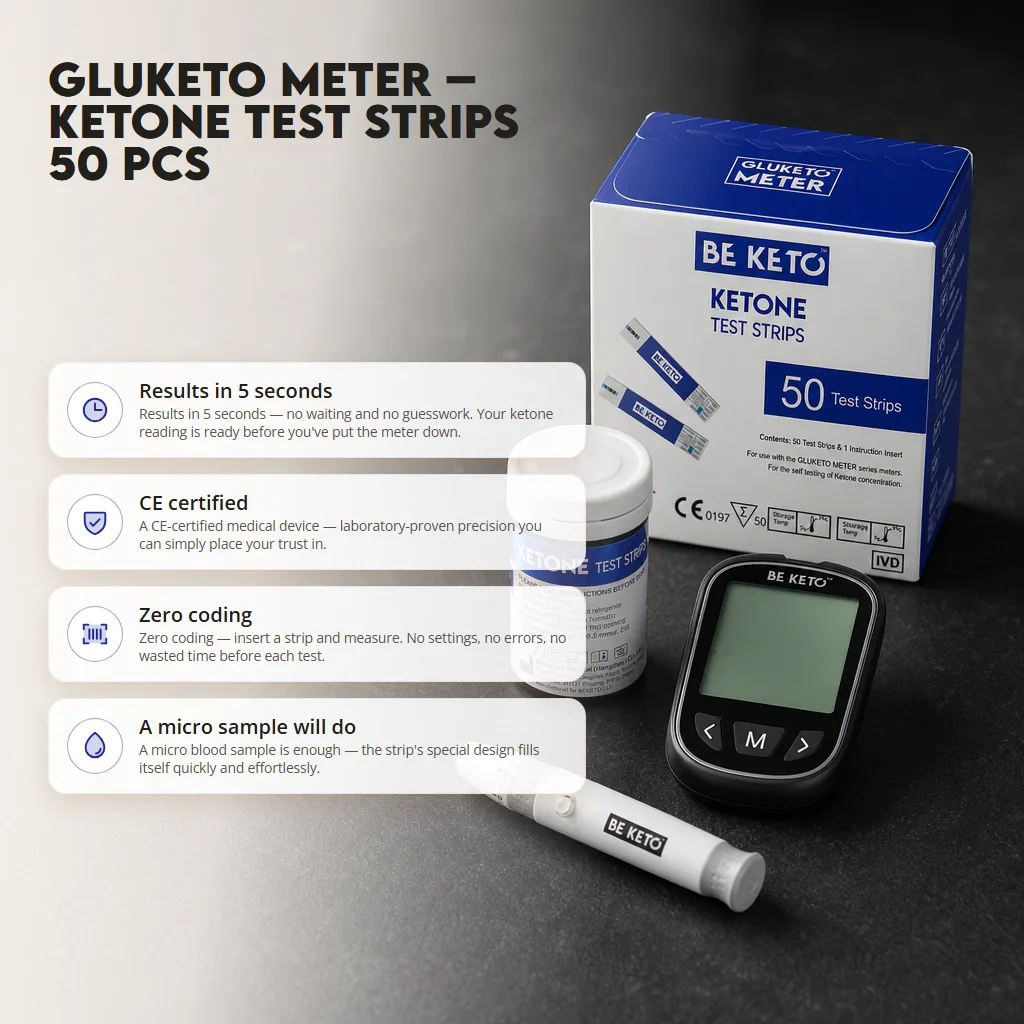
Slide a strip into the port, prick a fingertip and read the figure after 5 seconds. The lancing device does the pricking, and the drop is touched to the end of the strip rather than dropped on top of it.
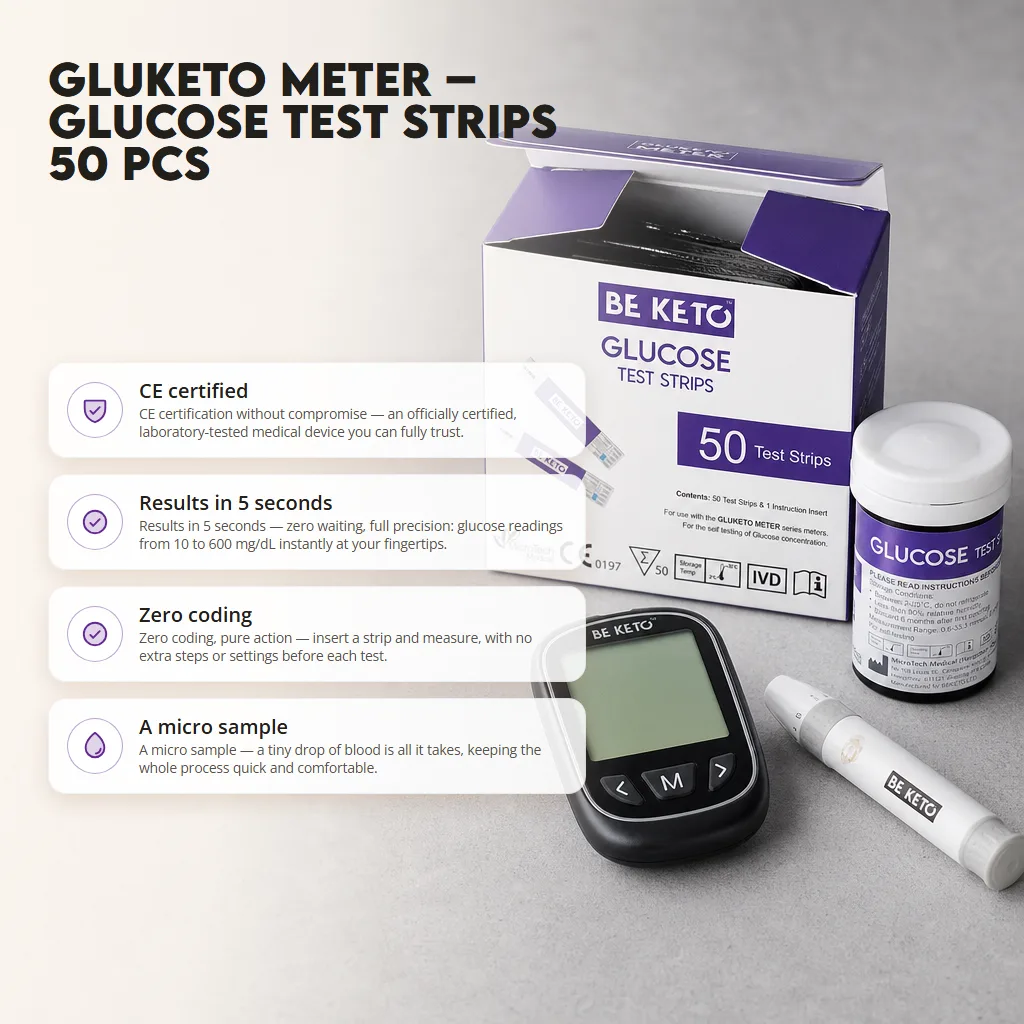
The strips carry no code to key in, so one goes straight from the pot into the meter, and the sample is a small drop taken from the side of a fingertip.
The same device is sold under several names, and a ketometer, keto meter or ketone monitor all describe the same thing: a meter that reads ketones from a finger prick sample.
What comes in the GluKeto starter pack?
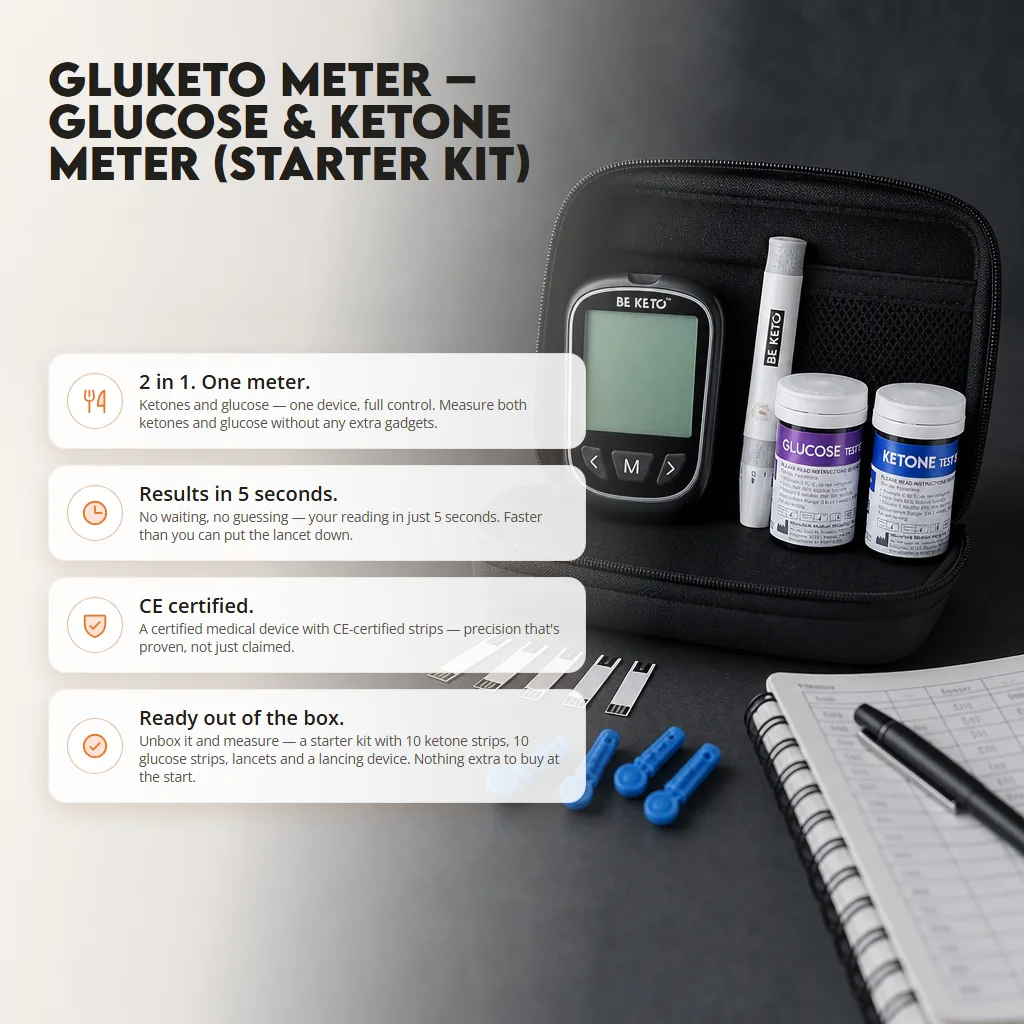
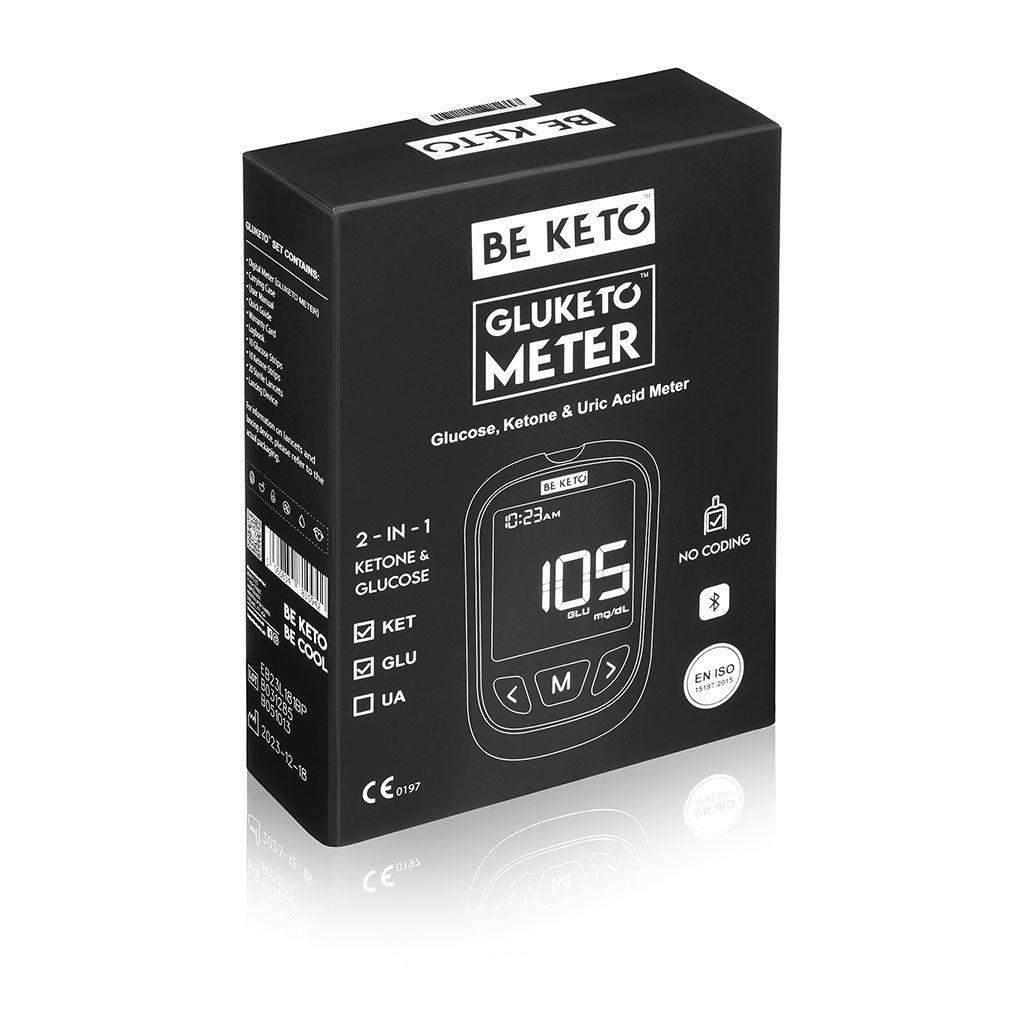
The £45.90 starter pack holds the meter, 20 strips, a lancing device, 20 lancets and a hard case. A results diary, the manual and the warranty card come in the box as well, and the strips split into 10 for ketones and 10 for glucose.
The pack therefore covers 20 readings straight out of the box, ten of ketones and ten of glucose, with one sterile lancet each.
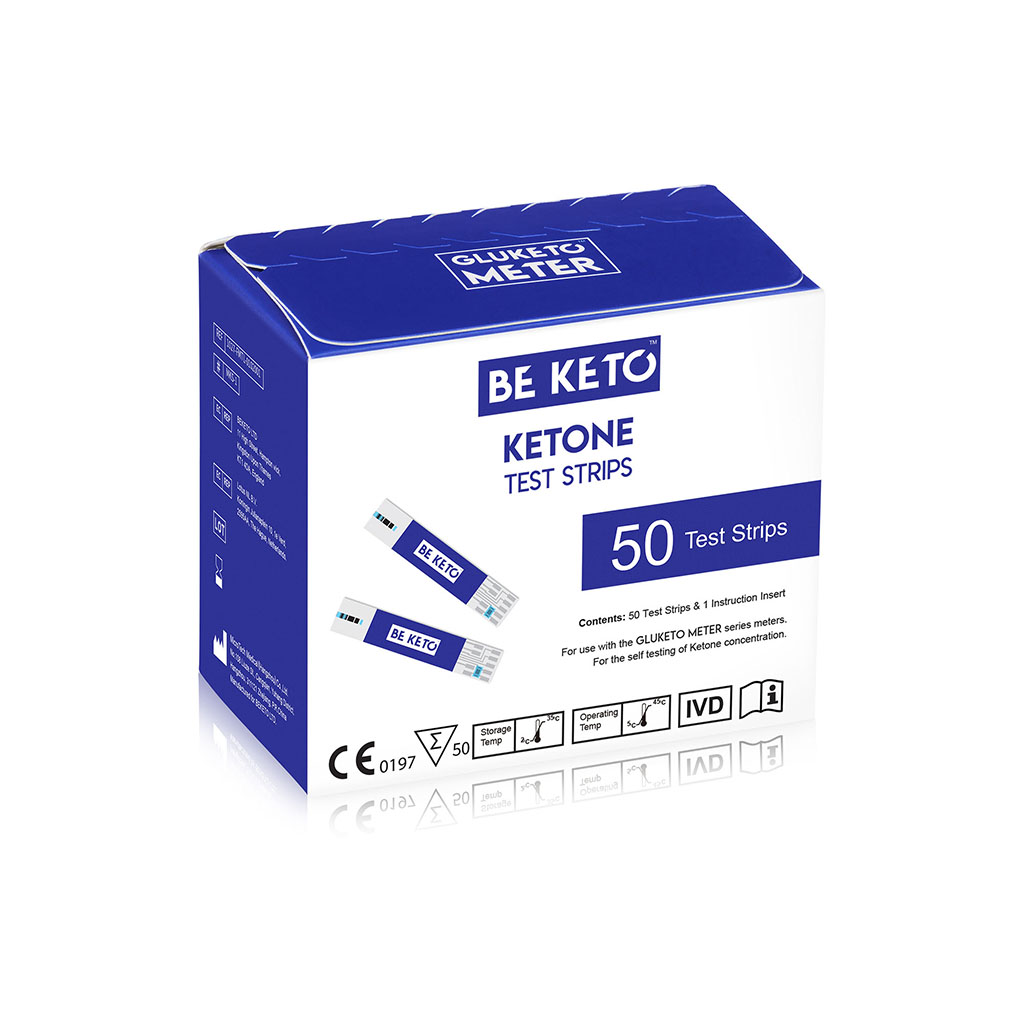
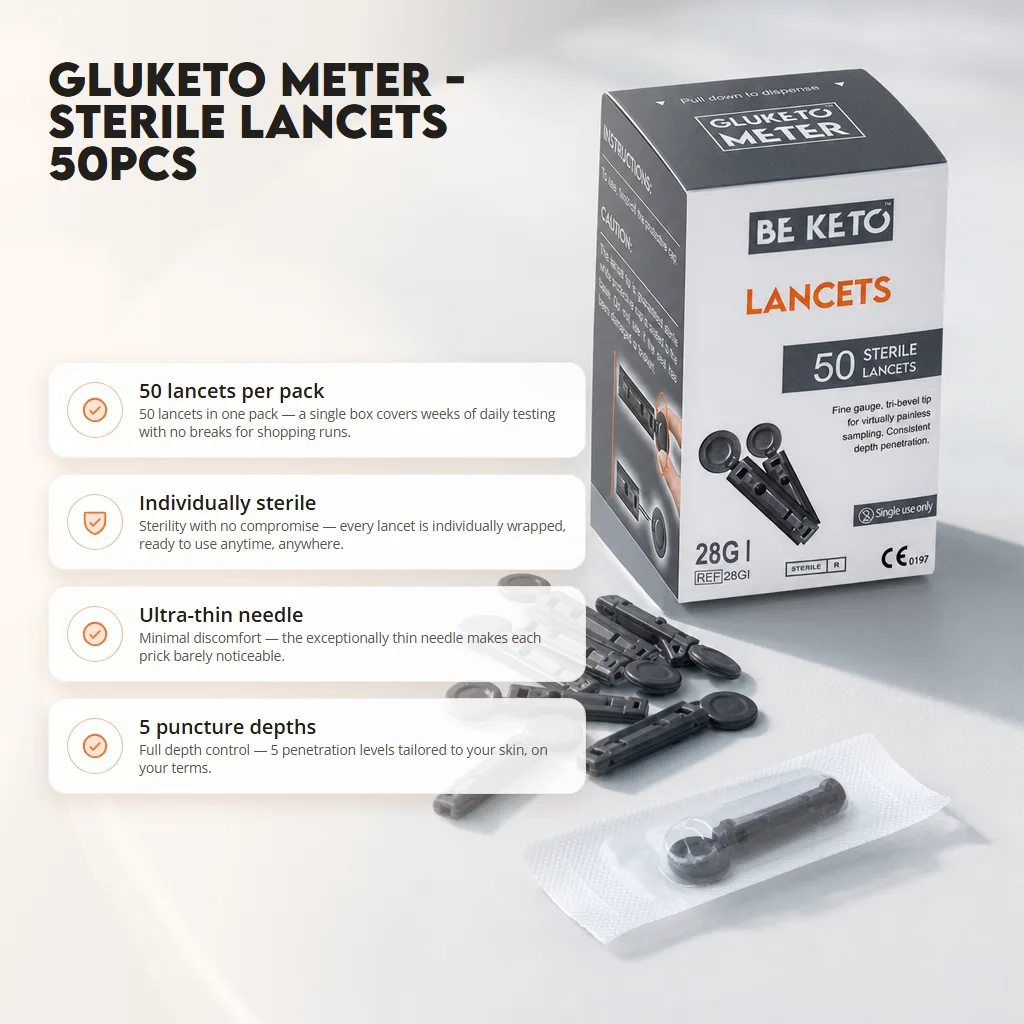
What runs out are the strips and the lancets, sold here as separate refills of 50 ketone strips, 50 glucose strips and 50 lancets.
How much does one ketone test cost?
One blood ketone reading costs about £1.02: a 92p strip plus a 10p lancet. A glucose reading on the same meter costs 38p, because that strip is the cheaper of the two.
Refill prices on this shelf work out per piece as follows.
- 50 ketone strips: £45.90, so 92p a strip
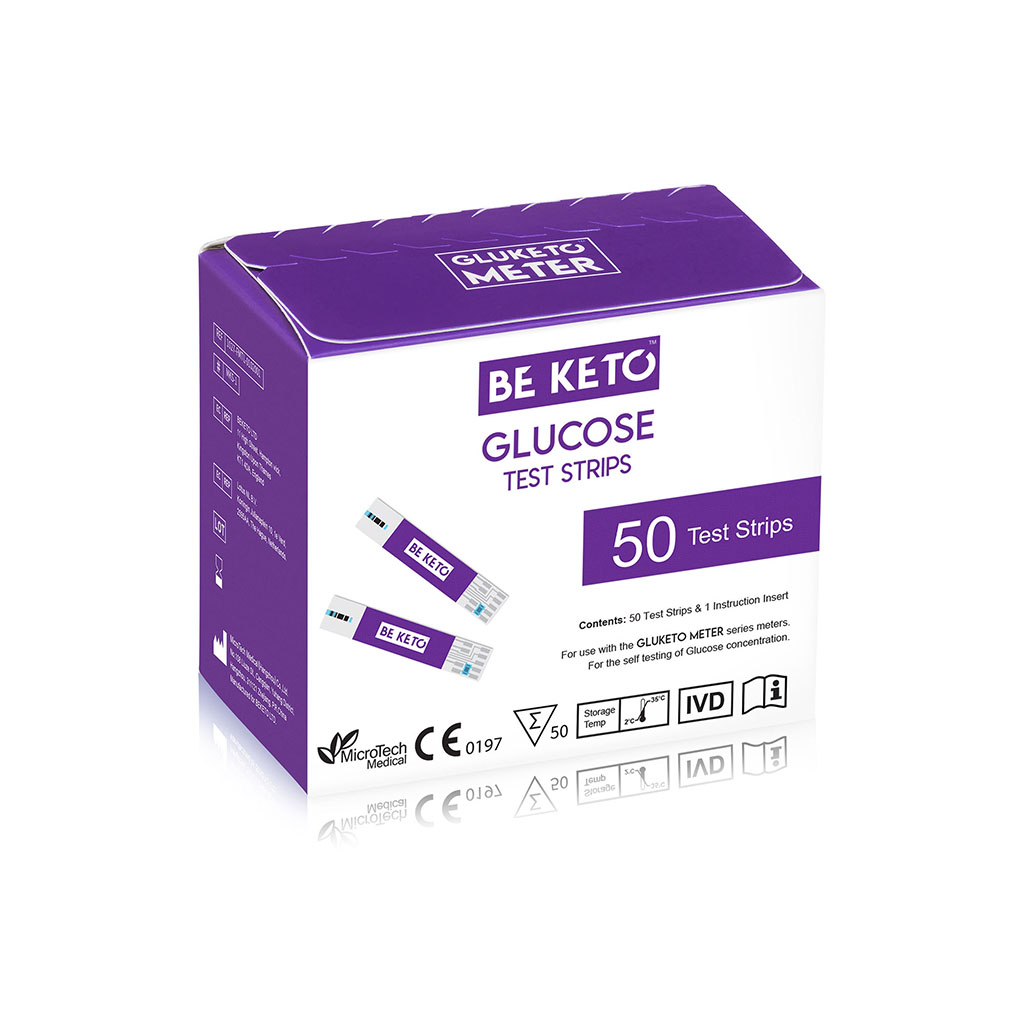
- 50 glucose strips: £13.90, so 28p a strip
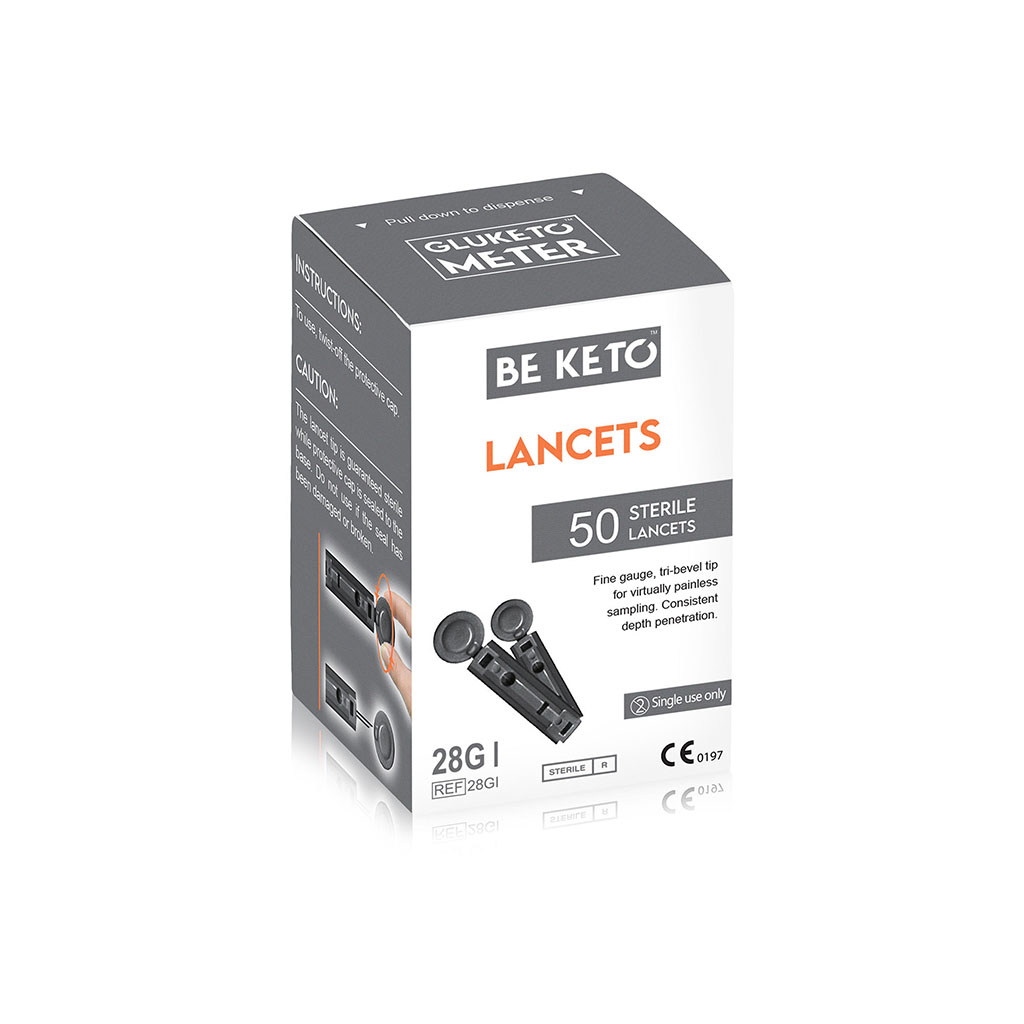
- 50 sterile lancets: £4.90, so 10p a lancet
- One reading: about £1.02 for ketones, 38p for glucose
At one test a day, a pack of 50 ketone strips covers 50 days of testing, while the meter itself is bought once.
What should my ketone levels be if I am in ketosis?
Nutritional ketosis is usually put at a blood reading between 0.5 and 3.0 mmol/L. The GluKeto ketone strips read from 0 to 8.0 mmol/L, so that whole band sits well inside the range of the strip.
Readings from 0.5 to 1.5 mmol/L are commonly described as light ketosis, and 1.5 to 3.0 mmol/L as a deeper reading. Above 3.0 mmol/L the strip simply carries on up to 8.0, so a high figure is still a figure and not an off scale result.
One number on its own says little, so compare readings taken at the same hour on different days. Our guide to ketone levels in ketosis sets the bands out in full.
Are ketone meters accurate?
A blood meter gives a figure to one decimal place, but two readings minutes apart can differ. Each result describes one drop at one moment, so testing at the same hour each day is what makes two days comparable.
The usual cause of an odd result is too small a drop of blood, so let a full bead form instead of squeezing the finger. A meal, a workout or a long gap without food between tests moves the number too.
We sell this meter for following ketosis on a keto diet. Anyone who needs blood glucose or ketones measured for a medical reason should speak to a pharmacist or a doctor.
Blood ketone meter or urine test strips?
A blood meter returns a number in mmol/L, while a urine strip returns a colour band. The cost per test is just as different: about £1.02 from blood against 3.5p from urine.
A urine strip reads what the body passed out a few hours earlier, and the colour fades once you are keto adapted, because less is leaving that way. A blood reading keeps moving at that point, which is when most people switch.
Start with ketone test strips while you settle into the diet, and choose a meter when you want a figure rather than a shade to match by eye.
What is the best blood ketone meter in the UK?
There is no single best meter, so compare four figures before you buy. Those figures are the price of one strip, the reading time, whether the strips need coding and what the kit already includes.
On those four figures the GluKeto Meter reads as follows.
- Price per strip: 92p for ketones, 28p for glucose
- Reading time: 5 seconds
- Coding: none, the strip goes straight in
- In the box: meter, 20 strips, lancing device, 20 lancets, hard case, results diary
Those four lines can be put side by side with any competing kit, which a star rating cannot. Check the price of a refill pack before the price of the device, because that is the cost that repeats.
Where can you buy a ketone meter in the UK?
Blood ketone meters are sold over the counter in the UK, with no prescription needed. Pharmacies keep them, medical suppliers list them online, and marketplaces such as Amazon and eBay carry a spread of brands.
What differs between sellers is the price of the strips rather than the meter, so check what a refill pack costs before choosing a device.
Order the GluKeto starter pack here for £45.90, with the ketone strips, glucose strips and lancets on the same shelf and free UK delivery on orders over £59.
Frequently asked questions
Where can I get a free ketone meter in the UK?
There is no free meter scheme for keto. A blood meter is a retail purchase, and the GluKeto starter pack costs £45.90 with 20 readings already in the box.
How often should you test your ketones?
Once a day, at the same hour. That is what makes one day comparable with the next, and a pack of 50 strips covers 50 days at that rate.
Is there a continuous ketone monitor in this range?
No, this meter reads a finger prick sample. Continuous ketone sensors are a separate class of device worn on the skin, and we do not sell one.
Can one meter read both glucose and ketones?
Yes, the GluKeto Meter reads both. The strip you put in decides which figure comes back: a ketone strip returns a reading in mmol/L, a glucose strip returns the glucose figure.
Do the GluKeto strips need coding?
No, neither strip needs coding. Take one from the pot, slide it into the meter and take the reading. There is no code chip and no number to key in first.
Can I use test strips from another brand?
No, only GluKeto strips fit this meter. The ketone and glucose strips sold here are made for it, and both refills come in packs of 50.
How long do the batteries last?
More than 1,000 tests on one set. That is twenty full packs of 50 strips, or more than two years of testing once a day.
Does the meter work out the Glucose Ketone Index (GKI)?
No, it shows the two figures separately. The meter returns a ketone reading or a glucose reading depending on the strip you use, and it does not combine them into an index.


 United KingdomCurrent regionDelivery within the United KingdomCurrency: Pound Sterling (£)
 GermanyDelivery within Germany and AustriaCurrency: Euro (€)
 FranceDelivery within France and BelgiumCurrency: Euro (€)
 ItalyDelivery within ItalyCurrency: Euro (€)
 PolandDelivery within Poland and EuropeCurrency: Zloty (PLN)
 Czech RepublicDelivery within the Czech Republic and SlovakiaCurrency: Czech Koruna (Kč)
 SpainDelivery within SpainCurrency: Euro (€)