What vitamins am I missing on keto?
A ketogenic plate drops the foods that carry most of the day's vitamin C, folate and potassium. Fruit, bread, potatoes and pulses go first when carbohydrate comes down, and with them go the largest single sources of those three.
Vitamin D sits apart from that list, because it comes from sunlight on the skin rather than from the plate, and a British winter supplies little of it either way. Neither a low carbohydrate plate nor a high one changes that arithmetic.
The B group depends on what replaced the carbohydrate. A mostly plant based keto plate is the one to watch, which is why Vitamin B12 in Drops uses methylcobalamin and carries a vegan label.
Minerals are the fourth piece, and most of them belong to the electrolyte shelf rather than to this one. The five minerals in Keto Greens are declared per serving, and all five are small: 143 mg of potassium, 22 mg of calcium and 17 mg of magnesium in a 10 g scoop.
Which multivitamin is best for a keto diet?
The best multivitamin for a keto diet here is not a single tablet. No multivitamin sits on this shelf, so the nearest thing is a B complex capsule taken alongside a greens powder.
Vitamin B Complex is one capsule a day from a 60 capsule pack at £17.90, in an HPMC shell. The ingredient list covers B2, B3, B5, B6, B9, B12, biotin, choline and myo-inositol.
What that pack does not state in text is the milligrams per capsule, so this page lists the ingredients and stops there. The figure that decides whether any wording is allowed sits on the printed label, not the product page.
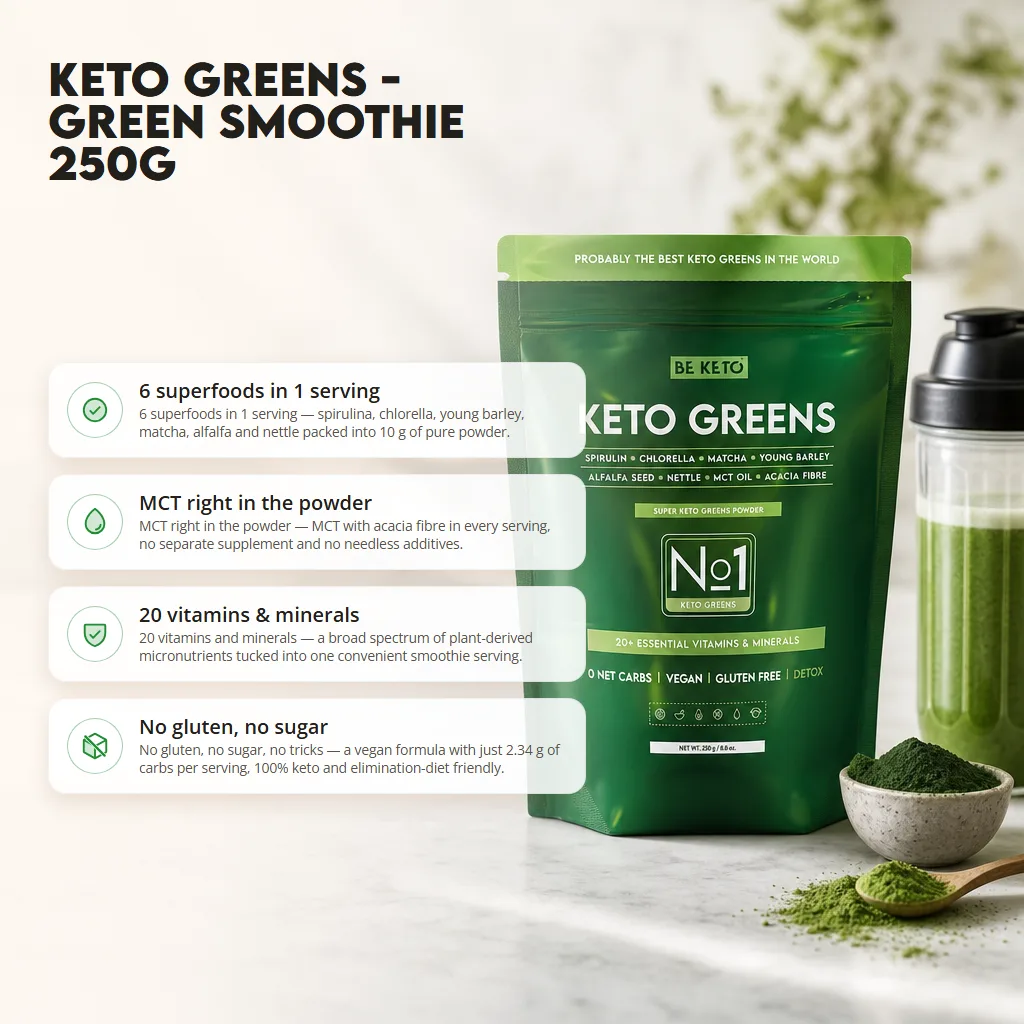
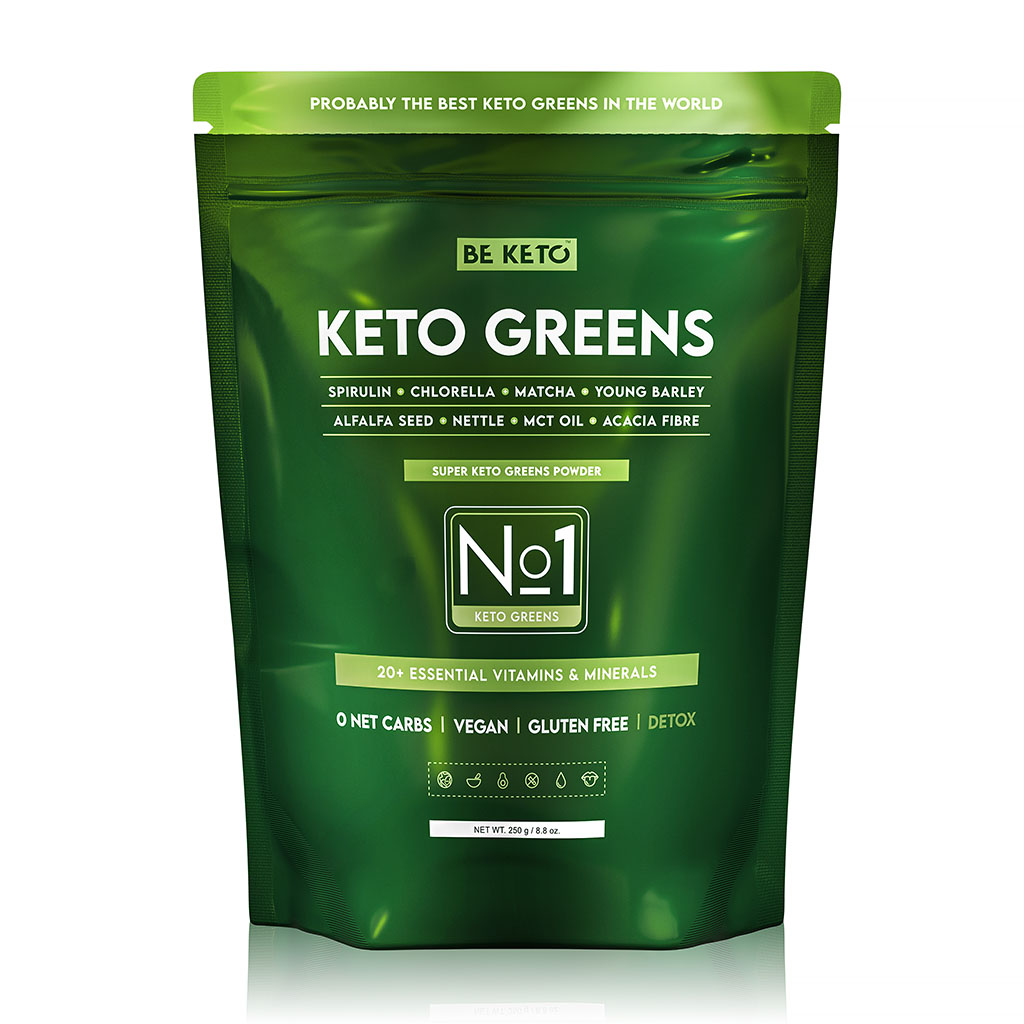
Keto Greens covers the plant and mineral side of the same job. A 10 g scoop of the 250 g tub gives 36 kcal, 3.75 g of protein, 2.34 g of carbohydrate and 2.47 g of fibre, from spirulina, chlorella, young barley, matcha, alfalfa seed, nettle, coconut MCT and prebiotic fibre.
That tub is high in fibre at 24.7 g per 100 g, carries no added sugar and is vegan, which are the three things it may say about itself. It costs £24.90 for 25 servings, or £1.00 a serving.
What makes a vitamin keto friendly?
A vitamin is keto friendly when the carbohydrate in one serving is small and stated on the pack. That carbohydrate sits in the base rather than in the vitamin itself, which is why the same nutrient can be keto friendly in one format and not in another.
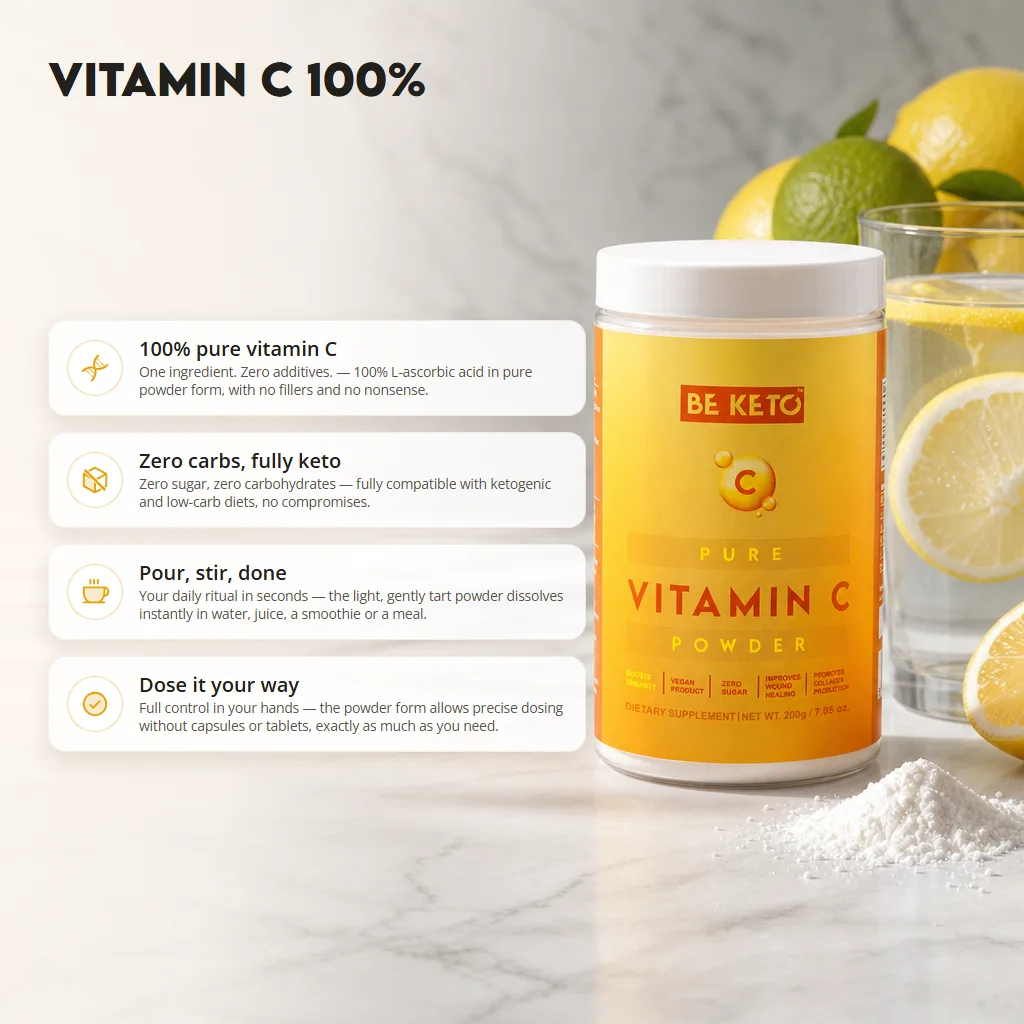
Vitamin C 100% is the clearest case, because it is pure L-ascorbic acid with no sugar and no carbohydrate. One gram of the powder is 1,000 mg of L-ascorbic acid, and the pack costs £6.90.
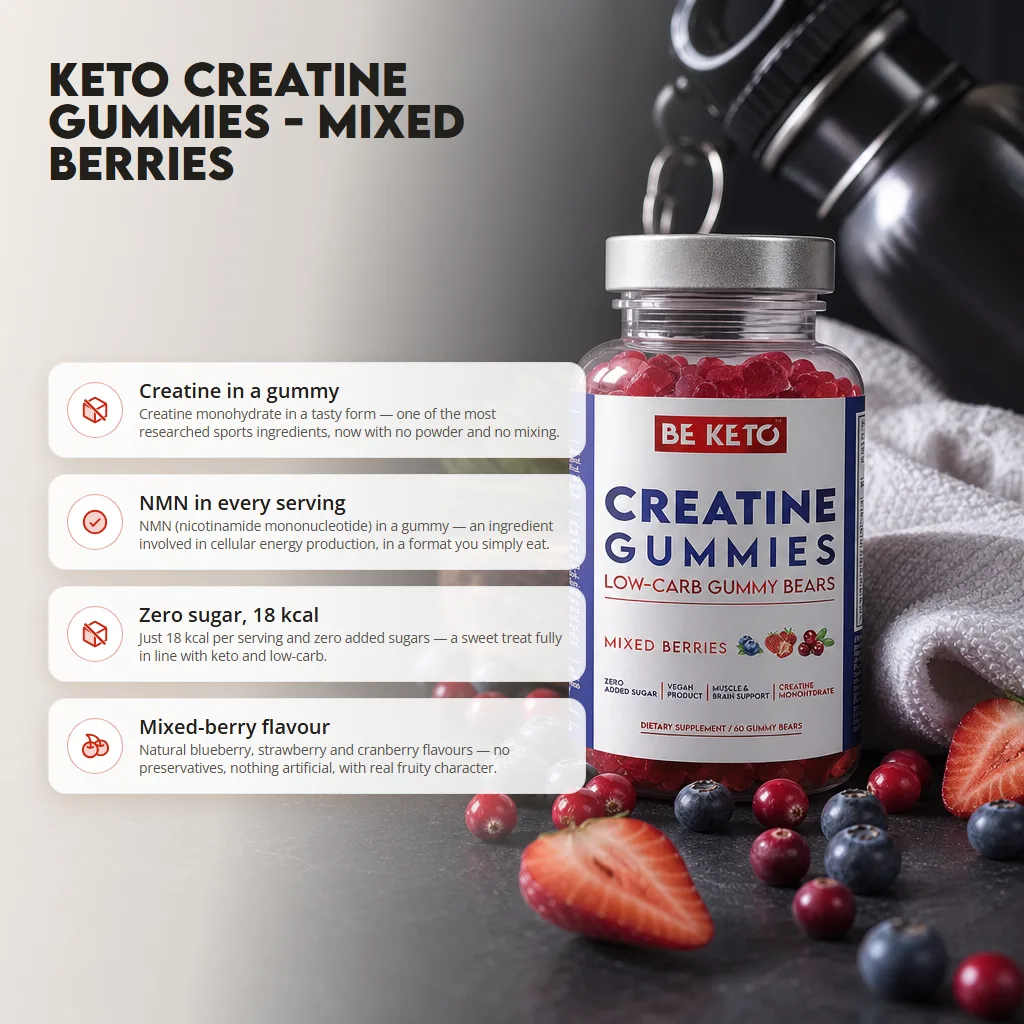
Sweetened formats are where the figure earns its place. Keto Gummies with Creatine carry 18 kcal in a serving of two gummies and no added sugar, and a 10 g scoop of Keto Greens carries 2.34 g of carbohydrate.
Capsules and drops add almost nothing either way, because the shell is HPMC cellulose and the liquid base is oil or glycerine. The number to check across the whole shelf is the carbohydrate per serving, not the carbohydrate per 100 g.
Drops, capsules or powder: which form should you pick?
The form decides how the dose is measured and what carries it. Drops are counted out, capsules are fixed at one, two or three a serving, and powder is weighed by gram or by scoop.
Three of the four drop bottles are dissolved in coconut MCT oil: Vitamin D3, Vitamin A+E and Vitamin B12, each in a 30 ml bottle at £16.90, £11.90 and £14.90. Vitamin D3 is taken as two drops with a meal.
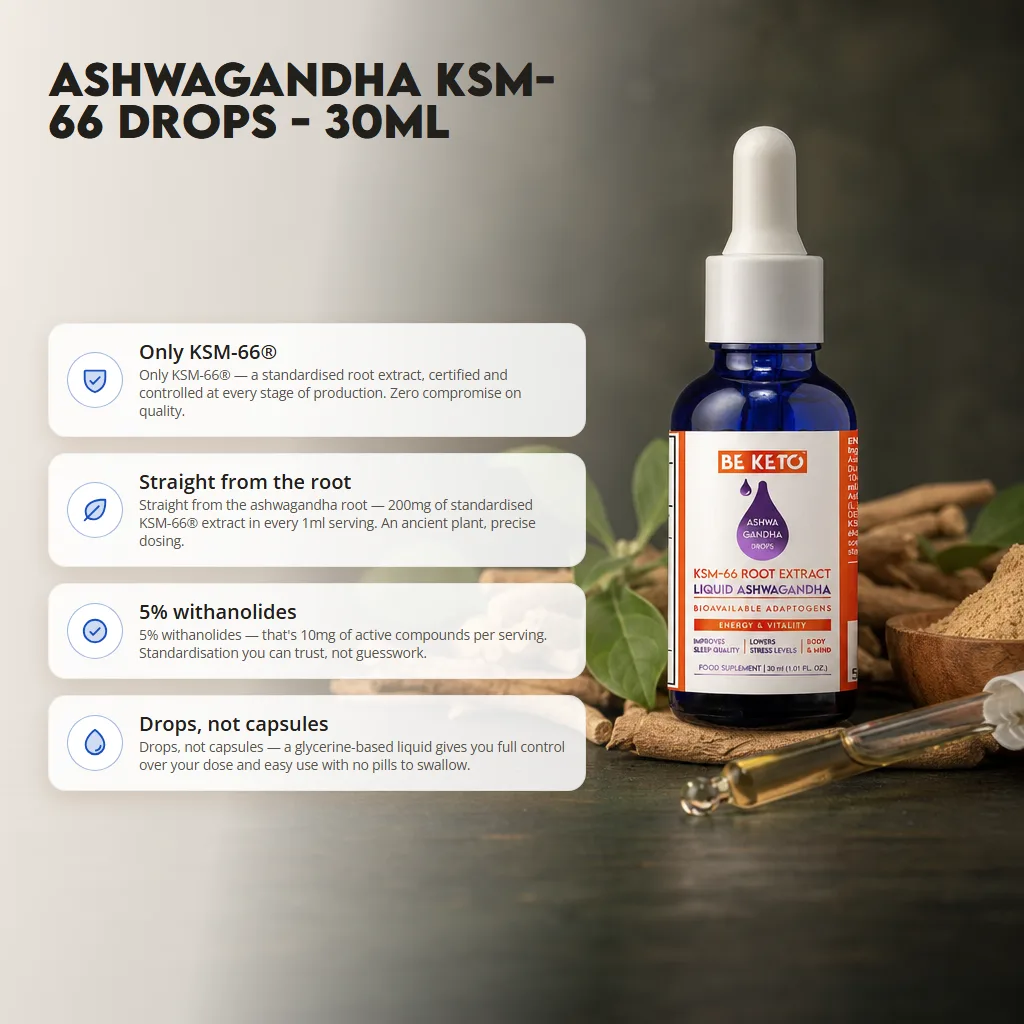
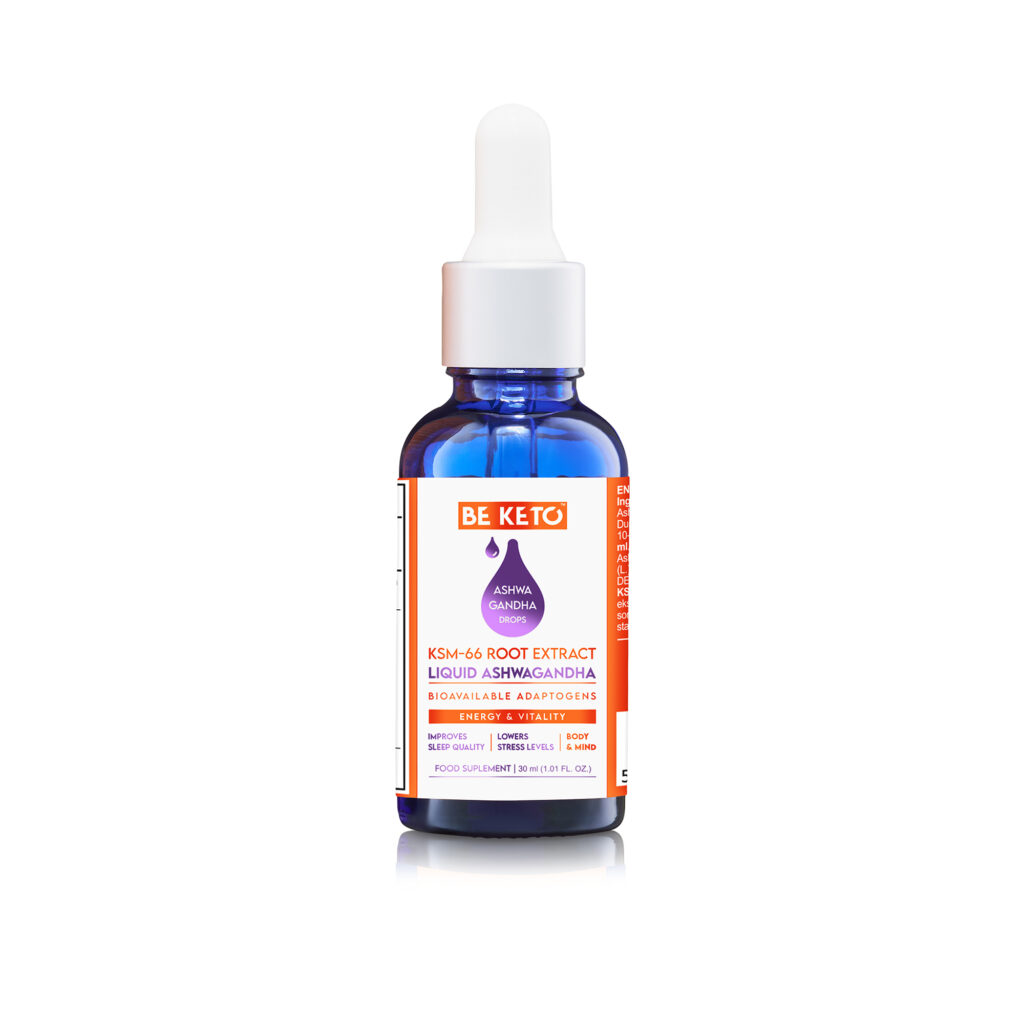
Ashwagandha KSM-66 in Drops is the exception, because its base is water and glycerine rather than oil. The bottle holds 30 ml and 30 servings at £23.90, which works out at £0.80 a serving.
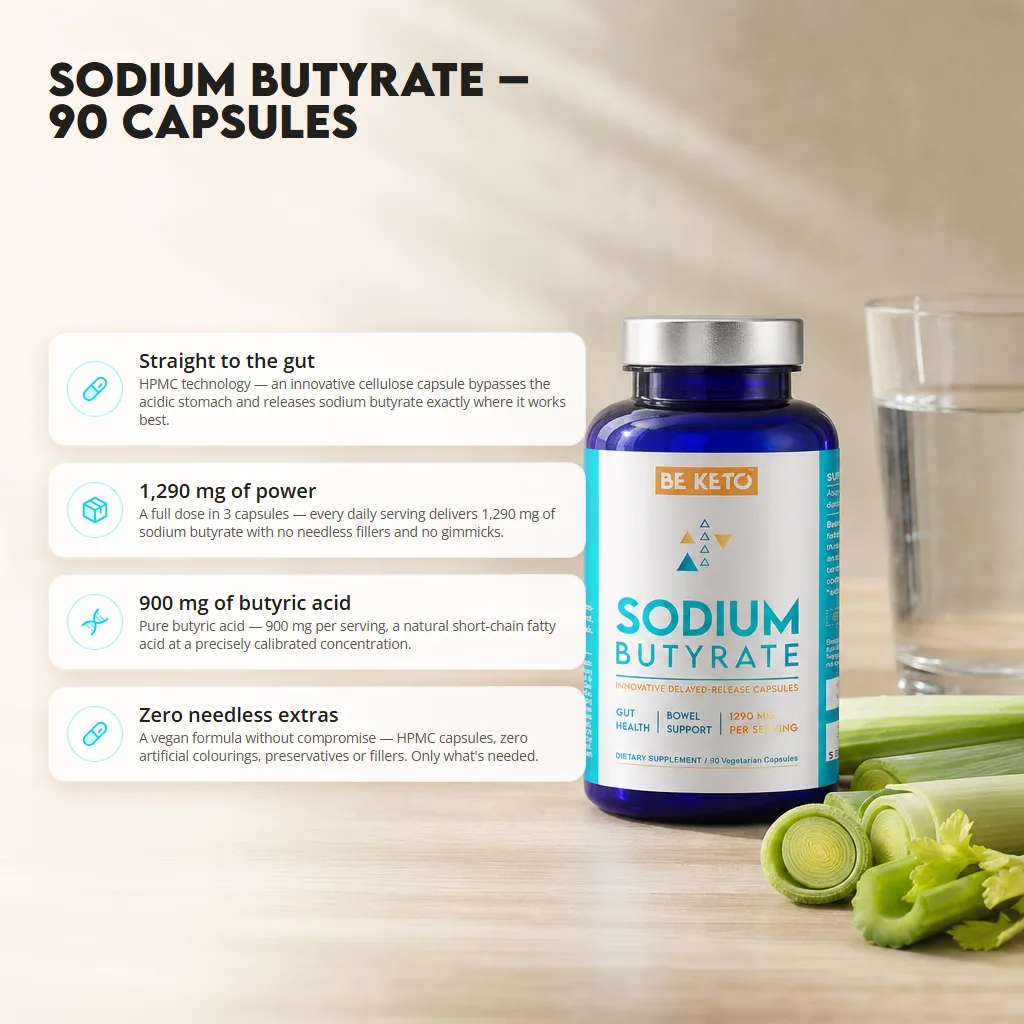
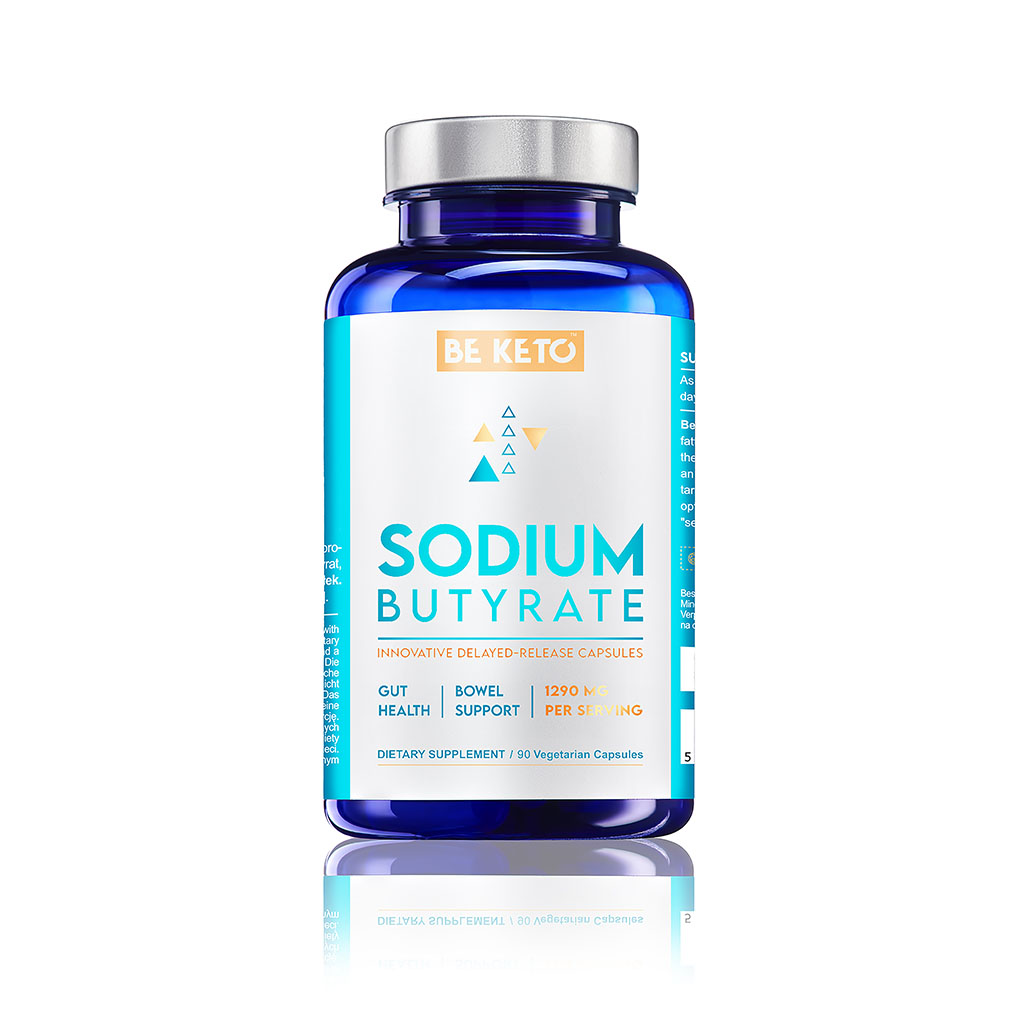
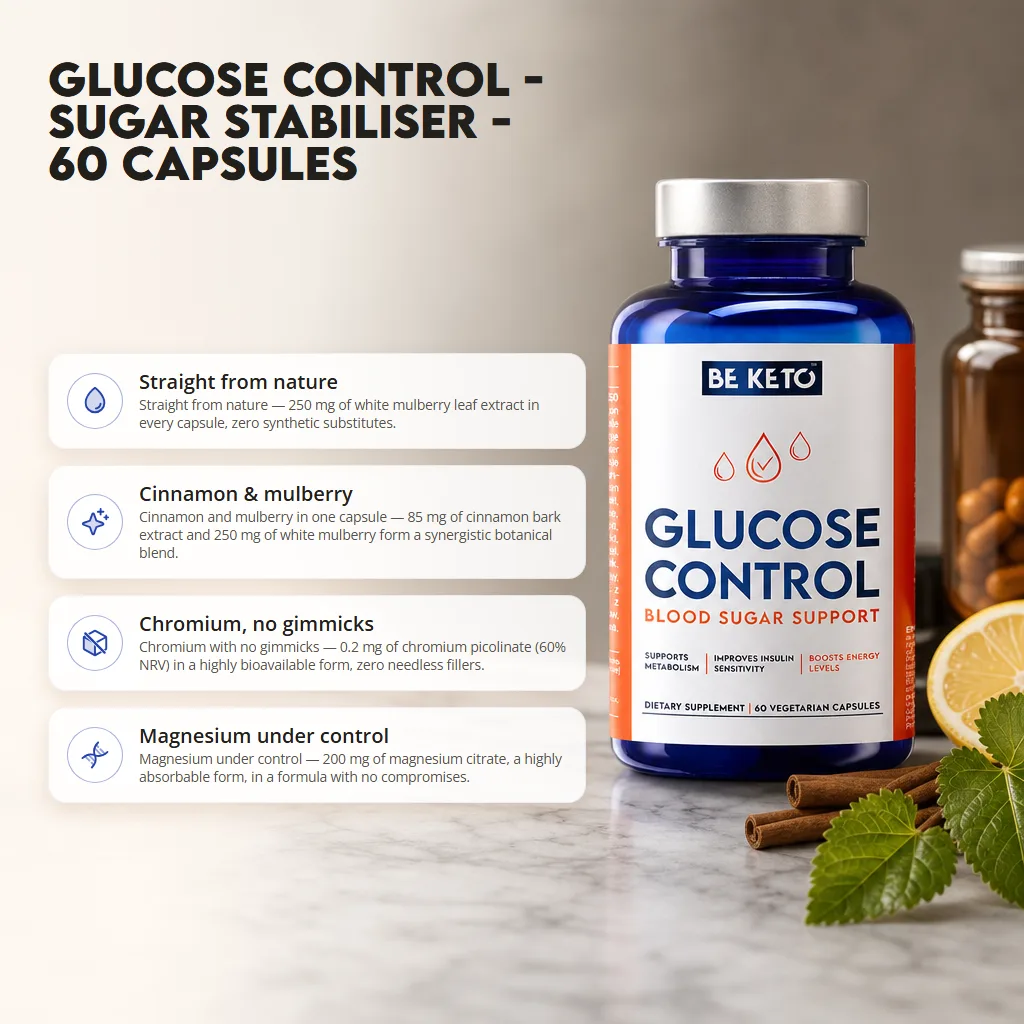
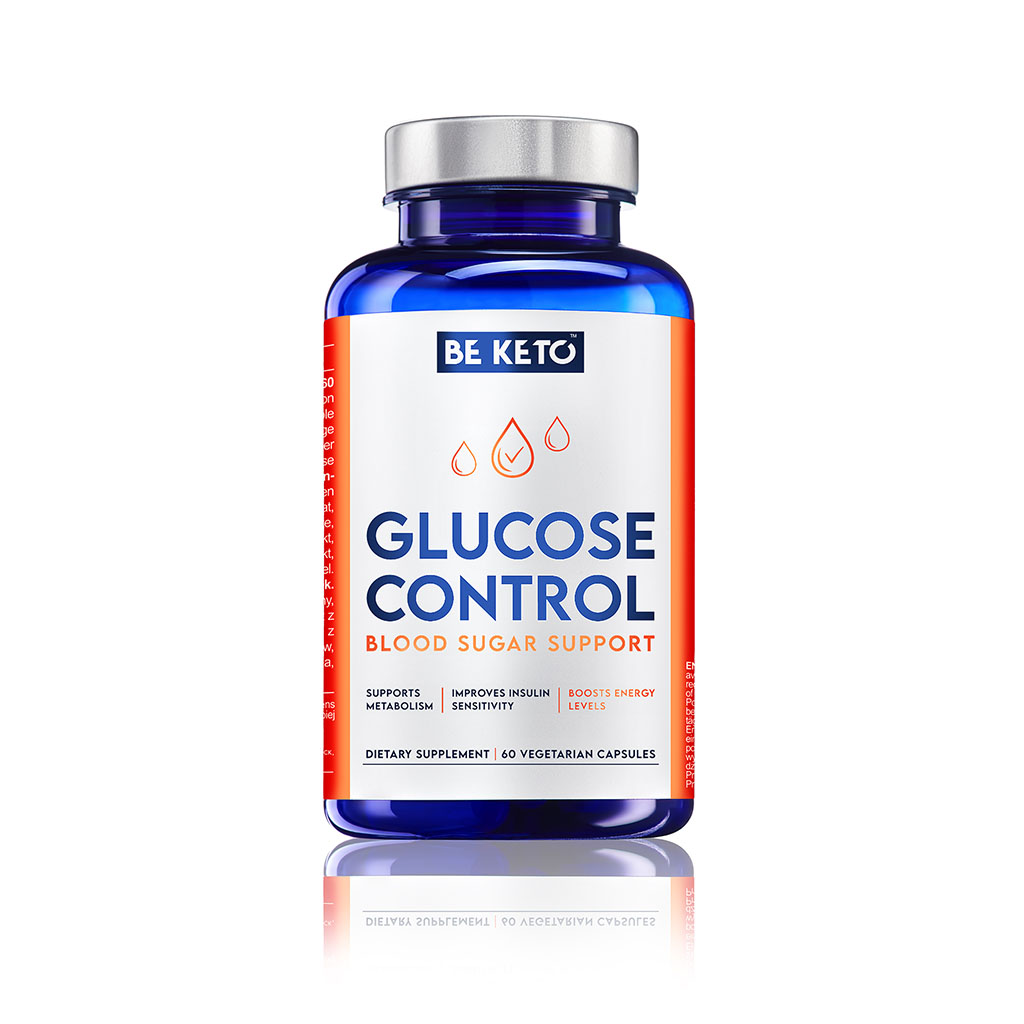
Capsules divide by how many make a serving. Vitamin B Complex is one capsule a day, Glucose Control is two, and Sodium Butyrate is three, which gives 1,290 mg of sodium butyrate including 900 mg of butyric acid per serving from a 90 capsule pack.
Powder leaves the serving size to you, which is why Vitamin C 100% is measured by the gram and Keto Greens by the 10 g scoop. Across the packs that state how many servings they hold, a serving runs from £0.60 to £1.00.
What may a vitamin supplement say about itself in the UK?
Wording is allowed only when one serving supplies at least 15% of the reference intake. That threshold, and not the name on the front of the pack, decides whether a supplement may say anything about a nutrient at all.
Glucose Control clears it twice over. The daily dose of two capsules supplies 0.2 mg of chromium picolinate, stated on the pack as 60% of the reference intake, and chromium contributes to the maintenance of normal blood glucose levels.
The same two capsules carry 200 mg of magnesium from magnesium citrate, which is 53% of the reference intake, so magnesium contributes to normal muscle function and to a reduction of tiredness and fatigue.
Vitamin C 100% clears the threshold by a wide margin, because 1 g of powder holds 1,000 mg of the vitamin against a reference intake of 80 mg. Vitamin C contributes to the normal function of the immune system and to the reduction of tiredness and fatigue.
Keto Greens clears it on nothing. Per 10 g scoop its five minerals come to 11.0% of the reference intake for zinc, 7.2% for potassium, 4.5% for magnesium, 2.8% for calcium and 2.6% for phosphorus, so the tub says nothing about minerals.
The mineral figures that do clear the threshold sit on the electrolyte shelf, where a 10 g serving of Keto Electrolytes Powder carries 376 mg of magnesium. Ashwagandha KSM-66 and Sodium Butyrate have no entry in the register at all, so both are described here by ingredient and milligrams only.
Compare this shelf on three numbers before you add anything to your basket: the carbohydrate per serving, the milligrams of each active per serving, and the pack price, which runs from £6.90 to £24.90.
Frequently asked questions
What are the best vitamins for a keto diet?
The best vitamins cover what your meals lack. For most people that means vitamin D in winter and the B group on a mostly plant based keto plate, because fruit, bread and pulses are the foods that go first.
Do the keto pills really work?
Not as weight loss pills, no. No capsule sold here carries an authorised weight loss claim in Great Britain, and a vitamin capsule tops up a declared micronutrient rather than standing in for the diet.
Which vitamins should you avoid on keto?
Read the base, not the vitamin. Gummy, chewable and syrup formats carry their carbohydrate in the sweetener, so the figure per serving is the thing to read, and a keto friendly version of the same nutrient usually exists in drops or powder.
Do keto vitamins have side effects?
Fat soluble vitamins build up in the body. Vitamins A, D and E are the fat soluble ones here, so the dose printed on the pack is a ceiling rather than a suggestion. Anyone pregnant, breastfeeding or taking prescribed medicine should ask a doctor first.
When should you take keto vitamins?
The form decides the moment. Take the fat soluble drops with a meal, the B complex capsule in the first half of the day, Vitamin C 100% about half an hour away from food, and Glucose Control 15 to 30 minutes before a meal.
How much do keto vitamins cost per serving?
Between £0.60 and £1.00 a serving. That holds for the packs that state how many servings they contain: £0.60 for the creatine gummies and for Sodium Butyrate, £0.63 for Glucose Control, £0.80 for the ashwagandha drops and £1.00 for Keto Greens.
Which keto vitamins are suitable for vegans?
Keto Greens and the B12 drops are. Both are labelled vegan, and the B12 drops hold methylcobalamin in coconut MCT oil. The capsules use an HPMC shell, which is vegetarian rather than gelatine, and the Vitamin D3 pack does not state the source of its cholecalciferol.
Can you get these vitamins from keto food instead?
Part of them, yes. Green vegetables are where to look first for folate, potassium and magnesium, and our guide to which vegetables to eat on keto sets out the ones worth eating and the ones to avoid.

 United KingdomCurrent regionDelivery within the United KingdomCurrency: Pound Sterling (£)
 GermanyDelivery within Germany and AustriaCurrency: Euro (€)
 FranceDelivery within France and BelgiumCurrency: Euro (€)
 ItalyDelivery within ItalyCurrency: Euro (€)
 PolandDelivery within Poland and EuropeCurrency: Zloty (PLN)
 Czech RepublicDelivery within the Czech Republic and SlovakiaCurrency: Czech Koruna (Kč)
 SpainDelivery within SpainCurrency: Euro (€)