OFFICIAL STORE IN THE UNITED KINGDOM


Keto Sweets
Sugar free sweets are sweets that declare no more than 0.5 g of sugars per 100 g, the condition Great Britain sets for that wording. On this shelf only the green apple konjac jelly at 0 g and the strawberry at 0.4 g reach it. The chocolate, bars and spreads declare 2.6 g to 12.2 g per 100 g, which puts them outside that claim. Erythritol, isomalt and maltitol syrup do the sweetening, and prices start at £2.29.
-
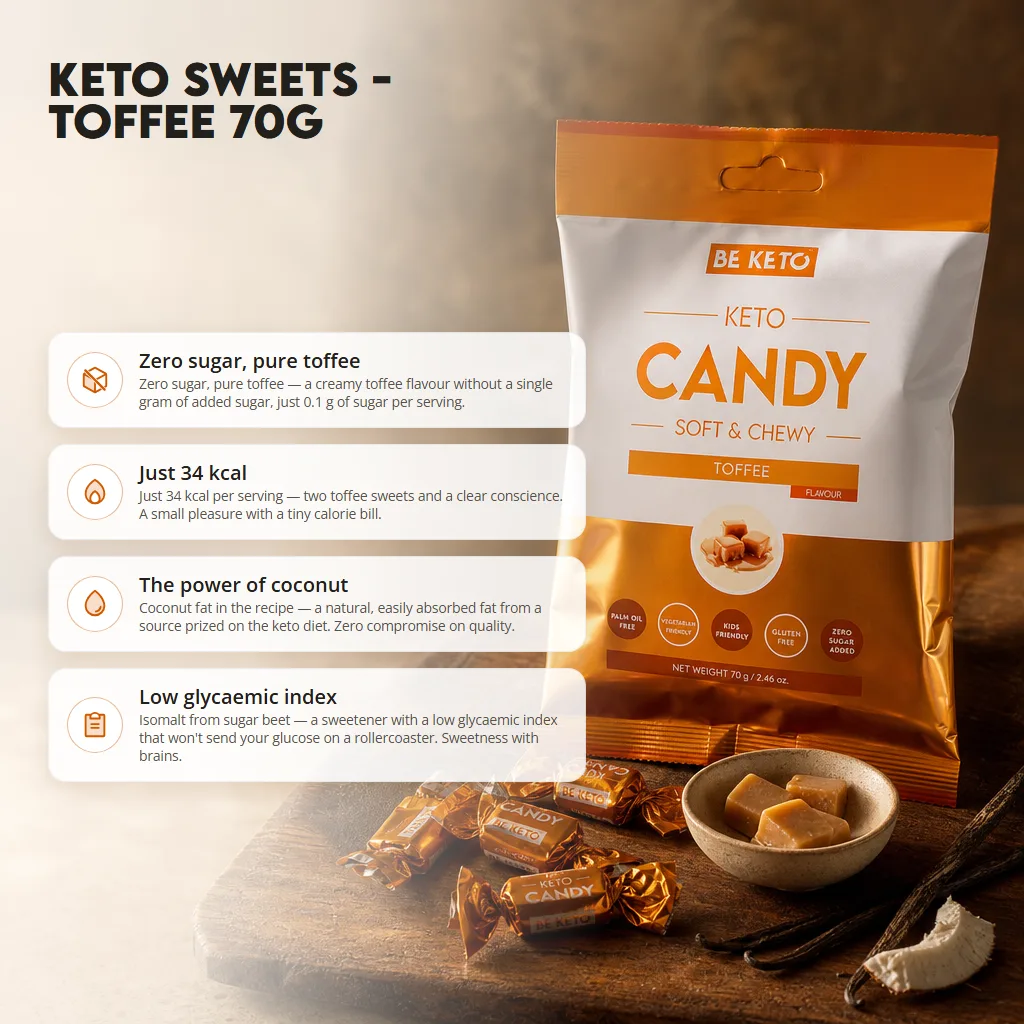
 33 kcal per serving
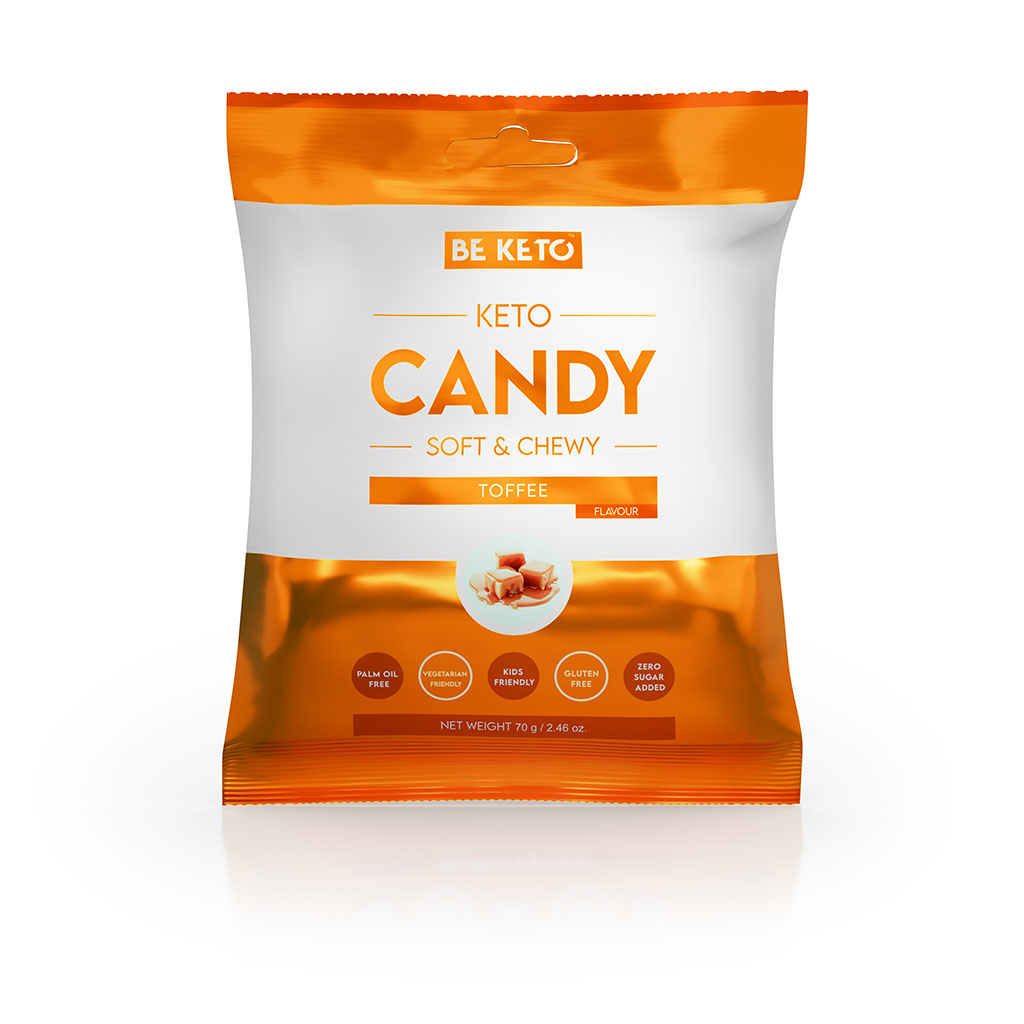
Keto Candy – Toffee 70g
£ 3.19 GBP✔ Satisfy the craving for sweets
✔ They give a boost of energy
✔ Reduce the risk of caries
✔ Enriched with healthy fats
✔ Organic composition and delicious taste
-
Out of stock32 kcal per serving
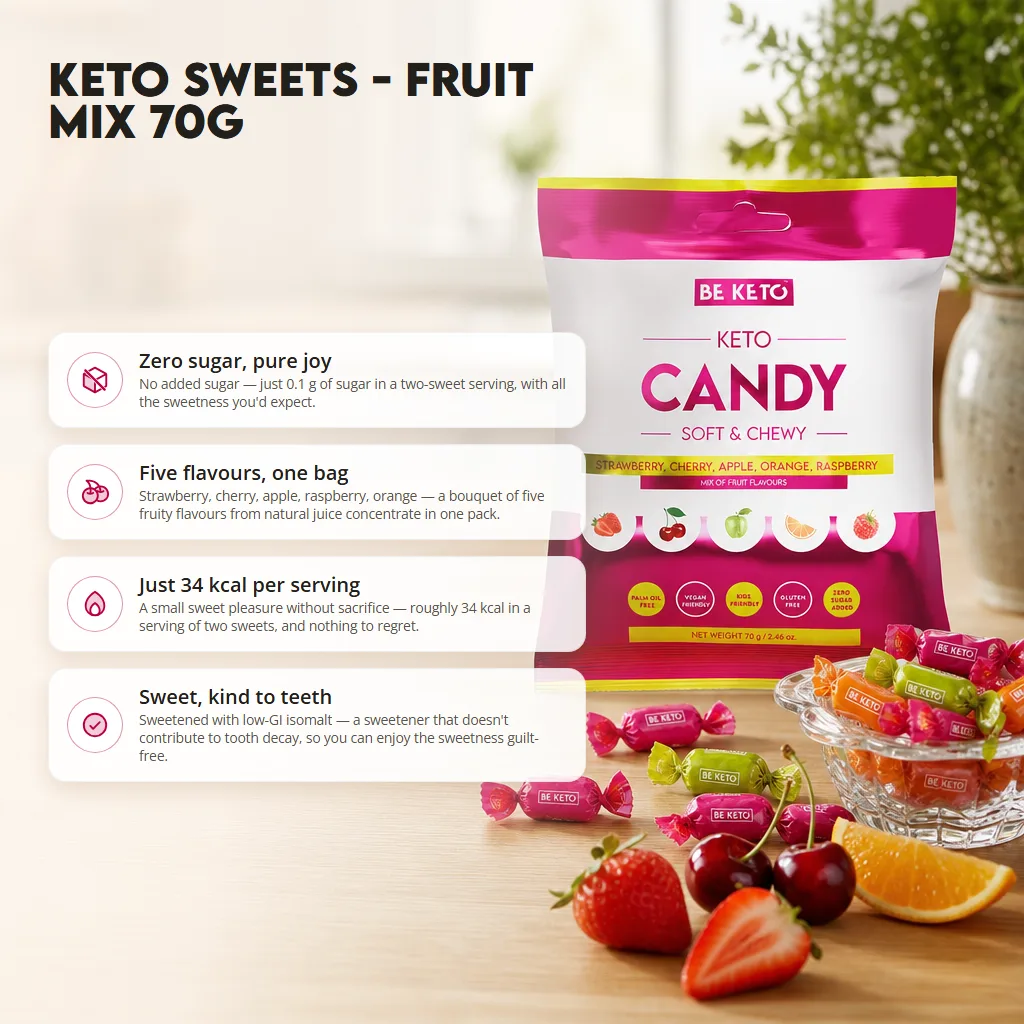
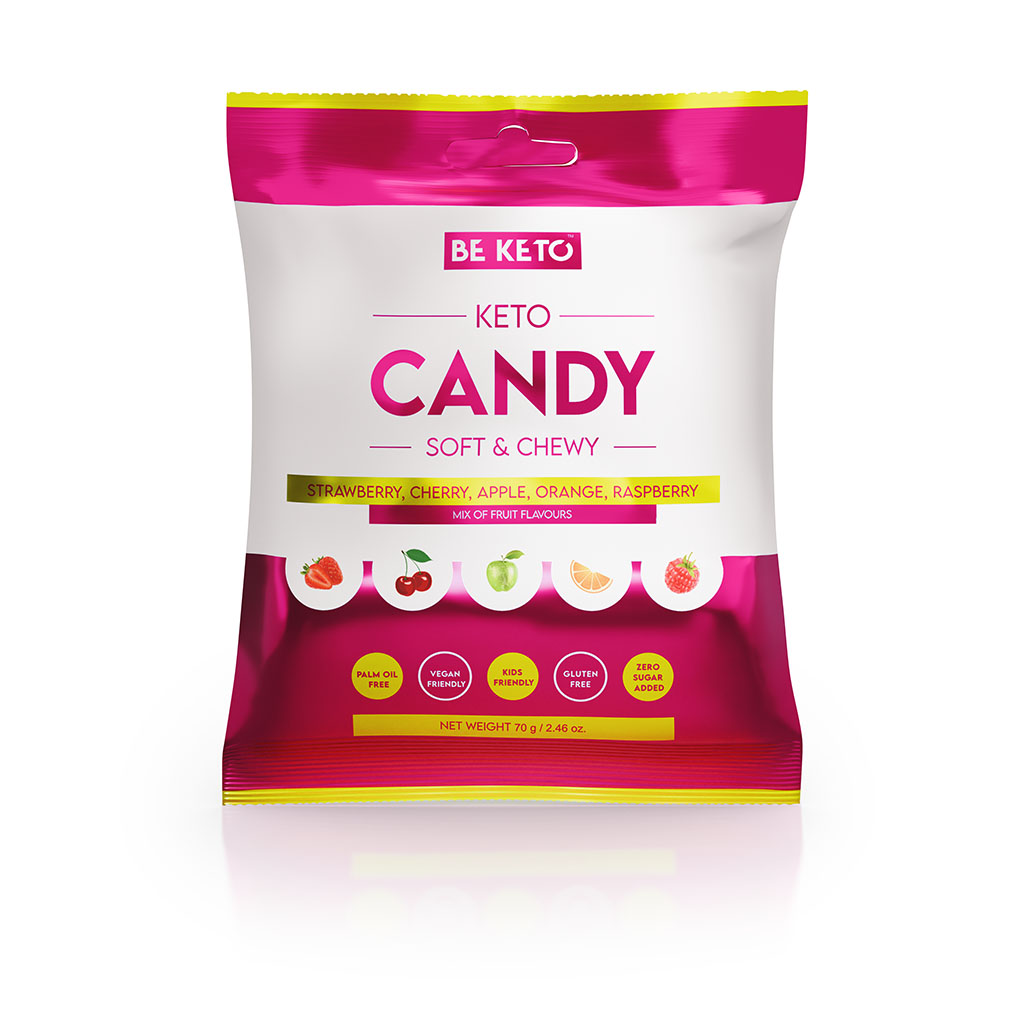
Keto Candy – Mix of Fruits 70g
£ 3.19 GBP✔ Satisfy the craving for sweets
✔ They give a boost of energy
✔ Reduce the risk of caries
✔ Enriched with healthy fats
✔ Organic composition and delicious taste
-
Only 20 kcal + vitamins
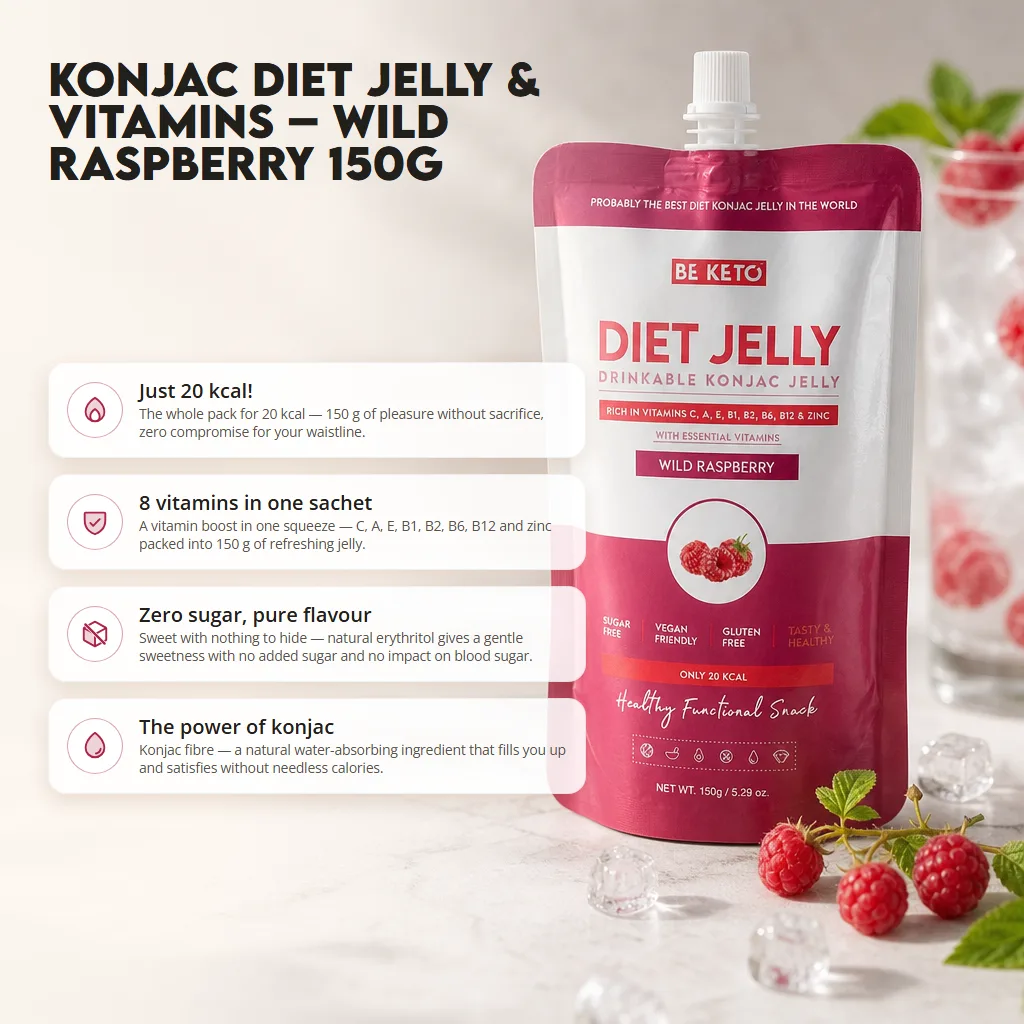
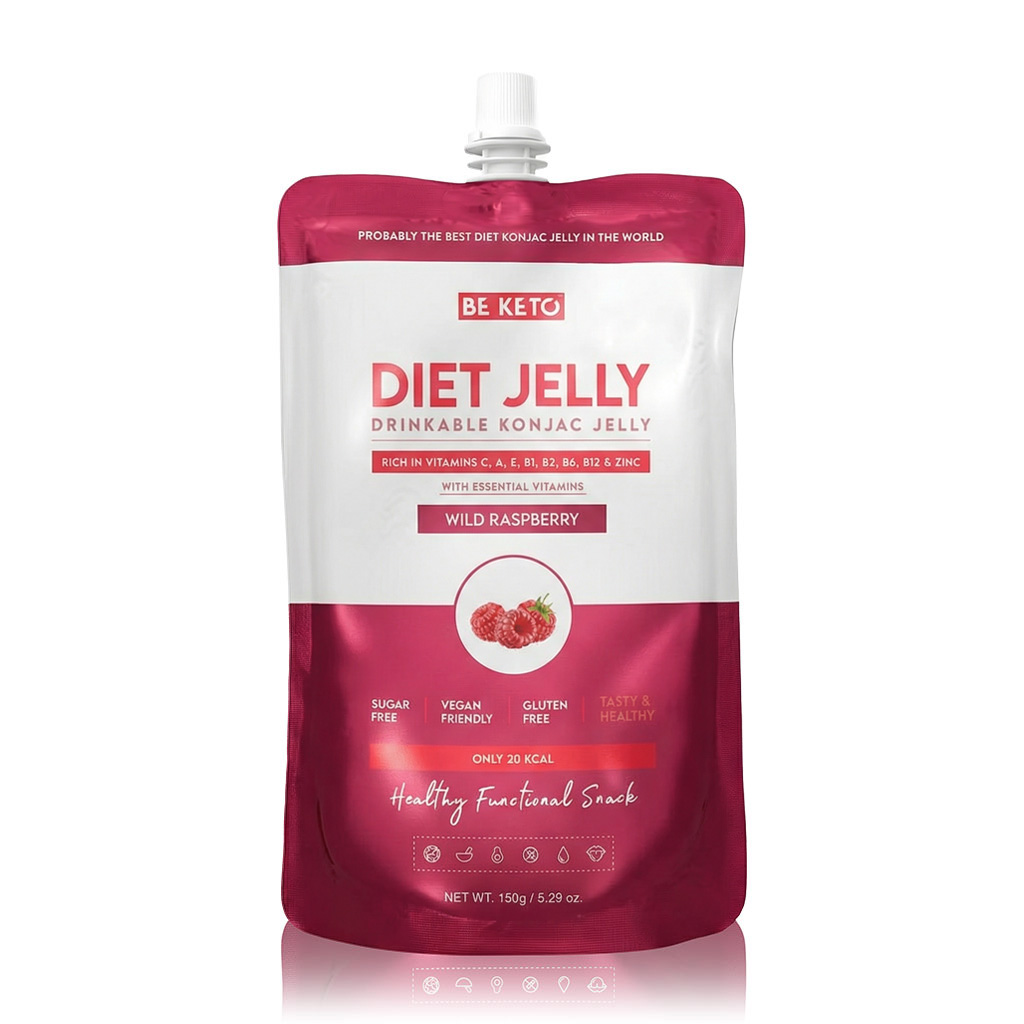
Diet Jelly Konjac & Vitamins – Wild Raspberry 150g
£ 2.49 GBP✔ Only 20 kcal
✔ 4 B vitamins
✔ No sugar or fat
✔ Wild raspberry flavour
✔ Supports energy metabolism
-
Only 11 kcal + minerals
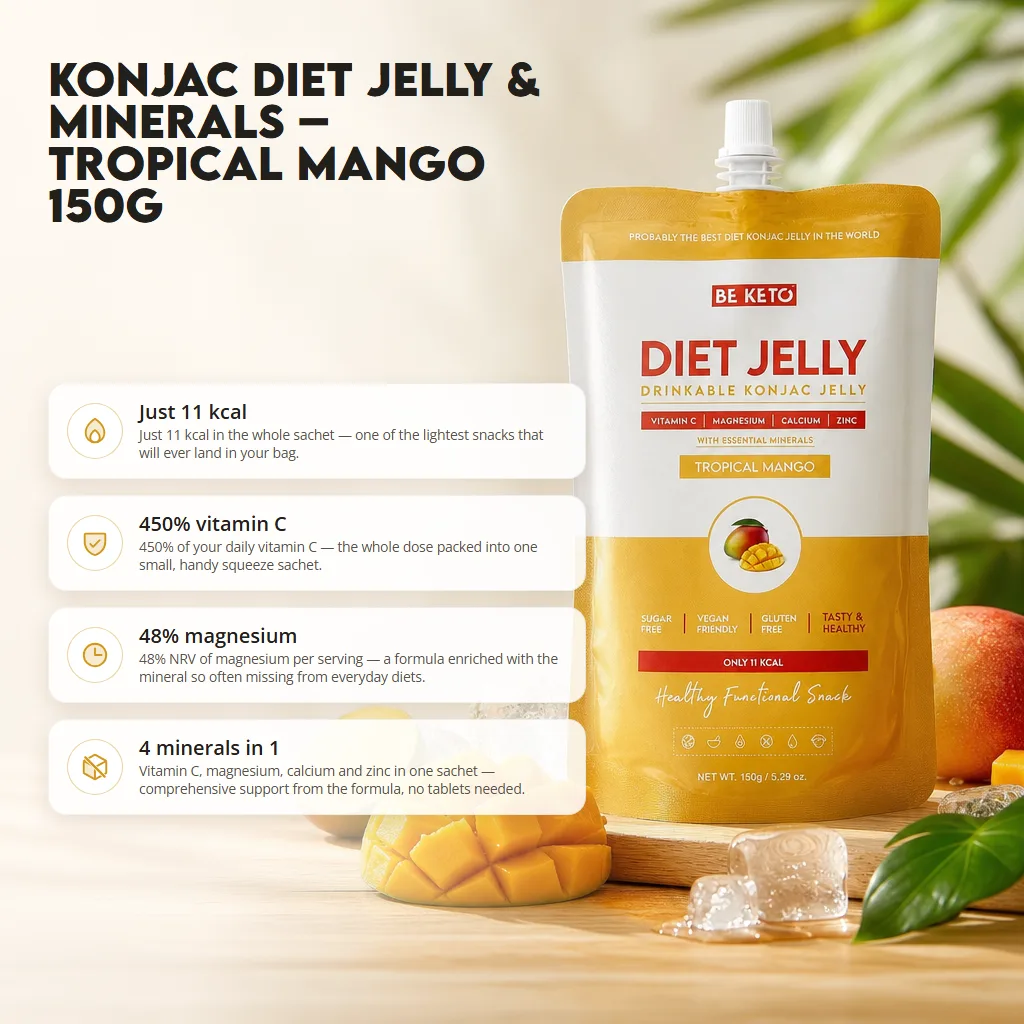
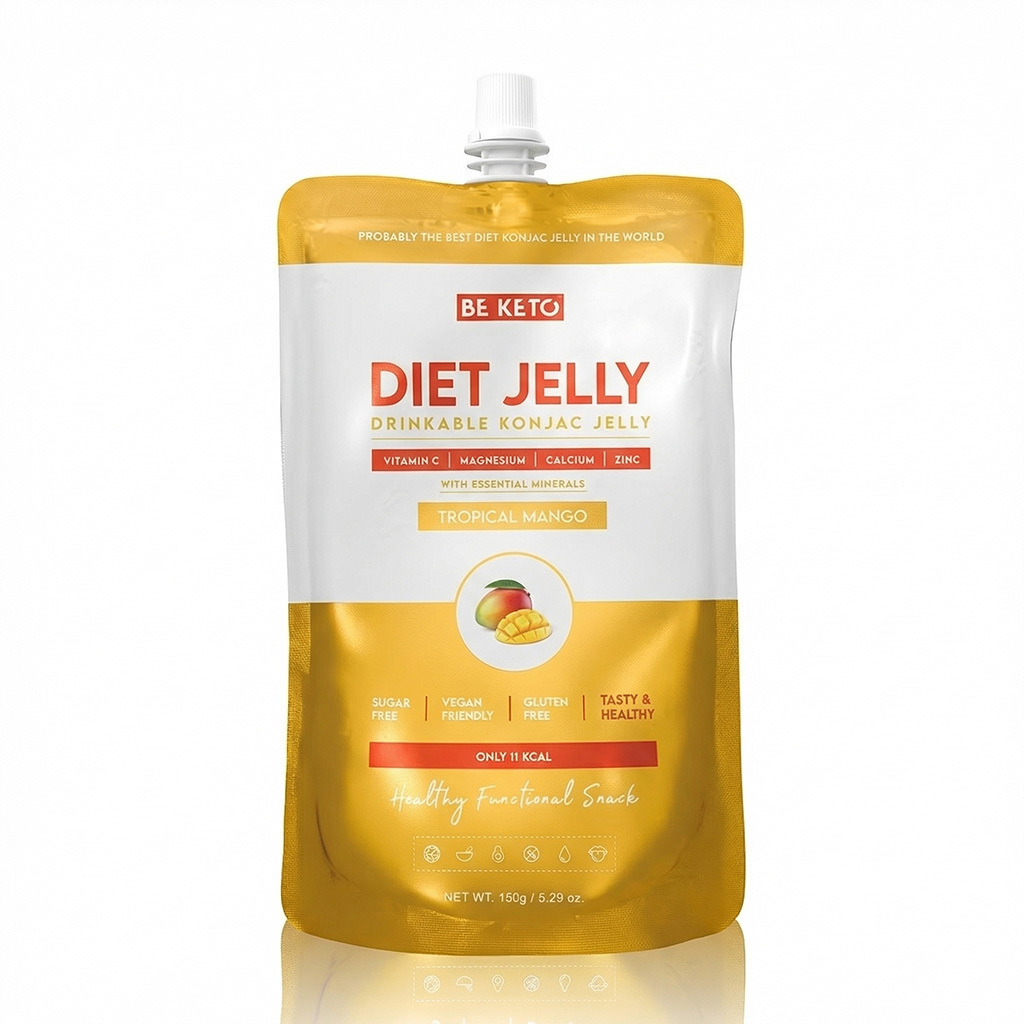
Diet Jelly Konjac & Minerals – Tropical Mango 150g
£ 2.49 GBP✔ Only 11 kcal
✔ 450% vitamin C
✔ 48% magnesium
✔ No sugar or fat
✔ Tropical mango flavour
-
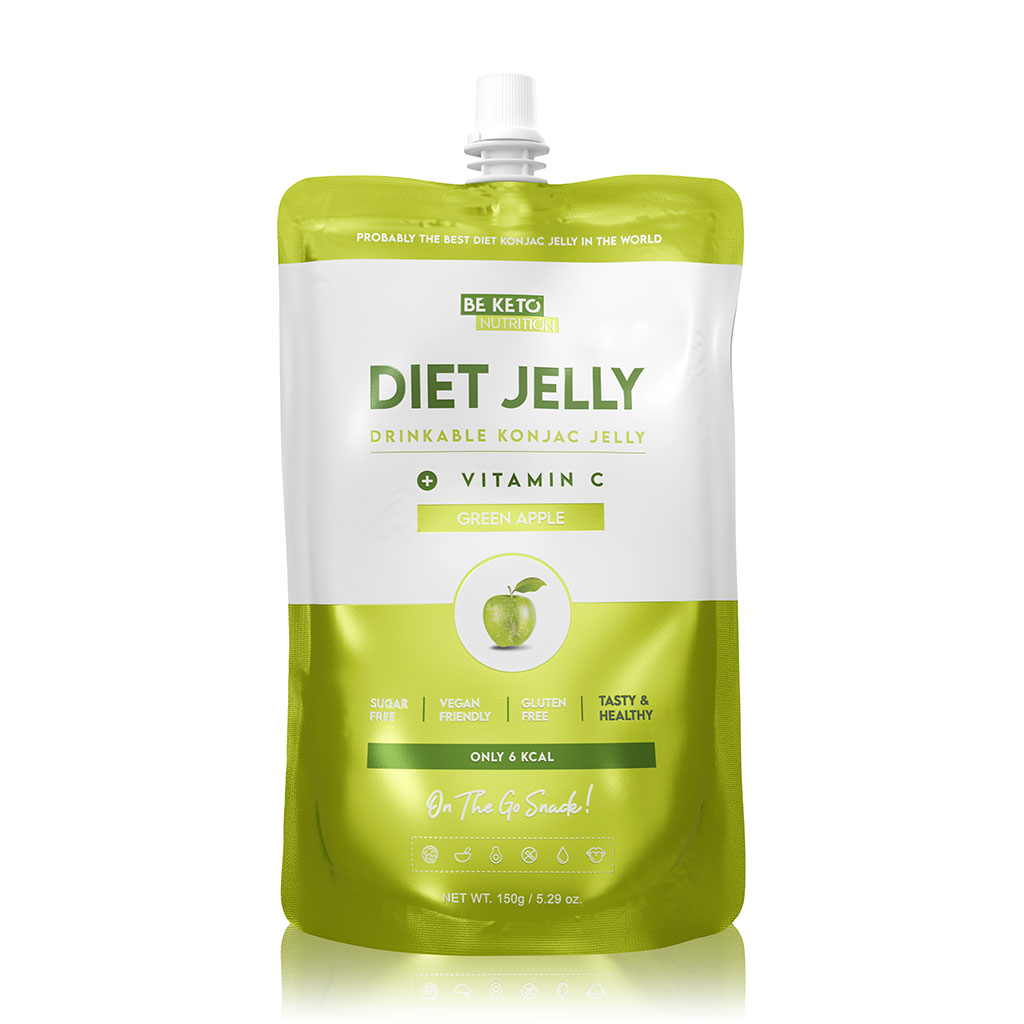
Out of stockOnly 6 Calories per Tube
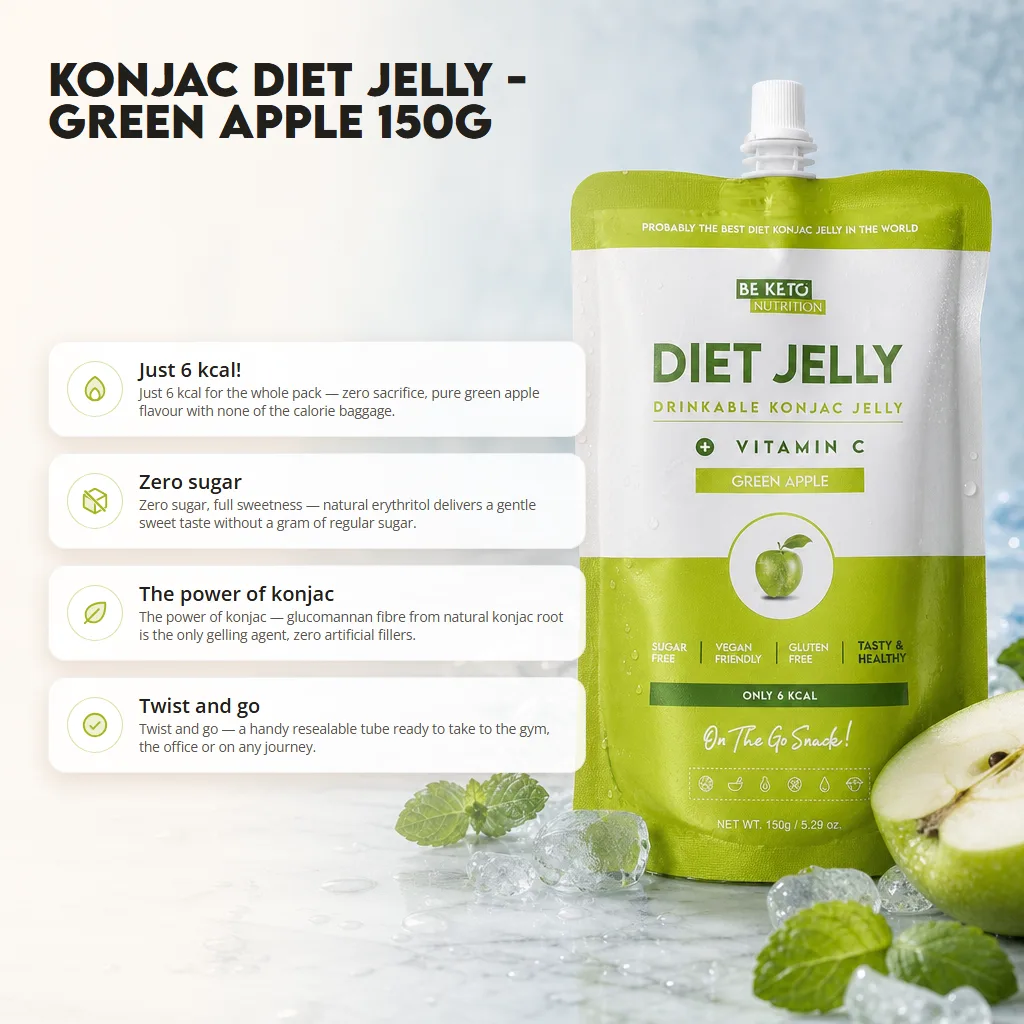
Diet Jelly Konjac – Green Apple 150g
£ 2.49 GBP✔ Only 6 calories per package
✔ A quick, healthy and refreshing snack
✔ Perfect for hot days (keep in the fridge)
✔ Vegan, gluten-free and insanely delicious
✔ Helps control appetite and feelings of hunger
✔ Enriched with vitamin C to support the immune system
-
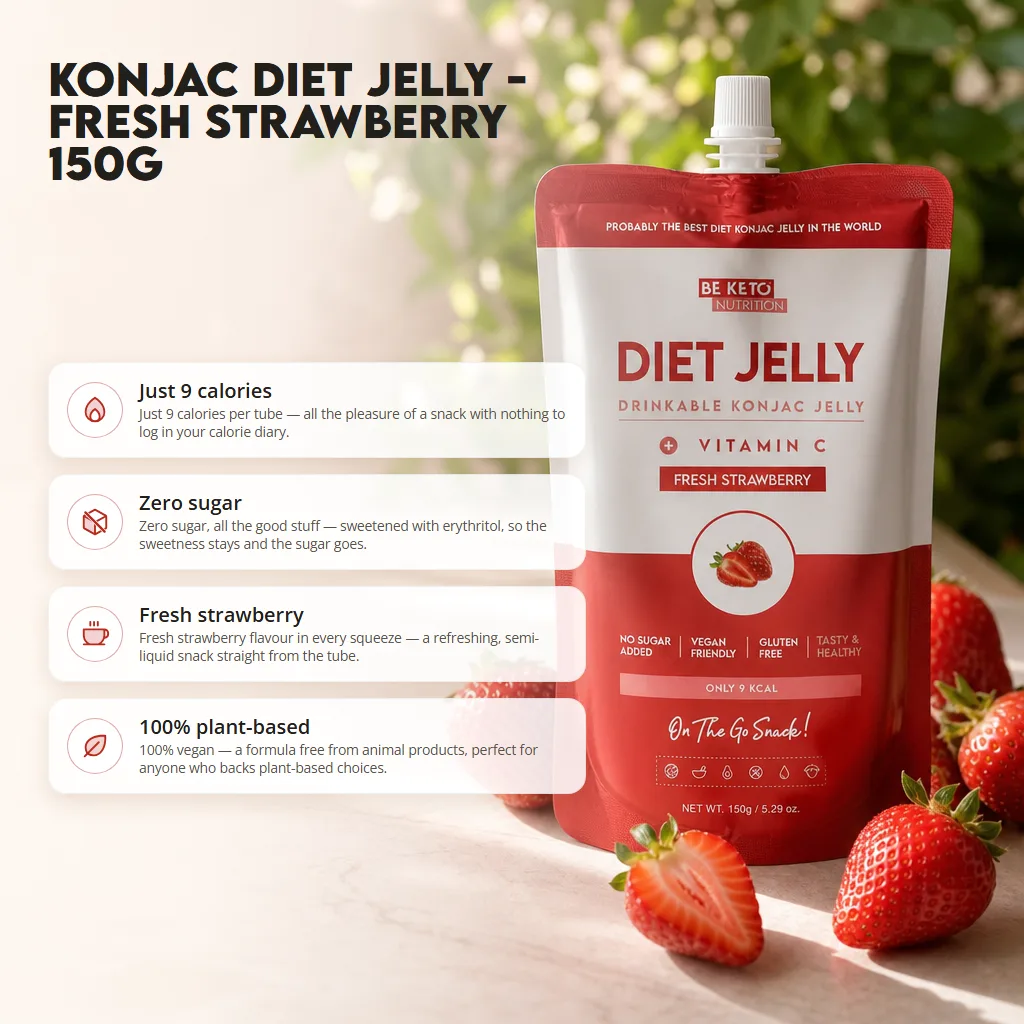
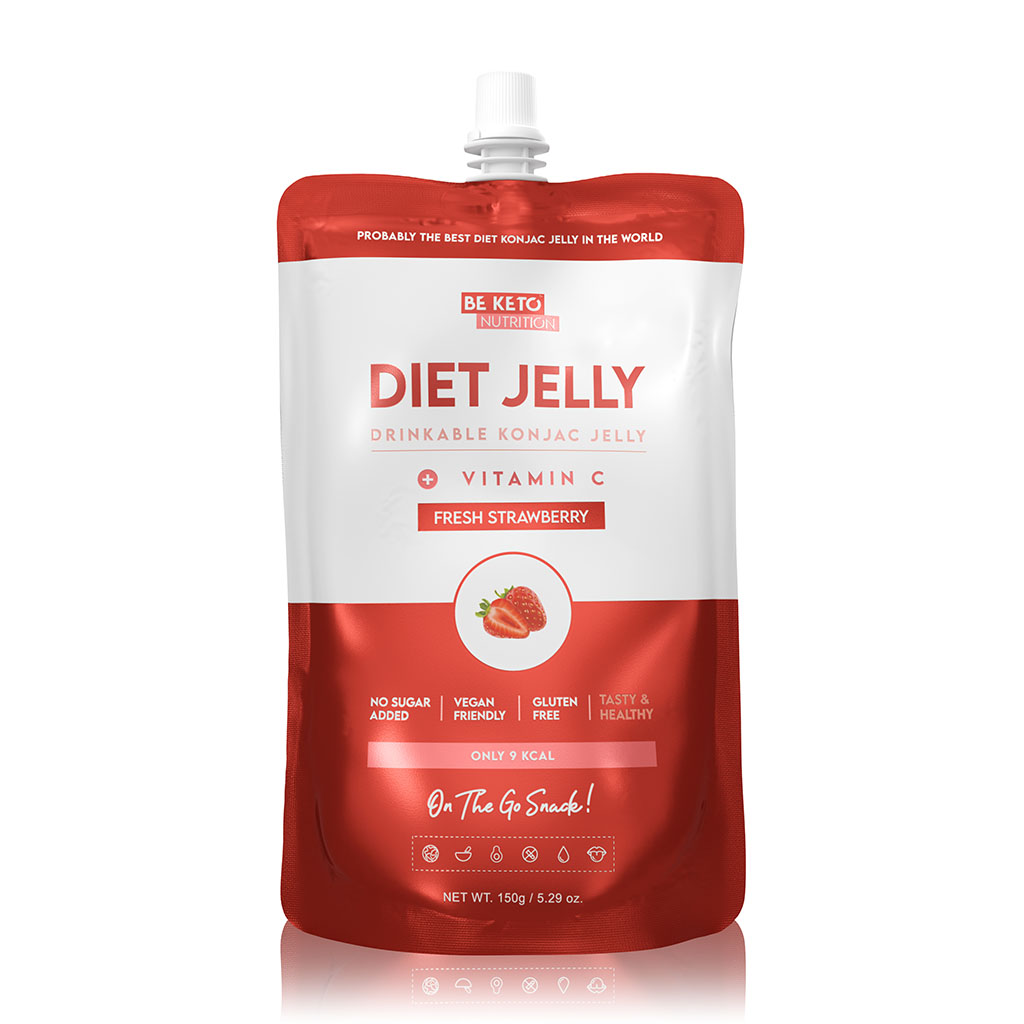
Out of stockOnly 9 Calories per Tube
Diet Jelly Konjac – Fresh Strawberry 150g
£ 2.49 GBP✔ Only 9 calories per package
✔ A quick, healthy and refreshing snack
✔ Perfect for hot days (keep in the fridge)
✔ Vegan, gluten-free and insanely delicious
✔ Helps control appetite and feelings of hunger
✔ Enriched with vitamin C to support the immune system
-
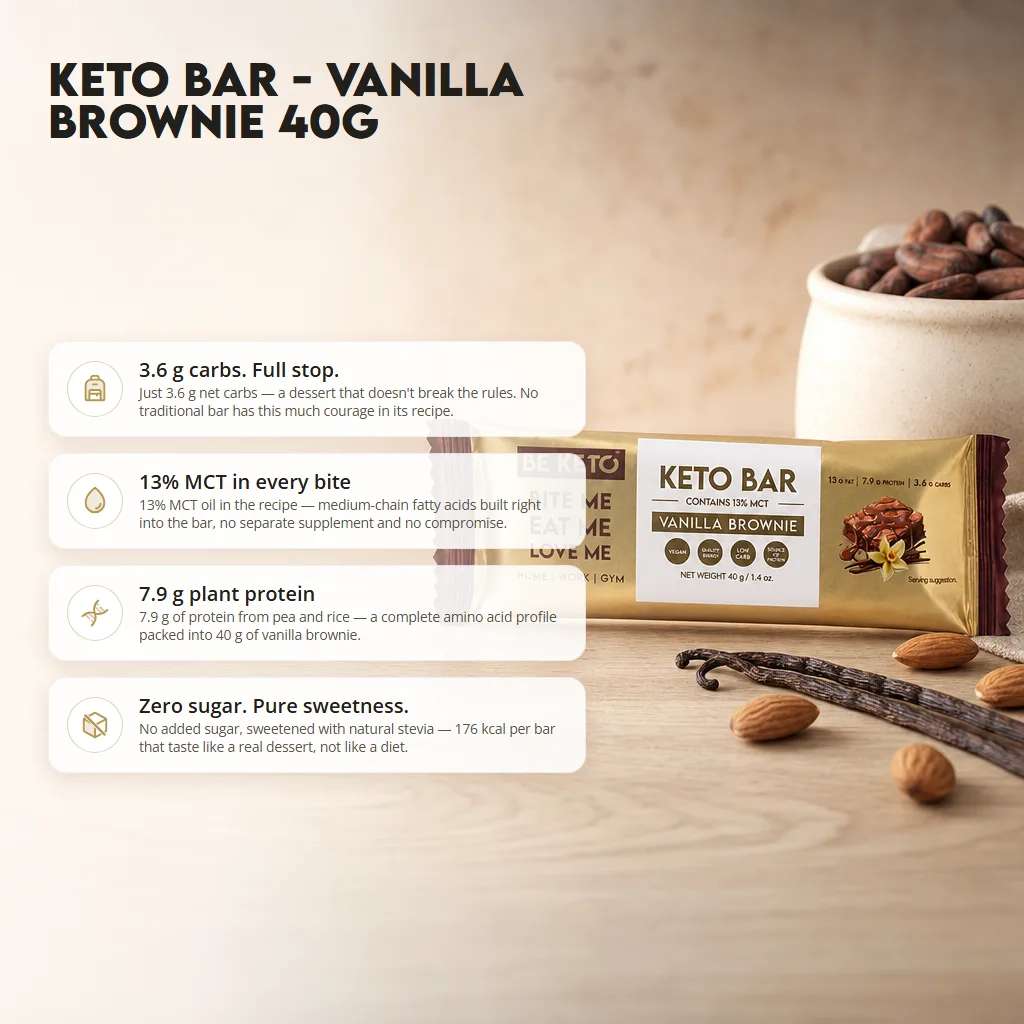
3.6g of Carbohydrates
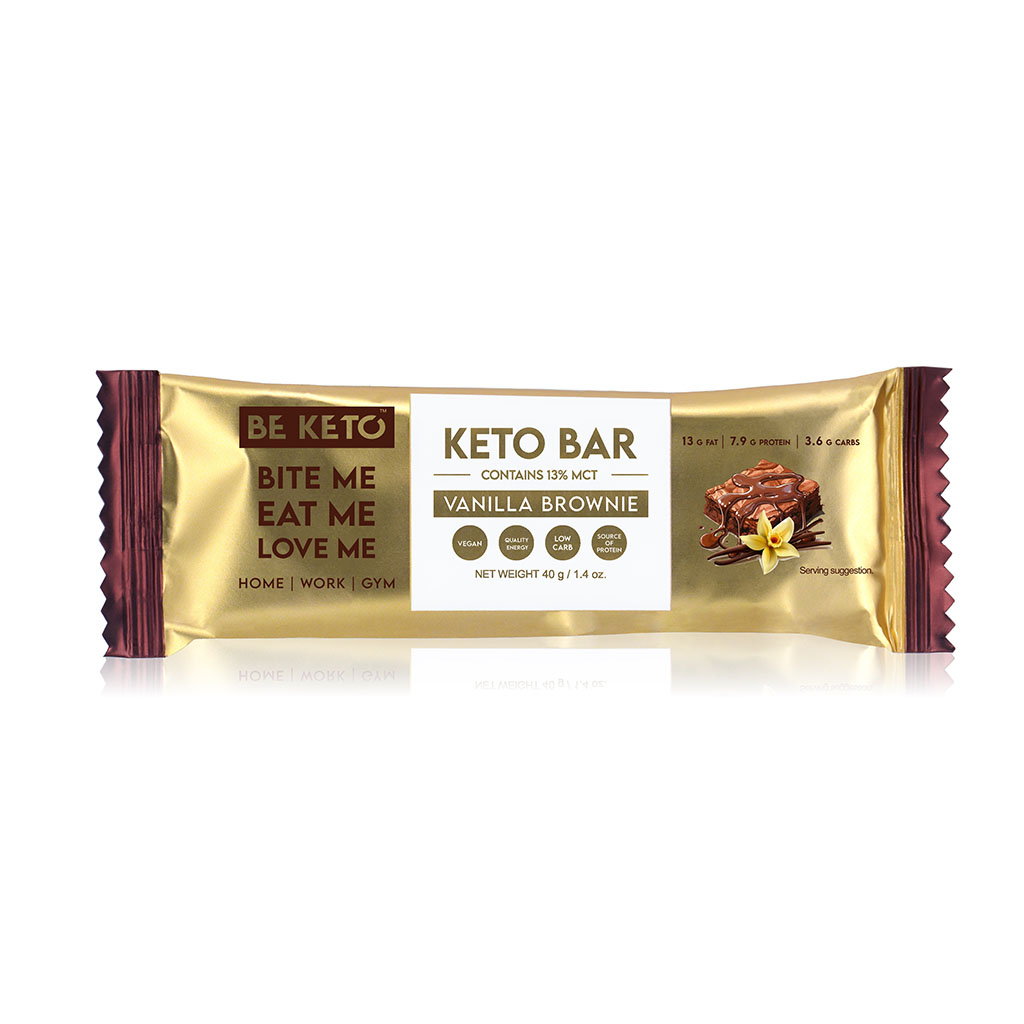
Keto Bar – Vanilla Brownie 40g
£ 3.19 GBP✔ 13g of healthy fats from MCT
✔ 7.9g of high-quality plant-based protein
✔ Only 3.6g net carbs
✔ Vegan, gluten-free, and insanely delicious
-
4.7g of Carbohydrates
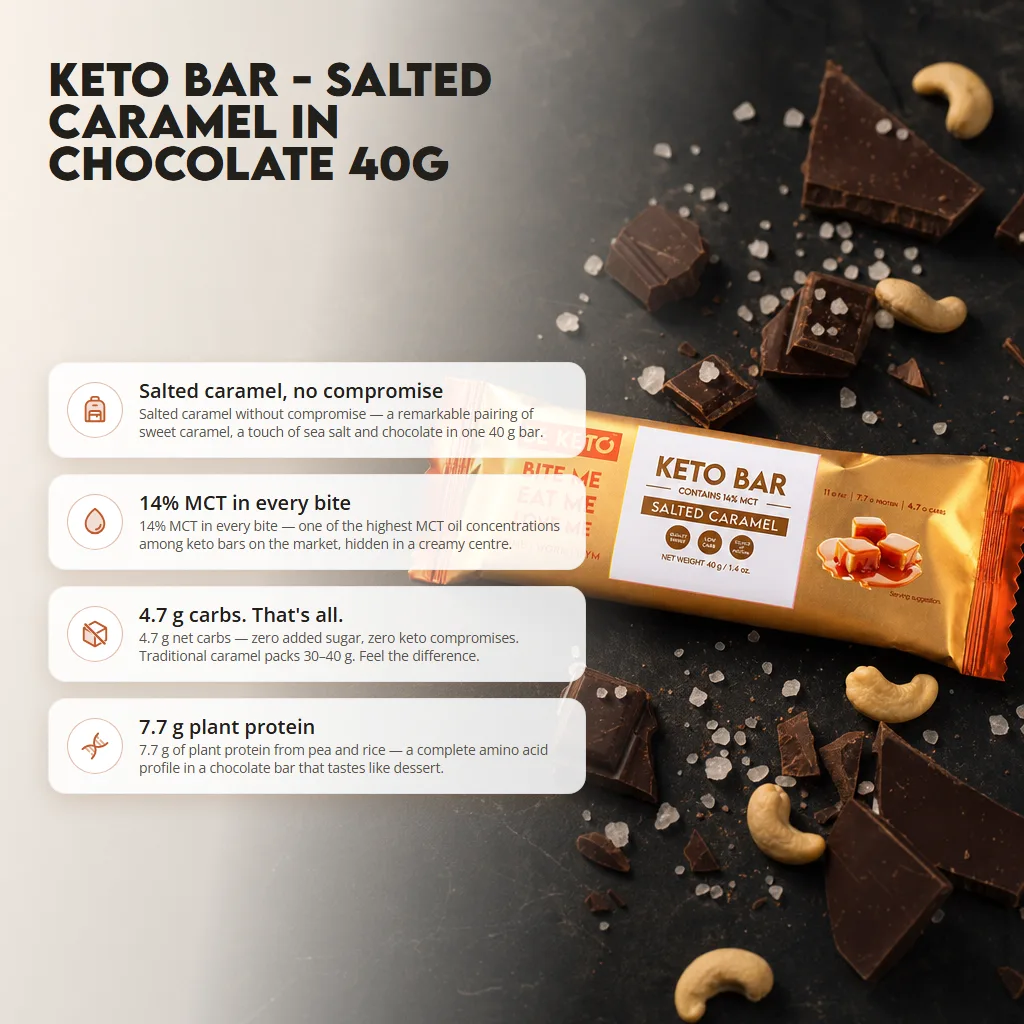
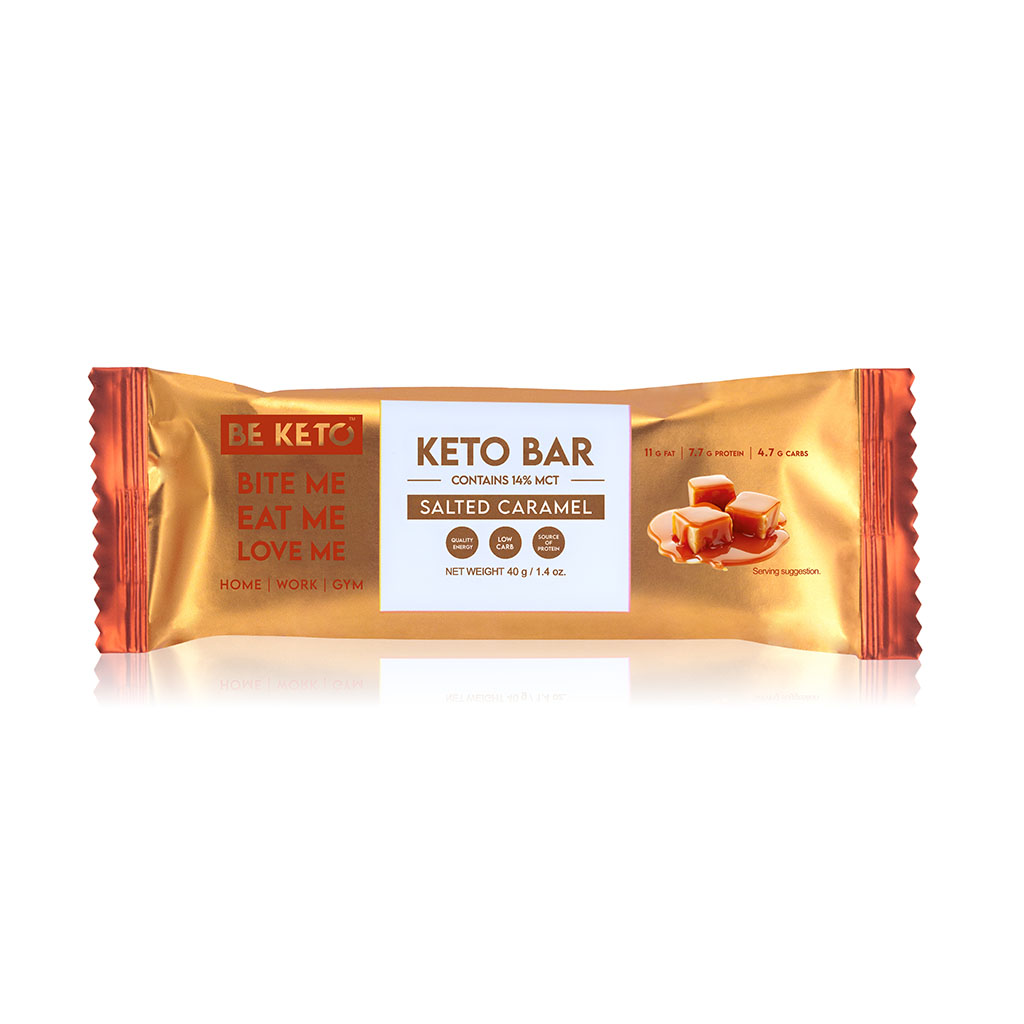
Keto Bar – Chocolate covered Salted Caramel 40g
£ 3.19 GBP✔ 11g of healthy fats from MCT
✔ 7.7g of high-quality plant-based protein
✔ Only 4.7g net carbs
✔ Gluten-free and insanely delicious
-
4.6g of Carbohydrates
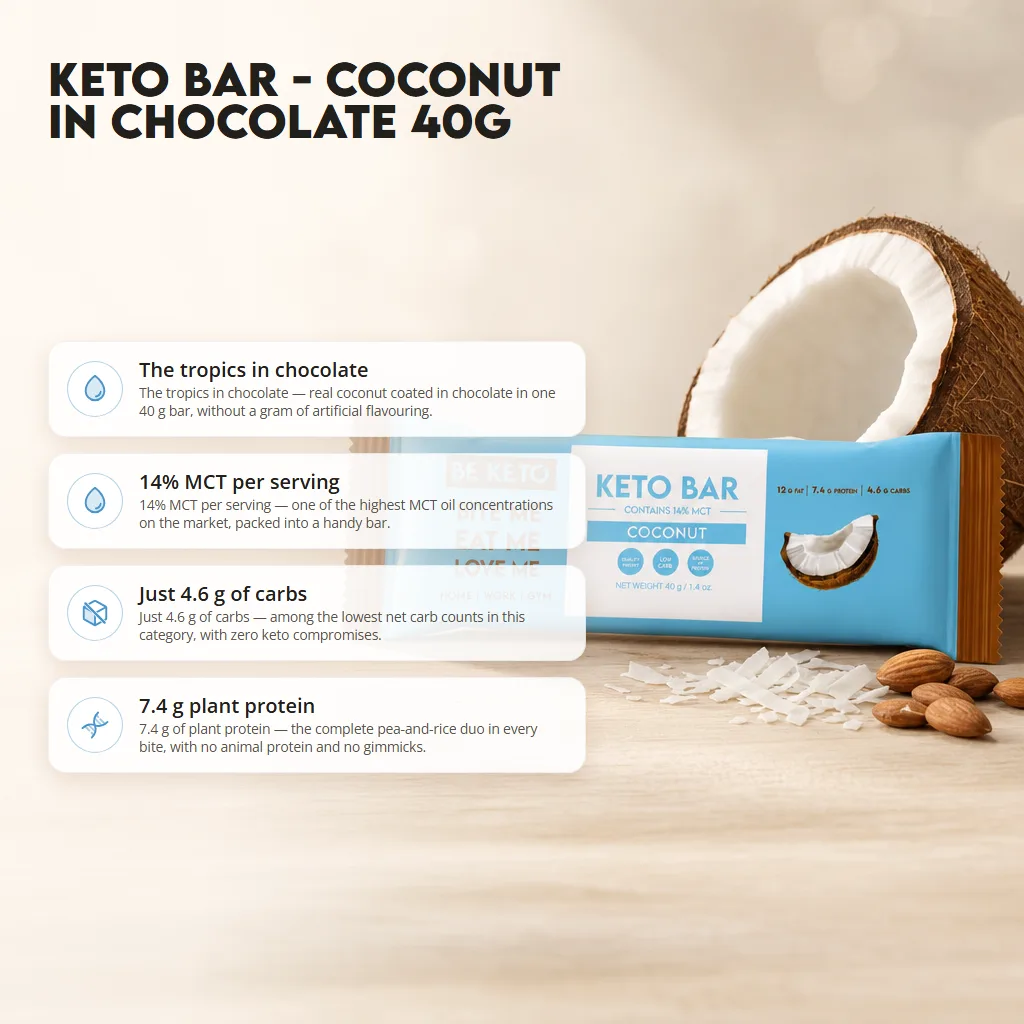
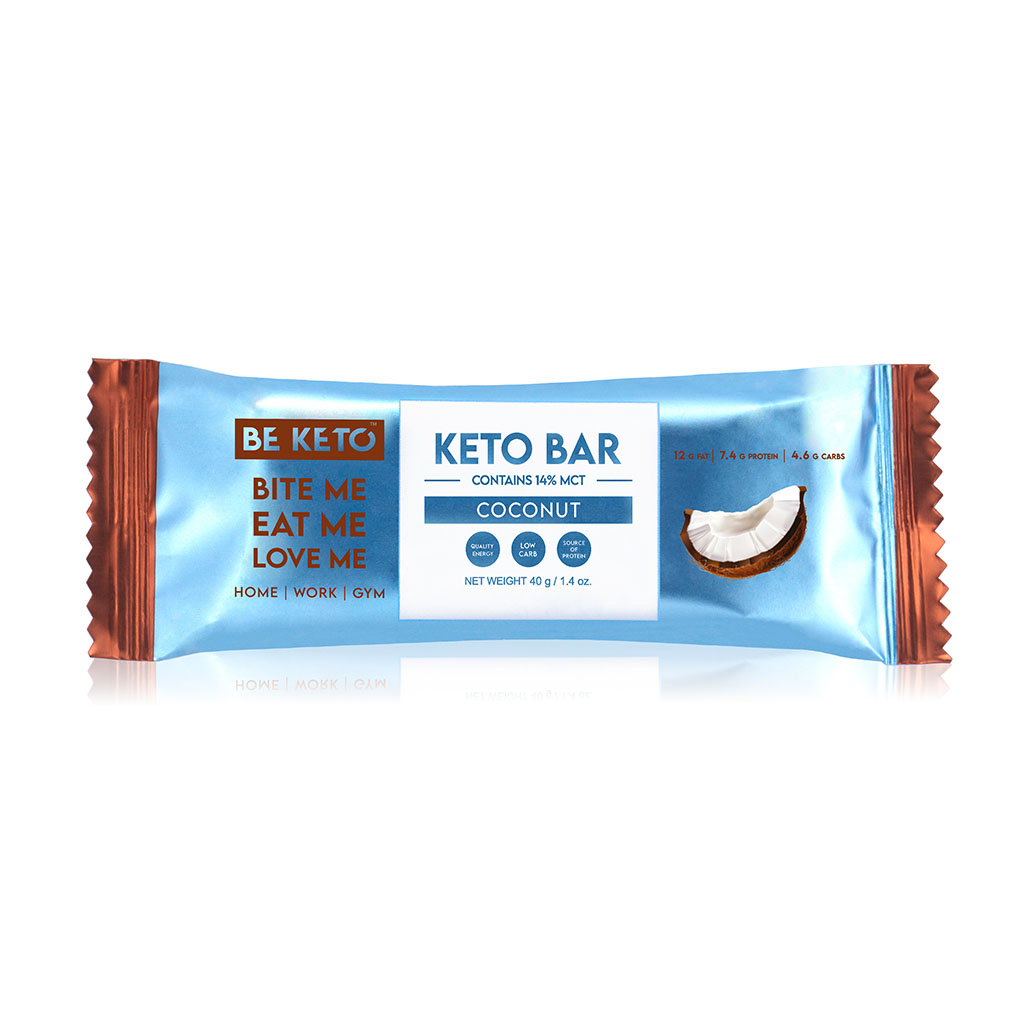
Keto Bar – Chocolate covered Coconut 40g
£ 3.19 GBP✔ 12g of healthy fats from MCT
✔ 7.4g of high-quality plant-based protein
✔ Only 4.6g net carbs
✔ Gluten-free and insanely delicious
-
Out of stock23 g fat
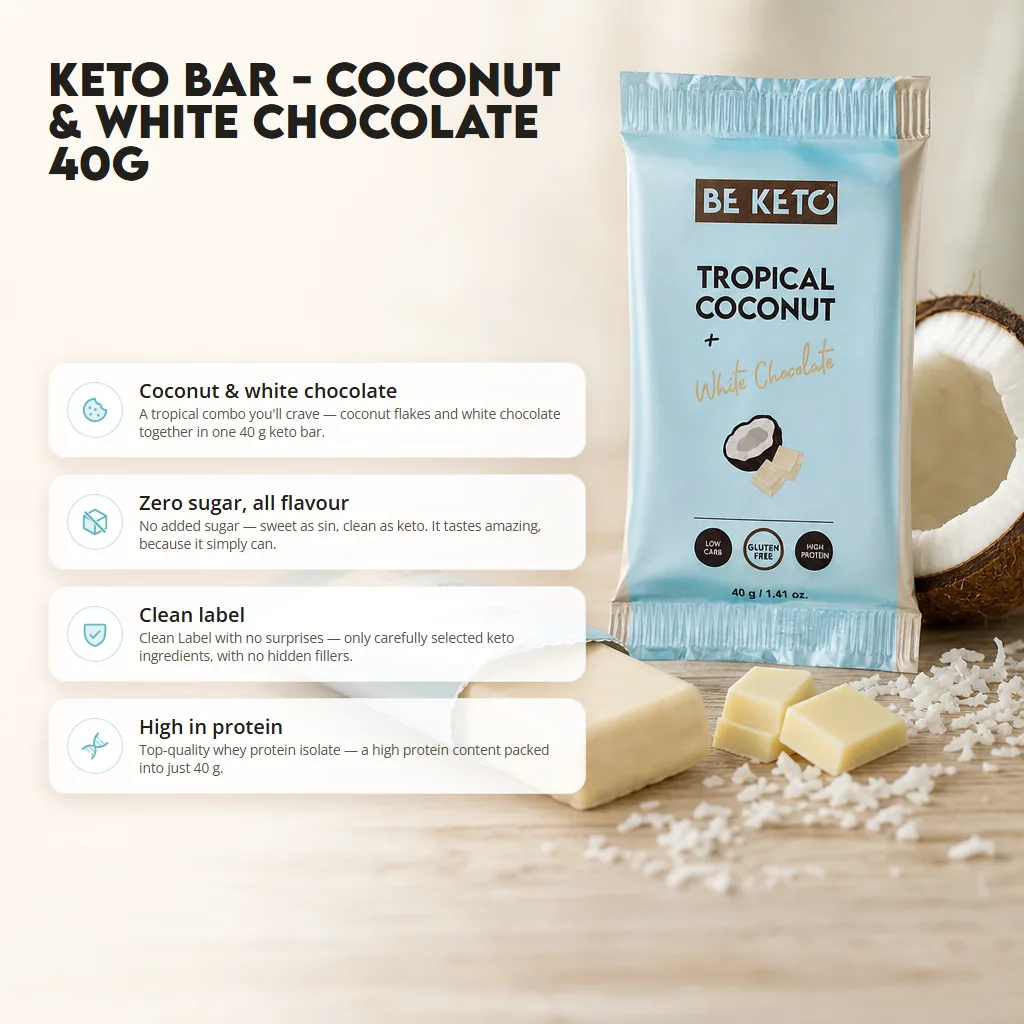
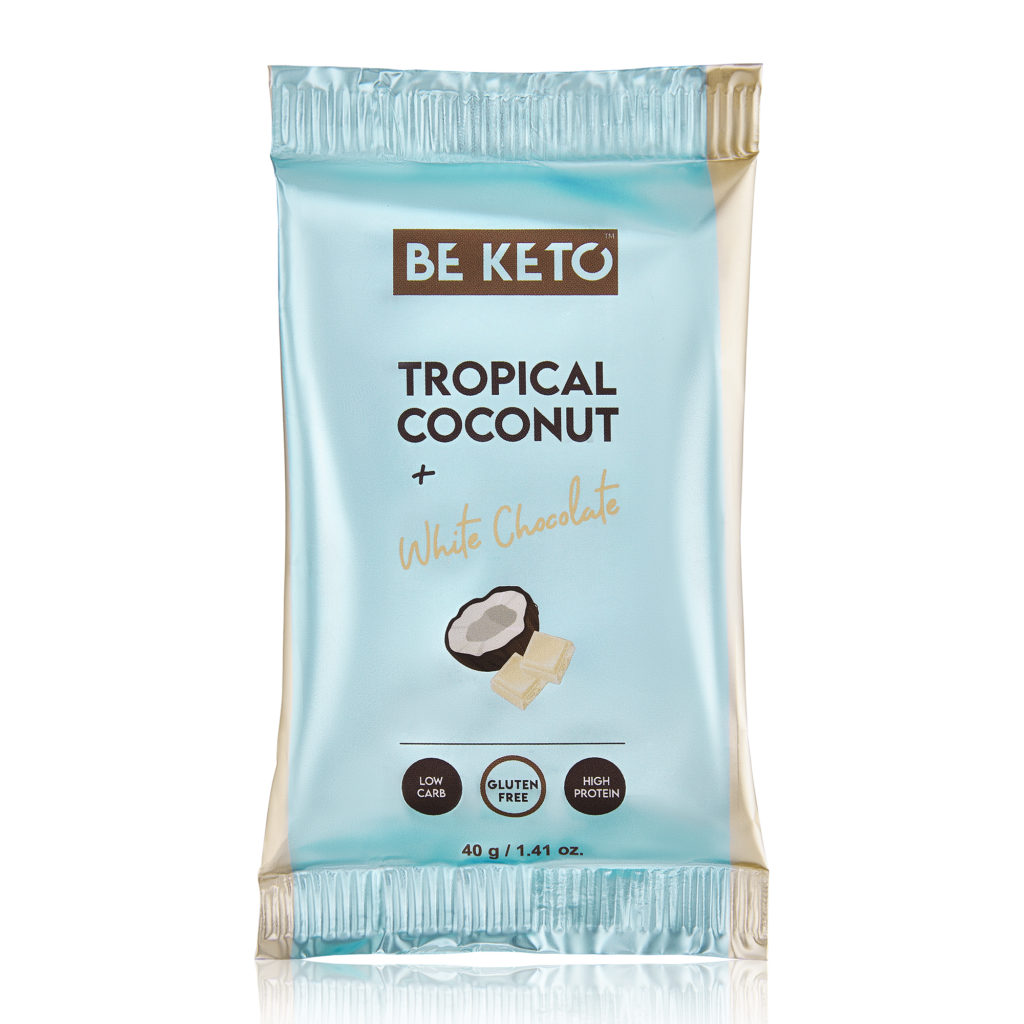
Keto Bar – Tropical Coconut 40g
£ 2.69 GBP✔ Healthy fuel for your body and mind!
✔ Quick and healthy keto snack
✔ High protein content
✔ Provides a full feeling
-
4.2 g Carbs
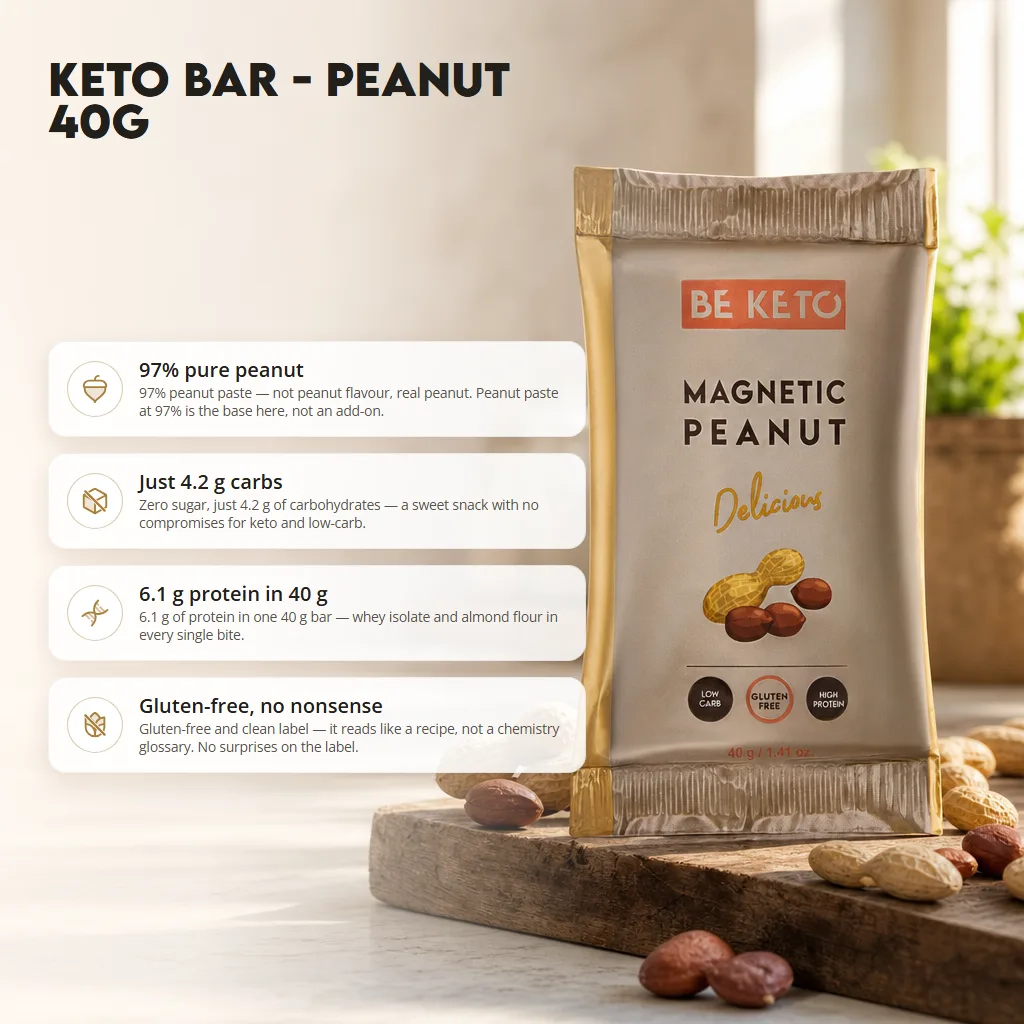
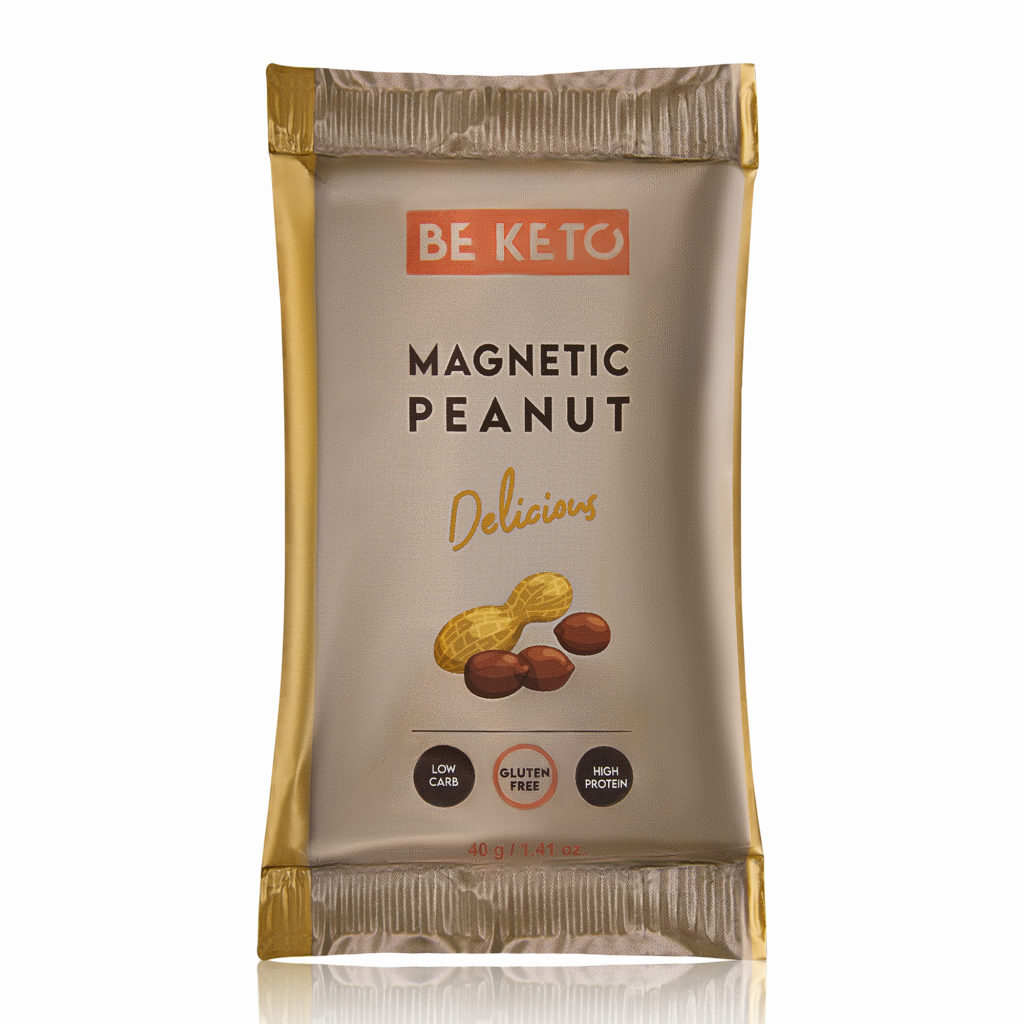
Keto Bar – Magnetic Peanut 40g
£ 2.69 GBP✔ Healthy fuel for your body and mind!
✔ Quick and healthy keto snack
✔ High protein content
✔ Provides a feeling of satiety
-
Out of stock4.4 g Protein
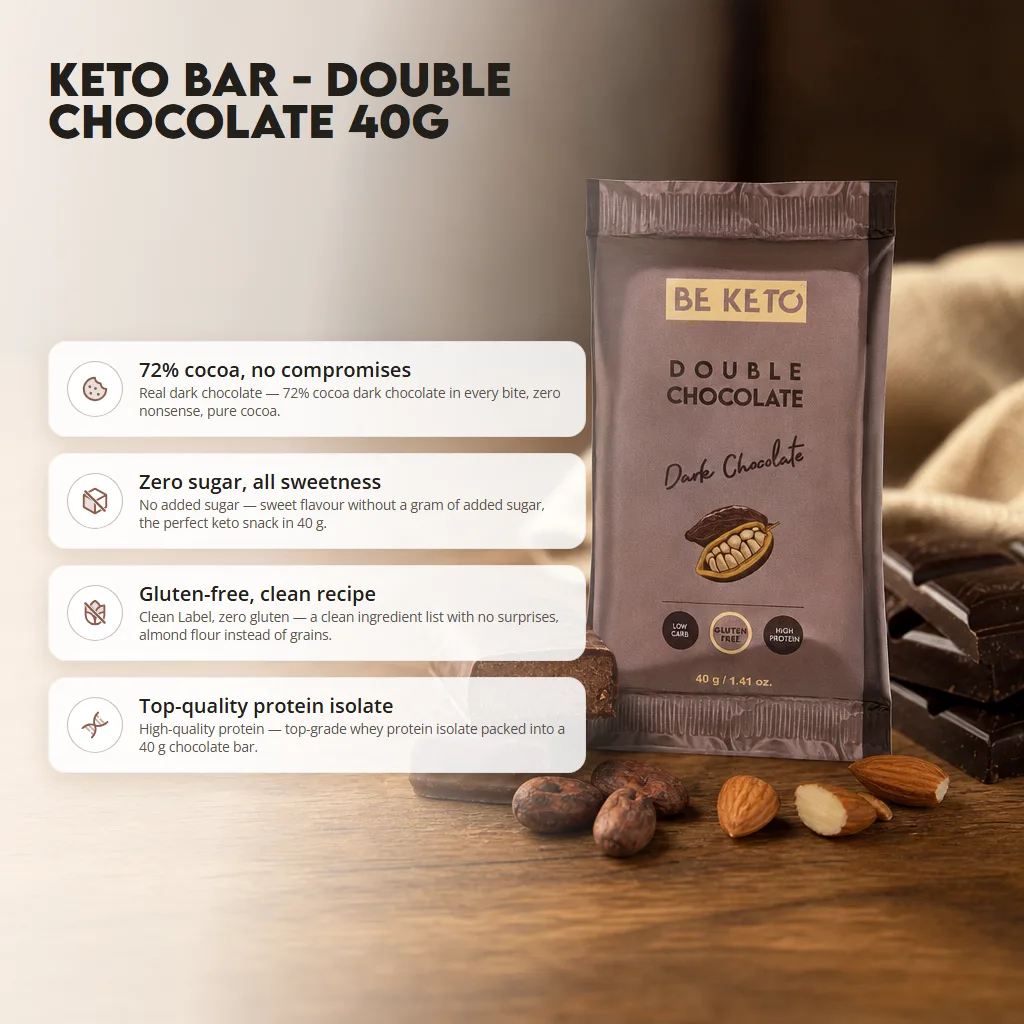
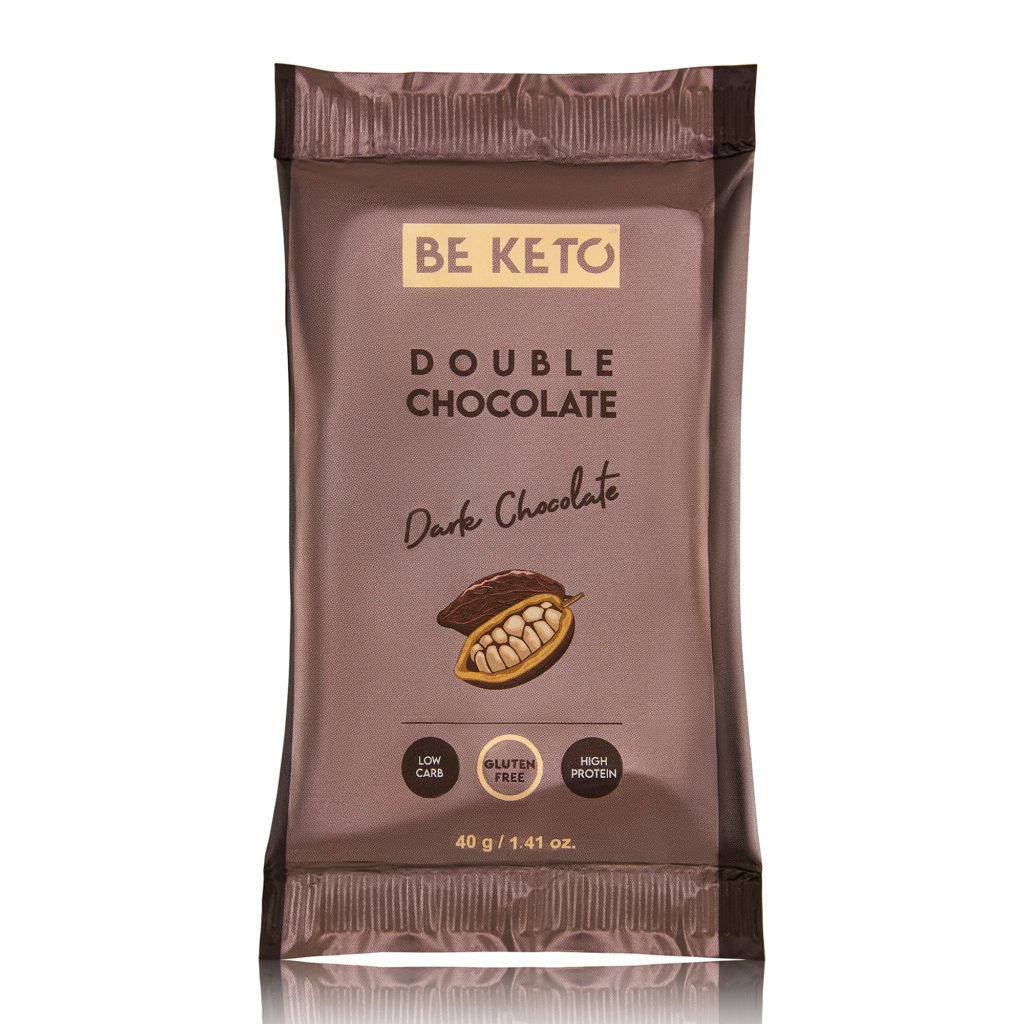
Keto Bar – Double Chocolate 40g
£ 2.69 GBP✔ Healthy fuel for your body and mind!
✔ Quick and healthy keto snack
✔ High protein content
✔ Provides a feeling of satiety
-
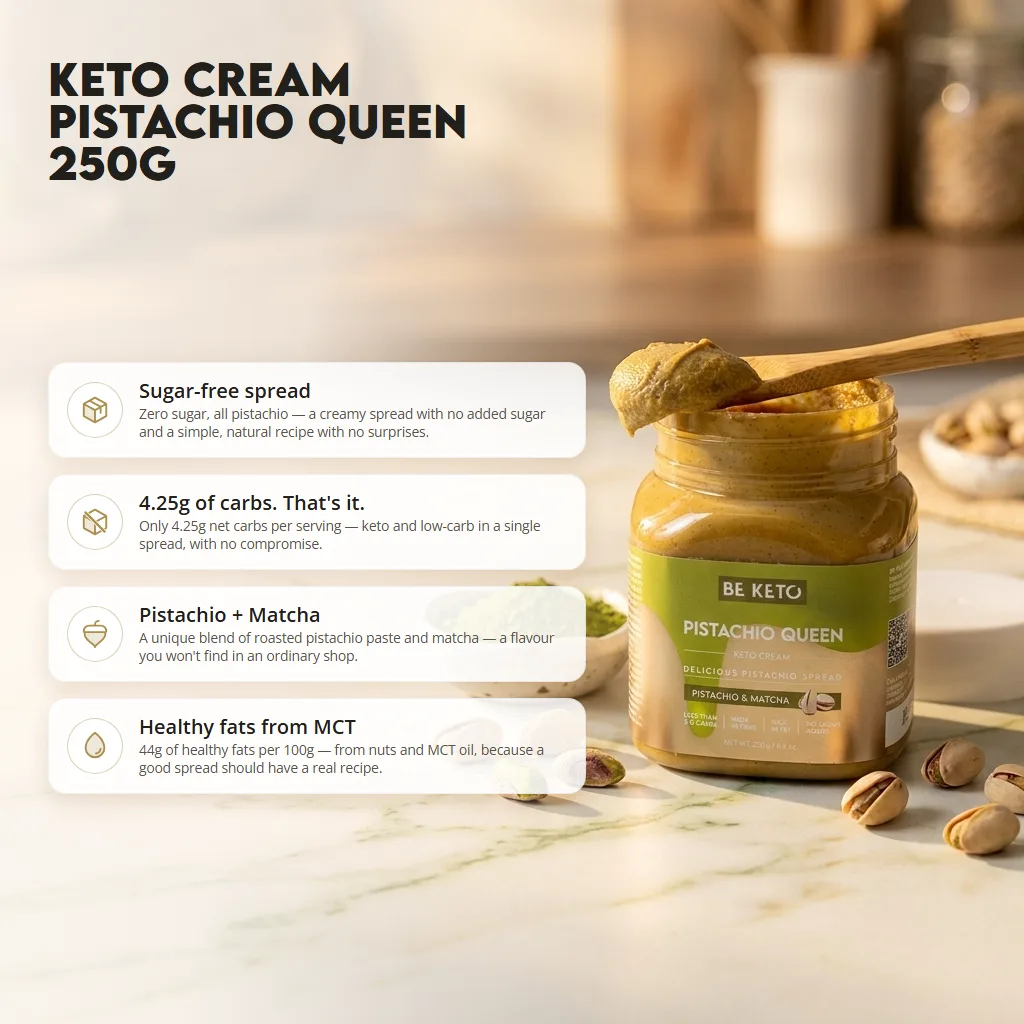
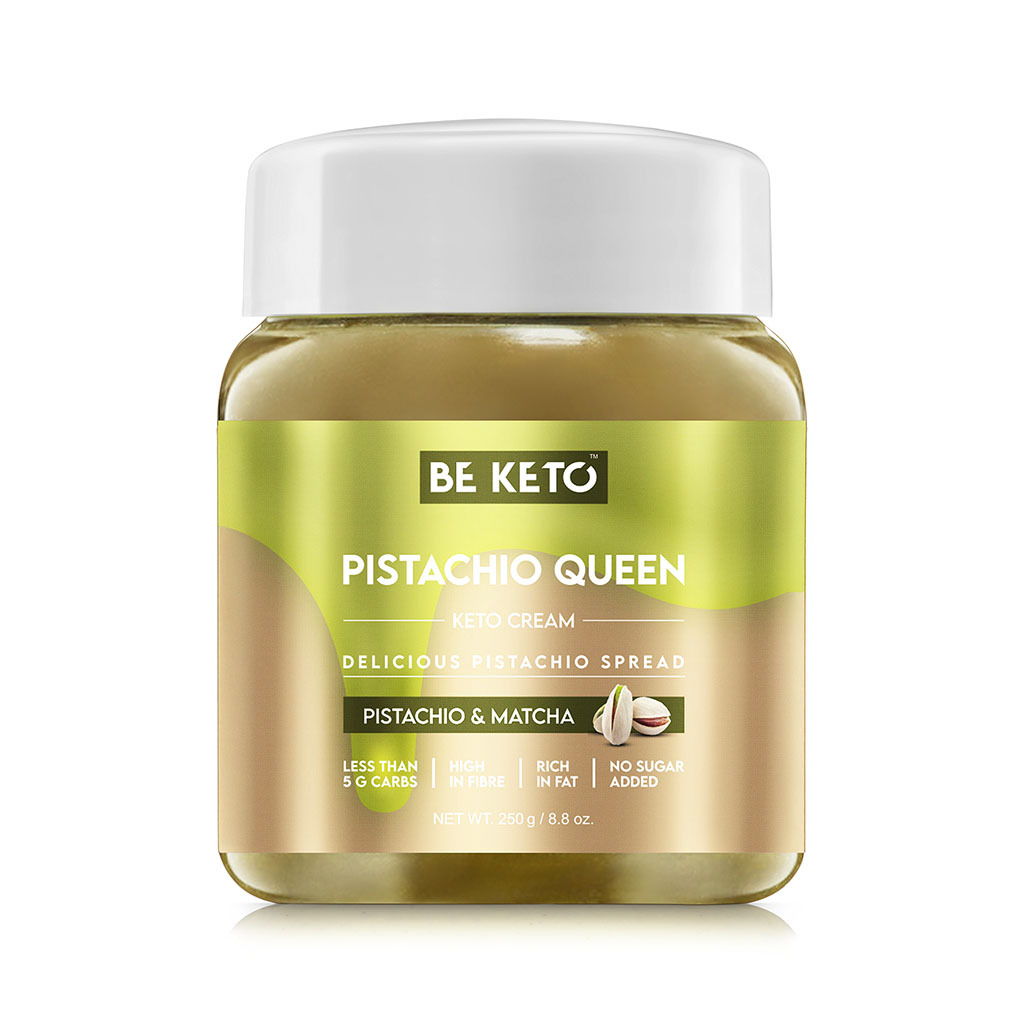
4.25g Net Carbohydrates + MCT
Keto Cream – Queen Pistachio 250g
£ 10.99 GBP✔ 44g of healthy fats per 100g of product
✔ Gluten-free and unbelievably delicious
✔ Completely free from added sugar, with a simple and natural ingredient list
✔ Enriched with matcha for a unique taste and a boost of antioxidants
-
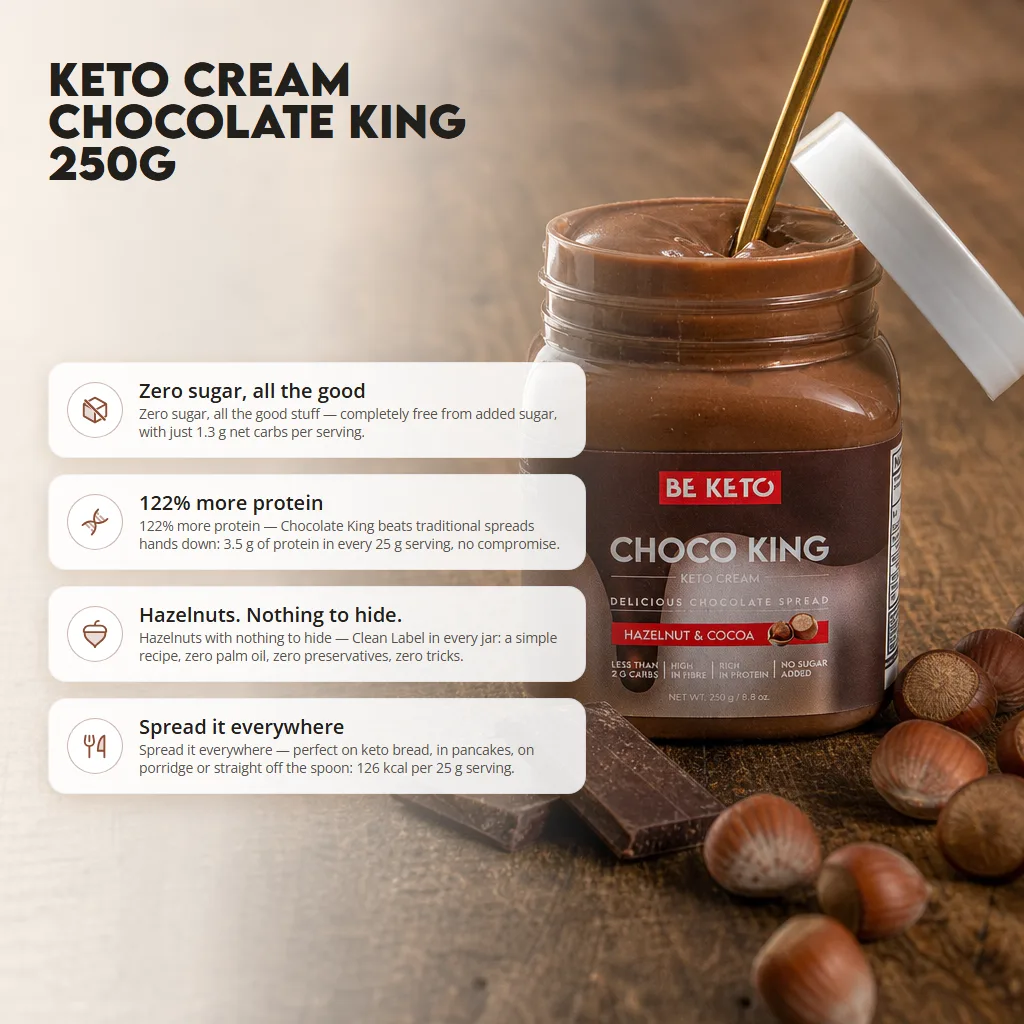
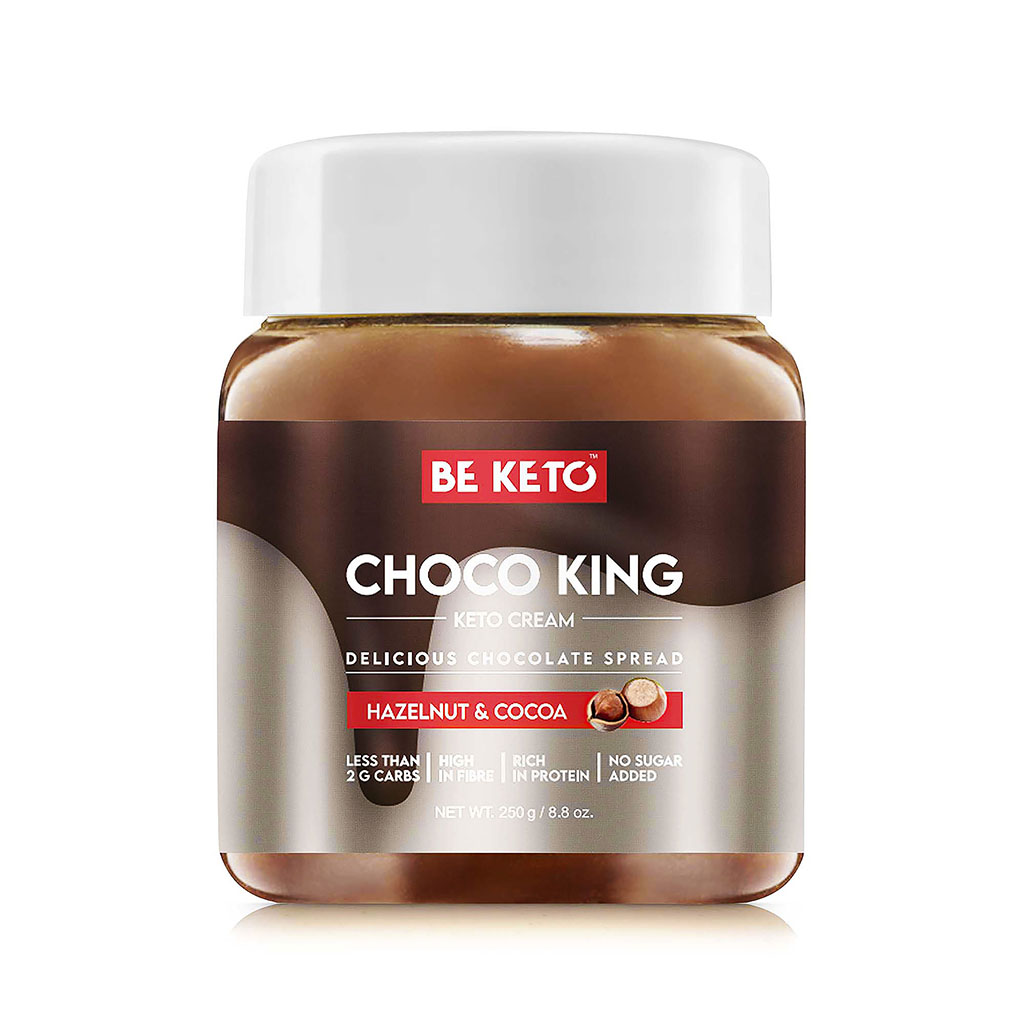
1.3g Net Carbohydrates per Portion
Keto Cream – Chocolate King 250g
£ 10.99 GBP✔ 90% fewer carbohydrates than traditional chocolate cream*
✔ 122% more protein than traditional chocolate cream*
✔ Contains no palm oil or preservatives
✔ Gluten-free and incredibly delicious
✔ Completely sugar-free
✔ Simple and excellent ingredients
-
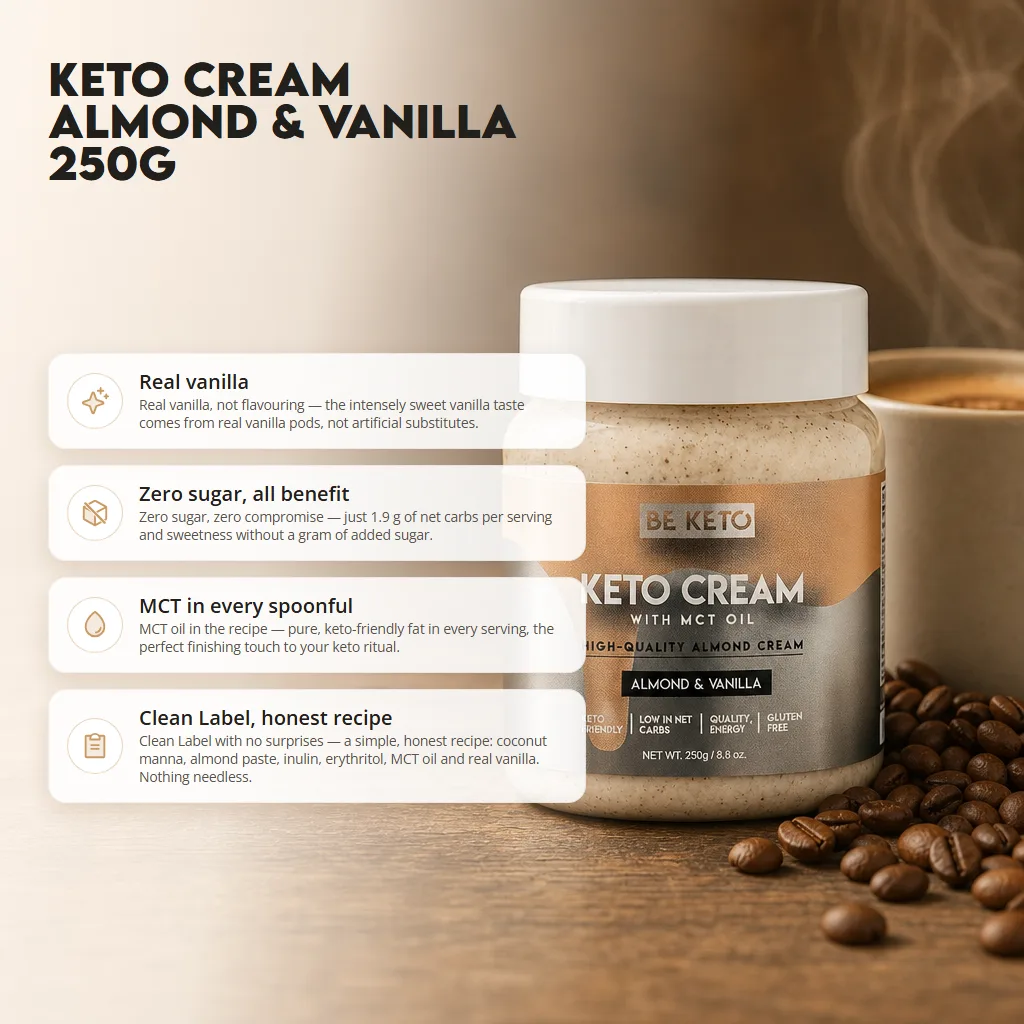
Out of stock1.9 g Net Carbohydrates + MCT
Keto Cream – Almond & Vanilla 250g
£ 8.49 GBP✔ Vegan and gluten-free
✔ Completely without added sugar
✔ 51g of healthy fats per 100 g of product
✔ Simple and perfect composition
-
2.2 g Net Carbohydrates + MCT
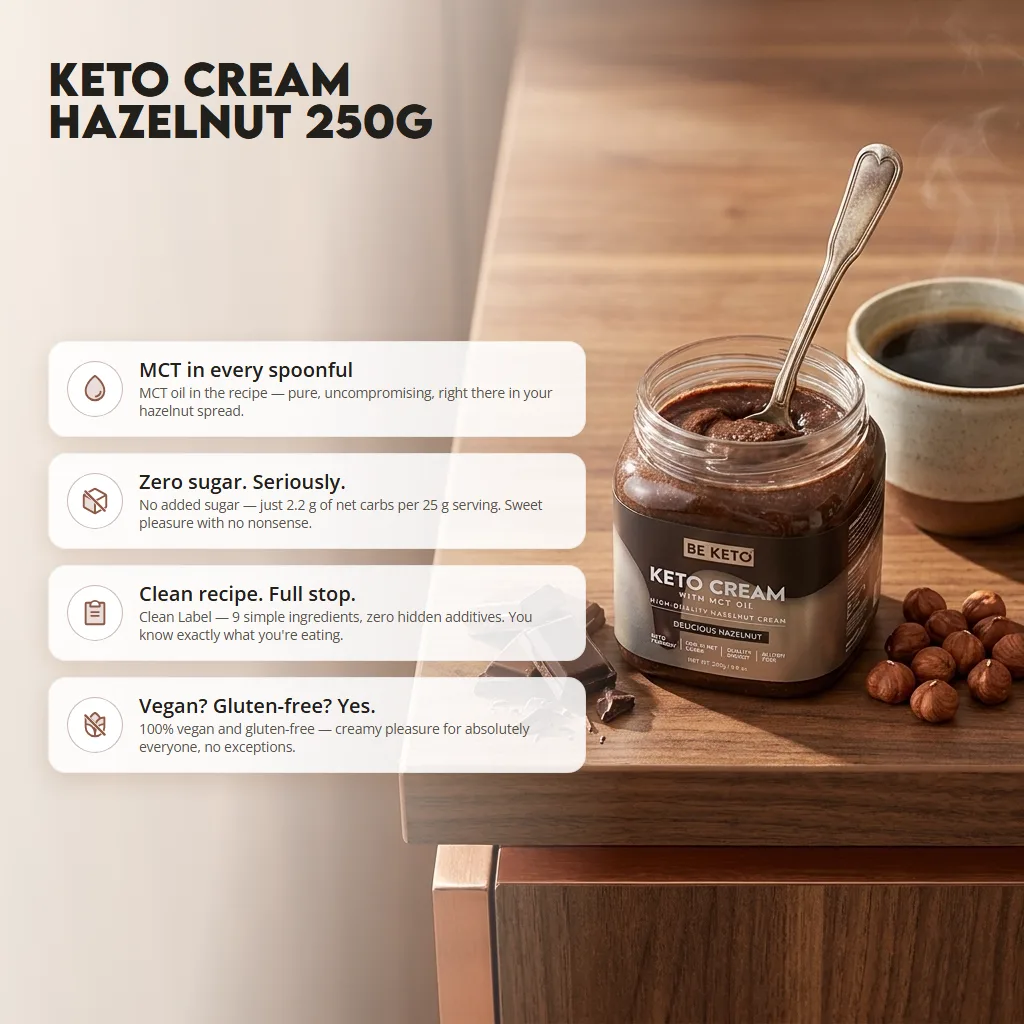
Keto Cream – Delicious Hazelnut 250g
£ 8.49 GBP✔ Vegan and gluten-free
✔ Completely without added sugar
✔ 44 g of healthy fats per 100 g of product
✔ Simple and excellent ingredients
-
4.4g Net Carbohydrates + MCT
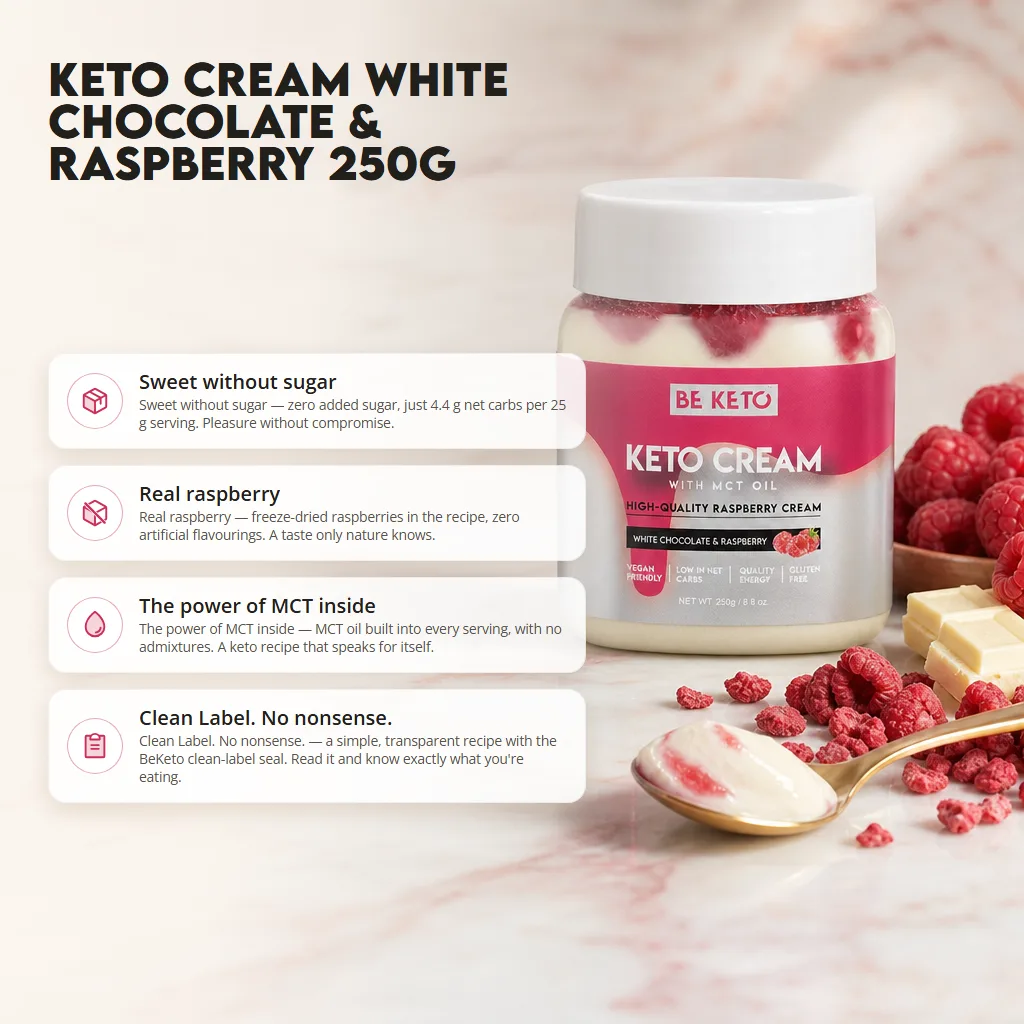
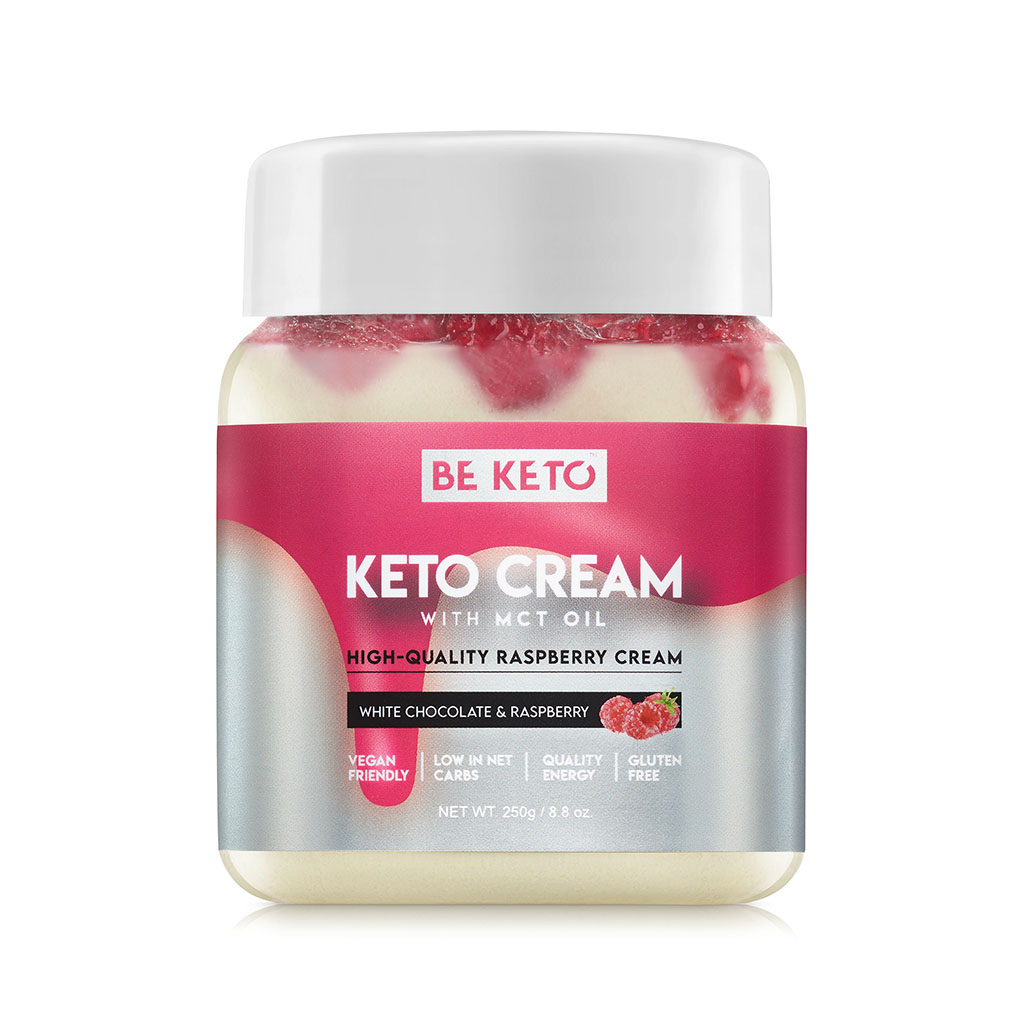
Keto Cream – White Chocolate & Raspberry 250g
£ 8.49 GBP✔ Vegan and gluten-free
✔ No added sugar at all
✔ 45.3 g of healthy fats per 100 g of product
✔ Simple and perfect composition
-
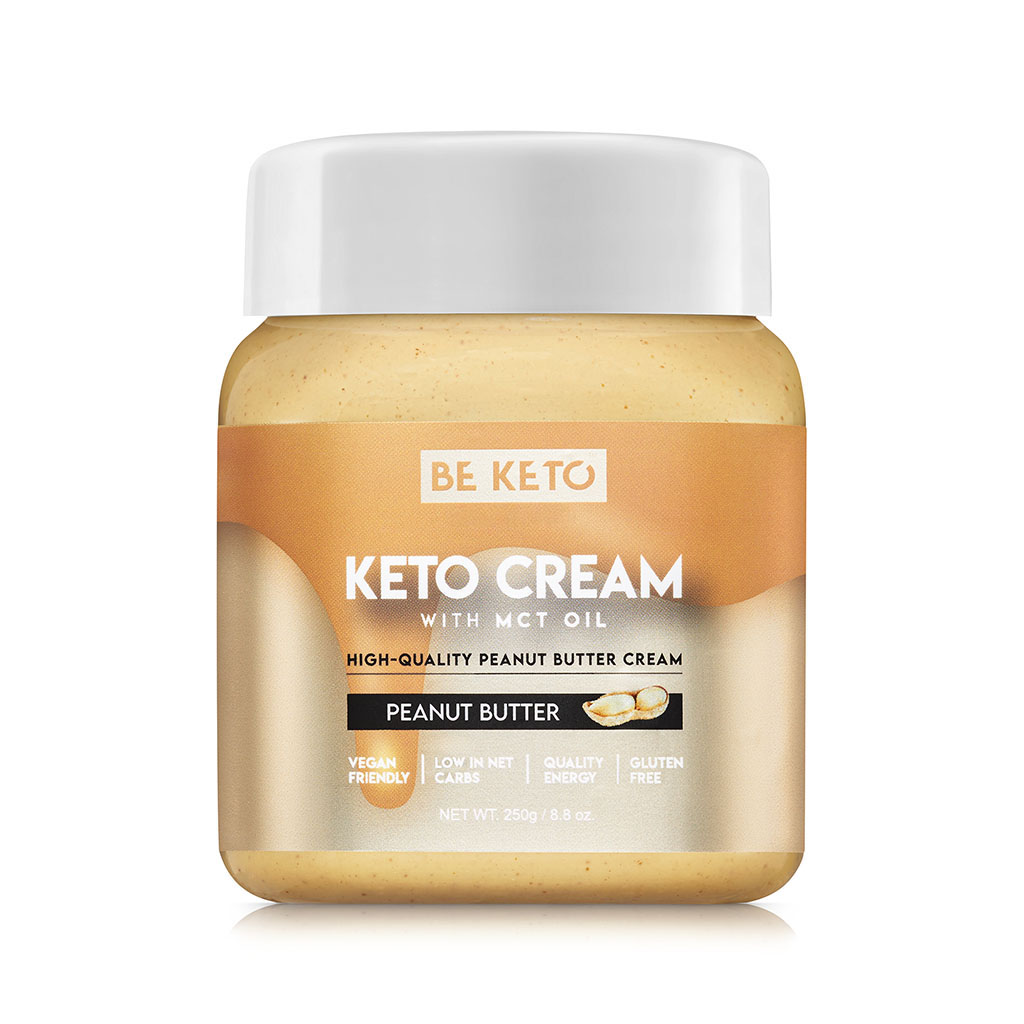
2.3 g Net Carbohydrates + MCT
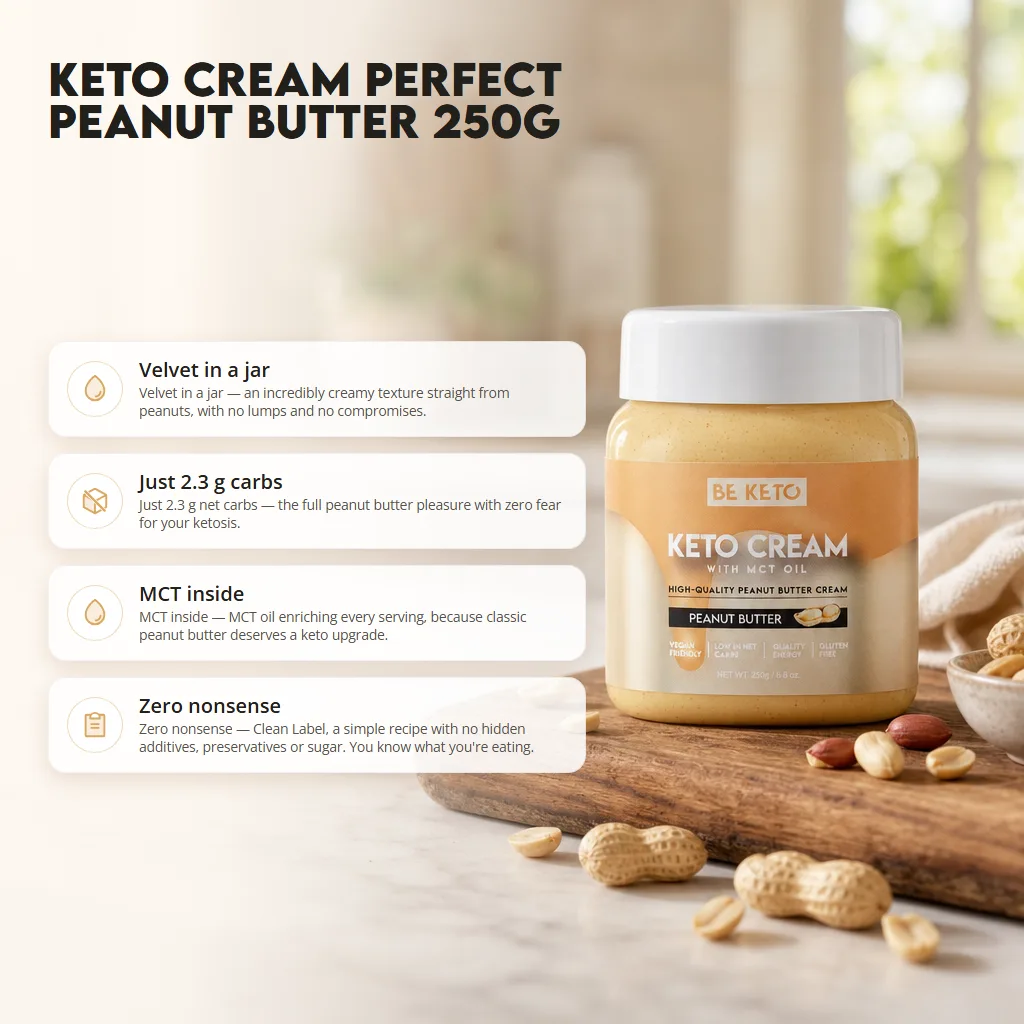
Keto Cream – Peanut Butter 250g
£ 8.49 GBP✔ Vegan and gluten-free
✔ No added sugar at all
✔ 42.7 g of healthy fats per 100 g of product
✔ Simple and perfect composition
-
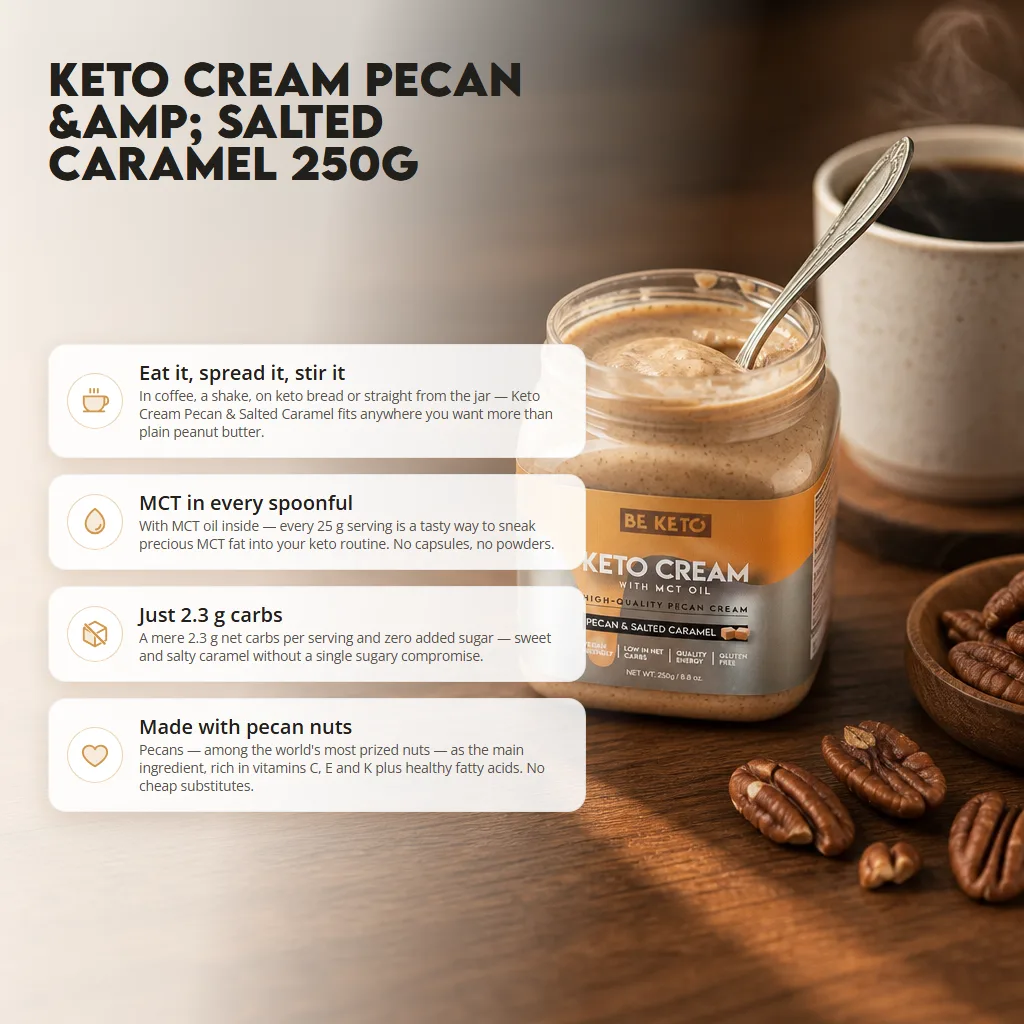
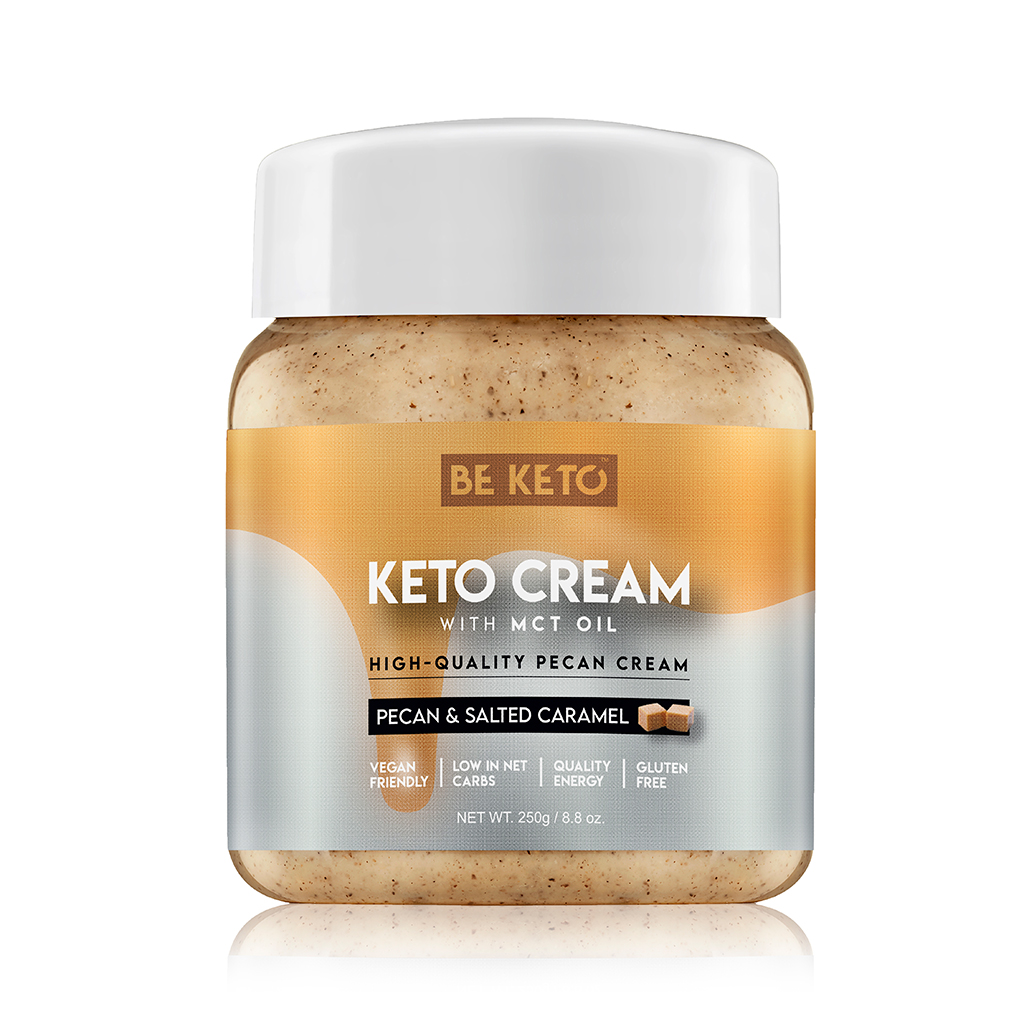
Out of stock2.3 g Net Carbohydrates + MCT
Keto Cream – Pecan & Salted Caramel 250g
£ 8.49 GBP✔ Vegan and gluten-free
✔ Completely without added sugar
✔ 47 g of healthy fats per 100 g of product
✔ Simple and perfect ingredients
-
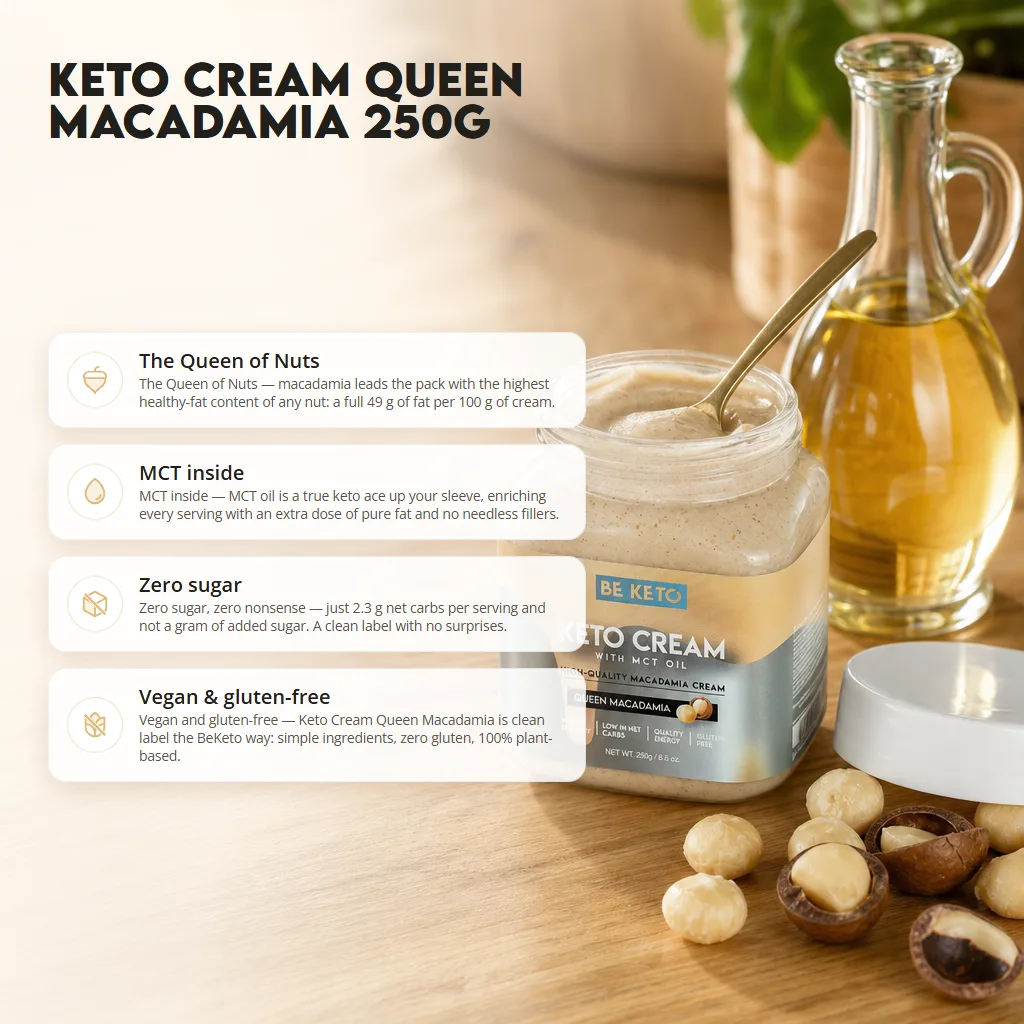
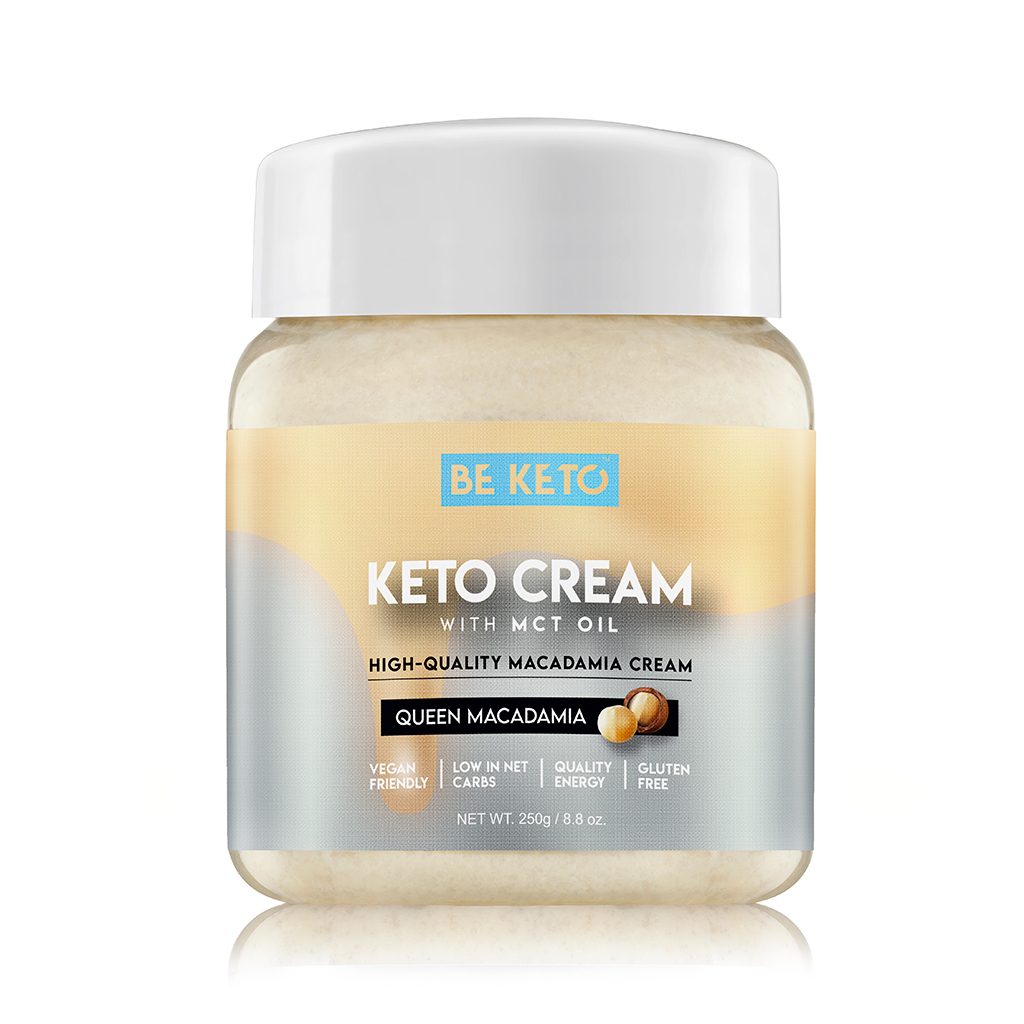
2.3 g Net Carbohydrates + MCT
Keto Cream – Queen Macadamia 250g
£ 10.99 GBP✔ Vegan and gluten-free
✔ Completely without added sugar
✔ 49g of healthy fats per 100g of product
✔ Simple and perfect composition
-
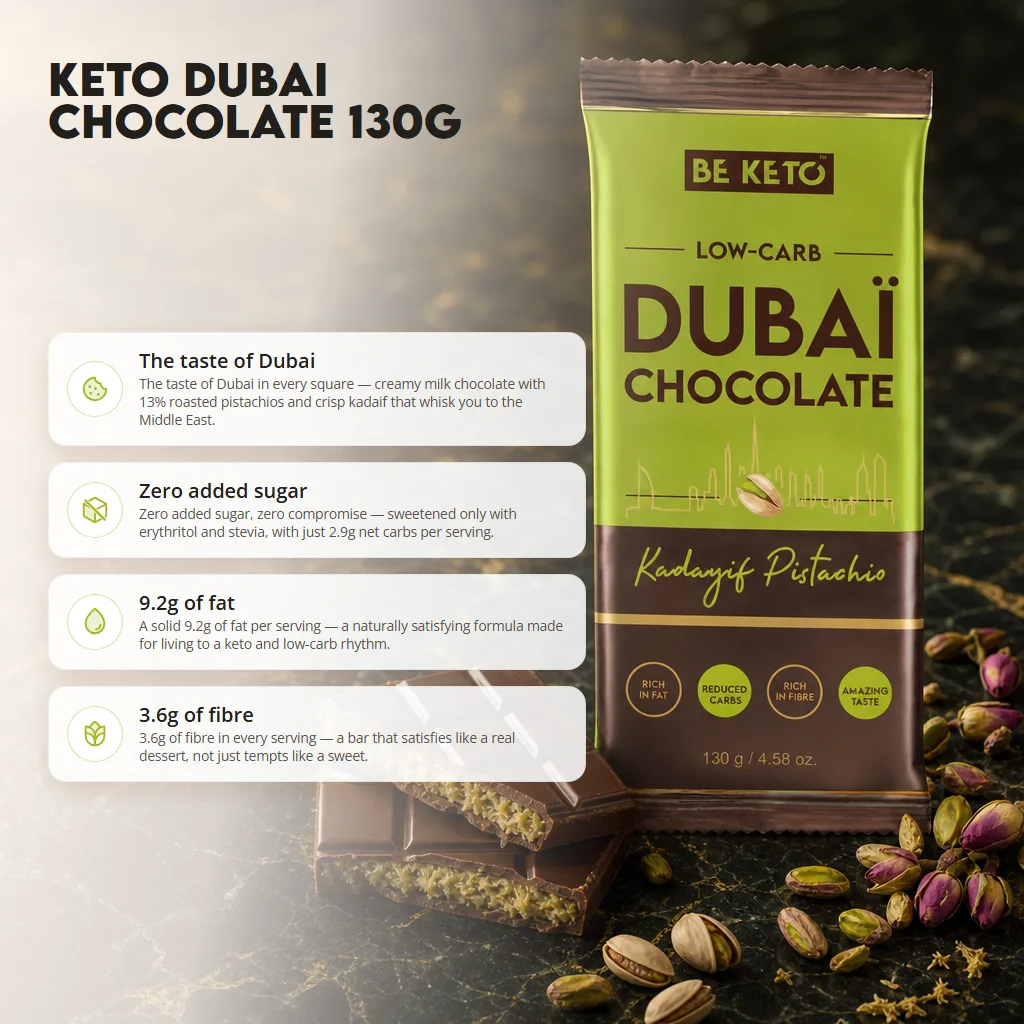
2.9 g Net Carbohydrates Per Serving
Keto Dubai Chocolate 130g
£ 11.90 GBP✔ Zero added sugars
✔ Does not cause insulin spikes
✔ Natural source of energy from fats
✔ Unique crunchy texture thanks to pistachios and kadaiyf
✔ Milky, creamy, and intensely pistachio — an addictive taste
-
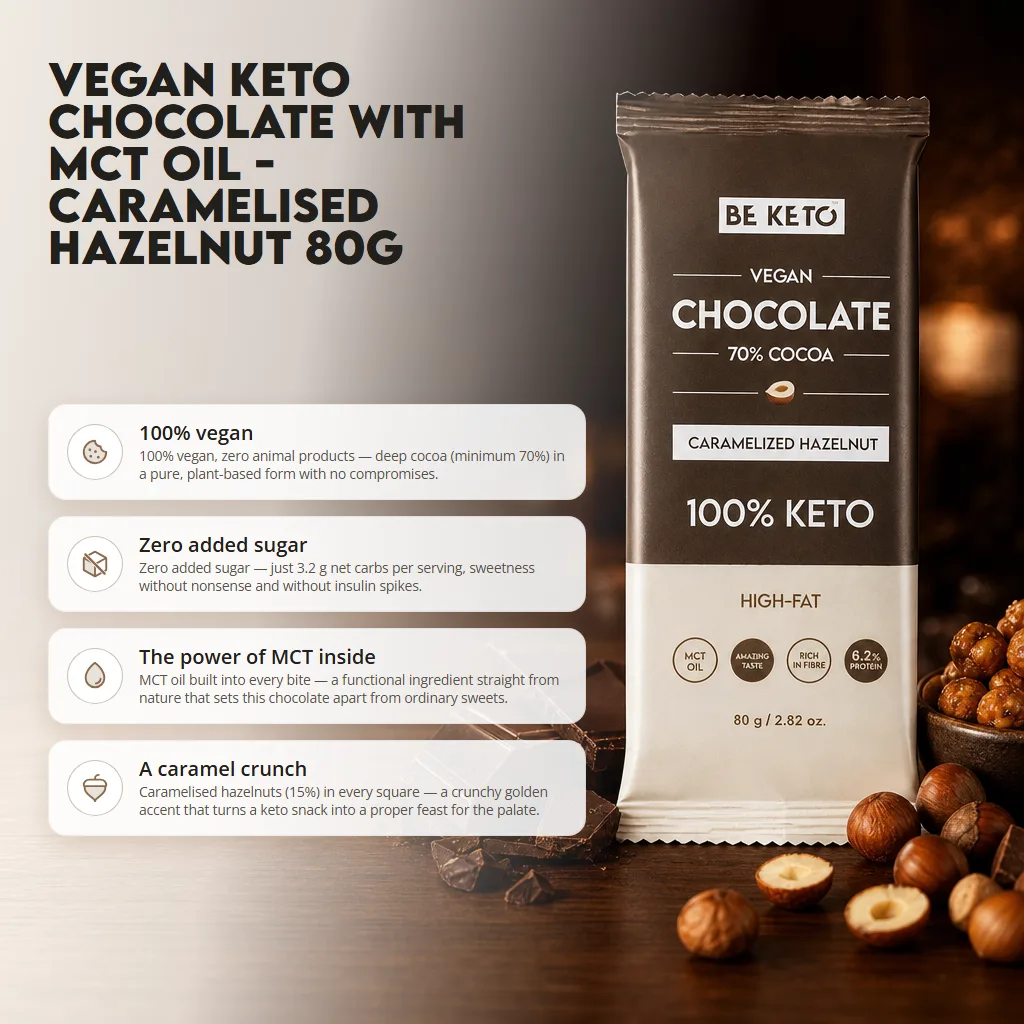
Out of stock3.2g Net Carbohydrates Per Serving
Vegan Keto Chocolate + MCT Oil – Caramelized Hazelnut 80g
£ 3.99 GBP✔ Without added sugar
✔ Does not cause insulin spikes
✔ Contains the healthiest MCT oil
✔ Excellent chocolate with the lowest carbohydrate content
✔ Suitable for vegans
-
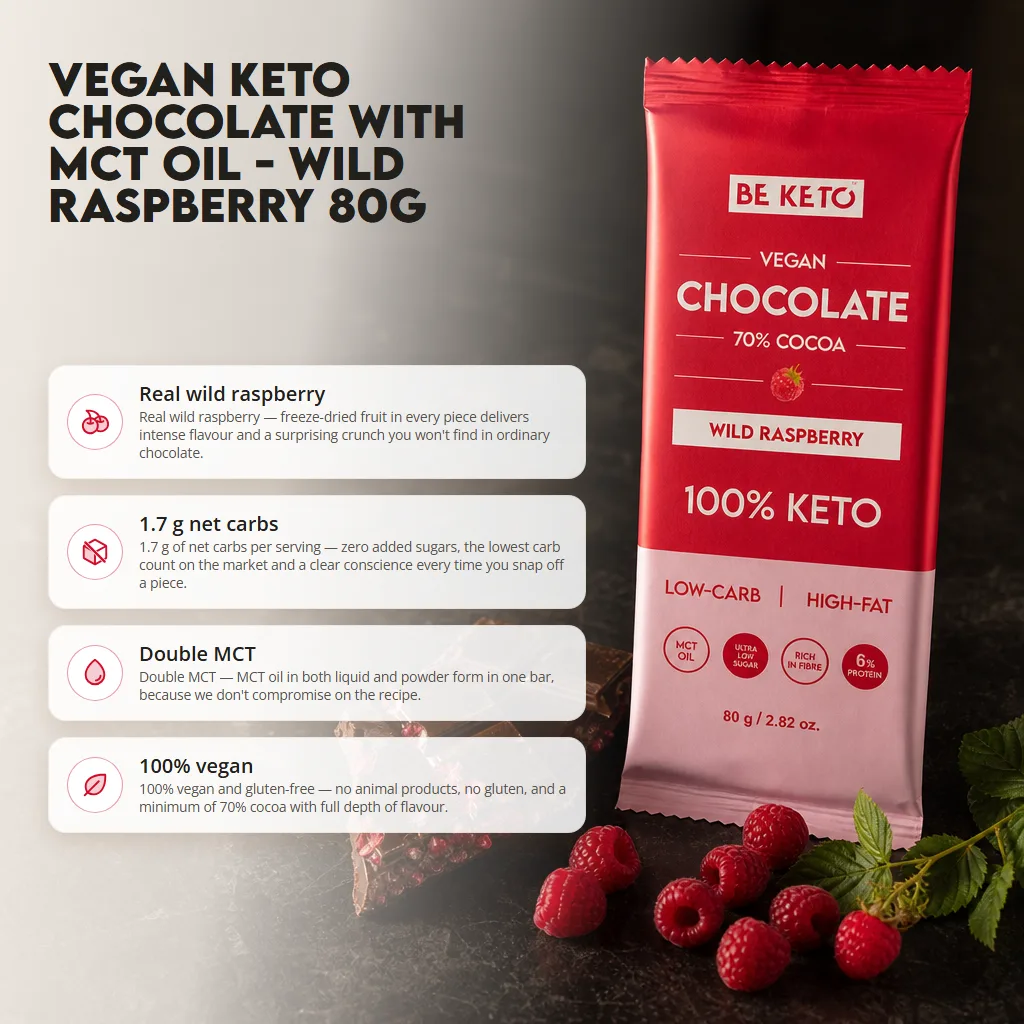
Out of stock1.7 g Net Carbohydrates Per Serving
Vegan Keto Chocolate + MCT Oil – Wild Raspberry 80g
£ 3.99 GBP✔ Without added sugar
✔ Does not cause insulin spikes
✔ Contains the healthiest MCT oil
✔ Excellent chocolate with the lowest carbohydrate content
✔ Freeze-dried fruit for a crunchy effect
✔ Suitable for vegans
-
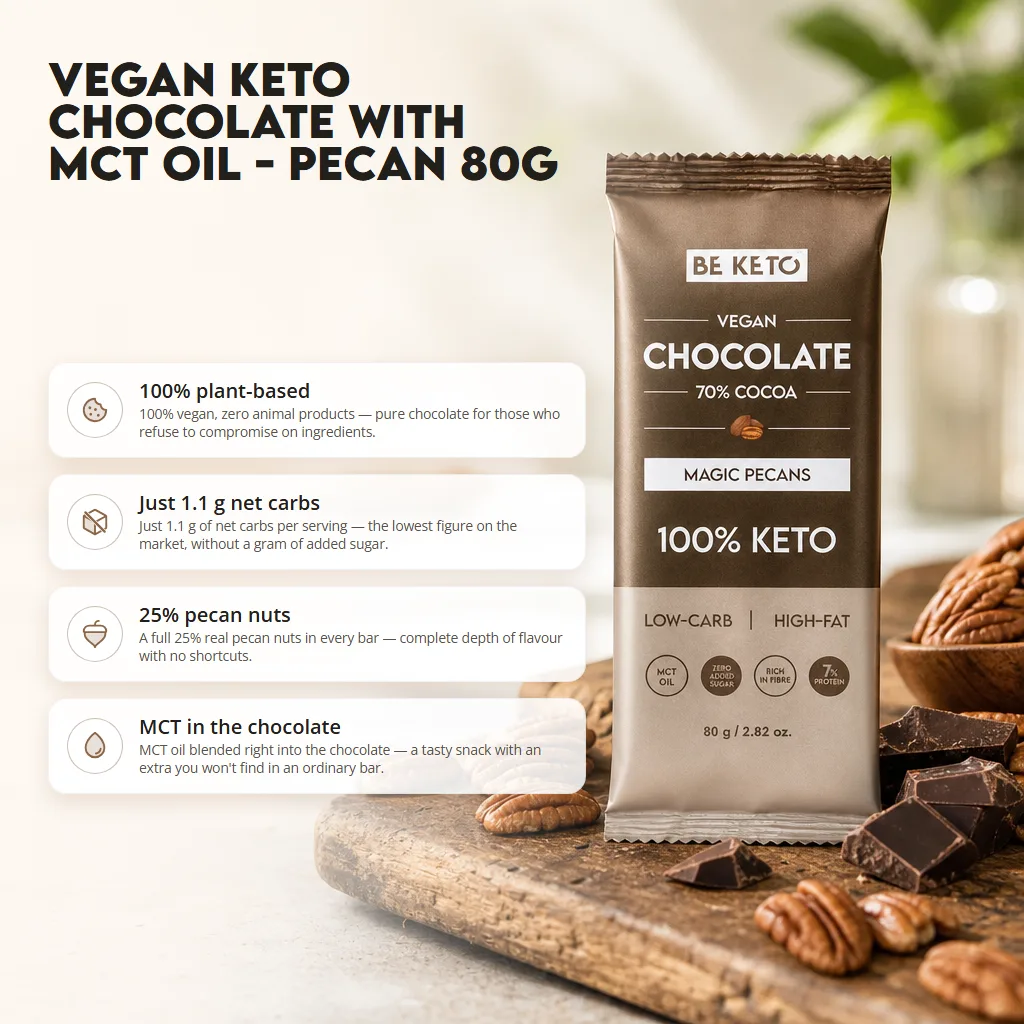
Out of stock1.1 g Net Carbs Per Portion
Vegan Keto Chocolate + MCT Oil – Magic Pecans 80g
£ 3.99 GBP✔ Without added sugar
✔ Does not cause insulin spikes
✔ Contains the healthiest MCT oil
✔ Excellent chocolate with the lowest carbohydrate content
✔ Suitable for vegans
-
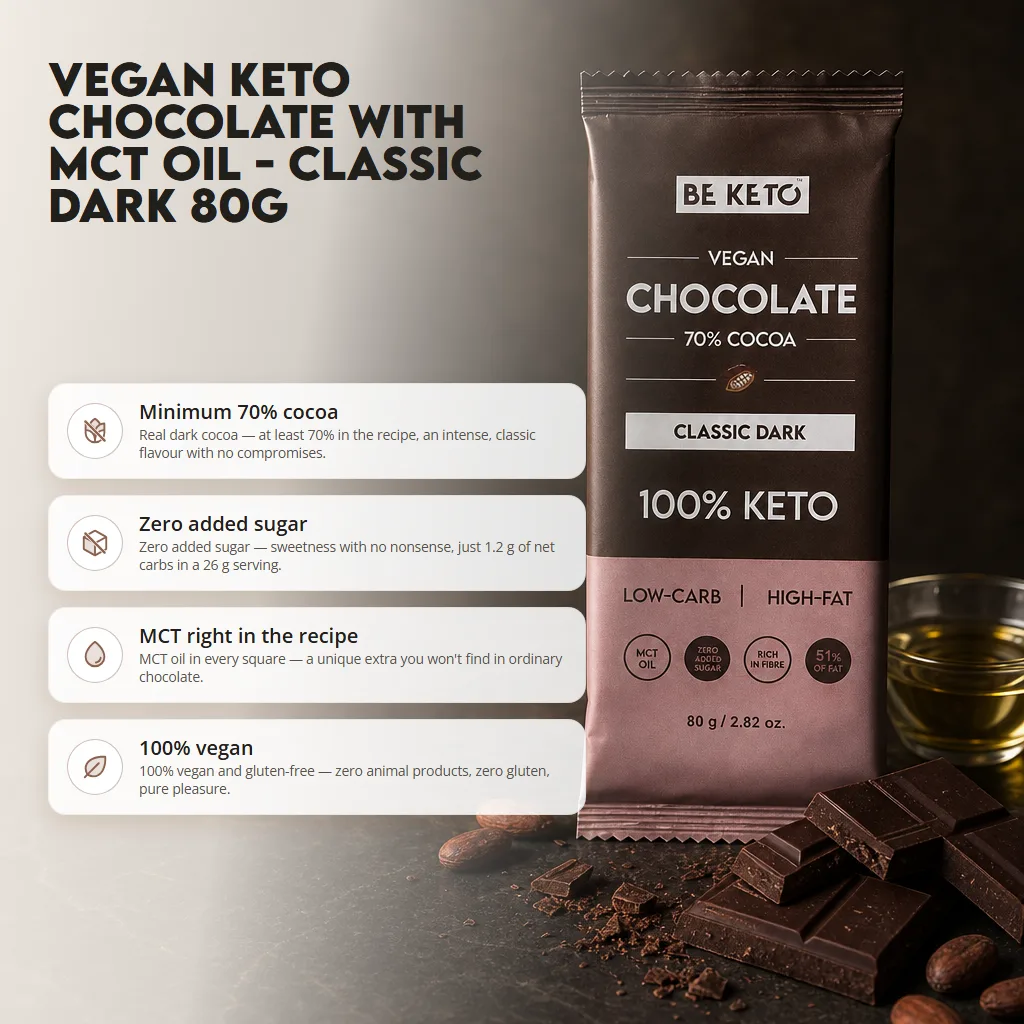
Out of stock1.2 g Net Carbs Per Portion
Vegan Keto Chocolate + MCT Oil – Classic Dark 80g
£ 3.99 GBP✔ Without added sugar
✔ Does not cause insulin spikes
✔ Contains the healthiest MCT oil
✔ Excellent chocolate with the lowest carbohydrate content
✔ Suitable for vegans
-
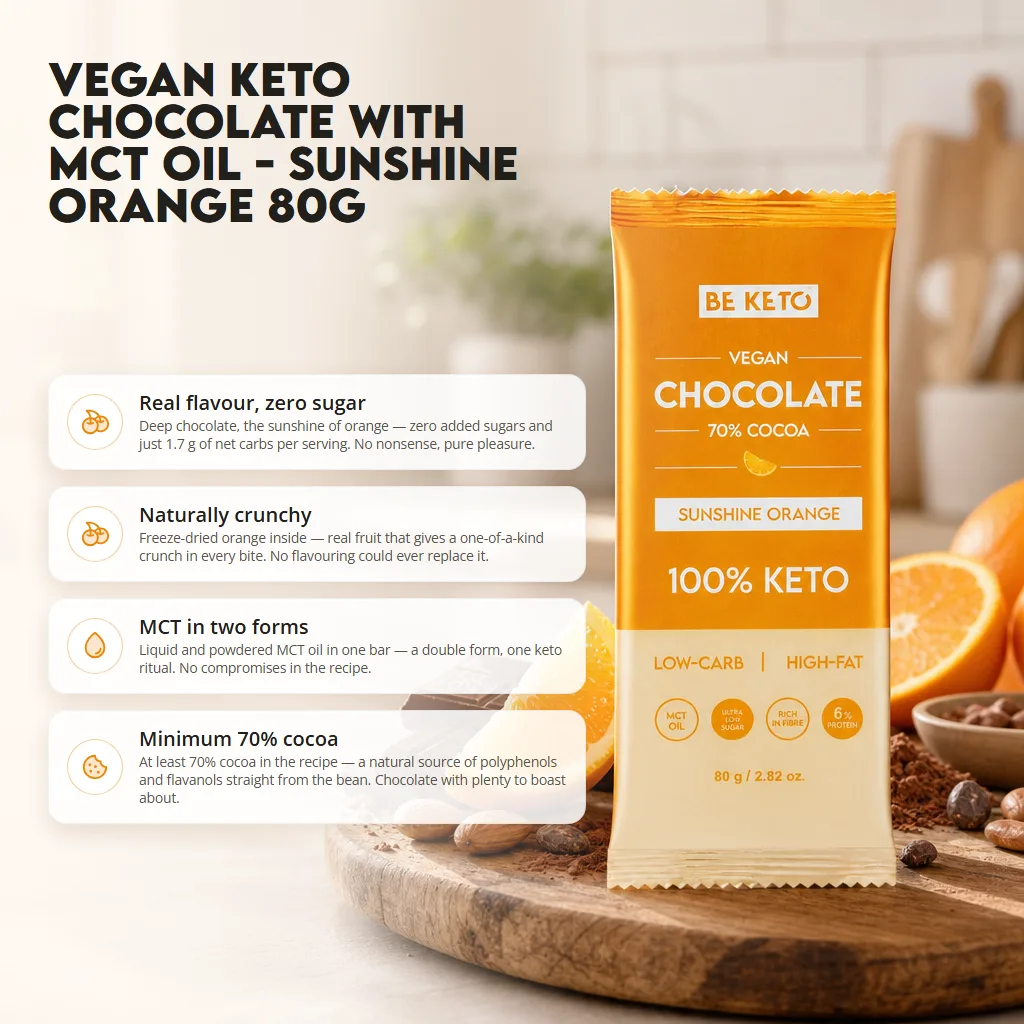
1.7 g Net Carbohydrates Per Serving
Vegan Keto Chocolate + MCT Oil – Sunshine Orange 80g
£ 3.99 GBP✔ Without added sugar
✔ Does not cause insulin spikes
✔ Contains the healthiest MCT oil
✔ Excellent chocolate with the lowest carbohydrate content
✔ Freeze-dried fruit for a crunchy effect
✔ Suitable for vegans
-
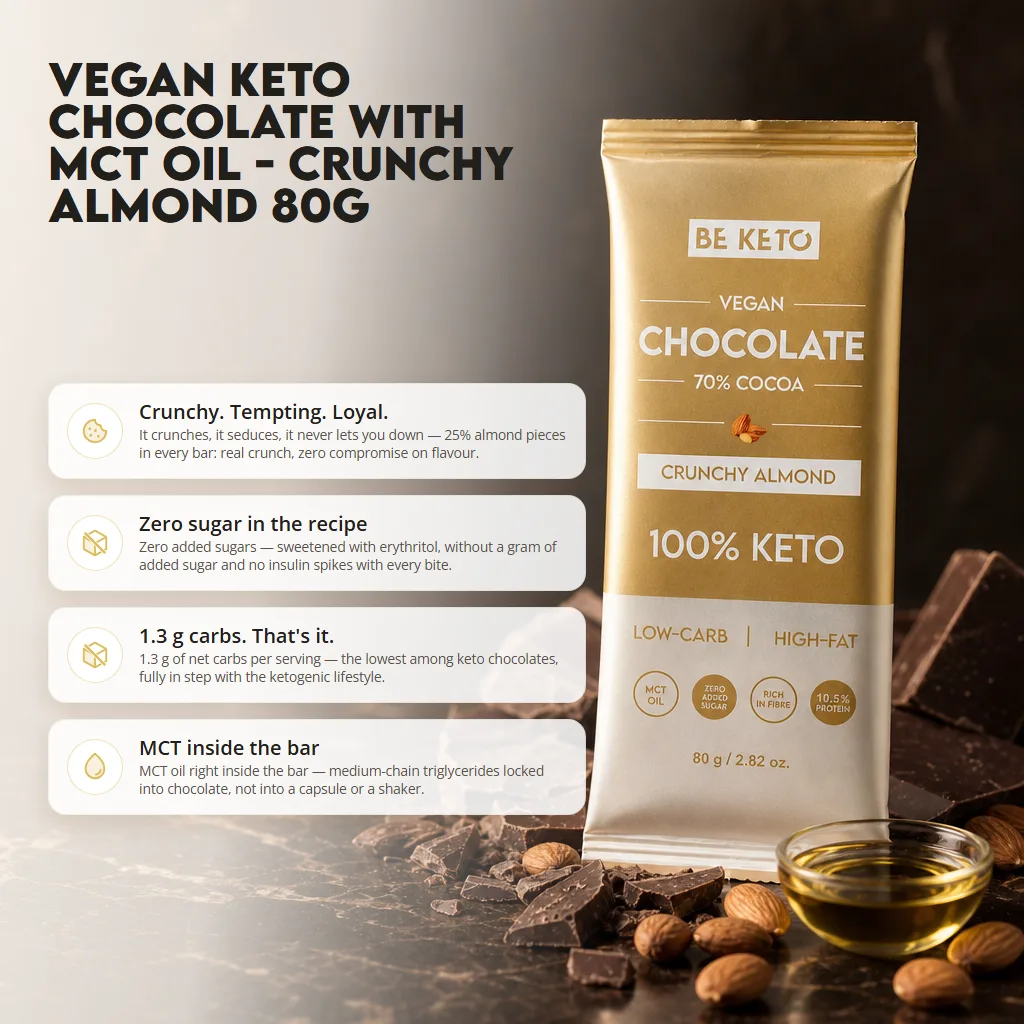
1.3 g Net Carbs Per Portion
Vegan Keto Chocolate + MCT Oil – Crunchy Almond 80g
£ 3.99 GBP✔ Without added sugar
✔ Does not cause insulin spikes
✔ Contains the healthiest MCT oil
✔ Excellent chocolate with the lowest carbohydrate content
✔ Suitable for vegans
-
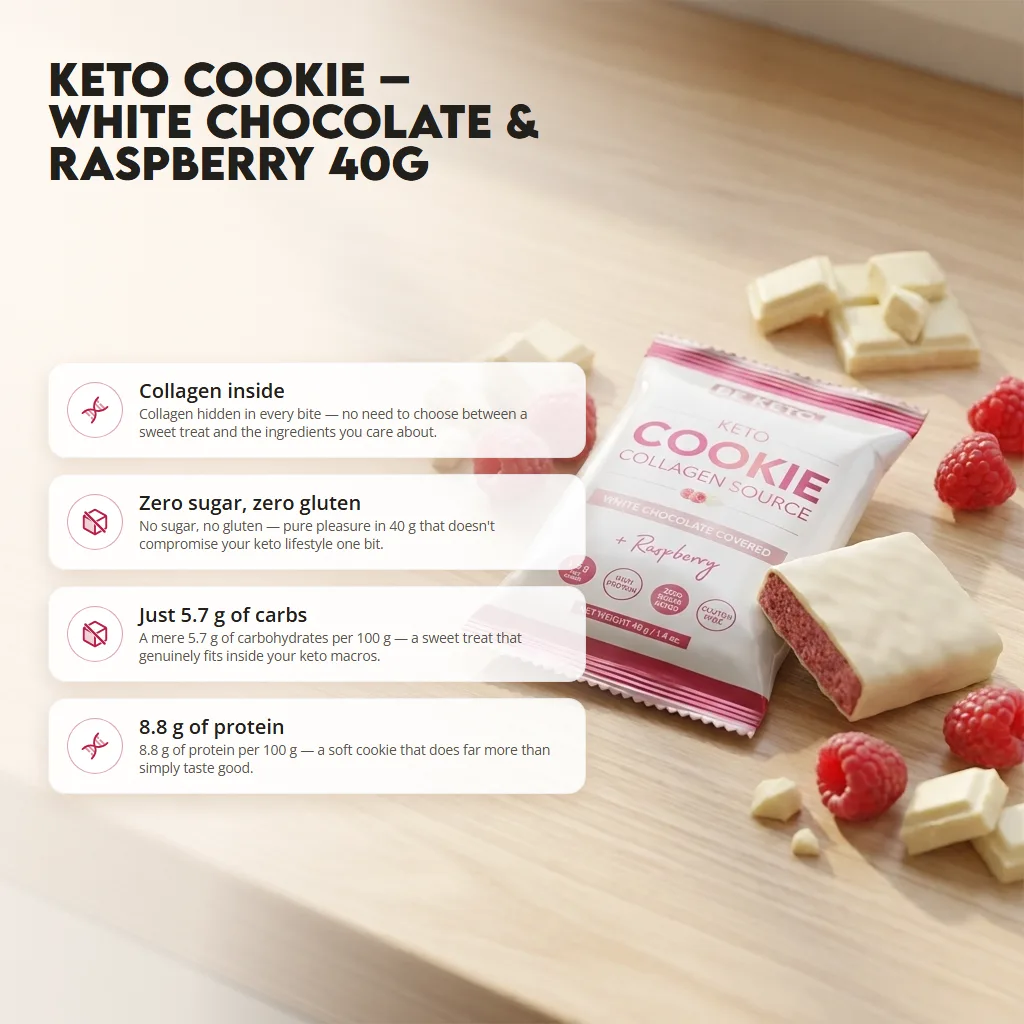
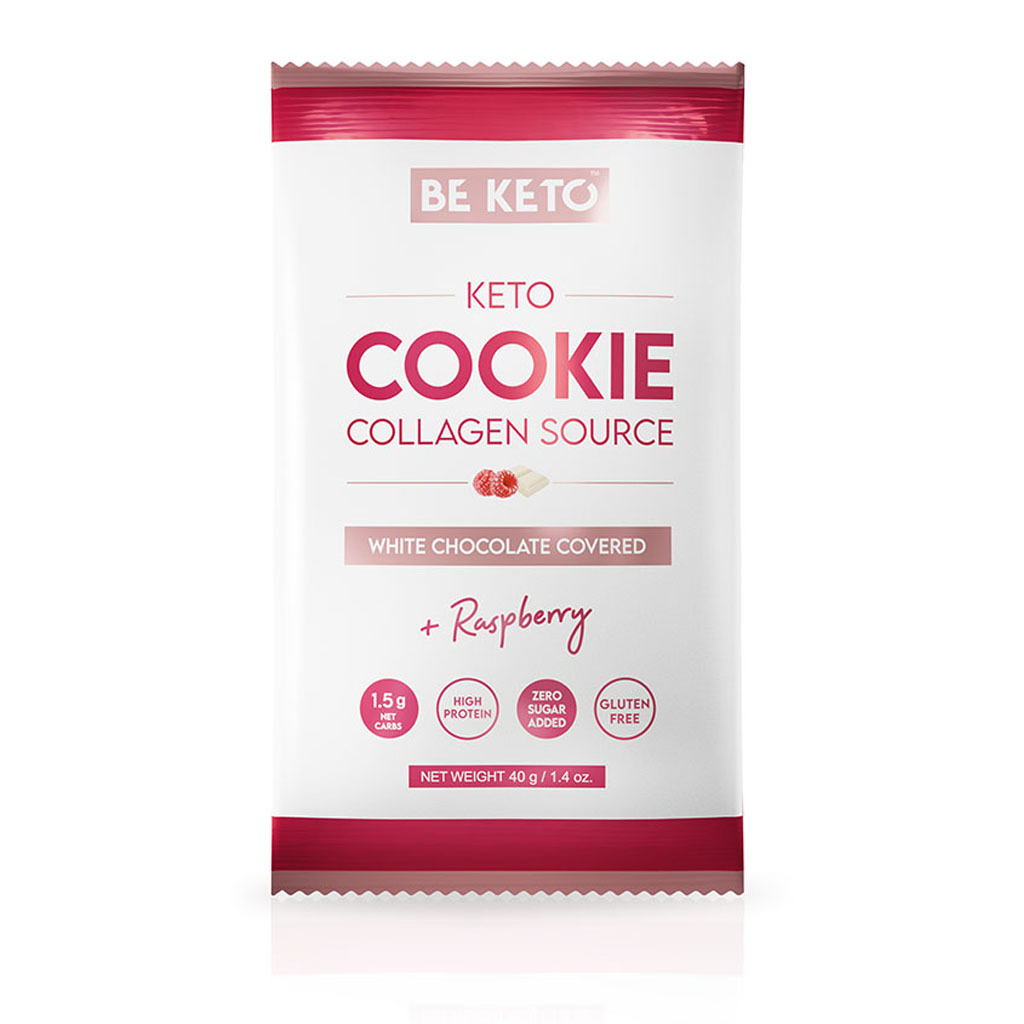
Keto Cookie – White Chocolate & Raspberry 40g
£ 2.29 GBP✔ Rich in healthy fats, fibre and collagen
✔ Satisfies cravings for sweet without remorse
✔ Provides a feeling of satiety
✔ Ideal for sweet lovers on a keto diet
-
Rich In Fibre
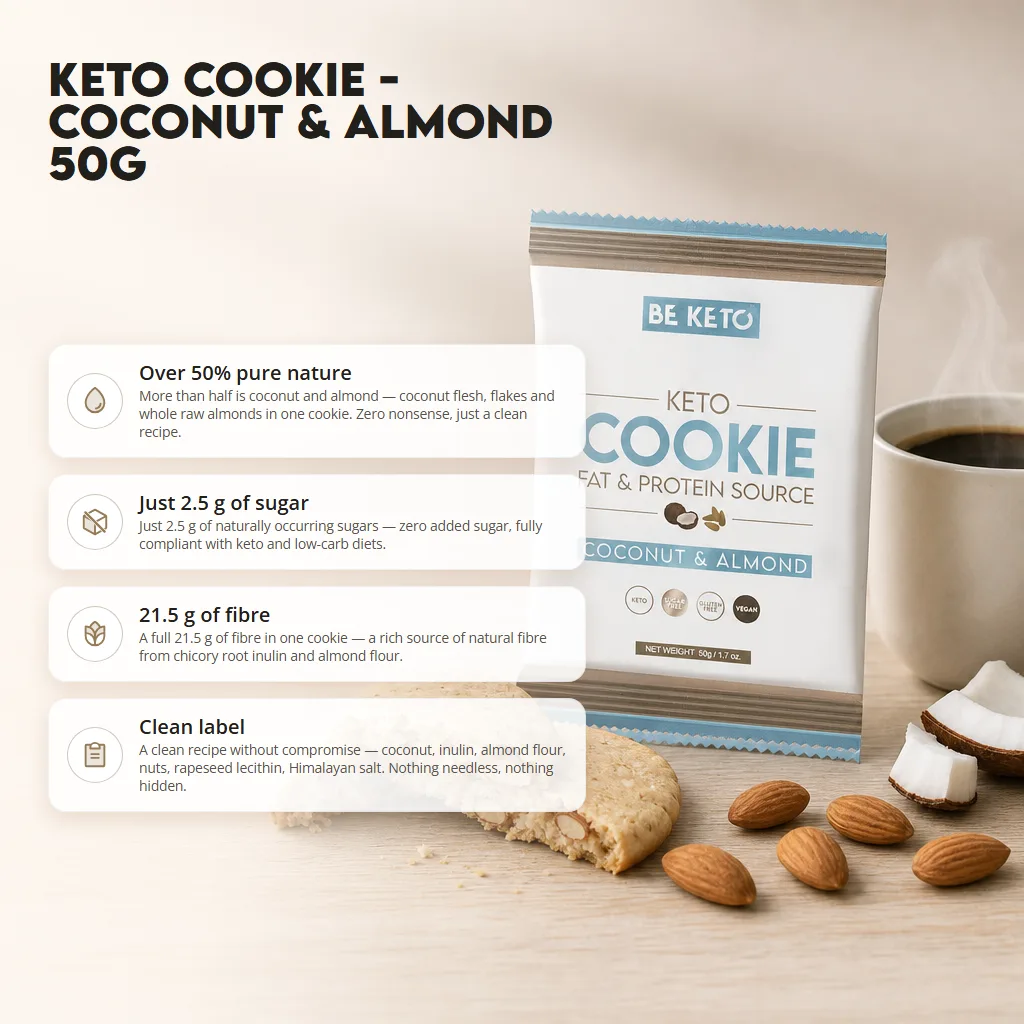
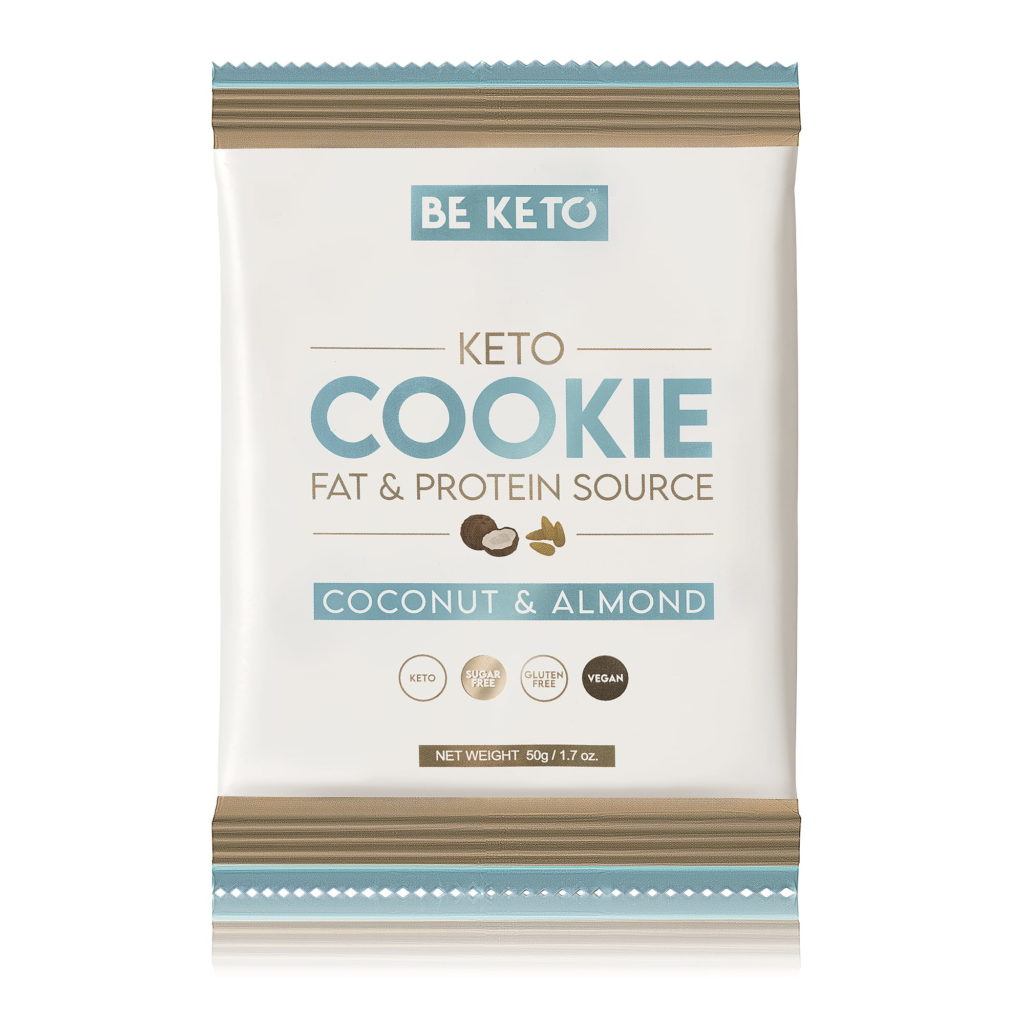
Keto Cookie Coconut & Almond 50g
£ 2.29 GBP✔ Rich in healthy fats, fibre and protein
✔ Satisfies the craving for sweets
✔ Provides a feeling of satiety
✔ Ideal snack for the day
-
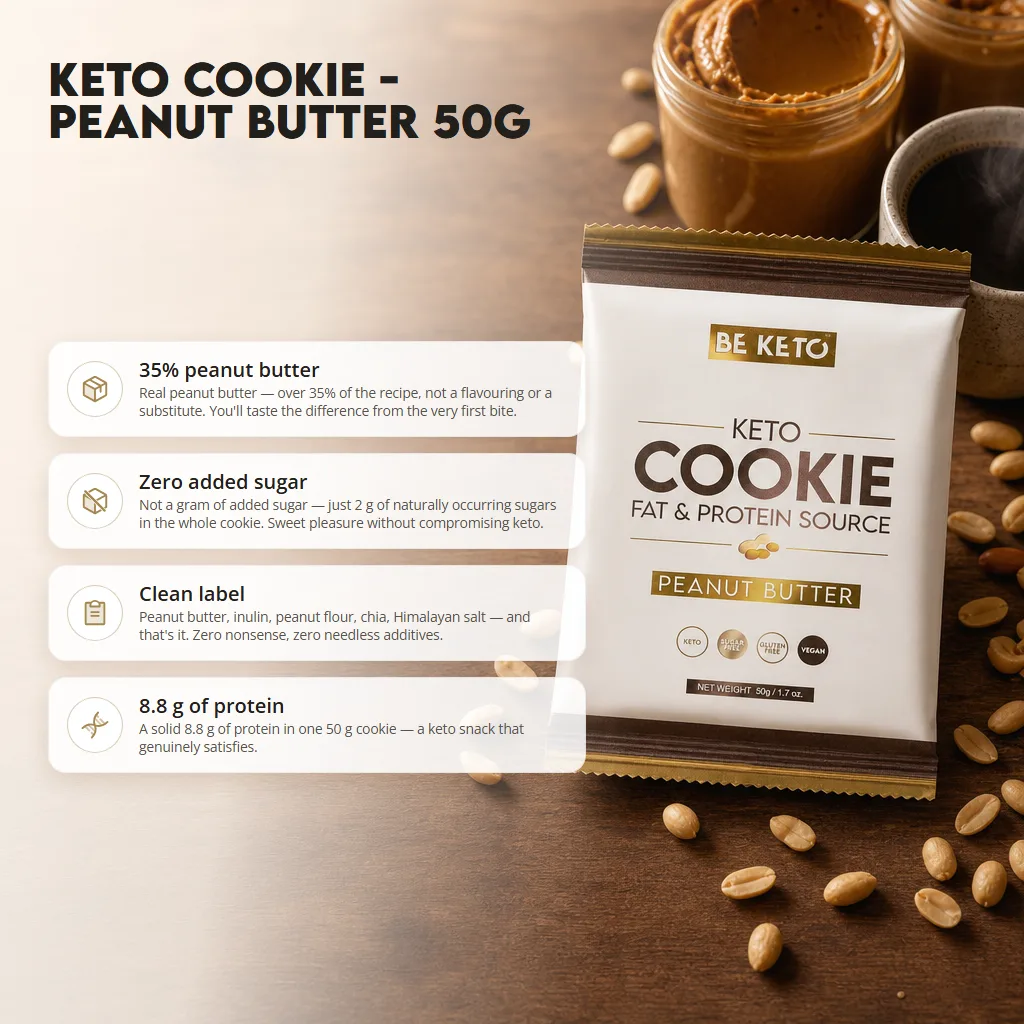
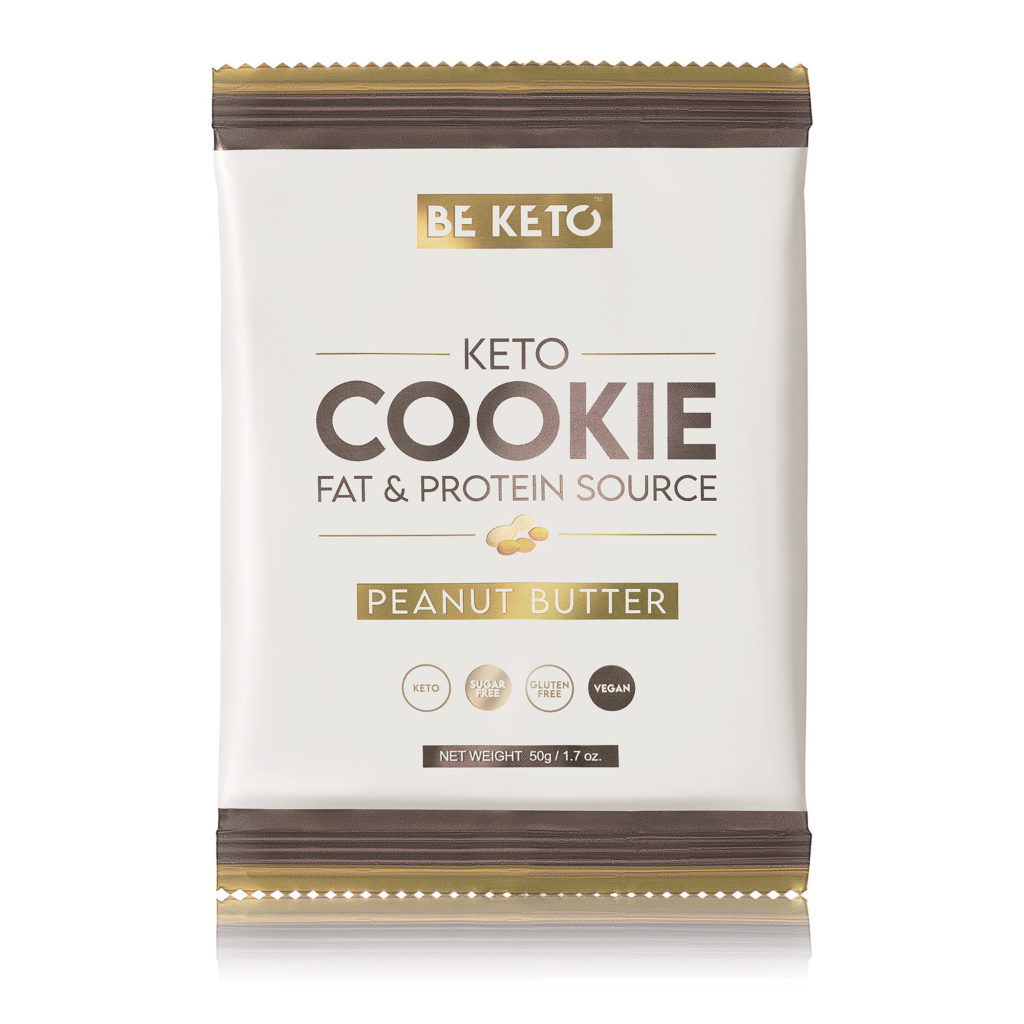
Rich In Fibre
Keto Cookie Peanut Butter 50g
£ 2.29 GBP✔ Rich in healthy fats, fibre and protein
✔ Satisfies the craving for sweets
✔ Provides a feeling of satiety
✔ Ideal as a snack during the day
-
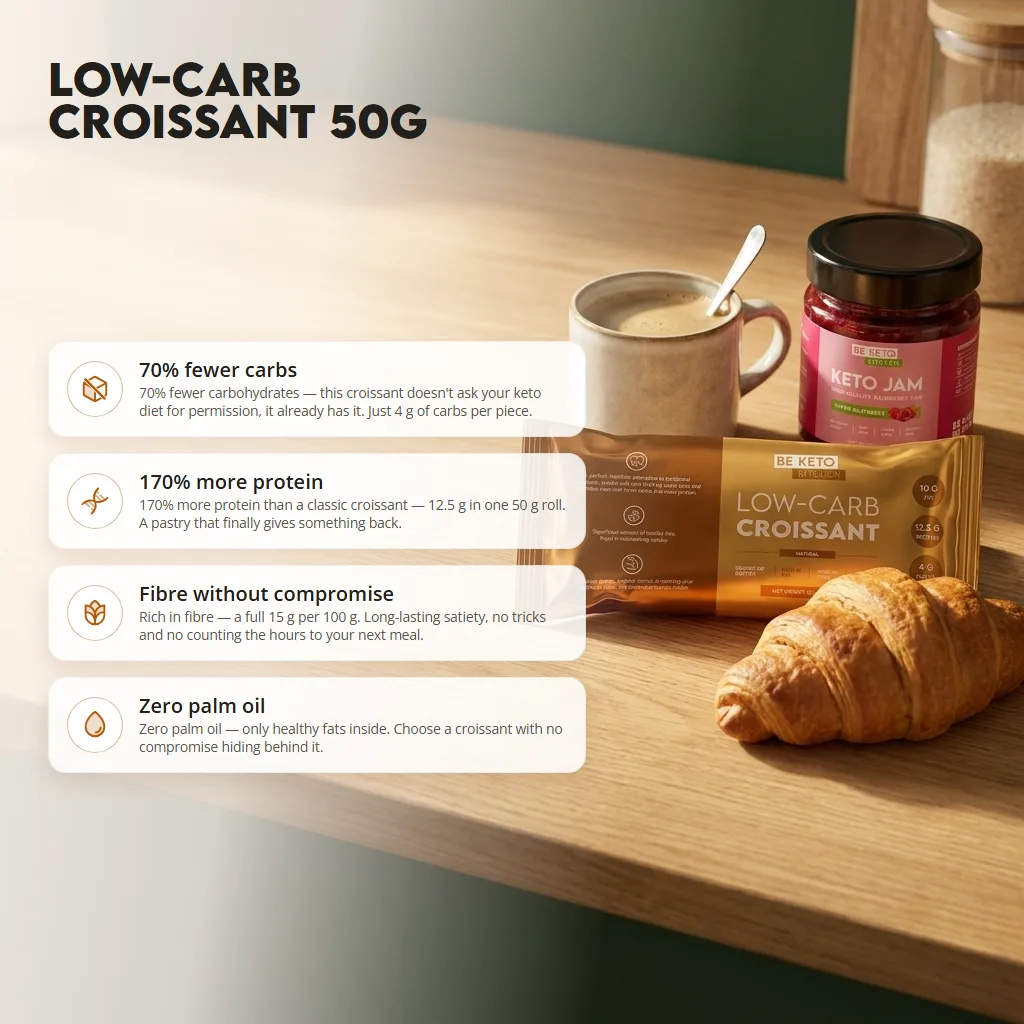
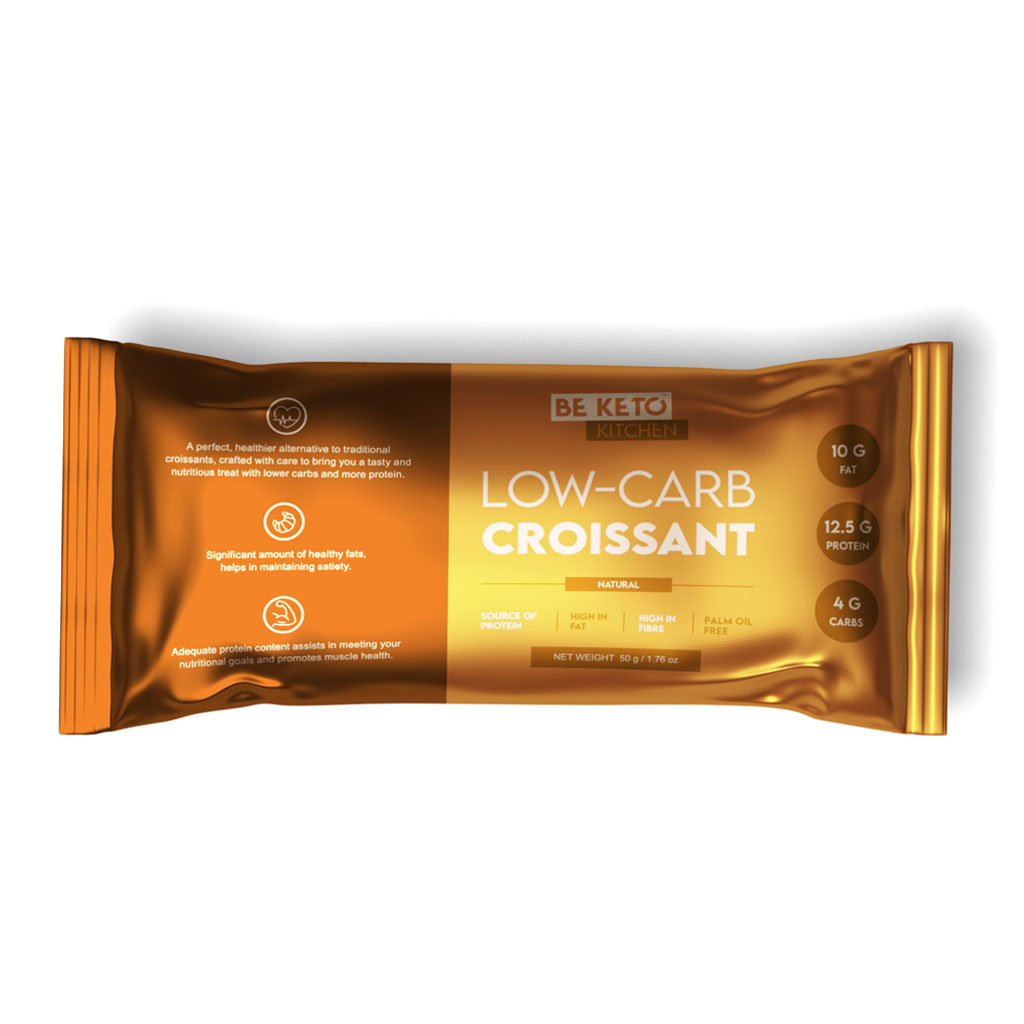
Rich in Protein and Fibre
Low-Carb Croissant 50g
£ 2.49 GBP✔ 70% less carbohydrates than a traditional croissant
✔ 170% more protein than a traditional croissant
✔ Zero added sugar
✔ High in fiber
✔ Palm oil free
-
Out of stockRich in Protein and Fibre
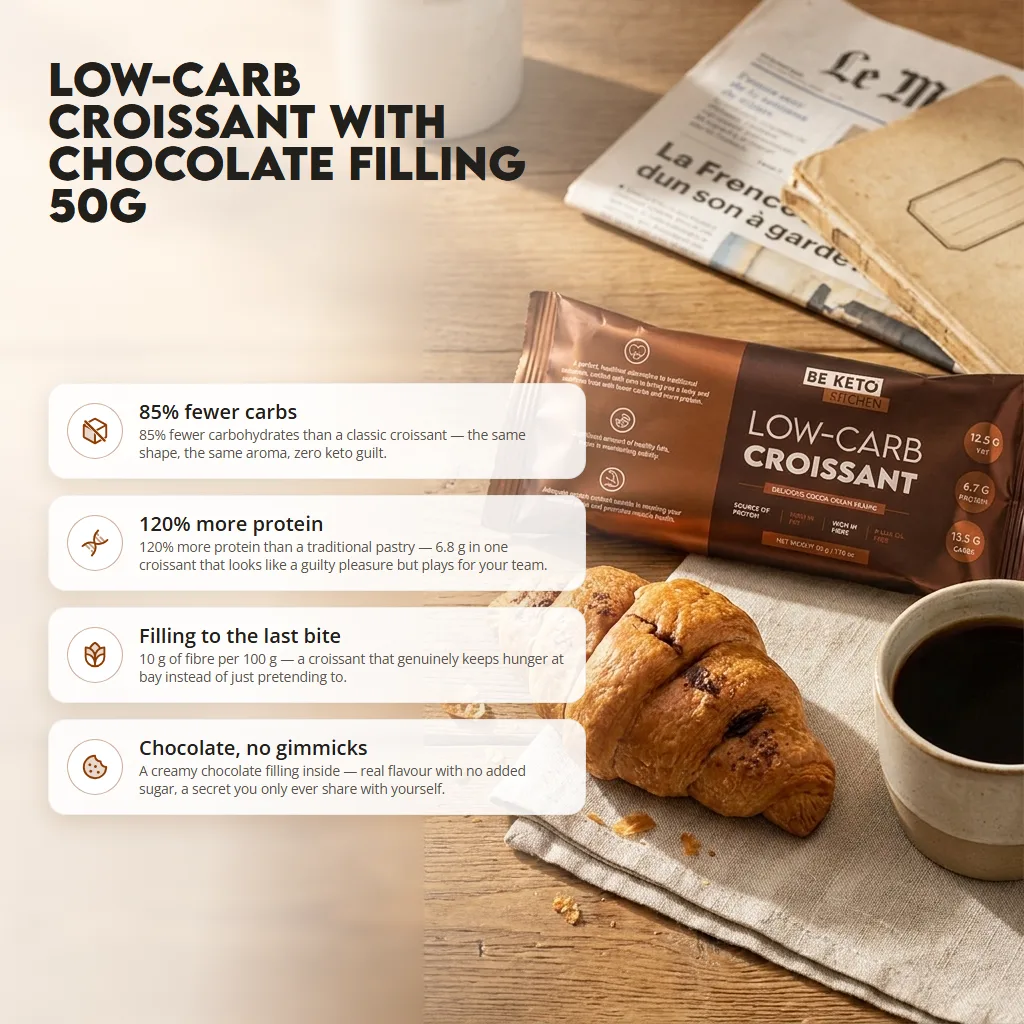
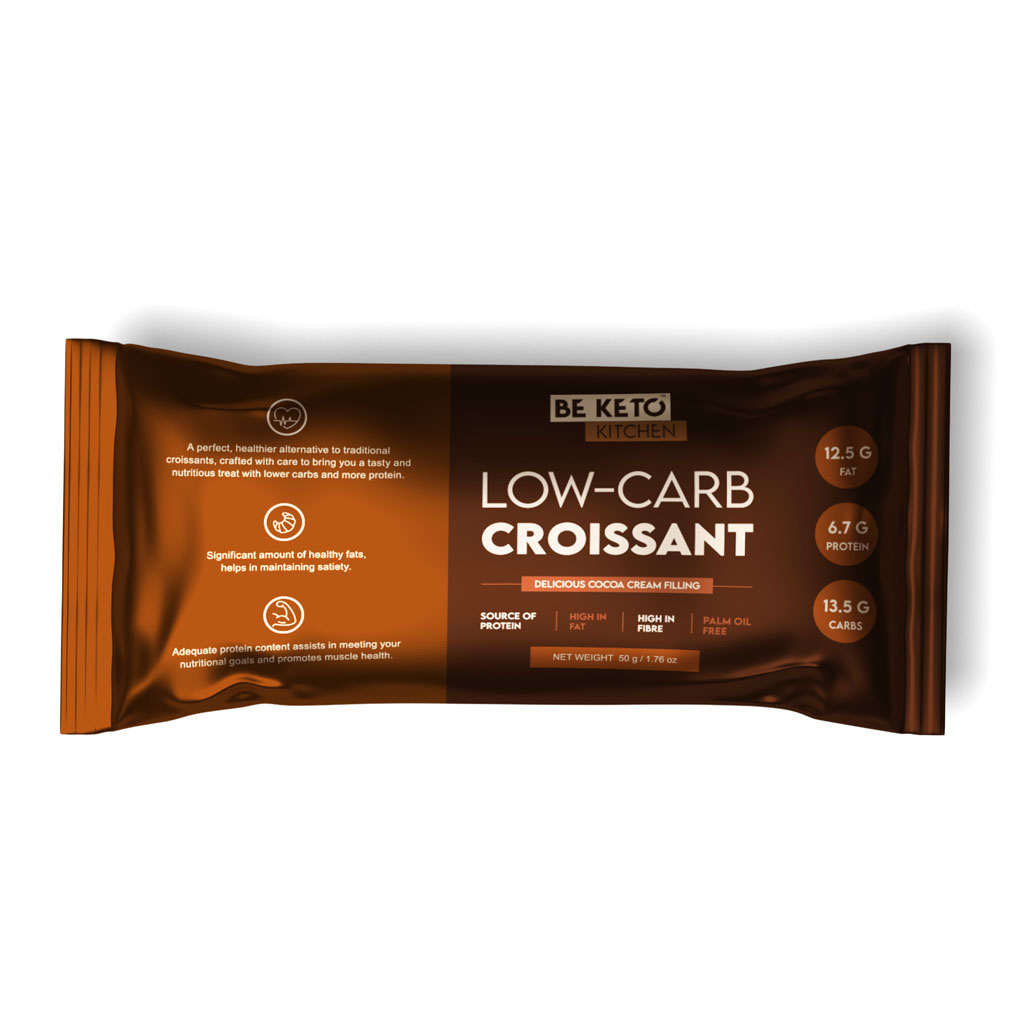
Low-Carb Croissant Chocolate Filling 50g
£ 2.69 GBP✔ 85% less carbohydrates than a traditional chocolate croissant
✔ 120% more protein than a traditional chocolate croissant
✔ Zero added sugar
✔ High in fiber
✔ Palm oil free









Are these sweets sugar free or no added sugar?
Two konjac jelly pouches meet the sugars free condition of no more than 0.5 g per 100 g. Green apple declares 0 g and fresh strawberry 0.4 g; no other pack reaches that line.
One threshold down is low in sugars, which allows up to 5 g per 100 g. Seventeen packs sit at or under it and twelve run higher, up to 12.2 g in the caramelised hazelnut chocolate.
No added sugar is a third claim, with no gram limit attached, and it does not cover this shelf end to end. Three packs list a sugar in their ingredients: dextrose in the Tropical Coconut bar, sucrose in the fruit pieces of the Wild Raspberry and the Sunshine Orange chocolate.
The two packs that do carry the sugars free wording are the konjac jelly pouches, 150 g at £2.49.
What is sweet but has no sugar?
Erythritol, isomalt, maltitol syrup, steviol glycosides and chicory inulin do the sweetening here. None of them is a sugar.
Erythritol sweetens the chocolate, bars, spreads and jelly pouches, usually with steviol glycosides. Isomalt and maltitol syrup appear on the two bags of sweets only, the croissants use sodium cyclamate, and inulin adds bulk and fibre.
Consumption of foods containing isomalt and maltitol instead of sugar induces a lower blood glucose rise after their consumption compared to sugar containing foods. The effect comes from the swap itself: two sweets, around 17 kcal, eaten instead of a sugar sweetened one, as part of a varied and balanced diet and a healthy lifestyle.
Polyols carry a second property: excessive consumption may produce laxative effects, which is why the serving there is two sweets.
Which sweetener suits a keto diet is a separate question: our guide to the best sweeteners for keto compares erythritol, maltitol and stevia.
What are the best sugar free sweets?
Pick by the sugars line on the pack, not by the wording on the front. Per label serving, the shelf reads like this:
- Konjac jelly pouch, 150 g: 0 g to 4.8 g of sugars, £2.49
- Keto candy, 70 g bag: 3.8 g per 100 g, around £0.27 for a two sweet serving
- Keto bar, 40 g: 1.0 g to 4.7 g of sugars, £2.69 to £3.19
- Vegan keto chocolate, 26 g serving: 1.1 g to 3.2 g of sugars, £3.99 an 80 g bar
- Keto cream, 25 g spoon: 1.2 g to 2.0 g of sugars, £8.49 to £10.99 a 250 g jar
- Keto cookie, peanut butter 50 g: 4.9 g of sugars a biscuit, £2.29
- Low carb croissant, 50 g: 0.5 g of sugars each, £2.49 and £2.69
The cheapest way in is a £2.29 biscuit or a £2.49 pouch; a 250 g jar works out at £0.85 to £1.10 a spoon.
Are sugar free sweets healthy?
Sweets made without added sugar are still confectionery, not a health food. Taking the sugar out does not take out the fat or the energy.
A 40 g bar declares 165 kcal to 260 kcal, a 26 g piece of chocolate 135 kcal to 156 kcal, a 150 g jelly pouch 6 kcal to 20 kcal, and two toffee sweets around 17 kcal.
Where can you buy sugar free sweets in the UK?
Tesco, Asda and Holland and Barrett all stock sugar free sweets. Those ranges are boiled sweets, mints and gummies, usually sweetened with isomalt or maltitol.
This shop ships its keto range across the United Kingdom: chocolate, bars, spreads, biscuits, jelly pouches and sweets.
The widest spread of sugars sits in the chocolate, 4.4 g to 12.2 g per 100 g; our keto chocolate page lists it bar by bar.
Check the sugars line, then order: pouches from £2.49, bars from £2.69 and chocolate from £3.99 an 80 g bar.
Frequently asked questions
Do sugar free sweets contain carbohydrates?
Yes, and often a high figure. The toffee sweets declare 80 g of carbohydrate per 100 g next to 3.8 g of sugars, because polyols count inside the carbohydrate line.
Are sugar free sweets lower in calories than ordinary sweets?
A little, not dramatically. Polyols are counted at 2.4 kcal per gram against 4 kcal for sugar, while fat still carries 9 kcal. The toffee bag declares 284 kcal per 100 g.
Why do sugar free sweets carry a laxative warning?
Because polyols are not fully absorbed. British labelling rules require a food with more than 10 per cent added polyols to say that excessive consumption may produce laxative effects.
Can you eat sugar free sweets on a keto diet?
Read the carbohydrate line, not the wording. The vanilla brownie bar declares 3.6 g of carbohydrate in 40 g and a 25 g spoon of the peanut butter spread 2.3 g.
Are any of these sweets vegan?
The vegan chocolate and the brownie bar. The toffee sweets, the Dubai chocolate and several spreads contain milk, so read the allergen line on each pack.
Do any of these sweets contain gluten?
Both croissants declare gluten and wheat. The plain one also lists oats and milk, the filled one hazelnuts, and the toffee sweets are labelled gluten free. Nuts run through the rest of the shelf: macadamia, pistachio, pecans, almonds and peanuts.
Over 26500+ excellent reviews
BeKeto is known for outstanding service and the highest product quality. This can be experienced by #BeKetonians in 29 countries!
Every day, we send out hundreds of parcels and receive fantastic reviews from you. Thank you!
Every day, we send out hundreds of parcels and receive fantastic reviews from you. Thank you!