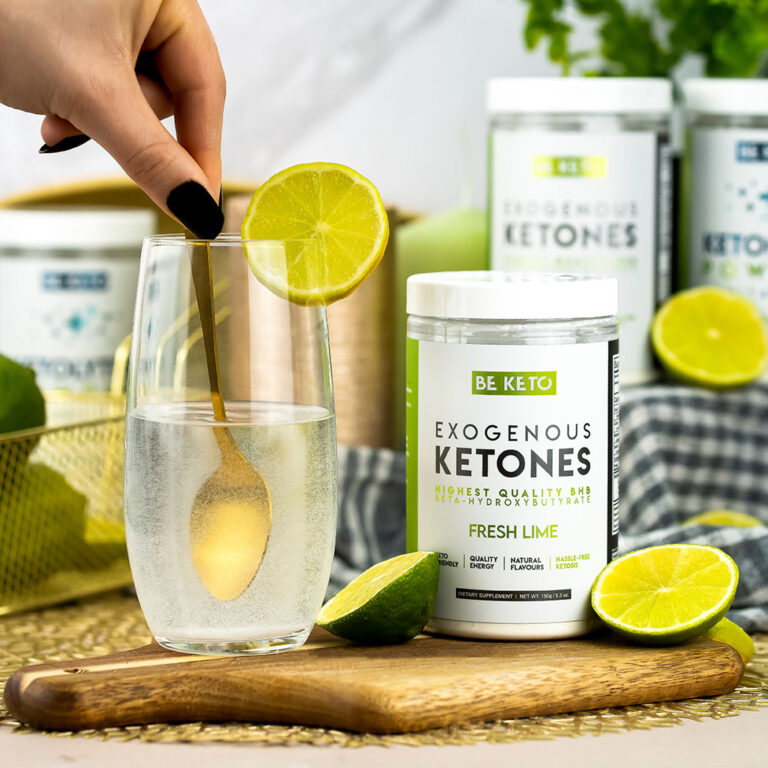
Exogenous Ketones vs MCT Oil: Blood Ketone Elevation, Energy Duration and Appetite Suppression
Unsure whether to choose exogenous ketones vs MCT oil? Exogenous ketones and MCT oil both raise blood BHB, but through entirely different mechanisms, at different speeds, with different durations, and with different effects on appetite and lipolysis. When comparing exogenous ketones vs MCT oil, this article presents concrete data and analysis for both supplements so you can choose the right one for your goal — or understand when combining exogenous ketones vs MCT oil makes sense.
Passionate about writing and a graduate in clinical dietetics. She is particularly interested in phytotherapy and the effects of ketogenic nutrition on cognitive brain function.
How Do Exogenous Ketones and MCT Oil Raise Blood Ketones Differently?
The mechanisms are fundamentally different — exogenous BHB is “ready-made” for uptake by the body — it is absorbed directly into the bloodstream through the intestines without hepatic conversion. Blood ketones rise within 15–30 minutes of consumption [1]. MCT oil requires hepatic ketogenesis: gastric and pancreatic lipases hydrolyse MCT into C8 and C10 fatty acids, which are transported to the liver via the portal vein and converted to BHB through β-oxidation. Blood BHB after C8 rises over 60–120 minutes, peaking around 3 hours post-consumption [2].
Blood-ketone elevation: exogenous BHB reaches 0.33–0.6 mmol/L; MCT C8 oil reaches 0.2–0.5 mmol/L with a single serving — lower peak and slower onset [3]. Both supplements are most effective on an empty stomach — carbohydrates trigger insulin release, which suppresses ketone utilisation for both types. Exogenous BHB delivers ketones faster and higher; MCT oil slower but through the natural metabolic pathway.
Did you know that… MCT C8 oil bypasses the normal fat-digestion pathway? Caprylic acid travels directly to the portal vein and liver — like glucose, not like fat. This is why the energy effect appears within 60–90 minutes rather than the 3–4 hours typical of long-chain fats [1].
Duration differs significantly — exogenous ketones peak quickly (30–45 minutes post-dosing), but the energy window is relatively short — 1–2 hours before blood ketones return to baseline [1]. MCT oil rises more slowly but delivers sustained energy for 2–4 hours, because hepatic ketogenesis is a continuous process throughout the metabolism of C8 fatty acids [2]. A study with 10 g and 20 g of MCT oil showed that ketone levels were significantly elevated for approximately 3 hours in a dose-dependent manner [4].
Practical recommendations: for training (immediate energy): exogenous ketones 15–30 minutes before exercise. For sustained energy throughout the day: MCT C8 oil 60–90 minutes before the required energy window. Some athletes combine both supplements: exogenous BHB for an immediate energy peak + MCT oil for sustained effect. This is an effective but more complex strategy.
Parameter
Exogenous BHB
MCT C8 Oil
Time to ketone rise
15–30 min
60–120 min
Peak BHB level (mmol/L)
0.33–0.6
0.2–0.5
Duration of effect
1–2 h
2–4 h
Appetite suppression
Hormonal (ghrelin ↓)
Caloric (fat content)
GI tolerance
Better
Worse at high doses
Cost per serving
From £0.90 (BeKeto)
£0.80–£1.50
Best use
Immediate ketones, appetite
Sustained energy, ketogenesis
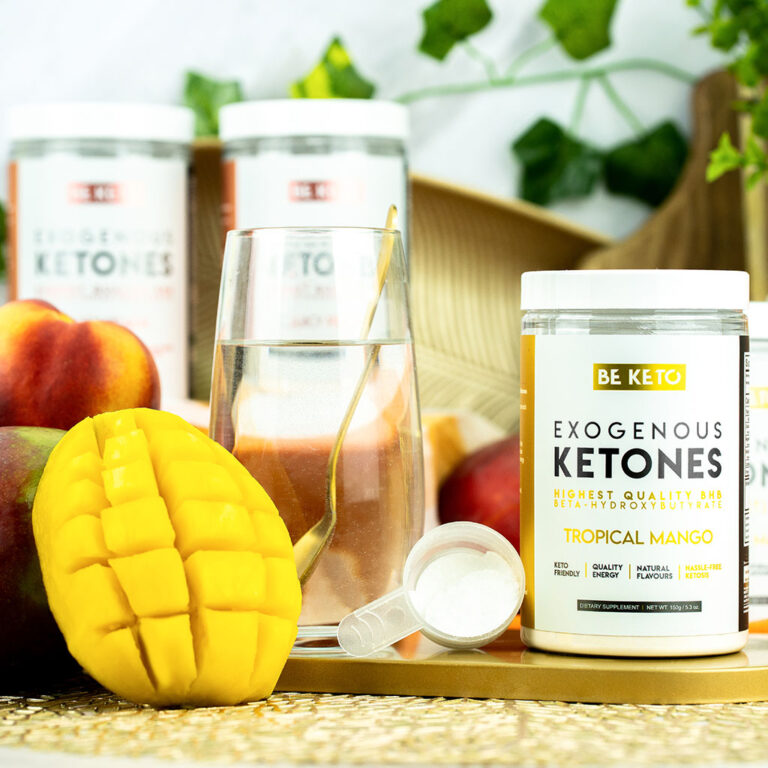
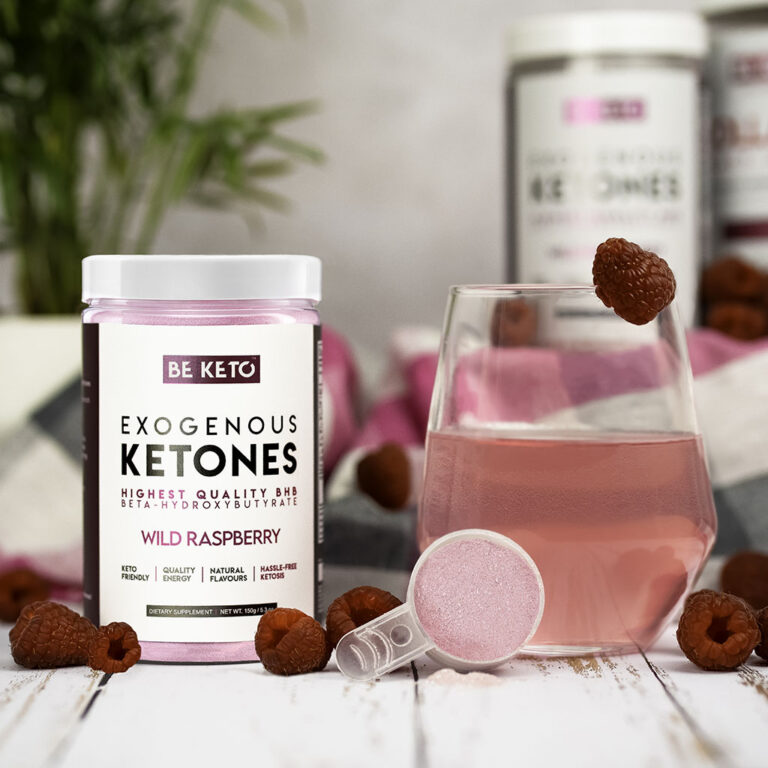
For immediate ketone elevation, BeKeto BHB exogenous ketones reach peak blood ketones within 30 minutes at £0.90 per serving.
Which Is Better for Appetite Suppression and Weight Loss?
Exogenous BHB wins on appetite suppression. BHB directly lowers ghrelin (the hunger hormone) by over 100 pg/mL within 2–4 hours — this is a hormonal mechanism [5]. MCT oil does not directly suppress ghrelin; satiety from MCT comes from its caloric content (9 kcal/g fat) — an effect of delivering concentrated calories rather than hormonal appetite suppression.
For weight loss, exogenous BHB is recommended because it reduces caloric intake without significantly adding calories (BHB ~4 kcal/g; a 12 g serving ≈ 48 kcal), whilst MCT oil contributes ~120 kcal per tablespoon. However, these recommendations are not exclusive — MCT oil has its own advantage in weight management: ketones from MCT arise through endogenous hepatic ketogenesis — a metabolic pathway that does not inhibit hormone-sensitive lipase (HSL). This means MCT oil does not halt lipolysis, unlike exogenous BHB [6]. Summary: exogenous BHB better for acute appetite suppression; MCT oil better for sustained fat-oxidation support.
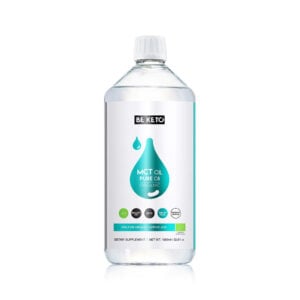
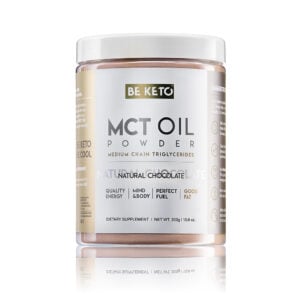
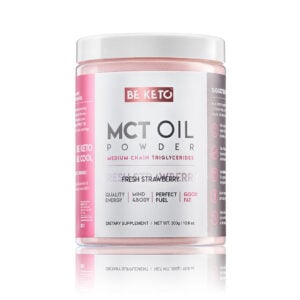
For sustained ketone production without lipolysis inhibition, BeKeto MCT C8 oil supports fat oxidation through natural hepatic ketogenesis.
Did you know that… exogenous BHB and MCT oil paradoxically differ in their effect on lipolysis — despite both raising blood ketones? BHB inhibits HSL lipase via the GPR109A receptor, slowing fat burning. Ketones from MCT arise through hepatic β-oxidation of C8 — a pathway that does not activate GPR109A and does not inhibit lipolysis [6].
Which Is Easier on the Stomach: Exogenous Ketones or MCT Oil?
MCT oil more frequently causes gastrointestinal discomfort — especially C8, which at higher doses has an osmotic laxative effect (diarrhoea, nausea, cramping). It is therefore advisable to start supplementation at 5 g of C8 daily and increase gradually to 15–20 g to minimise GI effects [7]. C10 MCT is better tolerated but converts to ketones more slowly.
Exogenous BHB salts are generally better tolerated because mineral carriers (sodium, magnesium, calcium) buffer absorption and reduce the osmotic effect [1]. However, BHB salts may cause nausea at high doses, especially on an empty stomach. For GI-sensitive individuals: exogenous BHB > MCT C10 > MCT C8 in terms of digestive comfort.
What Are Exogenous Ketones and How Do They Compare to a Keto Diet?
Exogenous ketones, MCT oil, and the ketogenic diet are three different tools in the world of ketosis. Exogenous BHB delivers ready-made, pre-formed ketones; MCT oil delivers hepatic ketones through hepatogenesis; and a ketogenic diet produces endogenous ketones derived from your own body fat. Understanding where each tool fits helps you choose the right approach for a given goal.
For a complete overview of how ketone bodies work in the body, read our guide to what are ketones.
What Are the Full Benefits of Exogenous Ketones Beyond MCT Oil?
Exogenous ketones offer unique advantages that MCT oil cannot match: direct ghrelin inhibition, measurable mood improvement through GABA and BDNF activation, and NLRP3-inflammasome inhibition [8]. MCT oil improves mood indirectly through ketogenesis, but the effect horizon is slower and weaker compared with pre-formed BHB.
For the complete research breakdown of exogenous ketone benefits, read our evidence-based analysis.
FAQ
Can You Take Exogenous Ketones and MCT Oil Together?
Yes — combining BHB + MCT delivers an immediate energy peak (BHB, 15–30 min) plus sustained energy (MCT, 2–4 hours). Some athletes and biohackers use this combination for extended cognitive and physical energy. Bear in mind, however, higher caloric intake (~170 kcal total) and a more complex dosing protocol.
Which Is Cheaper: Exogenous Ketones or MCT Oil?
MCT oil is typically cheaper per serving: £0.80–£1.50 per tablespoon (15 ml). Exogenous ketones range from £0.90 (BeKeto) to £6.50 per serving. Both supplements are comparable in cost (depending on brand and product quality) — £0.90 for exogenous BHB vs ~£1.00 for MCT C8 oil.
Which Should a Beginner Choose: Exogenous Ketones or MCT Oil?
For most beginners, MCT C8 oil is a simpler starting point — add to coffee or food, fewer digestive issues with gradual dosing. Exogenous BHB is better when you need immediate ketone elevation (before training, acute appetite control) or during adaptation to a ketogenic diet.
Bilbiography
See all
[1] Cuenoud B. et al. Metabolism of Exogenous D-Beta-Hydroxybutyrate, an Energy Substrate Avidly Consumed by the Heart and Kidney. Front Nutr 2020; PMC7042179. doi:10.3389/fnut.2020.00013
[2] Heidt C. et al. Beta-Hydroxybutyrate (BHB), Glucose, Insulin, Octanoate (C8), and Decanoate (C10) Responses to a Medium-Chain Triglyceride (MCT) Oil with and without Glucose. Nutrients 2023; PMC10005646. doi:10.3390/nu15051148
[3] Falkenhain K. et al. Exogenous ketone supplementation: an emerging tool for physiologists with potential as a metabolic therapy. Exp Physiol 2023; PMC10103874. doi:10.1113/EP090430
[4] St-Pierre V. et al. Medium Chain Triglycerides Modulate the Ketogenic Effect of a Metabolic Switch. Front Nutr 2019; PMC7005013. doi:10.3389/fnut.2019.00003
[5] Stubbs B.J. et al. A Ketone Ester Drink Lowers Human Ghrelin and Appetite. Obesity 2018; doi:10.1002/oby.22051. PMID:29105987
[6] Høgild M.L. et al. Oral 3-hydroxybutyrate ingestion decreases endogenous glucose production, lipolysis, and hormone-sensitive lipase phosphorylation in adipose tissue in men. Diabetic Medicine 2020; PMID:32794582. doi:10.1111/dme.14400
[7] Cunnane S.C. et al. The Ketogenic Effect of Medium-Chain Triacylglycerides. PMC8650700. doi:10.3389/fnut.2021.785999
[8] Youm Y-H. et al. The ketone metabolite β-hydroxybutyrate blocks NLRP3 inflammasome-mediated inflammatory disease. Nature Medicine 2015; doi:10.1038/nm.3804. PMC4352123
Adrianna Kalista
A graduate in clinical dietetics whose interests begin, not end, with the word diet. She has written specialist content on nutrition. She is fascinated by contemporary food culture, phytotherapy and the effects of the ketogenic diet on cognitive brain function. She promotes diet therapy and the nutritional treatment of disease.
To provide the best experiences, we use technologies like cookies to store and/or access device information. Consenting to these technologies will allow us to process data such as browsing behaviour or unique IDs on this site. Not consenting or withdrawing consent, may adversely affect certain features and functions.
Functional
Always active
The technical storage or access is strictly necessary for the legitimate purpose of enabling the use of a specific service explicitly requested by the subscriber or user, or for the sole purpose of carrying out the transmission of a communication over an electronic communications network.
Preferences
The technical storage or access is necessary for the legitimate purpose of storing preferences that are not requested by the subscriber or user.
Statistics
The technical storage or access that is used exclusively for statistical purposes.Przechowywanie techniczne lub dostęp, który jest używany wyłącznie do anonimowych celów statystycznych. Bez wezwania do sądu, dobrowolnego podporządkowania się dostawcy usług internetowych lub dodatkowych zapisów od strony trzeciej, informacje przechowywane lub pobierane wyłącznie w tym celu zwykle nie mogą być wykorzystywane do identyfikacji użytkownika.
Marketing
The technical storage or access is required to create user profiles to send advertising, or to track the user on a website or across several websites for similar marketing purposes.


 United KingdomCurrent regionDelivery within the United KingdomCurrency: Pound Sterling (£)
 GermanyDelivery within Germany and AustriaCurrency: Euro (€)
 FranceDelivery within France and BelgiumCurrency: Euro (€)
 ItalyDelivery within ItalyCurrency: Euro (€)
 PolandDelivery within Poland and EuropeCurrency: Zloty (PLN)
 Czech RepublicDelivery within the Czech Republic and SlovakiaCurrency: Czech Koruna (Kč)
 SpainDelivery within SpainCurrency: Euro (€)