Your Keto Basket
    Your shopping basket is emptyBack to the shop
      Calculate Shipping
      Apply Coupon

        About Supplements

        Proper supplementation on a ketogenic or low-carbohydrate diet is key. We are here to provide detailed and accessible information about our supplements, ideally suited to the keto diet.

        You'll find all about the ingredients, health benefits and how to use them, as well as advice on how to incorporate them effectively into a ketogenic or low-carb diet.

        Our keto diet and nutrition experts share their knowledge and experience, helping you understand how the right supplementation supports your health and dietary goals: improving metabolism, increasing energy and supporting weight loss. And that's not all! You will also find here, practical advice on supplement selection, dosage and their integration into your daily eating plan. This is the ideal place for people who are looking for reliable information about supplementation on the keto diet, regardless of their current level.
        MCT Oil Benefits

        MCT Oil Benefits: 10 Science-Backed Reasons to Use It

        Thinking about starting to supplement MCT oil? You are right to consider it — MCT oil is gaining ever-greater recognition among health-conscious individuals, athletes, and ketogenic-diet enthusiasts alike. MCT oil is a concentrated source of medium-chain triglycerides that convert into ketones within just 15–30 minutes — instant fuel for the brain and muscles [5] — and regular supplementation has been shown to effectively reduce body weight [1]. If you supplement MCT oil consistently, you can also support cognitive brain function [4] and aid appetite control through stimulation of satiety hormones and suppression of ghrelin [8]. MCTs accelerate the achievement of ketosis regardless of carbohydrate intake [5]. Want to experience these benefits for yourself? Discover 10 compelling, research-backed reasons why MCT oil is genuinely worthwhile — and learn why caprylic acid (C8) is the most effective, with a ketogenic effect three times higher than C10 [3].

        Read moreMCT Oil Benefits: 10 Science-Backed Reasons to Use It
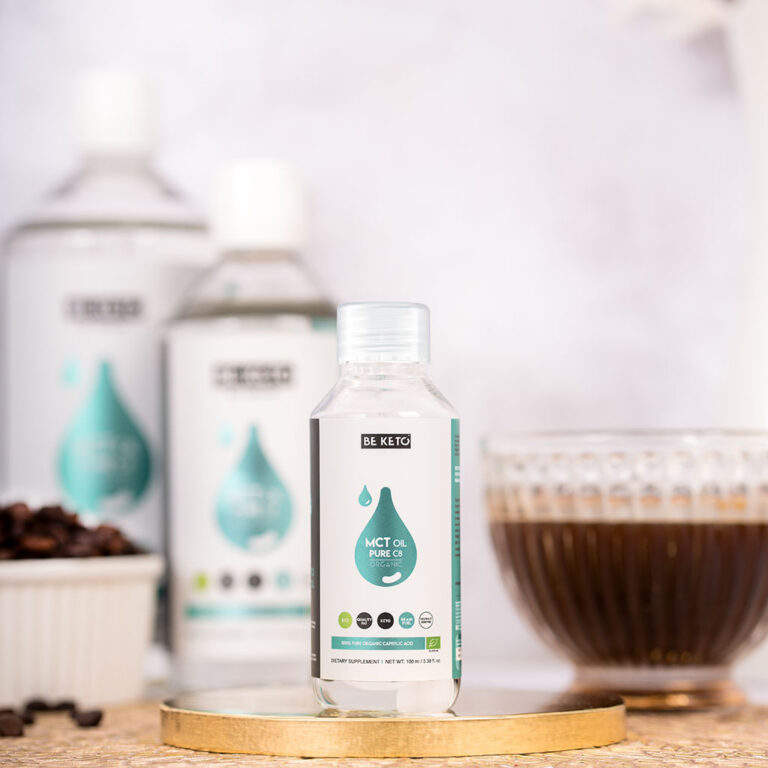
        BeKeto MCT OIL 100ml C8 100 Composition

        What Is MCT Oil? A Complete Guide to Medium-Chain Triglycerides

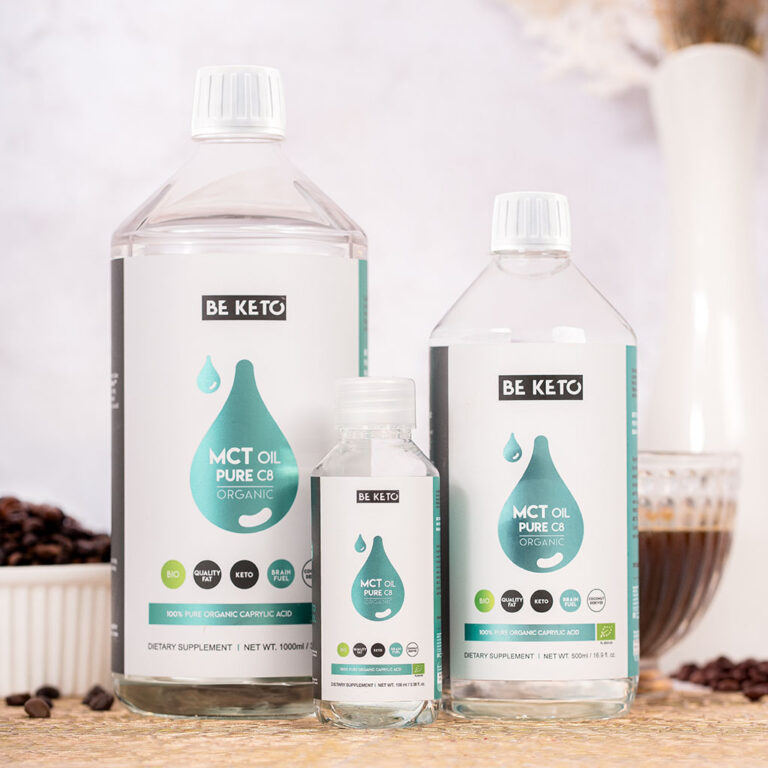
        Thinking about starting to supplement MCT oil but unsure whether you know everything there is to know? MCT oil is a concentrated dietary supplement containing medium-chain triglycerides (C8 and C10) — fats that travel directly to the liver via the portal vein and convert into energy in as little as 15–30 minutes, whilst conventional fats require a full 3–4 hours. MCTs bypass the standard digestive process and are converted into ketones — an alternative fuel for the brain and muscles. Extensive research confirms their efficacy: they support weight reduction, cognitive function, the nervous system, and stable energy throughout the day. The best MCT preparations contain pure C8 or a C8+C10 blend — avoid products with lauric acid (C12), which metabolically behaves like a regular long-chain fat. Whether you supplement MCT oil for ketosis, mental clarity, or athletic performance, this guide covers everything you need to make an informed choice — from chemical structure and composition, through mechanisms of action in the body, to practical advice on incorporating MCTs into your daily diet.

        Read moreWhat Is MCT Oil? A Complete Guide to Medium-Chain Triglycerides
        MCT Oil Side Effects

        MCT Oil Side Effects: What You Need to Know Before You Start

        Thinking about starting to supplement MCT oil safely? MCT oil is safe for most healthy adults; however, like any supplement, it can cause side effects — particularly when introduced too quickly or when exceeding the recommended dose. The most common complaints associated with excessive MCT intake are gastrointestinal in nature and include diarrhoea, nausea, stomach cramps, and bloating. These symptoms naturally result from the unique metabolic pathway of medium-chain fatty acids: rapid absorption and direct transport to the liver via the portal vein, where they undergo beta-oxidation and conversion into ketone bodies [1, 2]. If you want to supplement MCT oil safely and use it without discomfort, understand that these side effects are temporary and dose-dependent — they occur mainly when starting supplementation or when increasing the dose too quickly. The digestive system of most people adapts to MCTs within 1–2 weeks of consistent, gradual use [1, 3]. Emerging side effects are not a sign that the oil is harmful — in most cases, they are your body's way of signalling that the chosen dose is not yet suited to your individual tolerance.

        Read moreMCT Oil Side Effects: What You Need to Know Before You Start
        MCT Oil Side Effects Heart

        MCT Oil and Heart Health: Is It Safe for Your Heart?

        Want to supplement MCT oil safely but unsure how it might affect your heart? Medium-chain fatty acids are safe for the cardiovascular system of most healthy adults when using moderate doses (1–2 tablespoons per day), although as a saturated fat they require mindful use in individuals with elevated cholesterol or cardiovascular disease [1,6]. If you want to buy MCT oil safely with heart health in mind, understand that concerns about potential cardiac effects stem from MCT's classification as a saturated fat — yet medium-chain fatty acids behave metabolically quite differently from the long-chain saturated fats found in red meat or butter [7]. Research in this area is not conclusive — it shows varied individual responses to MCT supplementation — the key factors are dose and genetics, not the oversimplified equation "MCT = bad for heart" [2,3]. Looking to supplement MCT oil safely while caring for your cardiovascular system? This guide provides the nuanced, evidence-based picture you need before purchasing.

        Read moreMCT Oil and Heart Health: Is It Safe for Your Heart?
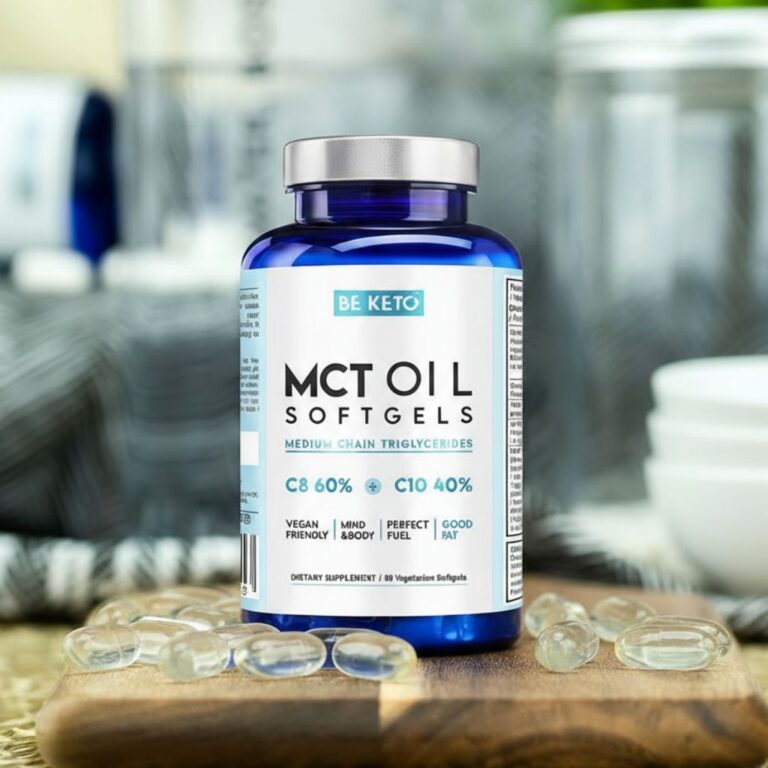
        MCT Oil C8C10 – 90 Capsules

        MCT Oil for Weight Loss: How It Works and How to Use It

        Want to use MCT oil for weight loss effectively? MCT oil genuinely supports weight loss through three scientifically documented mechanisms: thermogenesis that increases calorie burning, appetite regulation via satiety hormones, and preferential fat oxidation as an energy source rather than storage in adipose tissue. Research shows that diets enriched with pure MCTs lead to greater weight reduction compared with diets containing long-chain fats, with particular benefits for individuals who are overweight or obese. If you use MCT oil for weight loss, understand that it is not a magic slimming pill but a metabolic tool that supports the weight-loss process — it works most effectively as part of a well-planned, individually tailored nutritional strategy. Below, we discuss the mechanisms of action in detail, outline optimal dosing, and offer practical tips to maximise the fat-burning effects of MCT oil.

        Read moreMCT Oil for Weight Loss: How It Works and How to Use It
        BeKeto MCT OIL 500ml C8 100 Composition2

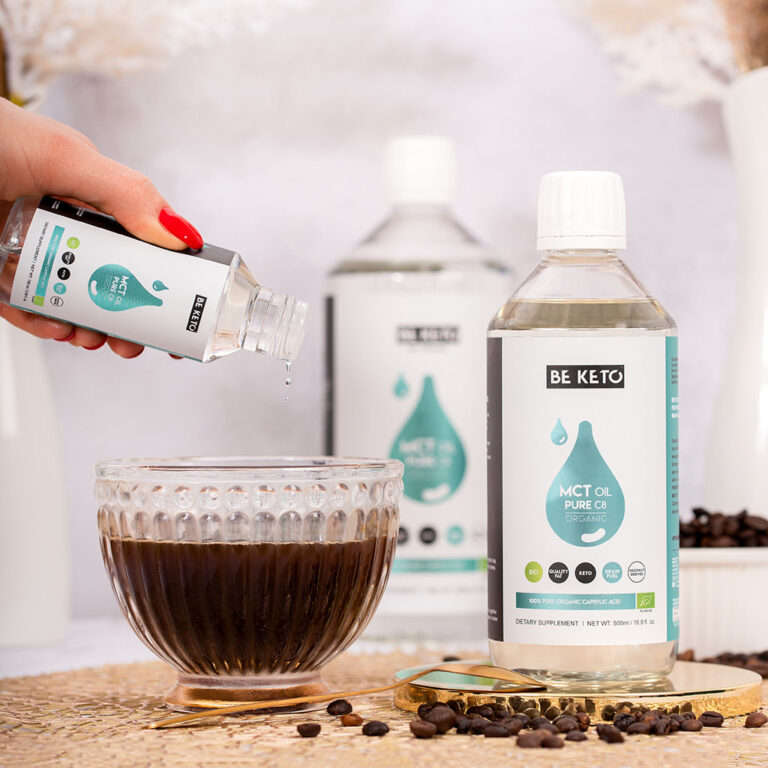
        MCT Oil in Coffee: Benefits, Recipe, and How Much to Use

        MCT oil in coffee elevates blood ketone levels to 0.5–0.8 mmol/L BHB within 60 minutes — equivalent to 12–16 hours of water fasting — while caffeine independently raises resting metabolic rate by 3–11% [2, 3, 6]. This combination, popularised as "Bulletproof coffee" by Dave Asprey in 2014 [1], works through a dual-fuel effect: caffeine stimulates the central nervous system for immediate alertness, whilst medium-chain fatty acids travel directly to the liver via the portal vein, producing beta-hydroxybutyrate (BHB) and acetoacetate (AcAc) that sustain energy and mental focus for 3–5 hours without glycaemic fluctuations [2, 3]. Together, MCT oil and caffeine burn an extra 100–150 kcal/day through increased diet-induced thermogenesis and the thermic effect of food — without any change in physical activity [3, 6].

        Read moreMCT Oil in Coffee: Benefits, Recipe, and How Much to Use
        mct vs coconout oil

        MCT Oil vs Coconut Oil: What Is the Difference and Which Should You Choose?

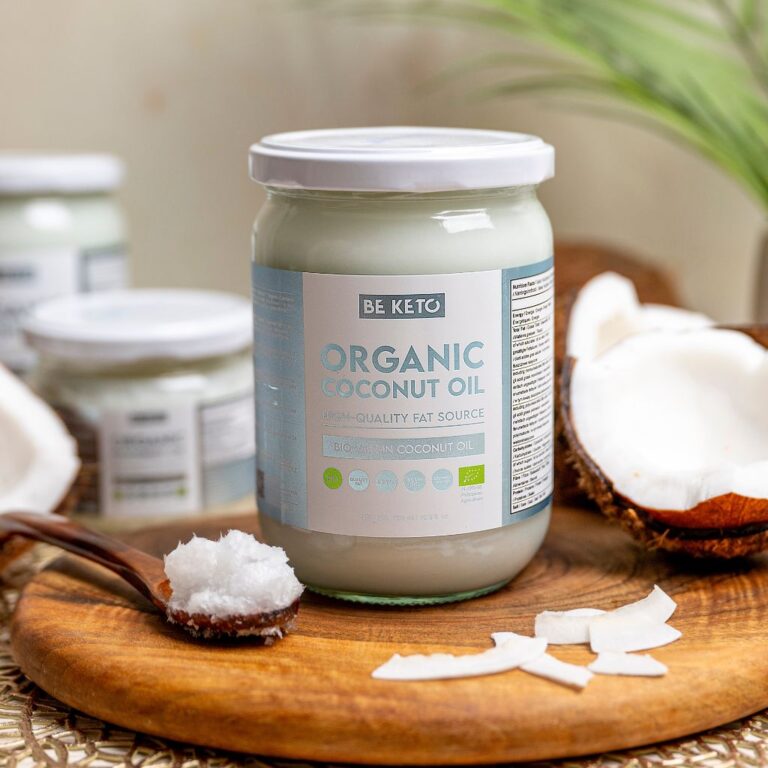
        Want to choose MCT oil but some people recommend coconut oil instead? MCT oil and coconut oil are related yet fundamentally different products — MCT oil is extracted from coconut oil through a fractionation process that isolates and concentrates only medium-chain triglycerides (primarily caprylic acid C8 and capric acid C10), whereas coconut oil is a whole, unrefined oil containing a broad mixture of fatty acids [1,2]. The key difference is that MCT oil contains 100% medium-chain triglycerides, whilst coconut oil contains only about 54% MCTs, most of which is lauric acid (C12) — a fatty acid that metabolically behaves more like a long-chain fat than a true MCT [2,3]. Want to choose MCT oil over coconut oil for maximum ketogenic benefit? The choice between these products depends primarily on your supplementation goal: MCT oil dominates in the context of ketosis, energy, and problematic-skin care, whilst coconut oil performs better in the kitchen and for body moisturising. If you want to choose MCT oil wisely, the guide below presents a detailed comparison of both products across all their key applications.

        Read moreMCT Oil vs Coconut Oil: What Is the Difference and Which Should You Choose?
        mcts and fast

        Does MCT Oil Break a Fast? The Complete Answer for Every Fasting Goal

        MCT oil technically breaks a caloric fast (it contains a load of 115 kcal per tablespoon); however, everything depends entirely on your fasting goal — for most intermittent-fasting practitioners focused on weight loss and ketosis, MCT maintains the metabolic fasting state [1,2]. MCT oil is pure fat — it contains zero carbohydrates and zero protein, meaning no significant insulin response that switches the body from a catabolic state (fasting) to an anabolic state (feeding). Does MCT oil break a fast for your specific purpose? The answer varies depending on what exactly you mean by "fasting" — read on to discover what choice you can make! Wondering whether MCT oil breaks a fast in a way that affects your results? This guide gives you the complete picture.

        Read moreDoes MCT Oil Break a Fast? The Complete Answer for Every Fasting Goal
        BeKeto MCT OIL 100 C8 Composition

        MCT Oil Dosage: How Much Should You Take Per Day?

        Wondering what MCT oil dosage will work best for you? The standard recommended daily serving of MCT oil is 1–2 tablespoons (15–30 ml), delivering approximately 14–28 g of medium-chain triglycerides and 115–230 kcal. The key to success also lies in gradually introducing the oil into your diet — always start with 1 teaspoon (5 ml) per day, allowing your digestive system to adapt to the rapid absorption pathway of medium-chain fatty acids. Jumping straight to a full tablespoon is the number-one cause of digestive side effects in beginner supplementers [3]. If you want to find the right MCT oil dosage for your goals, understand that the optimal amount for the vast majority of people is 1 tablespoon (15 ml) taken once daily. Curious about the ideal MCT oil dosage for your lifestyle? Read on to discover what will work best for you and why!

        Read moreMCT Oil Dosage: How Much Should You Take Per Day?
        can you coook with mcts

        Can You Cook with MCT Oil? Kitchen Guide

        Have MCT oil and wondering whether you can cook with MCT oil freely in the kitchen? MCT oil is safe to cook with — but only under specific temperature conditions that determine whether you preserve its metabolic properties or destroy them [1,2]. Can you cook with MCT oil at high heat? No — the key factor is the smoke point of MCT oil, which is approximately 160°C (320°F) — significantly lower than coconut oil (~230°C) or ghee (~250°C) — meaning standard frying and high-temperature baking cause thermal degradation of the medium-chain triglycerides you are paying for and counting on when including MCT oil in your diet [2,3]. If you want to cook with MCT oil safely, understand that it excels in non-heat culinary applications (dressings, smoothies, drizzling over finished dishes) and low-heat cooking, where it retains 100% of its ketogenic properties and capacity for ketogenesis.

        The guide below presents precise temperature limits, practical cooking methods ranked by suitability, simple starter recipes, and a clear answer on when it is better to reach for coconut oil instead of MCT.

        Read moreCan You Cook with MCT Oil? Kitchen Guide
        Foods High in MCTs

        MCT Foods: Complete List of Foods Rich in Medium-Chain Triglycerides

        Want to increase your MCT intake through MCT foods rather than supplements? Medium-chain triglycerides occur naturally in several food categories — primarily coconut products, palm kernel oil, and certain dairy products — yet their concentration varies significantly between sources [1,2]. If you want to find the best MCT foods for your diet, understand that even the richest MCT food sources contain mainly lauric acid (C12), which metabolises more slowly than the "fast" MCTs (C8 and C10 — caprylic acid and capric acid) concentrated in MCT oil supplements [2,3]. Looking for a complete list of MCT foods to add to your meals? The guide below presents a comprehensive list of MCT-rich foods with exact percentages, practical ways to incorporate them into your diet, and an honest answer to the question of whether food sources alone are enough to achieve your ketogenic and metabolic goals.

        Read moreMCT Foods: Complete List of Foods Rich in Medium-Chain Triglycerides
        raspberry 2

        Raspberry Ketone Dosage – What You Must Know

        One of the most frequently asked questions about raspberry ketones is: "how much should I supplement?" This seemingly simple question conceals complex issues, combining aspects of safety, effectiveness, and individual bodily needs - everyone is unique! In the world of dietary supplements, finding optimal dosage can be a real challenge. The key to safe and effective raspberry ketone use is understanding that there's no universal dose suitable for everyone - dose determinants include differences in body weight, metabolism, health status, and supplementation goals, requiring highly individualised dosing.

        Read moreRaspberry Ketone Dosage – What You Must Know
        raspberry

        Raspberry Ketones Benefits

        What makes raspberries smell so intensely and sweetly? Behind this characteristic aroma lie raspberry ketones - remarkable compounds that prove to be far more than just natural "perfumes". These small molecules, found in every ripe raspberry, harbour potential that could revolutionise our approach to health and wellbeing. From accelerating metabolism, through cellular protection, to improving skin appearance - these natural compounds prove remarkably versatile in action. Their universality and natural origin make them an attractive option for individuals seeking holistic support for their organism. What accounts for their incredible power?

        Read moreRaspberry Ketones Benefits
        Ketony Malinowe w Kapsulkach 120

        Raspberry Ketones Weight Loss: Complete Guide

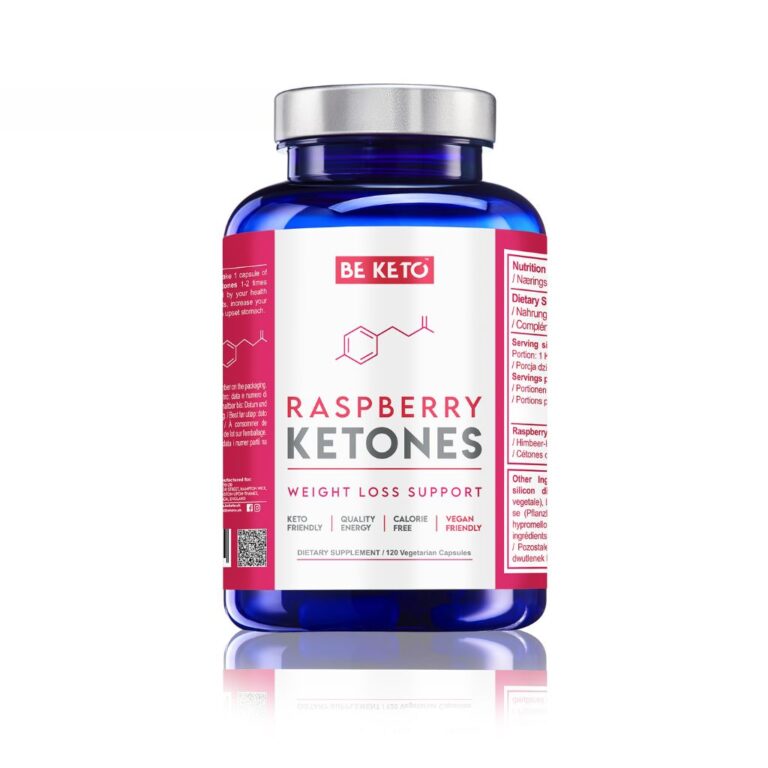
        Can the compound responsible for raspberry aroma support weight loss? Raspberry ketones are natural aromatic compounds that have become popular dietary supplements in recent years. Many people, however, confuse them with exogenous ketones - commonly used to support ketogenic and low-carbohydrate diet effects. But are all supplements created equal? Absolutely not! We explain these differences by analysing available scientific literature, which shows significant distinctions in the characteristics and mechanisms of raspberry ketones versus exogenous ketones.

        Read moreRaspberry Ketones Weight Loss: Complete Guide
        Does Coconut Oil Whiten Teeth

        Does Coconut Oil Whiten Teeth?

        Oil pulling with coconut oil is gaining popularity as one of the natural methods for improving oral hygiene and teeth whitening. This ancient Ayurvedic practice involves swishing oil in the mouth for several minutes, which according to its proponents brings spectacular health benefits. The growing interest in this method stems from the antibacterial properties of coconut oil - particularly the high content of lauric acid comprising approximately 47% of its composition. Scientific research confirms that coconut oil can affect teeth through reduction of pathogenic bacteria, decreased gum inflammation, plaque removal, and gentle brightening of tooth surfaces by improving overall oral hygiene.

        Read moreDoes Coconut Oil Whiten Teeth?
        Coconut Oil for Hair

        Coconut Oil for Hair – Is Coconut Oil Good for Your Hair?

        Coconut oil has earned its position as a leader in natural hair care for good reason. This tropical ingredient, used for centuries in Asian countries for care and culinary purposes, has become a global phenomenon in the natural hair care world. Unlike many cosmetic trends, coconut oil's popularity has solid scientific foundations - research confirms its unique ability to penetrate hair and protect against damage. Is coconut oil good for your hair on all hair types? The answer is far more complex than enthusiastic internet reviews suggest. The effectiveness of this natural ingredient depends on hair structure, porosity, current condition, and application method. Some hair types may experience spectacular improvement, whilst others may expect much milder effects.

        Read moreCoconut Oil for Hair – Is Coconut Oil Good for Your Hair?
        Benefits of Coconut Oil

        What Are the Benefits of Coconut Oil? Complete Health Guide

        Coconut oil has sparked interest for thousands of years as a natural remedy with broad health properties. Contemporary scientific research increasingly explains the mechanisms of coconut oil's action, confirming part of the traditional applications known from Ayurvedic medicine. Some of its attributed properties have strong scientific support, and certain areas of application show promising results in controlled clinical trials. What is certain? Coconut oil has the following properties: antibacterial and antifungal (thanks to lauric acid), thermogenic (increases energy expenditure), anti-inflammatory, neuroprotective, hepatoprotective, and dermatological, acting at the cellular level through biological membrane modulation and MCT metabolism - it's worth getting to know it thoroughly!

        Read moreWhat Are the Benefits of Coconut Oil? Complete Health Guide
        Exogenous Ketones Juicy Peach1

        Exogenous Ketones in Cardiovascular Disease and Diabetes

        Recent breakthroughs in ketone metabolism reveal that these compounds are more than just energy sources—they are potent signaling molecules with the potential to transform treatments for cardiovascular disease and diabetes. Once misunderstood and feared due to their association with diabetic ketoacidosis, ketones have now emerged as promising therapeutic agents, capable of reducing inflammation, improving heart function, and stabilizing blood sugar levels. This article explores the science behind exogenous ketones, particularly β-hydroxybutyrate (BHB), and their role in revolutionizing care for two of the most pressing global health challenges.

        Read moreExogenous Ketones in Cardiovascular Disease and Diabetes
        Notify when available Be the first to know when this product is back in stock. Leave your email address below and stay up to date.
        SHARE YOUR CART