Your Keto Basket
    Your shopping basket is emptyBack to the shop
      Calculate Shipping
      Apply Coupon
        Adrianna Kalista

        Adrianna Kalista

        A graduate in clinical dietetics whose interests begin, not end, with the word diet. She has written specialist content on nutrition. She is fascinated by contemporary food culture, phytotherapy and the effects of the ketogenic diet on cognitive brain function. She promotes diet therapy and the nutritional treatment of disease.
        MCT Oil Benefits

        MCT Oil Benefits: 10 Science-Backed Reasons to Use It

        Thinking about starting to supplement MCT oil? You are right to consider it — MCT oil is gaining ever-greater recognition among health-conscious individuals, athletes, and ketogenic-diet enthusiasts alike. MCT oil is a concentrated source of medium-chain triglycerides that convert into ketones within just 15–30 minutes — instant fuel for the brain and muscles [5] — and regular supplementation has been shown to effectively reduce body weight [1]. If you supplement MCT oil consistently, you can also support cognitive brain function [4] and aid appetite control through stimulation of satiety hormones and suppression of ghrelin [8]. MCTs accelerate the achievement of ketosis regardless of carbohydrate intake [5]. Want to experience these benefits for yourself? Discover 10 compelling, research-backed reasons why MCT oil is genuinely worthwhile — and learn why caprylic acid (C8) is the most effective, with a ketogenic effect three times higher than C10 [3].

        Lesen Sie das GanzeMCT Oil Benefits: 10 Science-Backed Reasons to Use It
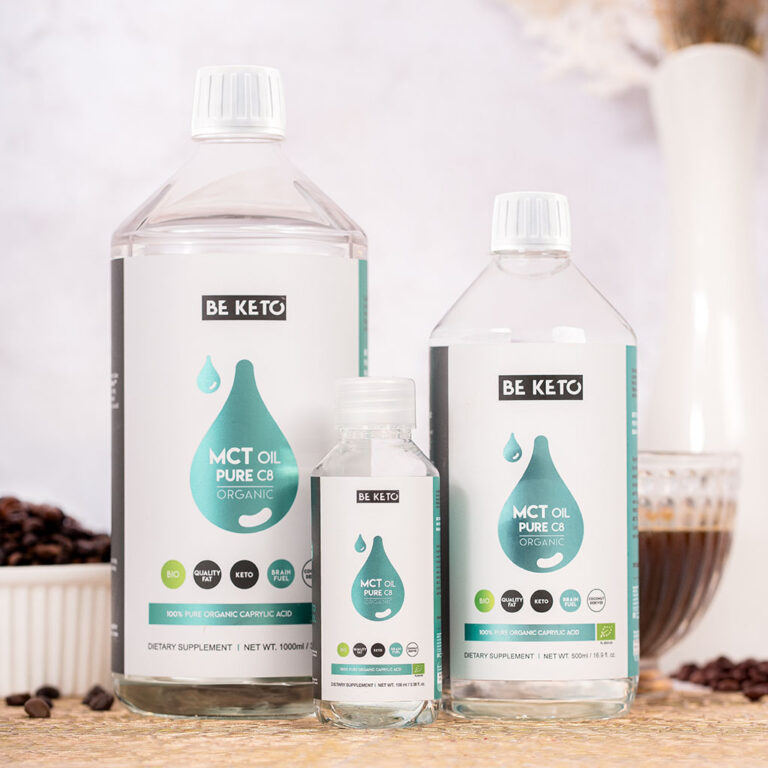
        BeKeto MCT OIL 100ml C8 100 Composition

        What Is MCT Oil? A Complete Guide to Medium-Chain Triglycerides

        Thinking about starting to supplement MCT oil but unsure whether you know everything there is to know? MCT oil is a concentrated dietary supplement containing medium-chain triglycerides (C8 and C10) — fats that travel directly to the liver via the portal vein and convert into energy in as little as 15–30 minutes, whilst conventional fats require a full 3–4 hours. MCTs bypass the standard digestive process and are converted into ketones — an alternative fuel for the brain and muscles. Extensive research confirms their efficacy: they support weight reduction, cognitive function, the nervous system, and stable energy throughout the day. The best MCT preparations contain pure C8 or a C8+C10 blend — avoid products with lauric acid (C12), which metabolically behaves like a regular long-chain fat. Whether you supplement MCT oil for ketosis, mental clarity, or athletic performance, this guide covers everything you need to make an informed choice — from chemical structure and composition, through mechanisms of action in the body, to practical advice on incorporating MCTs into your daily diet.

        Lesen Sie das GanzeWhat Is MCT Oil? A Complete Guide to Medium-Chain Triglycerides
        MCT Oil Side Effects

        MCT Oil Side Effects: What You Need to Know Before You Start

        Thinking about starting to supplement MCT oil safely? MCT oil is safe for most healthy adults; however, like any supplement, it can cause side effects — particularly when introduced too quickly or when exceeding the recommended dose. The most common complaints associated with excessive MCT intake are gastrointestinal in nature and include diarrhoea, nausea, stomach cramps, and bloating. These symptoms naturally result from the unique metabolic pathway of medium-chain fatty acids: rapid absorption and direct transport to the liver via the portal vein, where they undergo beta-oxidation and conversion into ketone bodies [1, 2]. If you want to supplement MCT oil safely and use it without discomfort, understand that these side effects are temporary and dose-dependent — they occur mainly when starting supplementation or when increasing the dose too quickly. The digestive system of most people adapts to MCTs within 1–2 weeks of consistent, gradual use [1, 3]. Emerging side effects are not a sign that the oil is harmful — in most cases, they are your body's way of signalling that the chosen dose is not yet suited to your individual tolerance.

        Lesen Sie das GanzeMCT Oil Side Effects: What You Need to Know Before You Start
        MCT Oil for Skin

        MCT Oil for Skin and Hair: Benefits Guide

        Thinking about using MCT oil for skin and hair? These oils exert a powerful effect thanks to their unique fatty acid profile — primarily caprylic acid (C8) and capric acid (C10), which display strong antimicrobial and moisturising properties. These medium-chain fatty acids have shorter molecular chains than typical oils, meaning faster and deeper penetration of the skin barrier without leaving a greasy layer. Dermatological research confirms the efficacy of MCT oil for skin conditions including seborrhoeic dermatitis, fungal acne, and dryness of the skin and hair [1,5,8]. If you want to use MCT oil for skin and hair effectively, this guide will show you why it is genuinely worthwhile. Still wondering whether MCT oil for skin and hair is right for you? Read on and discover the full range of benefits!

        Lesen Sie das GanzeMCT Oil for Skin and Hair: Benefits Guide
        MCT Oil Side Effects Heart

        MCT Oil and Heart Health: Is It Safe for Your Heart?

        Want to supplement MCT oil safely but unsure how it might affect your heart? Medium-chain fatty acids are safe for the cardiovascular system of most healthy adults when using moderate doses (1–2 tablespoons per day), although as a saturated fat they require mindful use in individuals with elevated cholesterol or cardiovascular disease [1,6]. If you want to buy MCT oil safely with heart health in mind, understand that concerns about potential cardiac effects stem from MCT's classification as a saturated fat — yet medium-chain fatty acids behave metabolically quite differently from the long-chain saturated fats found in red meat or butter [7]. Research in this area is not conclusive — it shows varied individual responses to MCT supplementation — the key factors are dose and genetics, not the oversimplified equation "MCT = bad for heart" [2,3]. Looking to supplement MCT oil safely while caring for your cardiovascular system? This guide provides the nuanced, evidence-based picture you need before purchasing.

        Lesen Sie das GanzeMCT Oil and Heart Health: Is It Safe for Your Heart?
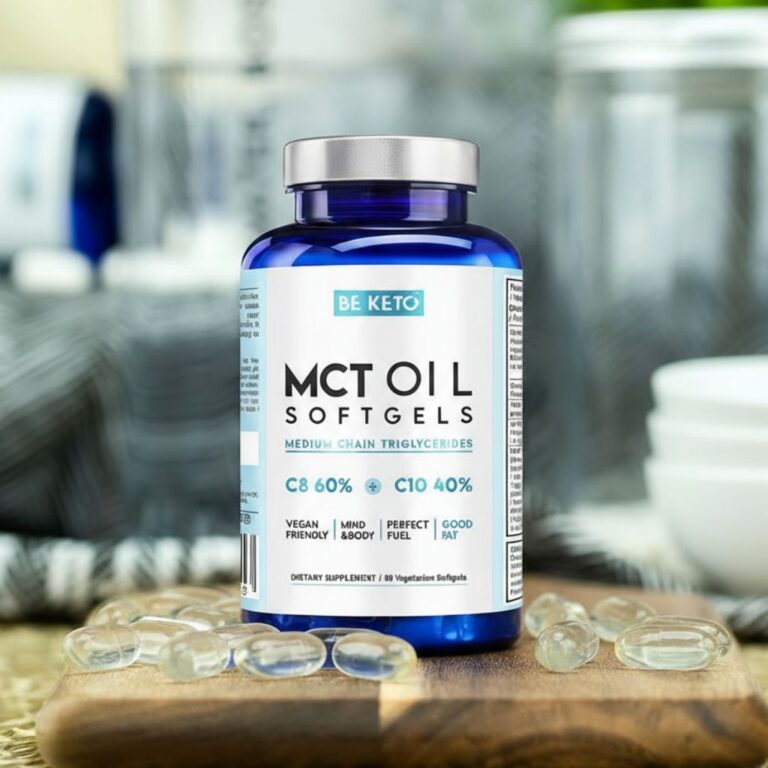
        MCT Oil C8C10 – 90 Capsules

        MCT Oil for Weight Loss: How It Works and How to Use It

        Want to use MCT oil for weight loss effectively? MCT oil genuinely supports weight loss through three scientifically documented mechanisms: thermogenesis that increases calorie burning, appetite regulation via satiety hormones, and preferential fat oxidation as an energy source rather than storage in adipose tissue. Research shows that diets enriched with pure MCTs lead to greater weight reduction compared with diets containing long-chain fats, with particular benefits for individuals who are overweight or obese. If you use MCT oil for weight loss, understand that it is not a magic slimming pill but a metabolic tool that supports the weight-loss process — it works most effectively as part of a well-planned, individually tailored nutritional strategy. Below, we discuss the mechanisms of action in detail, outline optimal dosing, and offer practical tips to maximise the fat-burning effects of MCT oil.

        Lesen Sie das GanzeMCT Oil for Weight Loss: How It Works and How to Use It
        BeKeto MCT OIL 500ml C8 100 Composition2

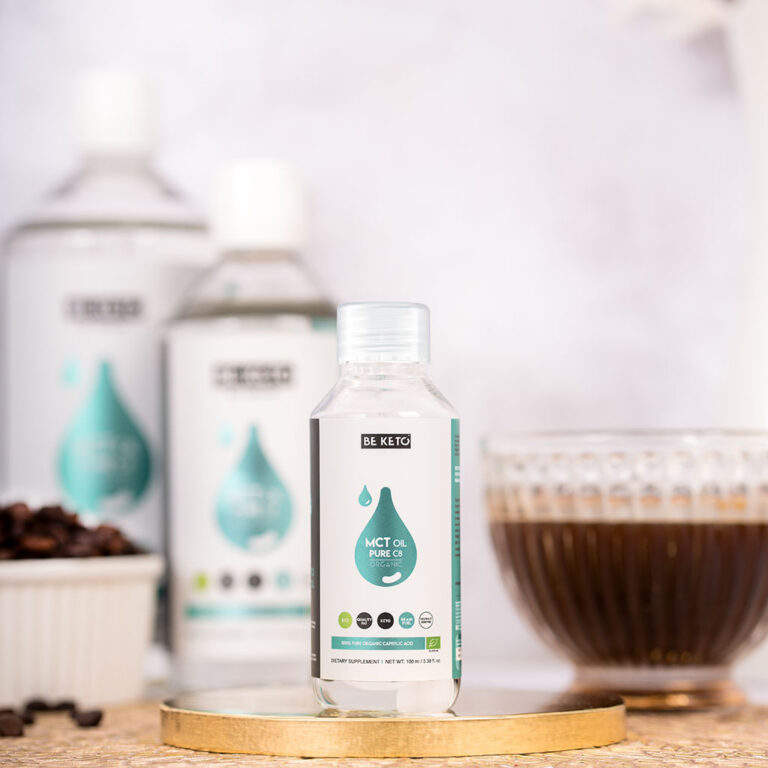
        MCT Oil in Coffee: Benefits, Recipe, and How Much to Use

        MCT oil in coffee elevates blood ketone levels to 0.5–0.8 mmol/L BHB within 60 minutes — equivalent to 12–16 hours of water fasting — while caffeine independently raises resting metabolic rate by 3–11% [2, 3, 6]. This combination, popularised as "Bulletproof coffee" by Dave Asprey in 2014 [1], works through a dual-fuel effect: caffeine stimulates the central nervous system for immediate alertness, whilst medium-chain fatty acids travel directly to the liver via the portal vein, producing beta-hydroxybutyrate (BHB) and acetoacetate (AcAc) that sustain energy and mental focus for 3–5 hours without glycaemic fluctuations [2, 3]. Together, MCT oil and caffeine burn an extra 100–150 kcal/day through increased diet-induced thermogenesis and the thermic effect of food — without any change in physical activity [3, 6].

        Lesen Sie das GanzeMCT Oil in Coffee: Benefits, Recipe, and How Much to Use
        mct vs coconout oil

        MCT Oil vs Coconut Oil: What Is the Difference and Which Should You Choose?

        Want to choose MCT oil but some people recommend coconut oil instead? MCT oil and coconut oil are related yet fundamentally different products — MCT oil is extracted from coconut oil through a fractionation process that isolates and concentrates only medium-chain triglycerides (primarily caprylic acid C8 and capric acid C10), whereas coconut oil is a whole, unrefined oil containing a broad mixture of fatty acids [1,2]. The key difference is that MCT oil contains 100% medium-chain triglycerides, whilst coconut oil contains only about 54% MCTs, most of which is lauric acid (C12) — a fatty acid that metabolically behaves more like a long-chain fat than a true MCT [2,3]. Want to choose MCT oil over coconut oil for maximum ketogenic benefit? The choice between these products depends primarily on your supplementation goal: MCT oil dominates in the context of ketosis, energy, and problematic-skin care, whilst coconut oil performs better in the kitchen and for body moisturising. If you want to choose MCT oil wisely, the guide below presents a detailed comparison of both products across all their key applications.

        Lesen Sie das GanzeMCT Oil vs Coconut Oil: What Is the Difference and Which Should You Choose?
        mcts and fast

        Does MCT Oil Break a Fast? The Complete Answer for Every Fasting Goal

        MCT oil technically breaks a caloric fast (it contains a load of 115 kcal per tablespoon); however, everything depends entirely on your fasting goal — for most intermittent-fasting practitioners focused on weight loss and ketosis, MCT maintains the metabolic fasting state [1,2]. MCT oil is pure fat — it contains zero carbohydrates and zero protein, meaning no significant insulin response that switches the body from a catabolic state (fasting) to an anabolic state (feeding). Does MCT oil break a fast for your specific purpose? The answer varies depending on what exactly you mean by "fasting" — read on to discover what choice you can make! Wondering whether MCT oil breaks a fast in a way that affects your results? This guide gives you the complete picture.

        Lesen Sie das GanzeDoes MCT Oil Break a Fast? The Complete Answer for Every Fasting Goal
        BeKeto MCT OIL 100 C8 Composition

        MCT Oil Dosage: How Much Should You Take Per Day?

        Wondering what MCT oil dosage will work best for you? The standard recommended daily serving of MCT oil is 1–2 tablespoons (15–30 ml), delivering approximately 14–28 g of medium-chain triglycerides and 115–230 kcal. The key to success also lies in gradually introducing the oil into your diet — always start with 1 teaspoon (5 ml) per day, allowing your digestive system to adapt to the rapid absorption pathway of medium-chain fatty acids. Jumping straight to a full tablespoon is the number-one cause of digestive side effects in beginner supplementers [3]. If you want to find the right MCT oil dosage for your goals, understand that the optimal amount for the vast majority of people is 1 tablespoon (15 ml) taken once daily. Curious about the ideal MCT oil dosage for your lifestyle? Read on to discover what will work best for you and why!

        Lesen Sie das GanzeMCT Oil Dosage: How Much Should You Take Per Day?
        can you coook with mcts

        Can You Cook with MCT Oil? Kitchen Guide

        Have MCT oil and wondering whether you can cook with MCT oil freely in the kitchen? MCT oil is safe to cook with — but only under specific temperature conditions that determine whether you preserve its metabolic properties or destroy them [1,2]. Can you cook with MCT oil at high heat? No — the key factor is the smoke point of MCT oil, which is approximately 160°C (320°F) — significantly lower than coconut oil (~230°C) or ghee (~250°C) — meaning standard frying and high-temperature baking cause thermal degradation of the medium-chain triglycerides you are paying for and counting on when including MCT oil in your diet [2,3]. If you want to cook with MCT oil safely, understand that it excels in non-heat culinary applications (dressings, smoothies, drizzling over finished dishes) and low-heat cooking, where it retains 100% of its ketogenic properties and capacity for ketogenesis.

        The guide below presents precise temperature limits, practical cooking methods ranked by suitability, simple starter recipes, and a clear answer on when it is better to reach for coconut oil instead of MCT.

        Lesen Sie das GanzeCan You Cook with MCT Oil? Kitchen Guide
        Foods High in MCTs

        MCT Foods: Complete List of Foods Rich in Medium-Chain Triglycerides

        Want to increase your MCT intake through MCT foods rather than supplements? Medium-chain triglycerides occur naturally in several food categories — primarily coconut products, palm kernel oil, and certain dairy products — yet their concentration varies significantly between sources [1,2]. If you want to find the best MCT foods for your diet, understand that even the richest MCT food sources contain mainly lauric acid (C12), which metabolises more slowly than the "fast" MCTs (C8 and C10 — caprylic acid and capric acid) concentrated in MCT oil supplements [2,3]. Looking for a complete list of MCT foods to add to your meals? The guide below presents a comprehensive list of MCT-rich foods with exact percentages, practical ways to incorporate them into your diet, and an honest answer to the question of whether food sources alone are enough to achieve your ketogenic and metabolic goals.

        Lesen Sie das GanzeMCT Foods: Complete List of Foods Rich in Medium-Chain Triglycerides
        intermittent fasting ketosis beketo

        Intermittent Fasting and Ketosis: Complete Guide to Combining Them

        Want to get into ketosis faster and deeper? Intermittent fasting (IF) and ketosis work synergistically: IF controls "when" you eat, keto controls "what" you eat — together they accelerate entry into ketosis by 50% (24–36 hours versus 2–4 days), deepen BHB levels (1.5–3.0 mmol/L during fasting versus 0.5–1.5 on diet alone), and lower basal insulin by 40–60% [1]. If you want to get into ketosis efficiently, the optimal start is: first, 2–4 weeks of a keto diet (<20–30 g carbohydrates), then IF 16:8 (16 hours fasting, 8-hour eating window). The IF 16:8 + keto combination delivers stable ketosis of 0.5–1.5 mmol/L throughout the entire 24-hour cycle. For anyone who wants to enter ketosis with minimal discomfort, the side effects (hunger, headaches, dizziness) are milder than IF on a high-carbohydrate diet and resolve within 1–2 weeks of adaptation.

        Lesen Sie das GanzeIntermittent Fasting and Ketosis: Complete Guide to Combining Them
        Nutritional ketosis beketo

        Nutritional Ketosis: What It Is, Benefits & How to Achieve It

        Want to get into ketosis the safe, sustainable way? Nutritional ketosis is a controlled metabolic state with blood BHB levels of 0.5–3.0 mmol/L, in which the body burns fat rather than glucose as its primary fuel. You achieve it by restricting carbohydrates to <20–50 g net per day (macronutrients: 70–80% fat, 10–20% protein, 5–10% carbohydrates). Nutritional ketosis ≠ ketoacidosis (DKA) — in healthy individuals, insulin regulates ketone production and prevents levels from reaching dangerous territory [1]. If you want to get into ketosis, the documented benefits make a compelling case: weight loss (an average of 2–3 kg more than a low-fat diet), HbA1c reduction of 0.5–1.5% in type 2 diabetics, triglyceride reduction of 20–40%, stable energy, and mental clarity (60–80% of people). For those who want to enter ketosis for the first time, the transition typically takes 2–7 days depending on carbohydrate restriction.

        Lesen Sie das GanzeNutritional Ketosis: What It Is, Benefits & How to Achieve It
        Is ketosis dangerous beketo

        Is Ketosis Dangerous? Safety, Risks & Who Should Avoid It

        Thinking about switching to ketosis but worried about the risks? Nutritional ketosis (BHB 0.5–3.0 mmol/L) is safe for the majority of healthy adults — a 24-week study of 64 obese individuals found no serious adverse effects [1]. If you want to switch to ketosis, the critical distinction to grasp first is: nutritional ketosis (safe, regulated by insulin) ≠ ketoacidosis/DKA (dangerous, >10 mmol/L + blood glucose >250 mg/dL, primarily affecting type 1 diabetes). A healthy person with a functioning pancreas will not enter DKA through a keto diet. Before you switch to ketosis, be aware of the transient side effects: keto flu (days 3–7, resolves within 1–2 weeks), constipation (50–65% of people), headaches (30–40%), muscle cramps (15–20%). Groups that should avoid ketosis or follow it only under medical supervision: type 1 and type 2 diabetics, pregnant or breastfeeding women, and individuals with kidney disease, liver disease, or eating disorders.

        Lesen Sie das GanzeIs Ketosis Dangerous? Safety, Risks & Who Should Avoid It
        Ketone levels for ketosis beketo

        Ketone Levels for Ketosis: What Your Numbers Mean

        Whether you're already on a ketogenic diet or want to get into ketosis, understanding your ketone levels is the single most reliable way to know where you stand. Nutritional ketosis begins at BHB ≥0.5 mmol/L in the blood. The ranges: 0.5–1.5 mmol/L = mild ketosis (improved insulin sensitivity, stable energy), 1.5–3.0 mmol/L = optimal ketosis (maximum fat burning, weight loss), 3.0–5.0 mmol/L = deep ketosis (therapeutic goals, e.g. epilepsy), >5.0 mmol/L = requires monitoring, >10 mmol/L + high blood glucose = potential ketoacidosis (primarily affecting type 1 diabetes) [1]. If you're in ketosis or working to enter it, the most accurate measurement comes from a blood ketone meter reading BHB. After keto-adaptation (4–8 weeks), levels paradoxically drop to 0.5–1.5 mmol/L — this is a sign of more efficient ketone utilisation, not a loss of ketosis. For weight loss, stable ketosis at 0.5–1.5 mmol/L is sufficient — what matters is a calorie deficit, not maximising your readings.

        Lesen Sie das GanzeKetone Levels for Ketosis: What Your Numbers Mean
        How to stay in ketosis beketo

        How to Stay in Ketosis: Tips & Strategies for Long-Term Success

        Want to stay in ketosis long-term and make the ketogenic diet a sustainable lifestyle? Staying in ketosis requires: net carbohydrates below 20–50 g/day (70–80% of calories from fat, 10–20% from protein, 5–10% from carbohydrates), electrolyte supplementation (sodium 3,000–5,000 mg, potassium 1,000–3,500 mg, magnesium 300–500 mg/day), intermittent fasting 16:8 or 18:6 (depletes glycogen, stimulates ketogenesis), and regular blood BHB measurement (target: 0.5–3.0 mmol/L) [1]. Knowing how to stay in ketosis means mastering these fundamentals daily. After falling out of ketosis, the return takes 1–3 days (after a single cheat meal) to 3–7 days (after a longer period). The longer you stay in ketosis, the more keto-adapted your body becomes and the more resistant to carbohydrate fluctuations.

        Lesen Sie das GanzeHow to Stay in Ketosis: Tips & Strategies for Long-Term Success
        carbs to stay in ketosis beketo

        How Many Carbs to Stay in Ketosis? Finding Your Limit

        How many carbs can you eat and stay in ketosis? Staying in ketosis requires consuming 20–50 g of net carbohydrates per day — below 20 g guarantees ketosis in roughly 95% of people, 20–50 g works after full keto-adaptation (4–8 weeks), and above 50 g typically disrupts ketosis [1]. Finding how many carbs to stay in ketosis is personal: net carbs = total carbohydrates − fibre − (sugar alcohols ÷ 2). Your individual limit depends on: physical activity (athletes tolerate up to 50–100 g), muscle mass, insulin sensitivity (insulin-resistant individuals: strictly <20 g), age, and genetics. To find your threshold: start at 20 g/day for 2–3 weeks, confirm ketosis (BHB ≥0.5 mmol/L), increase by 5 g/week, and test — when BHB drops below 0.5 mmol/L for 2–3 days, step back by 5 g.

        Lesen Sie das GanzeHow Many Carbs to Stay in Ketosis? Finding Your Limit
        Notify when available Be the first to know when this product is back in stock. Leave your email address below and stay up to date.
        SHARE YOUR CART