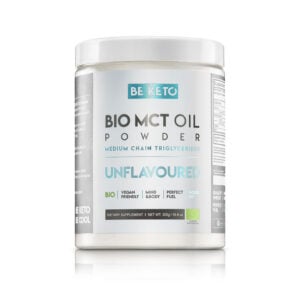
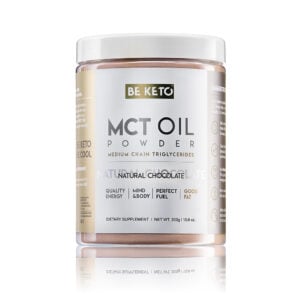
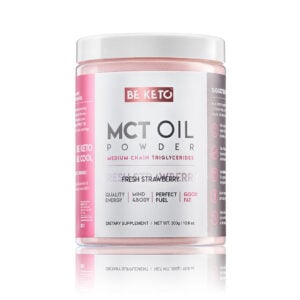
Thinking about using MCT oil for skin and hair? These oils exert a powerful effect thanks to their unique fatty acid profile — primarily caprylic acid (C8) and capric acid (C10), which display strong antimicrobial and moisturising properties. These medium-chain fatty acids have shorter molecular chains than typical oils, meaning faster and deeper penetration of the skin barrier without leaving a greasy layer. Dermatological research confirms the efficacy of MCT oil for skin conditions including seborrhoeic dermatitis, fungal acne, and dryness of the skin and hair [1,5,8]. If you want to use MCT oil for skin and hair effectively, this guide will show you why it is genuinely worthwhile. Still wondering whether MCT oil for skin and hair is right for you? Read on and discover the full range of benefits!
Passionate about writing and a graduate in clinical dietetics. She is particularly interested in phytotherapy and the effects of ketogenic nutrition on cognitive brain function.
MCT oil is good for skin thanks to its unique fatty acid profile — primarily the presence of caprylic acid (C8) and capric acid (C10), which have shorter molecular chains (than other popular oils used in skincare) that mean faster and deeper absorption without leaving a greasy film on the surface. These medium-chain fatty acids penetrate the skin barrier more efficiently than typical cosmetic oils.
The key properties that make MCT oil effective for skin encompass several distinct mechanisms of action. First, it is non-comedogenic — it does not clog pores, making it a safe choice for oily and acne-prone skin. It is antimicrobial — C8 and C10 MCT oils disrupt the cell membranes of bacteria and yeasts developing on the skin surface. It has anti-inflammatory properties — reducing redness, irritation, and swelling in conditions such as eczema and dermatitis [5,8]. It moisturises effectively — penetrating deeper skin layers thanks to its short chain length, delivering hydration directly to cells. It acts as an antioxidant — potentially protecting against free-radical damage and various environmental stressors.
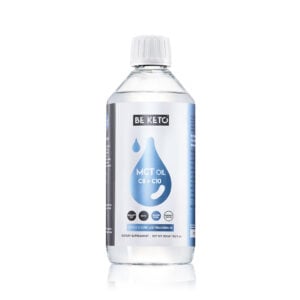
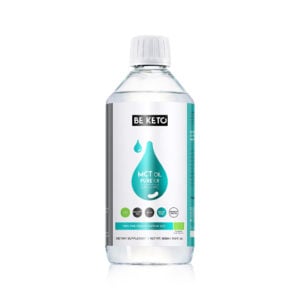
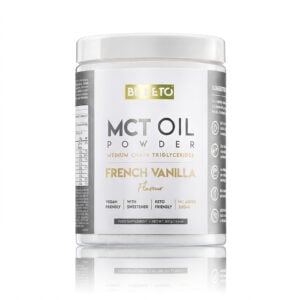
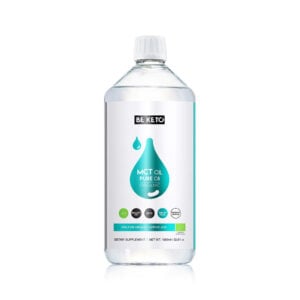
Unlike coconut oil, which contains high concentrations of lauric acid (C12) that can feed Malassezia yeast and clog pores, pure MCT oil (C8/C10) entirely avoids these dermatological issues. Browse our range of pure MCT oils suitable for skin and hair care.
Did you know that… consuming just 18–24 g of MCT oil per day (roughly 1.5–2 tablespoons) can lead to an average of 1.7 kg greater fat-tissue loss? This refers to replacing part of other dietary fats with a high-quality MCT oil whilst keeping the total caloric intake of both diets identical [2, 3].
You can use MCT oil on your face in various ways, depending on the time of day and your skin’s needs. Below, we outline how to apply it step by step — according to your purpose:
As a face oil: apply 3–5 drops to cleansed, slightly damp skin in the morning or evening. Gently pat — do not rub — to allow full absorption. You can use it alone or mix it with your existing moisturiser for additional hydration and barrier support.
As a cleansing oil: massage a small amount into dry skin to dissolve make-up, sunscreen, and impurities (oil-cleansing method). Wipe off with a warm flannel, then follow with a gentle cleansing gel. MCT oil effectively dissolves waterproof make-up and SPF without compromising the skin barrier.
As a carrier oil: mix with essential oils (tea tree, lavender) to create your own facial serum. The rapid absorption of MCT ensures effective delivery of active ingredients deep into the skin.
For oily or acne-prone skin: MCT oil is non-comedogenic and will not worsen breakouts. Its antimicrobial properties (caprylic and capric acids) may actually help reduce acne-causing bacteria on the skin surface [1,6].
Always perform a patch test on a small area before first use, particularly on sensitive skin.
How Does MCT Oil Help Seborrheic Dermatitis?
MCT oil (particularly caprylic acid C8) effectively targets Malassezia yeast — responsible for seborrhoeic dermatitis driven by its overgrowth — thanks to its antifungal properties. The mechanism of action relies on caprylic acid’s ability to disrupt the cell membranes of Malassezia [6], effectively reducing the yeast population on the skin surface and limiting proliferation in hair follicles and sebaceous glands.
At the same time, the anti-inflammatory properties of MCT oil soothe the redness and irritation accompanying flare-ups, providing rapid relief from the discomfort and persistent itching characteristic of this condition. Achieving lasting results requires consistent use: apply pure C8 MCT oil to affected areas after thoroughly cleansing the skin with a gentle preparation. Leave it on as a treatment oil or mix with a gentle moisturiser for easier spreading. For seborrhoeic dermatitis of the scalp, massage MCT oil into the scalp before washing and leave for 15–30 minutes (as a pre-wash treatment).
Improvement typically appears within 1–2 weeks of regular application [5,8], though this is an individual matter dependent on factors including the initial condition of the skin and various personal variables.
Is MCT Oil Safe for Fungal Acne?
Yes, MCT oil is safe for fungal acne provided you use pure C8 or C8+C10 formulations (without lauric acid). The Malassezia yeast responsible for this condition feeds only on fatty acids with 11–24 carbon atoms [6,7] — C8 (8 carbons) and C10 (10 carbons) fall below this range, so they do not support yeast growth. Avoid MCTs containing C12.
What Are the MCT Oil Benefits for Hair?
MCT oil benefits hair through its moisturising and antimicrobial properties, offering several key conditioning effects, such as:
Moisture without heaviness: MCT oil penetrates the hair shaft, reducing protein loss (the main cause of dry, brittle hair) [4] without weighing strands down or leaving a greasy coating. It works excellently for both fine and thick hair.
Shine and smoothness: MCT oil adds natural lustre and reduces frizz even in humid conditions by sealing the cuticle layer.
Split-end protection: regular application of MCT oil to hair ends helps prevent further splitting and breakage.
Conditioning: MCT oil can be used as an intensive pre-wash treatment (30 minutes before shampooing) or as a lightweight leave-in oil for daily support without weighing hair down.
Regardless of hair texture, you may notice an improvement in condition — with consistent, regular use of high-quality MCT oils from trusted manufacturers.
How Does MCT Oil Help the Scalp?
MCT oil addresses common scalp problems through its antimicrobial, anti-inflammatory, and moisturising properties. It can effectively support scalp health across a variety of issues:
For dandruff: dandruff is often linked to overgrowth of Malassezia yeast on the scalp. The caprylic acid in MCT oil targets these yeasts whilst soothing the accompanying itching and flaking.
For dry scalp: MCT oil moisturises the scalp barrier without clogging hair follicles, reducing dryness and the sensation of tightness.
For itchy or irritated scalp: the anti-inflammatory properties of MCT oil noticeably soothe irritation arising from conditions such as seborrhoeic dermatitis, psoriasis, or skin sensitivity.
How to apply MCT to the scalp correctly? Massage MCT oil into the scalp before washing (for roughly 15–30 minutes) or apply a few drops to the scalp after cleansing as a leave-in treatment. It is best to use a high-quality pure C8 MCT oil.
Topical application of MCT oil requires adjusting the amount of product and technique to the specific area of the body — here is a detailed guide outlining the step-by-step approach to maximise effectiveness with minimal product usage.
On the face: apply 3–5 drops to cleansed, slightly damp skin. Gently pat in with your fingertips, allowing full absorption before applying further products. Use in the morning under make-up or in the evening as the final step of your skincare routine.
On the body: spread a few drops onto damp skin directly after a shower, when pores are open. Focus particularly on areas prone to dryness: elbows, knees, shins, and feet.
On hair: as an intensive treatment, apply a generous amount to dry hair 30 minutes before washing, wrapping your head in a towel. For daily care, 2–3 drops patted into damp ends after washing will suffice.
On the scalp: massage 5–10 drops into dry scalp in circular motions, leave for 15–30 minutes before shampooing. For persistent problems, use as an overnight treatment.
As a base for blends: dilute essential oils at a ratio of 1–2% (1–2 drops of essential oil per teaspoon of MCT oil).
Store in a cool, dark place. Before first use, perform a patch test on the inner forearm. [4,5,8]
Did you know that… consuming just 18–24 g of MCT oil per day (roughly 1.5–2 tablespoons) can lead to an average of 1.7 kg greater fat-tissue loss? This refers to replacing part of other dietary fats with a high-quality MCT oil whilst keeping the total caloric intake of both diets identical [2, 3].
Which MCT Oil Is Best for Skin and Hair?
Not all MCT oils are equally effective for topical use, so choosing the right type of medium-chain fatty acid is crucial for skincare efficacy — particularly with problematic skin or fungal conditions. The table below compares the main MCT oil types available on the market in terms of safety and dermocosmetic applications.
MCT Oil Type
Skin Safety
Hair Use
Fungal Acne
Pore-Clogging
Recommendation
Pure C8 (caprylic acid)
Best
Excellent
Safe
Non-clogging
Best choice for seborrhoeic dermatitis, fungal acne, dandruff, and sensitive skin
C8+C10 blend
Very good
Excellent
Safe
Non-clogging
Good choice for general moisturising, hair conditioning, and as a carrier oil
MCT with C12 (lauric acid)
Problematic
Good
Feeds Malassezia
May clog
Avoid for fungal skin conditions and acne-prone skin
Coconut oil (unfractionated)
Problematic
Good (masks)
Worsens condition
Comedogenic
Avoid on face — suitable only for body and hair masks
For seborrhoeic dermatitis and fungal acne, a pure C8 MCT oil delivers the strongest antifungal protection and soothing action.
What Are the Other Benefits of MCT Oil?
Beyond external skin and hair care, MCT oil provides a broad spectrum of internal health benefits when taken as a dietary supplement. MCT oil benefits include rapid energy production (through conversion to ketones in the liver within just 15–30 minutes of consumption), support for weight management (via appetite suppression and enhanced thermogenesis), improved cognitive function and mental clarity (thanks to ketones serving as an alternative, more efficient fuel for the brain), and enhanced gut health (through antimicrobial properties and general antibacterial and antifungal activity supporting immune function). Many consumers combine topical MCT oil application with daily oral supplementation — to achieve comprehensive benefits for skin, hair, and overall health. Discover the full range of MCT oil benefits including energy, weight loss, and brain health.
What Are the Potential Skin Reactions to MCT Oil?
Although MCT oil is very well tolerated by most skin types, some individuals — particularly those with hypersensitive or reactive skin — may potentially experience mild redness, a sensation of warmth, or irritation of the area after the first MCT oil application. This is very rare with pure C8/C10 MCT formulations but may occur in people with hypersensitivity or allergies.
To minimise the risk of an adverse skin reaction, always perform a patch test before applying the product to a larger area of the body. Start by using a small amount of MCT oil and observe your skin’s reactions carefully over the following 24 hours. Avoid applying the product to damaged skin, open wounds, or the eye area. Read about all MCT oil side effects and how to manage them, and if irritation persists — discontinue use and consult a dermatologist.
MCT oil (medium-chain triglycerides) is a concentrated supplement extracted from coconut or palm kernel oil through a process called fractionation. It contains primarily caprylic acid (C8) and capric acid (C10) — fatty acids with shorter molecular chains that are rapidly absorbed both when consumed and when applied topically to skin and hair.
For skin and hair, the shorter chain length means deeper penetration, faster hydration, and effective antimicrobial action without the pore-clogging risk characteristic of long-chain oils. Importantly, MCT also does not require emulsification by bile, which translates to its immediate bioavailability in the body. Learn everything about what is MCT oil, how it is made, and all its uses.
FAQ
How Often Should You Apply MCT Oil to Skin?
MCT oil can be applied daily — once or twice a day depending on your skin’s needs and type. For effective moisturising, evening-only MCT oil application is sufficient (for most skin types); however, for dry or mature skin, twice-daily application (morning and evening) is suggested, and for seborrhoeic dermatitis or fungal acne, daily application to affected areas is recommended until symptoms subside. Consistency is far more important than quantity — a few drops daily delivers better results than sporadic heavy application.
Can MCT Oil Cause Acne or Breakouts?
Pure MCT oil (C8 and C10) is non-comedogenic, does not clog pores, and as a rule should not cause acne in most people across different skin types. In fact, its antimicrobial properties may even help reduce acne-causing bacteria on the skin — however, if an MCT oil product contains lauric acid (C12) or other long-chain fatty acids, it may potentially worsen breakouts or fungal acne. Always check the label for a pure C8 or C8+C10 formula without any additives.
MCT Oil vs Coconut Oil for Skin — Which Is Better?
For skincare, MCT oil is generally far superior to coconut oil — owing to its fatty acid profile. Coconut oil contains roughly 50% lauric acid (C12), which has a longer carbon chain that can clog pores and feed Malassezia yeast [2,3,7] — worsening fungal acne and seborrhoeic dermatitis. MCT oil (C8+C10) is more refined and concentrated, and it absorbs far more quickly without the risk of clogging pores or feeding yeasts.
Bilbiography
See all
[1] Huang WC, et al. Anti-bacterial and anti-inflammatory properties of capric acid against Propionibacterium acnes. J Dermatol Sci. 2014;73(3):232-240.
[2] Jadhav HB, Annapure US. Triglycerides of medium-chain fatty acids: a concise review. J Food Sci Technol. 2023;60(8):2143-2152.
[3] Ogbolu DO, et al. In vitro antimicrobial properties of coconut oil on Candida species. J Med Food. 2007;10(2):384-387.
[4] Rele AS, Mohile RB. Effect of mineral oil, sunflower oil, and coconut oil on prevention of hair damage. J Cosmet Sci. 2003;54(2):175-192.
[5] Verallo-Rowell VM, et al. Novel antibacterial and emollient effects of coconut and virgin olive oils in adult atopic dermatitis. Dermatitis. 2008;19(6):308-315.
[6] Kabara JJ, et al. Fatty acids and derivatives as antimicrobial agents. Antimicrob Agents Chemother. 1972;2(1):23-28.
[7] Nakatsuji T, et al. Antimicrobial property of lauric acid against Propionibacterium acnes. J Invest Dermatol. 2009;129(10):2480-2488.
[8] Evangelista MT, et al. The effect of topical virgin coconut oil on SCORAD index, transepidermal water loss, and skin capacitance in mild to moderate pediatric atopic dermatitis. Int J Dermatol. 2014;53(1):100-108.
Adrianna Kalista
A graduate in clinical dietetics whose interests begin, not end, with the word diet. She has written specialist content on nutrition. She is fascinated by contemporary food culture, phytotherapy and the effects of the ketogenic diet on cognitive brain function. She promotes diet therapy and the nutritional treatment of disease.
To provide the best experiences, we use technologies like cookies to store and/or access device information. Consenting to these technologies will allow us to process data such as browsing behaviour or unique IDs on this site. Not consenting or withdrawing consent, may adversely affect certain features and functions.
Functional
Always active
The technical storage or access is strictly necessary for the legitimate purpose of enabling the use of a specific service explicitly requested by the subscriber or user, or for the sole purpose of carrying out the transmission of a communication over an electronic communications network.
Preferences
The technical storage or access is necessary for the legitimate purpose of storing preferences that are not requested by the subscriber or user.
Statistics
The technical storage or access that is used exclusively for statistical purposes.Przechowywanie techniczne lub dostęp, który jest używany wyłącznie do anonimowych celów statystycznych. Bez wezwania do sądu, dobrowolnego podporządkowania się dostawcy usług internetowych lub dodatkowych zapisów od strony trzeciej, informacje przechowywane lub pobierane wyłącznie w tym celu zwykle nie mogą być wykorzystywane do identyfikacji użytkownika.
Marketing
The technical storage or access is required to create user profiles to send advertising, or to track the user on a website or across several websites for similar marketing purposes.
 United KingdomCurrent regionDelivery within the United KingdomCurrency: Pound Sterling (£)
 GermanyDelivery within Germany and AustriaCurrency: Euro (€)
 FranceDelivery within France and BelgiumCurrency: Euro (€)
 ItalyDelivery within ItalyCurrency: Euro (€)
 PolandDelivery within Poland and EuropeCurrency: Zloty (PLN)
 Czech RepublicDelivery within the Czech Republic and SlovakiaCurrency: Czech Koruna (Kč)
 SpainDelivery within SpainCurrency: Euro (€)