
OFFICIAL STORE IN THE UNITED KINGDOM



The Ketogenic Diet in Cancer Therapy: Mechanisms and Emerging Insights
Many people have heard of the ketogenic diet as a weight loss strategy. Although it is possible to lose weight with the ketogenic diet, this approach brings about many other benefits. In cancer, it helps decrease insulin and cell proliferation signals, reduces blood glucose levels and fuel availability for tumors, and increases susceptibility to chemotherapy/radiotherapy, while protecting normal cells [1].


What will you learn from the article?
Introduction to Ketogenic Diet and Cancer Therapy
The ketogenic diet, widely recognized for its weight loss benefits, has garnered attention in the oncology community for its potential therapeutic effects on cancer. This diet, characterized by low carbohydrate intake and high fat content, may reduce insulin levels and glucose availability, thereby diminishing the primary energy source for tumor growth and enhancing the efficacy of conventional cancer treatments.
Ketogenic Diets and Their Mechanism of Action in Cancer
The ketogenic diet aims to shift the body’s metabolism from relying on glucose to using ketone bodies produced from dietary fats. This metabolic shift significantly reduces insulin secretion and the subsequent production of insulin-like growth factor 1 (IGF-1) in the liver, which is implicated in cell proliferation and cancer growth. Historical observations, including those by Nobel laureate Otto Warburg, underscore the propensity of cancer cells to consume glucose at a higher rate than normal cells—a phenomenon now known as the Warburg effect.[2]
Glucose Metabolism and Cancer Cell Dynamics
Cancer cells often overexpress glucose transporters such as Glut-1 and Glut-3, which correlates with aggressive tumor behavior and increased glucose uptake observable in PET scans. These cells typically exhibit mitochondrial dysfunction, rendering them unable to efficiently produce ATP through normal oxidative phosphorylation. Instead, they rely heavily on glycolysis, leading to excessive production of lactate and pyruvate, indicative of the Warburg effect and mitochondrial distress.
Mitochondrial Dysfunction and Resistance to Therapy
The mitochondrial abnormalities in cancer cells not only compromise energy production but also make these cells adept at evading apoptosis, thereby increasing their resistance to chemotherapy. The ketogenic diet, by reducing glucose availability, may hinder the glycolytic pathway that cancer cells predominantly use, thereby sensitizing them to chemotherapeutic agents.
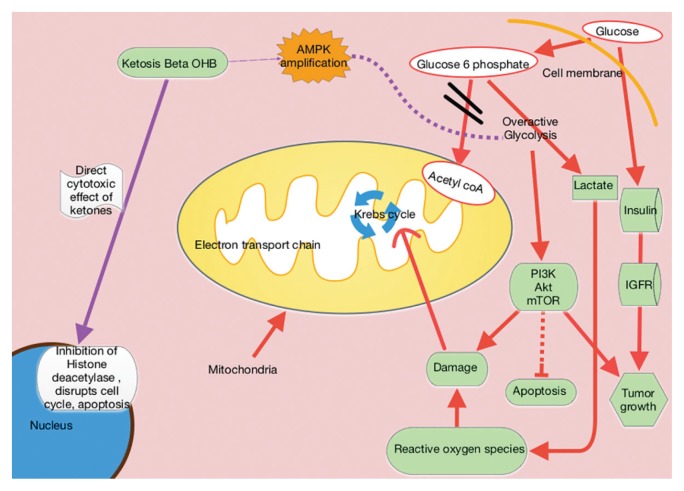
Source of image: Tan-Shalaby, 2017
Benefits of ketones in cancer
Ketones are more than just alternative energy sources; they modulate gene expression, stimulate mitochondrial biogenesis, and improve cellular bioenergetics. Their antioxidant properties and ability to preserve lean muscle mass are particularly beneficial in reducing the adverse effects of chemotherapy. Preliminary research suggests that ketones may play a role in reducing tumor activity in certain cancers like glioblastoma and possibly mitigate some side effects in breast cancer treatment.
Challenges and Considerations
However, the ketogenic diet is not universally beneficial for all cancer patients. [2][3] Studies have shown that in conditions like pancreatic and colorectal cancer, the diet might exacerbate cachexia—a syndrome marked by severe muscle and weight loss. Ongoing research aims to tailor ketogenic interventions to mitigate such risks and enhance the overall well-being of patients.
Conclusion: A Balanced Approach to Cancer Nutrition
While the ketogenic diet offers promising potential in cancer treatment, its application should be carefully considered based on individual patient conditions and cancer types. Collaboration between oncologists and dietitians specialized in metabolic therapies is crucial to optimize dietary strategies to support cancer treatment and patient quality of life. As research progresses, it is hoped that further insights will enable more targeted and effective dietary interventions in oncology. Patients and caregivers should consult with healthcare professionals before initiating any new dietary regimen, particularly one as specialized as the ketogenic diet, to ensure it aligns with the overall treatment plan and patient health status.
Bilbiography
View all
[1] Dowis, K.; Banga, S. The Potential Health Benefits of the Ketogenic Diet: A Narrative Review. Nutrients 2021, 13, 1654. https://doi.org/10.3390/nu13051654
[2] Tan-Shalaby J. Ketogenic Diets and Cancer: Emerging Evidence. Fed Pract. 2017 Feb;34(Suppl 1):37S-42S. PMID: 30766299; PMCID: PMC6375425.
[3] Doaa N. Al-Jada, Hamed R. Takruri & Wamidh H. Talib. (2023) From antiepileptic therapy to promising adjuvant in medical oncology: A historical view of the ketogenic diet. PharmaNutrition 24, pages 100340.
[4] Patikorn, C., Saidoung, P., Pham, T. et al. Effects of ketogenic diet on health outcomes: an umbrella review of meta-analyses of randomized clinical trials. BMC Med 21, 196 (2023). https://doi.org/10.1186/s12916-023-02874-y