Ketogenic diet – promising benefits for cardiovascular healt
Cardiovascular diseases (CVD) are the leading cause of death globally. The risk of a heart attack or stroke increases [1] significantly with excessive carbohydrate intake or improper insulin management in diabetics . This article explores the relationship between the ketogenic diet and heart disease, highlighting its potential benefits and addressing common concerns.
Scientist specialising in nutrition, food research and the ketogenic diet. She is conducting pioneering global research into the effects of the keto diet on the human body.
Often, the ketogenic diet is cited as a cause of increased serum cholesterol levels. However, there is no strong, unequivocal evidence to suggest that dietary cholesterol significantly raises serum cholesterol levels. The body regulates cholesterol absorption based on its needs. For instance, even the consumption of 25 eggs per day for 15 years did not result in an abnormal lipid profile in an 88-year-old patient[2] .
Inflammation and Cardiovascular Disease
Inflammation plays a crucial role in the development of cardiovascular diseases by initiating the atherosclerotic process. Excessive inflammation causes endothelial dysfunction, increasing the risk of cardiovascular disease. While aging is a natural cause of inflammation, dietary choices significantly impact cardiovascular health.
Anti-Inflammatory Effects of the Ketogenic Diet
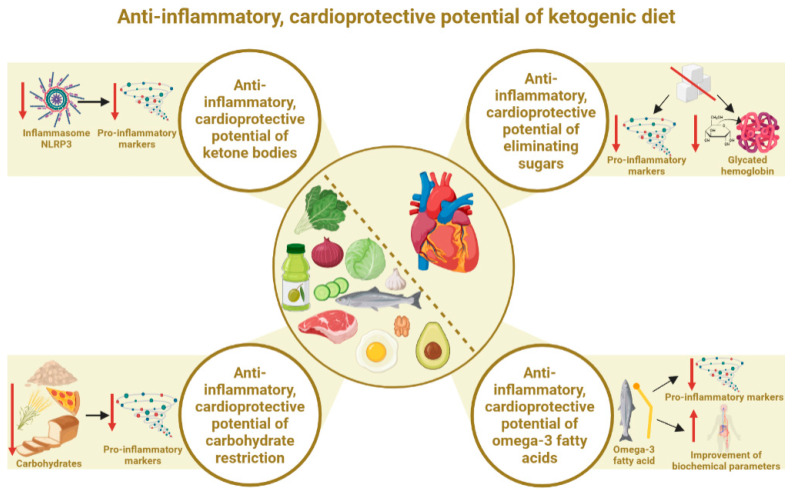
The ketogenic diet has proven anti-inflammatory effects, which can prevent or treat cardiovascular diseases. The diet promotes the production of ketone bodies, particularly β-hydroxybutyrate (BHB), which mimics the fasting state and exhibits anti-inflammatory properties. BHB influences gene expression, reduces inflammation, and improves mitochondrial function .
Impact on Myocardial Metabolism
BHB also affects myocardial metabolism and function. The heart has the highest energy requirement of all organs, and BHB can be synthesized through fasting, supplementing with medium-chain triglycerides (MCTs), or taking exogenous ketones. MCTs, which do not require pancreatic enzymes for digestion, rapidly convert to ketones in the liver, enhancing mitochondrial biogenesis and benefiting heart health.
The Role of Simple Sugars and Omega-3 Fatty Acids
Simple sugars are key pro-inflammatory dietary factors. The ketogenic diet eliminates simple sugars to minimize serum glucose and insulin spikes, which inhibit ketosis. To maximize the benefits of a ketogenic diet, incorporating foods rich in omega-3 fatty acids is crucial. Omega-3s have anti-inflammatory effects and reduce the risk of atherosclerosis and cardiovascular diseases by lowering triglyceride levels, reducing plaque growth, lowering blood pressure, and minimizing inflammation.
Sources of Omega-3 Fatty Acids
Mackerel
Salmon
Seabass
Oysters
Sardines
Shrimp
Seaweed
Chia seeds
Hempseed
Flaxseed
Conclusion
The ketogenic diet offers promising benefits for cardiovascular health by reducing inflammation, improving mitochondrial function, and lowering triglyceride levels. While concerns about cholesterol levels persist, the body’s regulatory mechanisms ensure that dietary cholesterol does not significantly impact serum cholesterol levels. By eliminating simple sugars and incorporating omega-3-rich foods, the ketogenic diet can be an effective strategy for preventing and managing heart disease.
Bilbiography
View all
[1] O’Brien MJ, Karam SL, Wallia A, et al. Association of Second-line Antidiabetic Medications With Cardiovascular Events Among Insured Adults With Type 2 Diabetes. JAMA Netw Open. 2018;1(8):e186125. doi:10.1001/jamanetworkopen.2018.6125
[2] Kern F Jr. Normal plasma cholesterol in an 88-year-old man who eats 25 eggs a day. Mechanisms of adaptation. N Engl J Med. 1991 Mar 28;324(13):896-9. doi: 10.1056/NEJM199103283241306. PMID: 1953841.
[3] Dyńka D, Kowalcze K, Charuta A, Paziewska A. The Ketogenic Diet and Cardiovascular Diseases. Nutrients. 2023 Jul 28;15(15):3368. doi: 10.3390/nu15153368. PMID: 37571305; PMCID: PMC10421332
Dr Andreia Torres
Clinical dietitian, with a PhD in Health Education. For over 20 years, Andreia has coached medical professionals, patients, and families interested in the use of metabolic therapies, such as low-carb and keto diets for the treatment of conditions such as obesity, diabetes, Alzheimer's, bipolar disorder, and certain types of cancer
To provide the best experiences, we use technologies like cookies to store and/or access device information. Consenting to these technologies will allow us to process data such as browsing behaviour or unique IDs on this site. Not consenting or withdrawing consent, may adversely affect certain features and functions.
Functional
Always active
The technical storage or access is strictly necessary for the legitimate purpose of enabling the use of a specific service explicitly requested by the subscriber or user, or for the sole purpose of carrying out the transmission of a communication over an electronic communications network.
Preferences
The technical storage or access is necessary for the legitimate purpose of storing preferences that are not requested by the subscriber or user.
Statistics
The technical storage or access that is used exclusively for statistical purposes.Przechowywanie techniczne lub dostęp, który jest używany wyłącznie do anonimowych celów statystycznych. Bez wezwania do sądu, dobrowolnego podporządkowania się dostawcy usług internetowych lub dodatkowych zapisów od strony trzeciej, informacje przechowywane lub pobierane wyłącznie w tym celu zwykle nie mogą być wykorzystywane do identyfikacji użytkownika.
Marketing
The technical storage or access is required to create user profiles to send advertising, or to track the user on a website or across several websites for similar marketing purposes.

 United KingdomCurrent regionDelivery within the United KingdomCurrency: Pound Sterling (£)
 GermanyDelivery within Germany and AustriaCurrency: Euro (€)
 FranceDelivery within France and BelgiumCurrency: Euro (€)
 ItalyDelivery within ItalyCurrency: Euro (€)
 PolandDelivery within Poland and EuropeCurrency: Zloty (PLN)
 Czech RepublicDelivery within the Czech Republic and SlovakiaCurrency: Czech Koruna (Kč)
 SpainDelivery within SpainCurrency: Euro (€)