Omega-3: what it is, what it does and where to get it (UK guide)
Omega-3 fatty acids are essential fats: ALA comes from plants, while EPA and DHA come from oily fish and the microalgae that first make them. The UK guideline is 450 mg of EPA and DHA a day, roughly two portions of fish a week, one oily. Yet the omega-3 index estimated in 117,108 UK Biobank participants averaged 5.58%, in the low range. On keto, oily fish can cover it; without fish, compare algal oil supplements by EPA and DHA per serving.
Passionate about writing and a graduate in clinical dietetics. She is particularly interested in phytotherapy and the effects of ketogenic nutrition on cognitive brain function.
What are omega-3 fatty acids? Omega-3 fatty acids are a family of polyunsaturated fats, and three are most relevant in food: ALA from plants, plus EPA and DHA from marine sources. EPA and DHA are made at the base of the marine food chain by microalgae and other marine microorganisms; fish obtain them mainly from their diet and can make them only to a limited, species-dependent extent [1]. ALA is the plant form, found in foods such as flaxseed, chia, walnuts and rapeseed oil. The body turns ALA into EPA and DHA only in small amounts. In isotope studies, young women given 700 mg labelled ALA converted an estimated net 21% to EPA, 6% to DPA and 9% to DHA over 21 days, while labelled DHA was not detected in 6 young men [3]. In practice, this is the distinction: plant omega-3 is useful, but it is not the same as eating oily fish or taking algal oil.
Omega-3
Full name
Chain length
Main food sources
Net conversion from ALA in young women [%]
In young men
ALA
alpha-linolenic acid
short
flaxseed, chia, walnuts, rapeseed oil
not applicable
not applicable
EPA
eicosapentaenoic acid
long
oily fish, microalgae
21
formed
DHA
docosahexaenoic acid
long
oily fish, microalgae
9
not detected
What does omega-3 do in the body?
What does omega-3 do in the body? What omega-3 does in the body can be stated cleanly only through the GB register wording, because each authorised claim has a daily dose condition. At 250 mg EPA and DHA a day: “EPA and DHA contribute to the normal function of the heart” [30]. At 250 mg DHA a day: “DHA contributes to maintenance of normal brain function” [30]. At 250 mg DHA a day: “DHA contributes to the maintenance of normal vision” [30]. At 2 g EPA and DHA a day: “DHA and EPA contribute to the maintenance of normal blood triglyceride levels” [30]. At 3 g EPA and DHA a day: “DHA and EPA contribute to the maintenance of normal blood pressure” [30]. In a meta-analysis of 64 RCTs, triglycerides fell by about 0.10 mmol/L per gram of omega-3 from fish oil; total cholesterol did not fall [15]. For what the evidence shows for each condition, read omega-3 benefits.
Do omega-3 supplements lower heart attack risk?
Do omega-3 supplements lower heart attack risk? Whether omega-3 supplements lower heart attack risk is mixed in trial summaries, and the overall cardiovascular picture is more mixed. Across 40 trials with 135,267 people, EPA and DHA reduced heart attacks by about 13% (RR 0.87) and coronary death by about 9% (RR 0.91), but total cardiovascular events were not significantly reduced (RR 0.95), with larger effects at higher doses; the meta-analysis was funded by GOED, the omega-3 industry body, and its lead author works for GOED [16]. In VITAL, 1 g a day for a median 5.3 years in 25,871 US adults did not significantly reduce major cardiovascular events (HR 0.92) but reduced total heart attacks (HR 0.72) [17]. REDUCE-IT was not a supplement trial: with 4 g prescription icosapent ethyl, pure EPA, composite events were 17.2% versus 22.0% (HR 0.75), while STRENGTH used 4 g EPA plus DHA versus corn oil and was stopped: 12.0% versus 12.2% (HR 0.99) [18].
Which foods are high in omega-3?
Which foods are high in omega-3? Foods high in omega-3 EPA and DHA are oily fish, not all fish, and not every food that contains plant fats. The NHS lists herring, including kippers, pilchards, salmon, sardines, sprats, trout and mackerel as oily fish; fresh and canned tuna do not count as oily fish [25]. A portion is about 140 g cooked, and NHS advises at least 2 portions of fish a week, 1 of them oily [25]. In 1,108 Norwegian farmed salmon samples, median EPA plus DHA fell by more than 60% between 2005 and 2020 as fish oil in their feed was replaced [2]. One 175 g portion of farmed salmon still covers an adult’s weekly adequate intake of EPA and DHA as set by EFSA [2]. Flaxseed, chia and walnuts give ALA only. For the food-by-food guide, see omega-3 foods.
Sardines on toast, keto style?
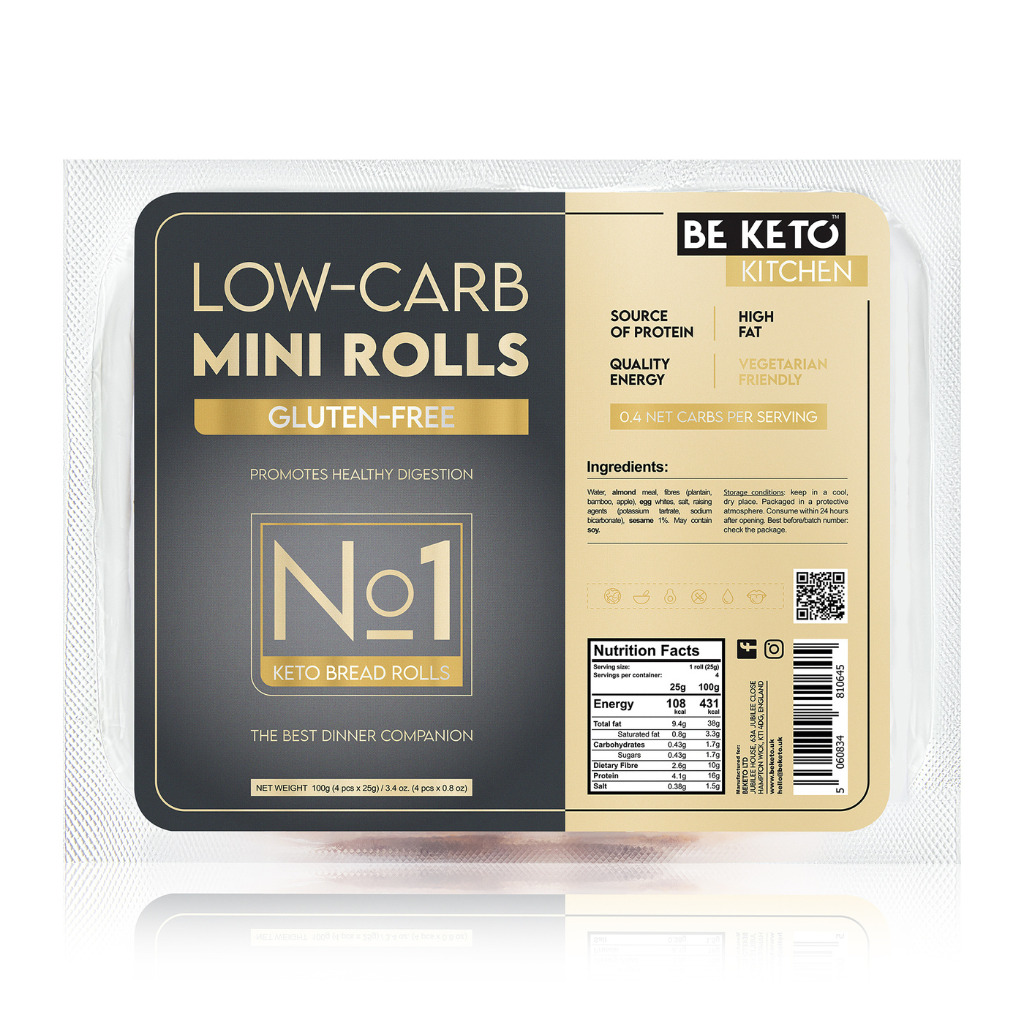
Oily fish needs something to sit on. In the BeKeto shop you will find keto bagels, tortillas and mini rolls.
How much omega-3 do you need a day? In the UK, SACN set 450 mg a day of long-chain omega-3, meaning EPA plus DHA, and raised that population guideline in 2004 from 200 mg. SACN says two portions of fish a week, one white and one oily, contain about 0.45 g, or 450 mg, of long-chain omega-3 a day [26]. The European value is EFSA’s adequate intake of 250 mg EPA plus DHA a day for adults [10]. UK adults aged 19 to 64 ate on average 56 g of oily fish a week in NDNS years 9 to 11, 2016/17 to 2018/19, compared with the recommended 140 g [28]. EFSA saw no safety concerns for supplemental intakes of EPA and DHA combined up to 5 g a day in adults, which is not a recommendation [11].
Body
Type of value
EPA plus DHA [mg/day]
Applies to
SACN (UK)
population guideline, 2004
450
UK population
British Nutrition Foundation [27]
UK dietary reference value
450
adults
EFSA (EU)
adequate intake
250
adults
EFSA (EU)
extra DHA in pregnancy and breastfeeding
100 to 200 (DHA only)
pregnant and breastfeeding women
EFSA (EU)
supplemental intake without safety concerns, not a recommendation
5000
adults
For how much omega-3 per day by age, timing and with food, use the dosage guide.
Which omega-3 supplement: fish oil, krill oil or algal oil?
Which omega-3 supplement: fish oil, krill oil or algal oil? Omega-3 fish oil comes from whole oily fish, krill oil comes from Antarctic krill, and algal oil comes from microalgae. Omega-3 supplements differ in raw material, not in the EPA and DHA molecules themselves. EPA and DHA are made at the base of the marine food chain by microalgae and other marine microorganisms [1]. Algal oil raised blood EPA and DHA as effectively as fish oil in a 2025 randomised double-blind trial in 74 adults measured at 6 and 14 weeks; the trial was run by a producer of algal oil, with 5 dsm-firmenich employees and 1 contracted statistician as authors [5]. Chemical form matters in the short term: in 72 volunteers over 2 weeks, re-esterified triglycerides were absorbed at 124% and ethyl esters at 73% of natural fish oil, a gap that largely disappears with long-term use [14].
Supplement
Raw material
Contains vitamins A and D
Fish free
What the evidence shows
Fish oil
whole oily fish
no
no
largest trial base, e.g. VITAL at 1 g a day
Cod liver oil
cod liver
yes
no
vitamin A and D upper limits apply
Krill oil
Antarctic krill (crustacean)
check the label
no
no comparison trial cited here
Algal oil
microalgae (e.g. Schizochytrium)
no
yes
raises blood EPA and DHA as effectively as fish oil (74 adults, producer-run trial)
Is cod liver oil the same as omega-3? Cod liver oil vs omega-3 is not a like-for-like comparison, because cod liver oil is one source of EPA and DHA, not another name for the nutrient family. Cod liver oil also contains vitamins A and D, which fish oil from whole fish and algal oil do not [6]. That changes what you need to check on the label for cod liver oil: EFSA’s tolerable upper intake levels for adults are 100 µg vitamin D and 3 000 µg RE vitamin A a day [6]. NHS advises avoiding fish liver oils such as cod liver oil when pregnant or trying for a baby, because they are high in retinol [25]. Vitamins A and D are also sold as separate drops, so if you use them separately, compare total daily amounts across products; see keto vitamins.
Taking vitamins A and D separately?
If you choose vitamins one by one, each label shows its own amount. Keto vitamins in the BeKeto shop include vitamin D3 drops.
Can you get omega-3 without eating fish? You can get omega-3 without fish, but you need to separate plant ALA from marine-source EPA and DHA. Flaxseed, chia, walnuts and rapeseed oil give ALA, the short-chain plant omega-3. ALA supplementation raises EPA in blood but has little effect on DHA [4]. In a review of 13 RCTs from 2010 to 2020, high-dose flaxseed or echium oil did not raise the omega-3 index, while microalgal oil raised it in every included study [4]. For fish-free EPA and DHA, microalgal oil is the direct route. That is because EPA and DHA are made at the base of the marine food chain by microalgae and other marine microorganisms [1]. For a fish-free guide to labels and sources, read vegan omega-3.
What is the right ratio of omega-3, 6 and 9?
What is the right ratio of omega-3, 6 and 9? There is no agreed right ratio of omega-6 to omega-3, and EFSA deliberately set no value for it. Western diets are estimated at about 15:1 to 16.7:1, but that is a narrative estimate by one author, mainly about US diets rather than a measured UK dietary ratio [8]. Omega-9 fats are not essential, because the body makes them. In practice, a ratio can distract from the question you can answer from your diet: are you getting EPA and DHA from oily fish, or from a fish-free algal oil if you do not eat fish? If your diet is built around plant oils, nuts, meat and dairy, that ratio number still does not tell you your red blood cell omega-3 status. For the full explainer, read omega 3, 6 and 9.
Did you know? A 2025 blood biomarker reported a median total omega-6 to omega-3 ratio in whole blood of 6.3 in UK dried blood spots.
What are the side effects of omega-3?
What are the side effects of omega-3? The side effects of omega-3 depend on dose, product type and your own medical situation. In 8 large RCTs with 83,112 people, omega-3 was linked to more atrial fibrillation: about 12% at up to 1 g a day (RR 1.12) and about 51% above 1 g a day (RR 1.51), mainly in people with heart disease or high risk [19]. Omega-3 reduces platelet aggregation, yet did not increase bleeding in 11 trials with 120,643 people (rate ratio 1.09, not significant) [20]. EFSA reported that EPA plus DHA at 2 to 6 g a day increased LDL cholesterol by about 3% [11]. Dose and background risk matter, so do not skip the serving size on the label. Read the longer safety guide on omega-3 side effects. If you take anticoagulants, ask your GP.
Do you need omega-3 on a keto diet?
Do you need omega-3 on a keto diet? Whether you need omega-3 on keto depends on what you actually eat. Keto with salmon, sardines, mackerel, trout or herring is different from keto built mostly on meat, dairy, nuts and plant oils [7]. We found no human trials of omega-3 supplementation in adults on a ketogenic diet, so there is no keto-specific dose [7]. That leaves the ordinary UK target: SACN’s population guideline is 450 mg a day of long-chain omega-3, meaning EPA plus DHA [26]. If you eat oily fish regularly, food may cover your intake. If you do not eat fish, algal oil is the fish-free source of EPA and DHA. The useful keto question is therefore not whether the diet has a special rule, but whether your own food choices provide EPA and DHA. For the keto-specific guide, read omega-3 on keto.
How do you choose a good omega-3 supplement?
How do you choose a good omega-3 supplement? Choose a good omega-3 supplement by checking four facts on the label: mg of EPA and DHA per daily serving, raw material, chemical form and freshness. Do not judge the product only by total oil weight, because the EPA and DHA amount is the number that matters for dose comparisons. Freshness is often expressed as TOTOX, which equals 2 × peroxide value + p-anisidine value; the voluntary GOED industry monograph sets caps of 5 meq/kg for peroxide value, 20 for p-anisidine value and 26 for TOTOX [9]. For a label checklist, see best omega-3 supplement. In 26 supplements tested in Australia, 38% exceeded the primary oxidation limit, 25% the secondary limit and 33% the total oxidation limit; premium products were not less oxidised, and human harm is not established [12]. In one study simulating consumer use, bottled omega-3 oils oxidised faster than capsules: maximum peroxide value was 44.6 versus 7.6 meq/kg, and maximum TOTOX was 96.9 versus 30.4 [13].
Did you know? In 72 omega-3 supplements tested in the USA (2014 to 2020, including algal oils), the GOED peroxide limit was exceeded by 65% of flavoured and 32% of unflavoured products.
How does BeKeto MEGA Omega compare on these criteria?
How does BeKeto MEGA Omega compare on these criteria? On the label criteria above, MEGA Omega 3 vegan algae oil comes out best for anyone who avoids fish, because one 5 ml teaspoon gives 570 mg DHA and 185 mg EPA, above the SACN 450 mg guideline. One 5 ml serving provides 570 mg DHA and 185 mg EPA [29]. SACN’s UK population guideline is 450 mg long-chain omega-3 a day [26]. Each 150 ml dark glass bottle has 30 servings, and the liquid oil has a Sicilian lemon flavour [29]. The algal oil used in production has a typical TOTOX value below 8, compared with the GOED limit of 26, measured before flavouring [29]. One serving meets the 250 mg condition for “EPA and DHA contribute to the normal function of the heart” [30]. “This product is intended for adults. Not for use by children or by women who are pregnant or breastfeeding. If you take anticoagulant medication or are due to have surgery, consult your doctor before use.” [29]
Looking for EPA and DHA without fish?
MEGA Omega 3 Vegan is a liquid algae oil from Schizochytrium microalgae with a lemon flavour. One 5 ml teaspoon provides 570 mg DHA and 185 mg EPA.
This product is intended for adults. Not for use by children or by women who are pregnant or breastfeeding. If you take anticoagulant medication or are due to have surgery, consult your doctor before use.
Frequently asked questions (FAQ)
Does the NHS recommend omega-3?
Does the NHS recommend omega-3? The NHS recommends getting omega-3 from food first: at least 2 portions of fish a week, 1 oily, each about 140 g cooked. Most people in the UK do not eat this much [25]. That is not the same as an NHS supplement recommendation for everyone.
What happens if I take omega-3 every day?
What happens if I take omega-3 every day? Taking omega-3 every day raises omega-3 levels in red blood cells over weeks, not days. In 20 people taking 1 296 mg EPA plus 864 mg DHA daily for 8 weeks, the omega-3 index reached 7.8% at week 8 [21]. No time-of-day effect has been reported [21]; take it with a meal containing fat [14].
What are the signs you need omega-3?
What are the signs you need omega-3? The signs you need omega-3 are not a validated symptom list. The measurable marker is the omega-3 index, the share of EPA plus DHA in red blood cells, where below 4% was linked to the highest coronary risk [22]. The UK Biobank mean, estimated from plasma NMR rather than measured in red blood cells, was 5.58%; the sample is not representative [23].
Does fish oil help with weight loss?
Does fish oil help with weight loss? Fish oil does not help with weight loss. Across 11 RCTs with 617 people, the difference in body weight was 0.00 kg [24]. If weight loss is your aim, omega-3 is not the thing to rely on.
Is omega-3 different for women?
Is omega-3 different for women? Omega-3 needs for women differ in pregnancy and breastfeeding, when EFSA adds 100 to 200 mg DHA a day [10]. The NHS advises girls, women who may become pregnant, and pregnant and breastfeeding women to limit oily fish to 2 portions a week, because pollutants can build up in the body [25].
Discover more in the BeKeto keto shop
Besides supplements, the shop has keto vitamins, snacks and bread.
A graduate in clinical dietetics whose interests begin, not end, with the word diet. She has written specialist content on nutrition. She is fascinated by contemporary food culture, phytotherapy and the effects of the ketogenic diet on cognitive brain function. She promotes diet therapy and the nutritional treatment of disease.
To provide the best experiences, we use technologies like cookies to store and/or access device information. Consenting to these technologies will allow us to process data such as browsing behaviour or unique IDs on this site. Not consenting or withdrawing consent, may adversely affect certain features and functions.
Functional
Always active
The technical storage or access is strictly necessary for the legitimate purpose of enabling the use of a specific service explicitly requested by the subscriber or user, or for the sole purpose of carrying out the transmission of a communication over an electronic communications network.
Preferences
The technical storage or access is necessary for the legitimate purpose of storing preferences that are not requested by the subscriber or user.
Statistics
The technical storage or access that is used exclusively for statistical purposes.Przechowywanie techniczne lub dostęp, który jest używany wyłącznie do anonimowych celów statystycznych. Bez wezwania do sądu, dobrowolnego podporządkowania się dostawcy usług internetowych lub dodatkowych zapisów od strony trzeciej, informacje przechowywane lub pobierane wyłącznie w tym celu zwykle nie mogą być wykorzystywane do identyfikacji użytkownika.
Marketing
The technical storage or access is required to create user profiles to send advertising, or to track the user on a website or across several websites for similar marketing purposes.


 United KingdomCurrent regionDelivery within the United KingdomCurrency: Pound Sterling (£)
 GermanyDelivery within Germany and AustriaCurrency: Euro (€)
 FranceDelivery within France and BelgiumCurrency: Euro (€)
 ItalyDelivery within ItalyCurrency: Euro (€)
 PolandDelivery within Poland and EuropeCurrency: Zloty (PLN)
 Czech RepublicDelivery within the Czech Republic and SlovakiaCurrency: Czech Koruna (Kč)
 SpainDelivery within SpainCurrency: Euro (€)